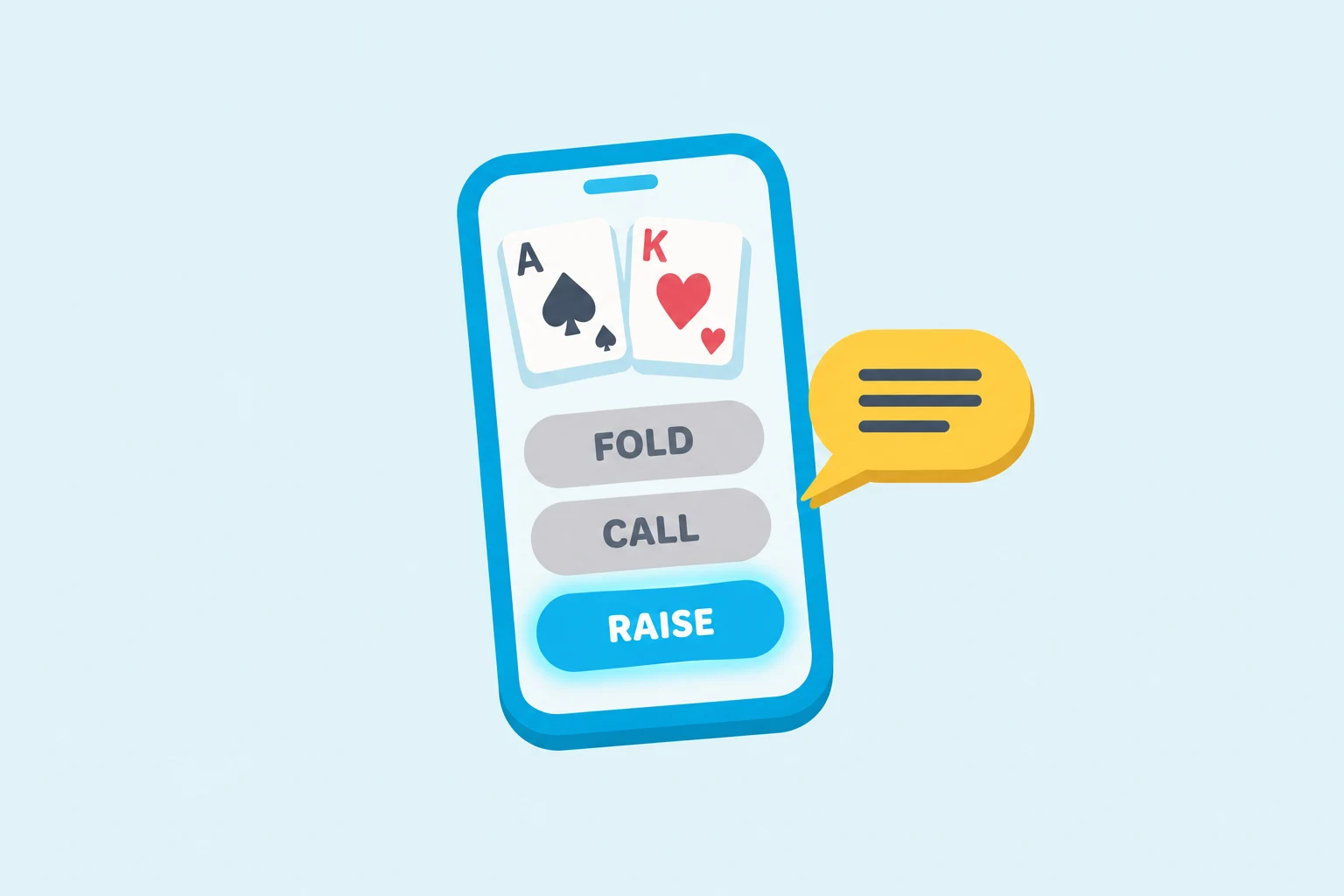

Poker strategy that sticks.
Walk-through articles on the spots that decide pots: counting outs, defending blinds, c-betting wet boards. Each one ends with a habit you can use at the table.
Best App to Learn Poker: A Beginner's Evaluation Checklist
Seven five-minute tests that separate apps that teach poker from apps that just deal it. Run any app through them tonight, including ours.
Best Poker Training Apps in 2026: An Honest Comparison
GTO Wizard, Postflop+, PokerTrainer, and Poker Skill, compared by what they actually train, who each one fits, and what the free versions really give you.
HORSE Poker: How to Play All Five Games in the Rotation
HORSE rotates through five limit games, and most players are only fluent in one of them. What each letter means, how the unfamiliar four actually work, and the survival rule for your weakest game.
How to Play Pot-Limit Omaha: Rules, Equities, and Traps
PLO hands you four cards, caps every bet at the pot, and quietly repeals half of what hold'em taught you. The two rules that matter, why aces stop being magic, and the habits to unlearn.
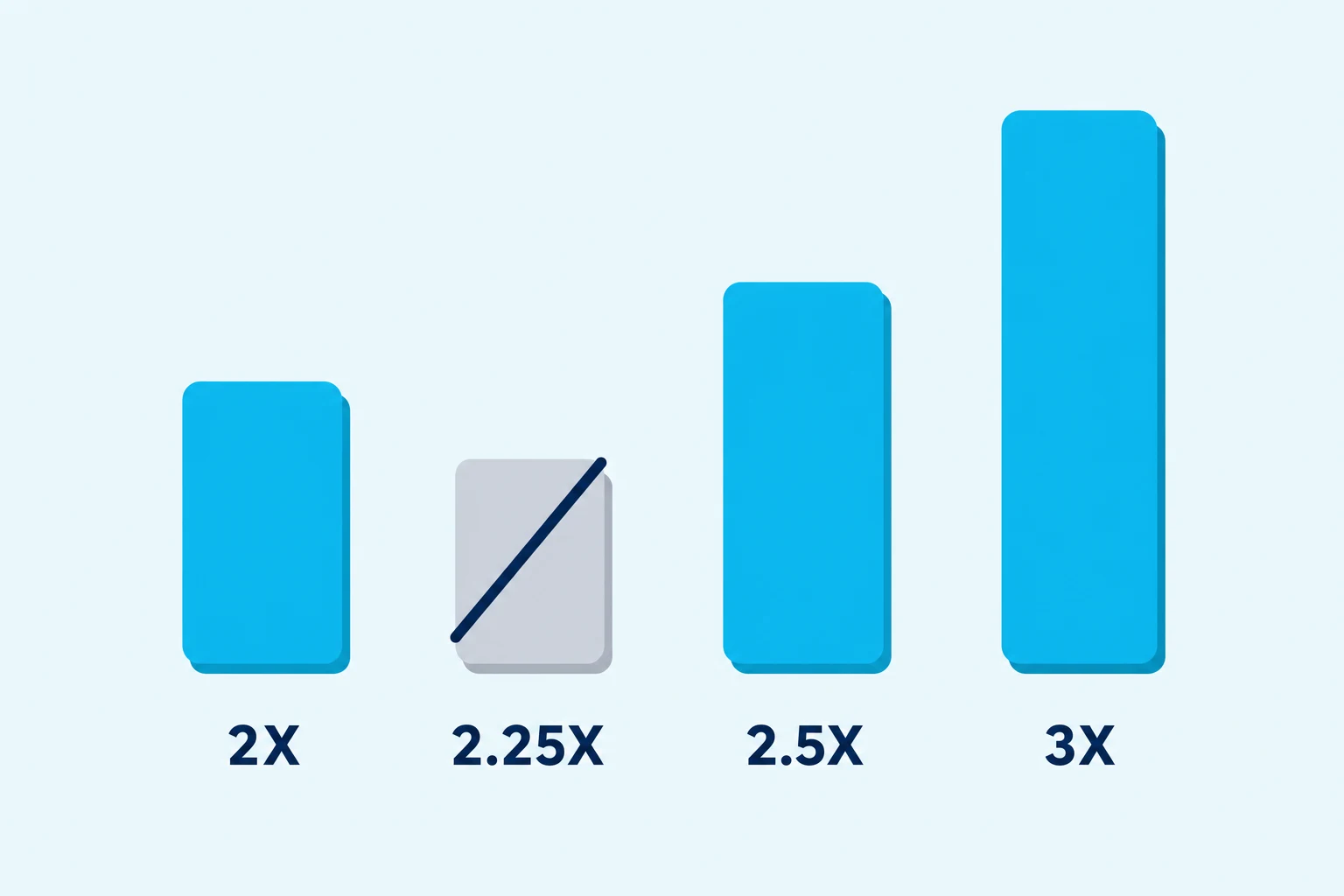
Poker Bet Sizing: Why 2x and 2.67x Are Not the Same Raise
Two well-known tournament players spent a week arguing about chip denominations. Underneath the logistics is a strategy question most players never get taught: what does the number you pick actually do?
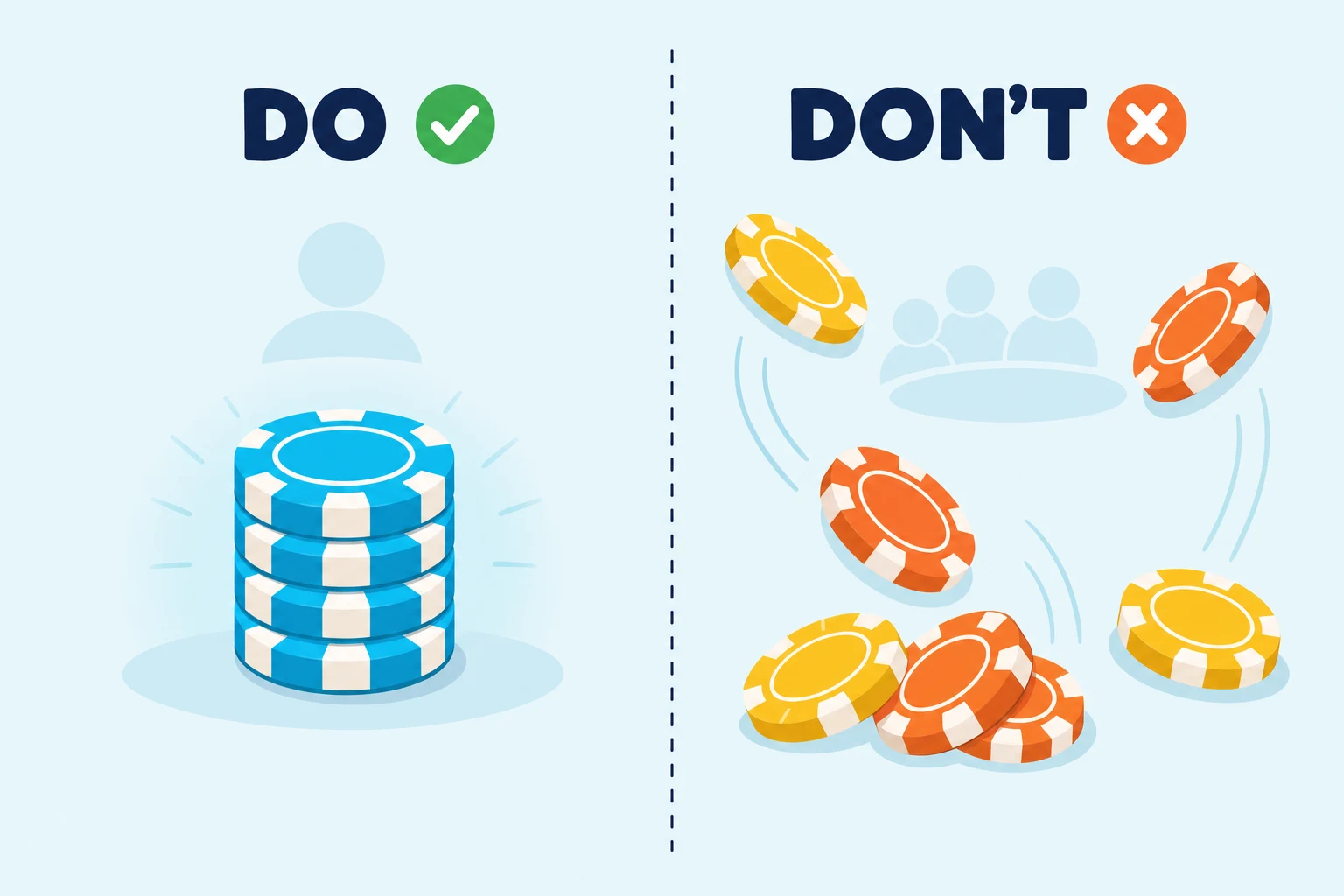
Poker Etiquette: The Unwritten Rules of the Live Table
Live poker runs on two rulebooks, and the dealer only enforces one of them. The unwritten rules organized by moment in the hand, plus the handful that cost real money when broken.
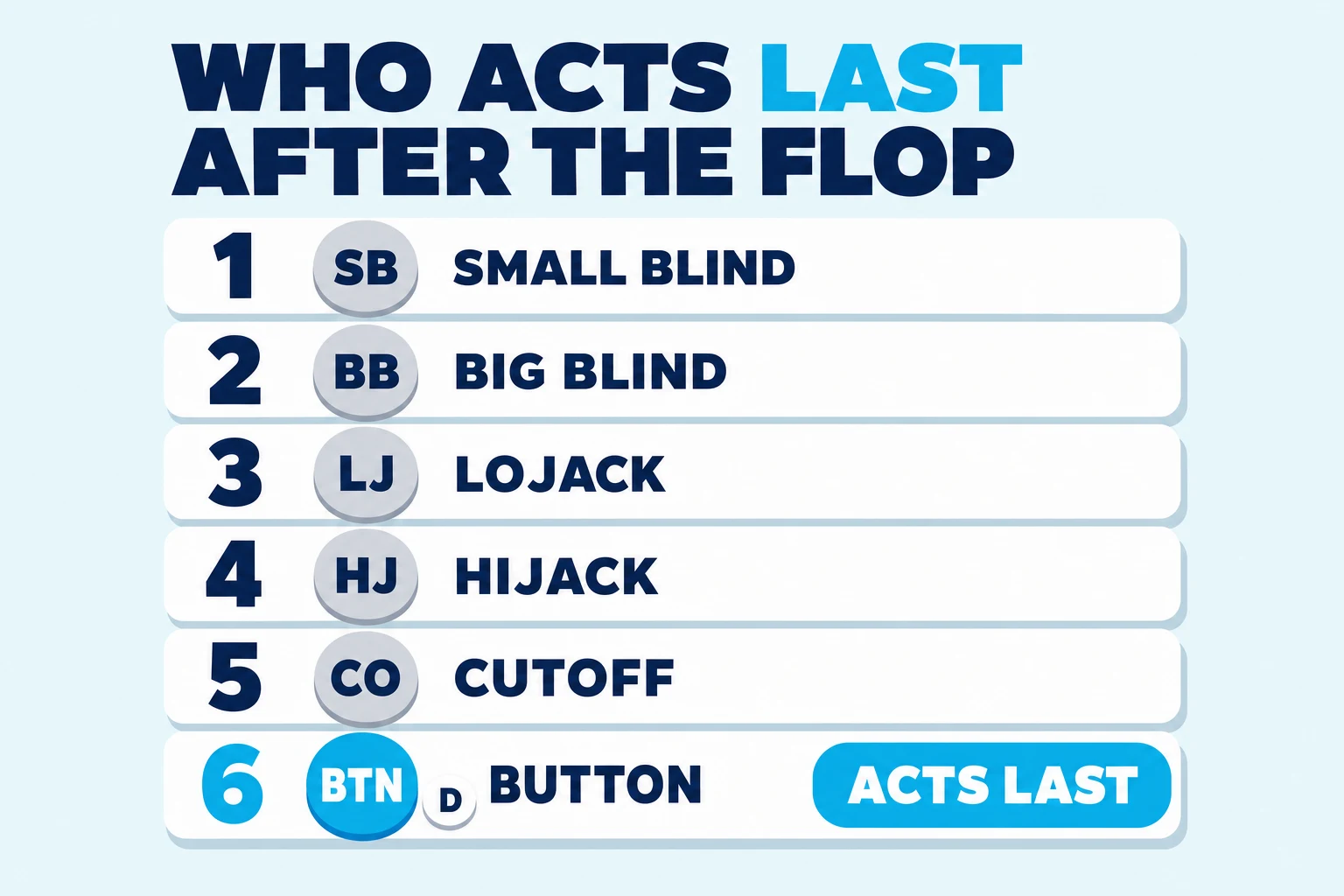
Poker positions: what each seat is and what it changes
Your seat decides whether you act first or last, and that one fact sets how many hands you can play. Every position counted back from the button.
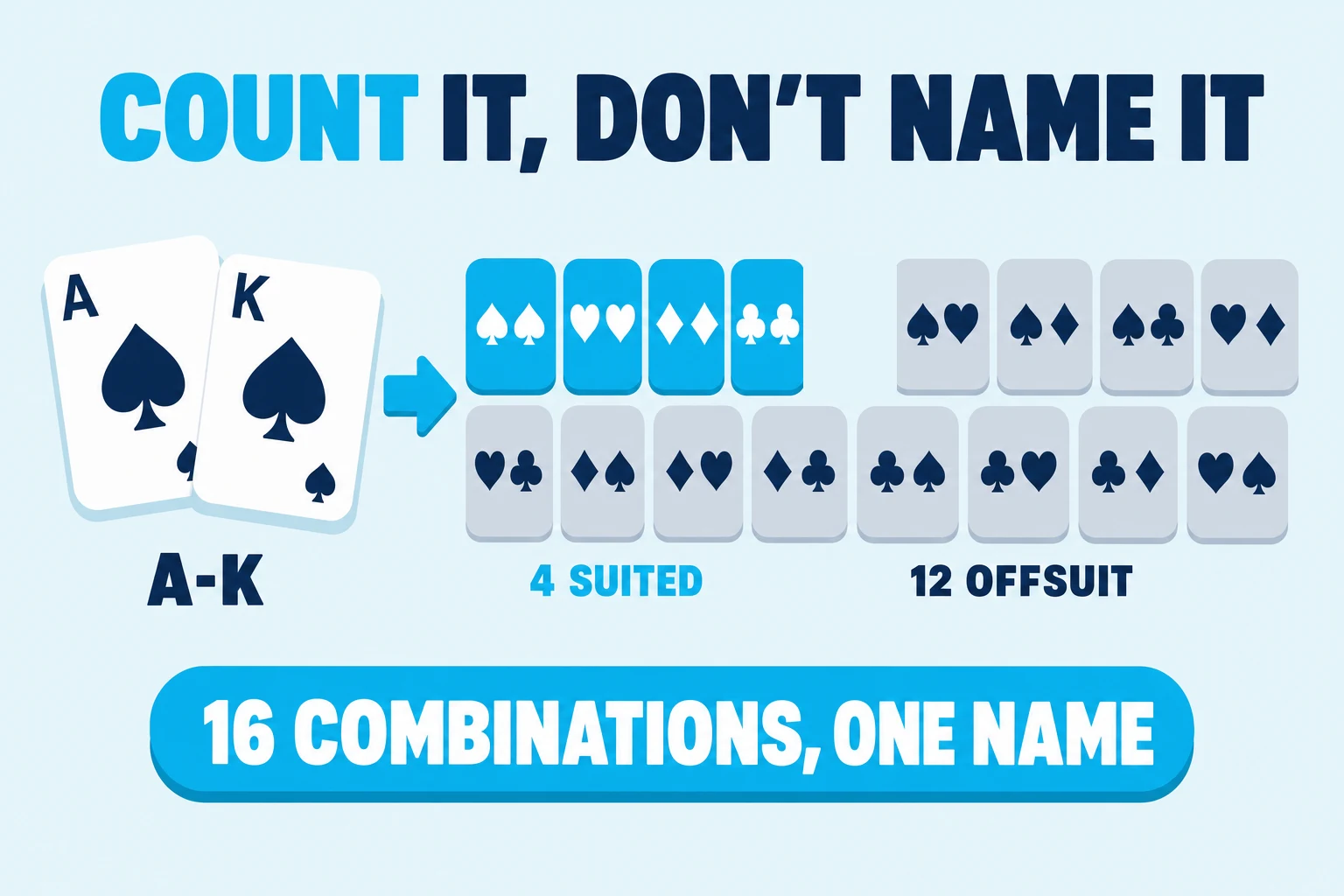
Poker ranges: how to build one and cut it street by street
A range is every hand a player can hold right now, not the one hand you guessed. Write it down, count its combinations, and cut it street by street.
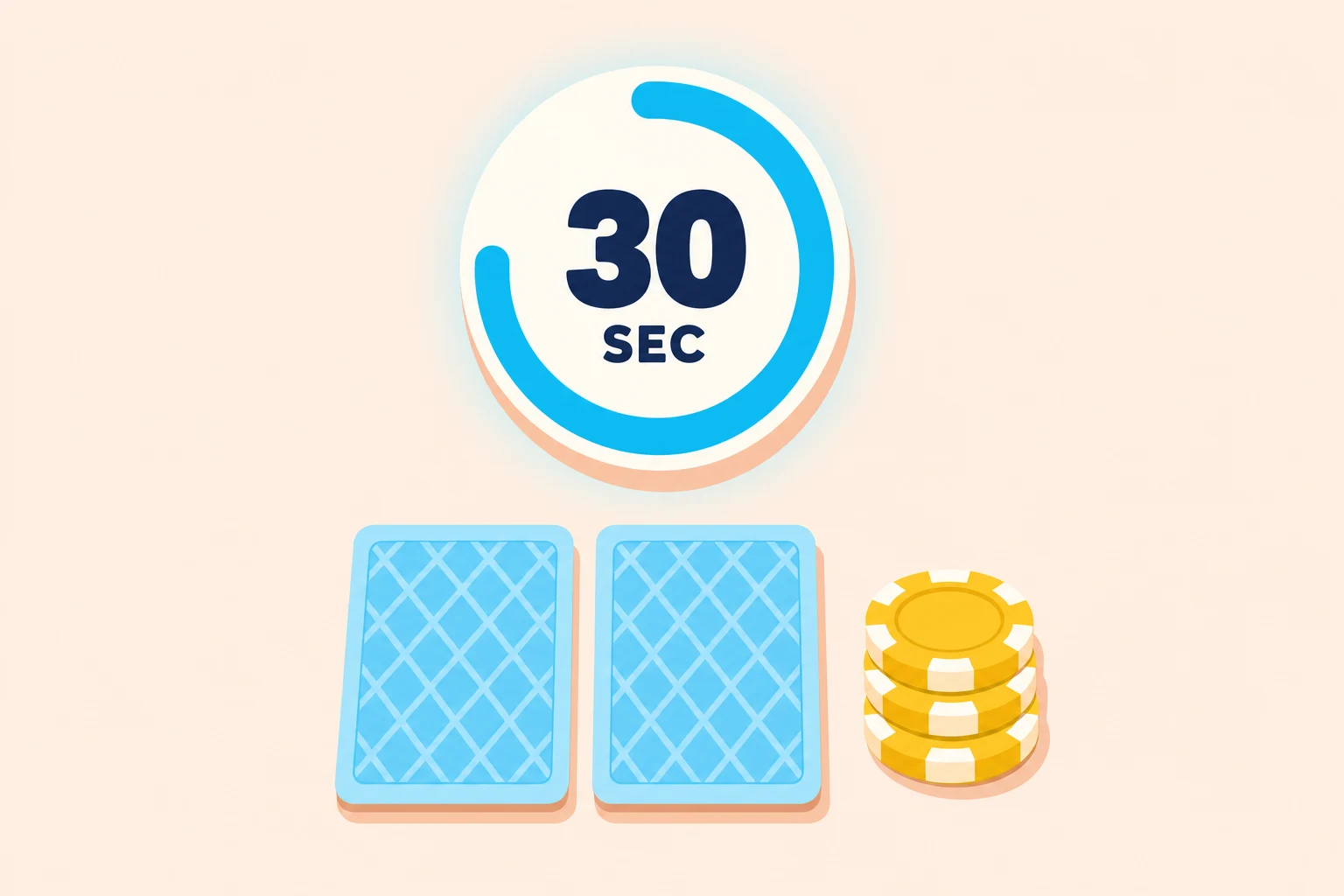
Poker Shot Clocks: The Rules and How to Beat the Timer
The World Series just put its Main Event on a timer for the first time ever. How shot clocks work, why tanking forced the issue, and how to keep your decisions sharp in 30 seconds.
Poker Tells: What They're Worth and What Beats Them
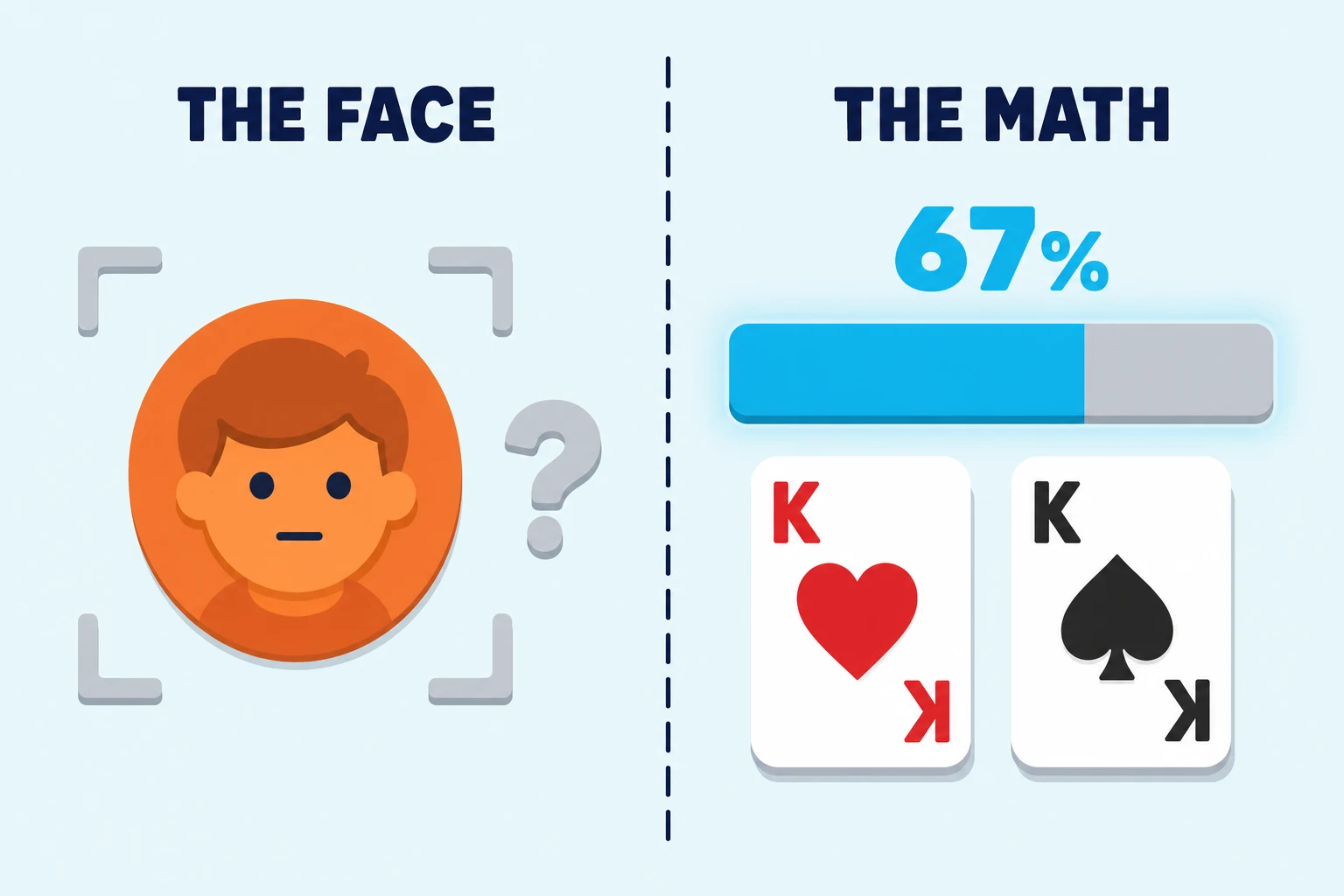
ESPN put an AI on the Main Event broadcast to read players' faces. What tells are actually worth, which ones carry real information, and why the best poker minds ever built don't look at faces at all.
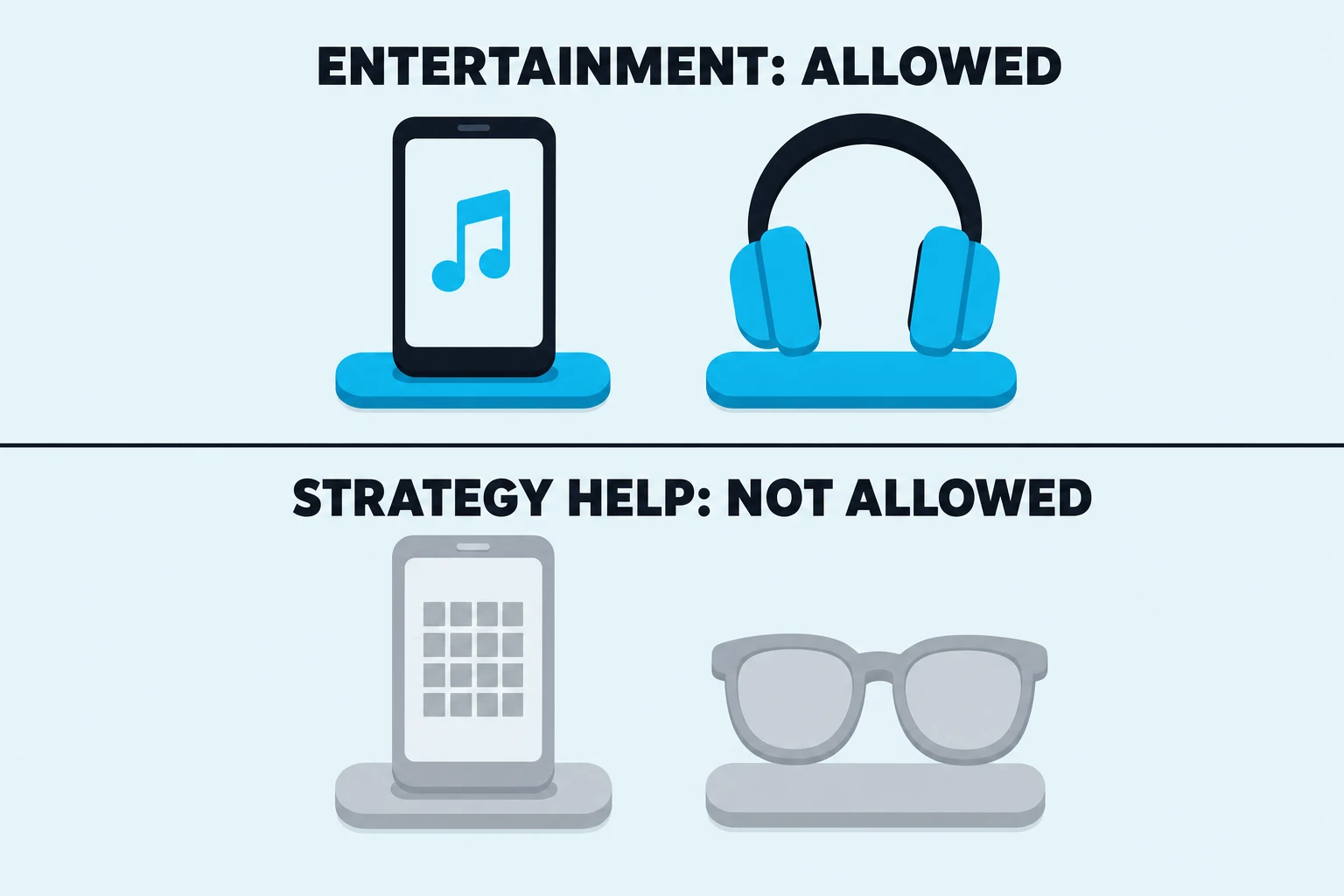
What Electronics Are Actually Allowed at a Poker Table
Phones, headphones, cameras, smart glasses. The rule that decides all of them is older than any of the hardware, and it is written around the help rather than the gadget.
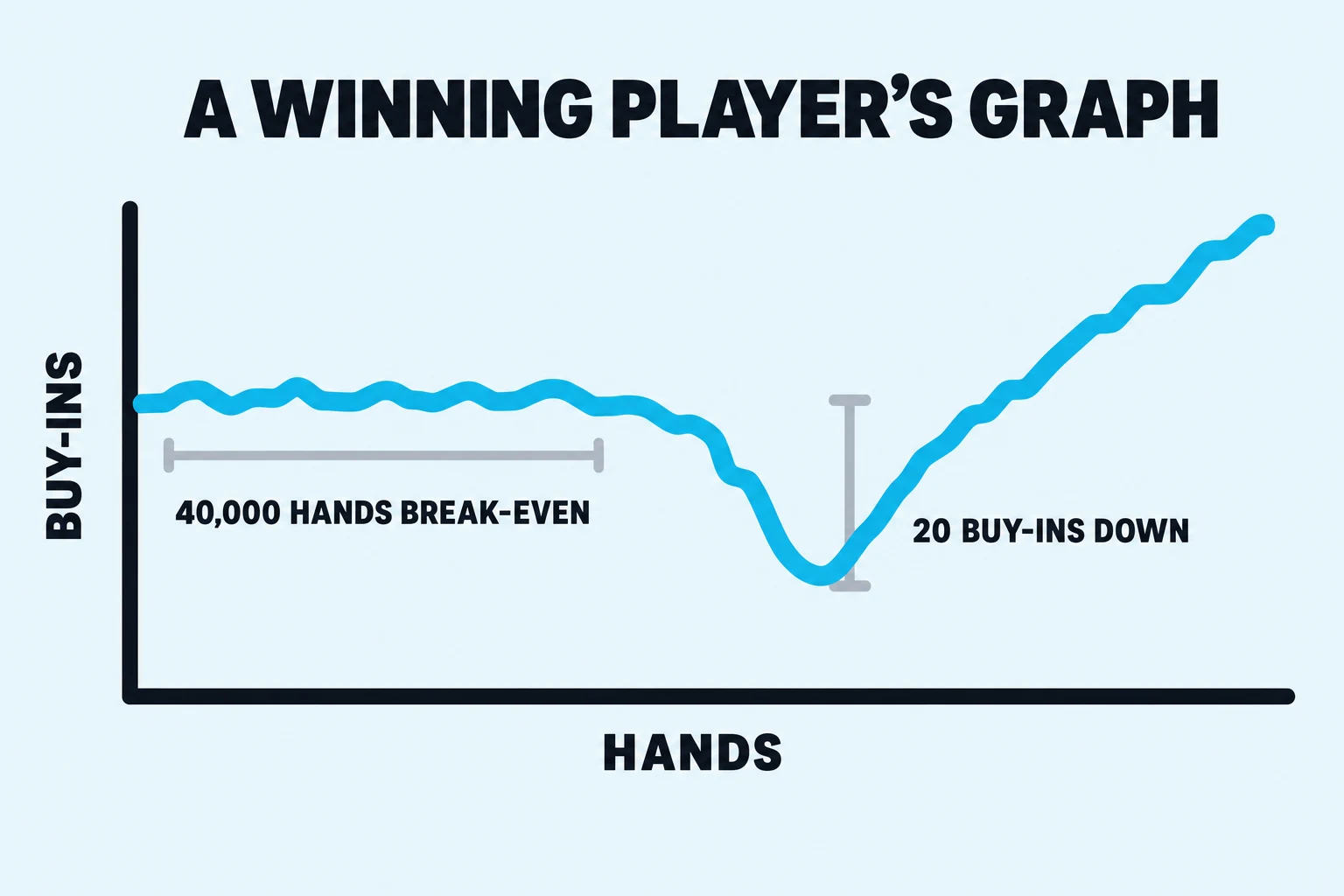
Your Downswing Calculator Says 0.1%. You Have Had It Twice. Here Is What That Means
When a variance calculator hands back a probability that does not match your experience, the calculator is usually not the thing that is wrong, and neither is your memory. The inputs are.
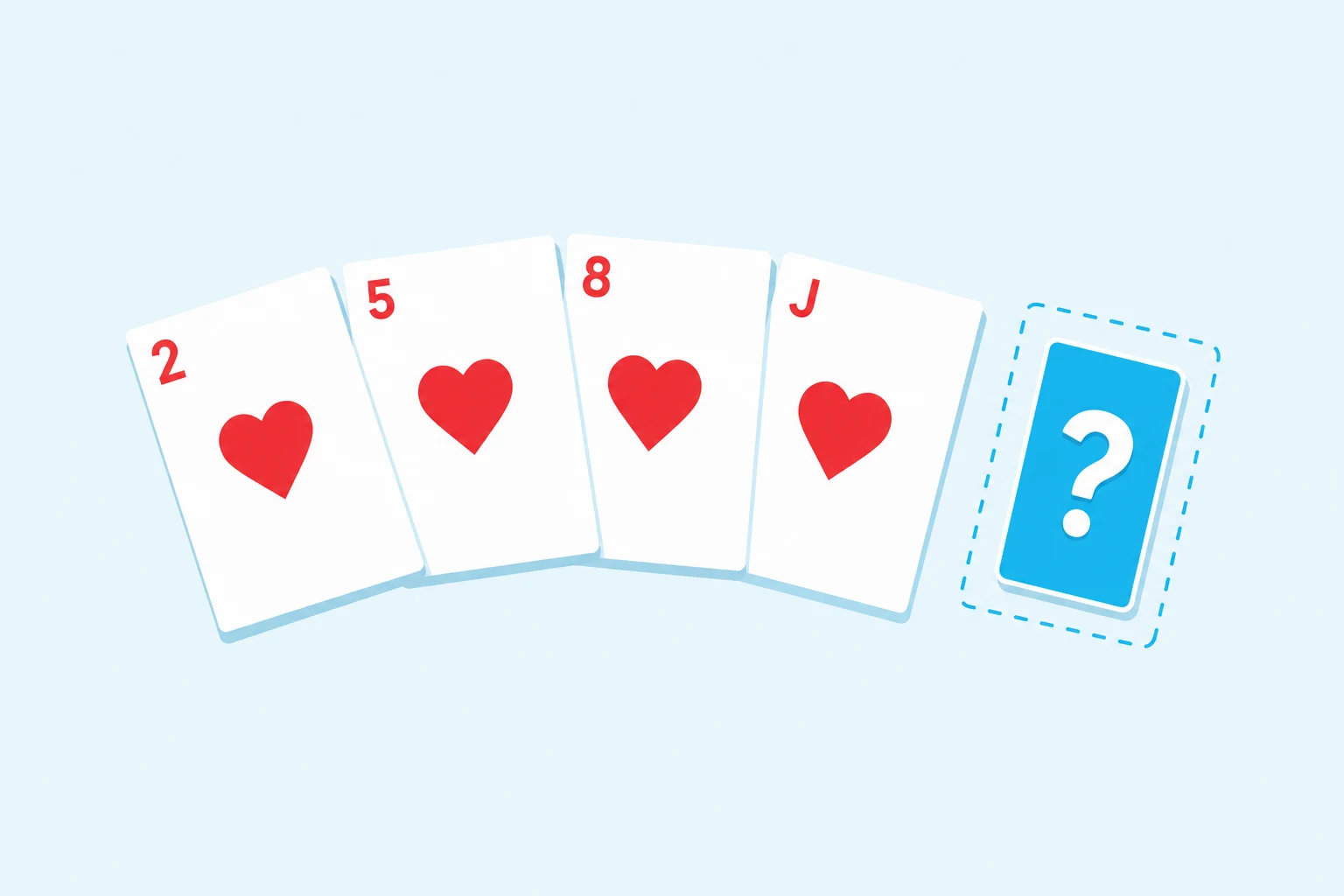
Four Cards of the Same Suit: What It Counts For
Four suited cards is not a hand, and it is not almost a flush at showdown. Here is what it is worth, when it is worth chasing, and the price math.
How to play poker: rules, betting rounds, and showdown
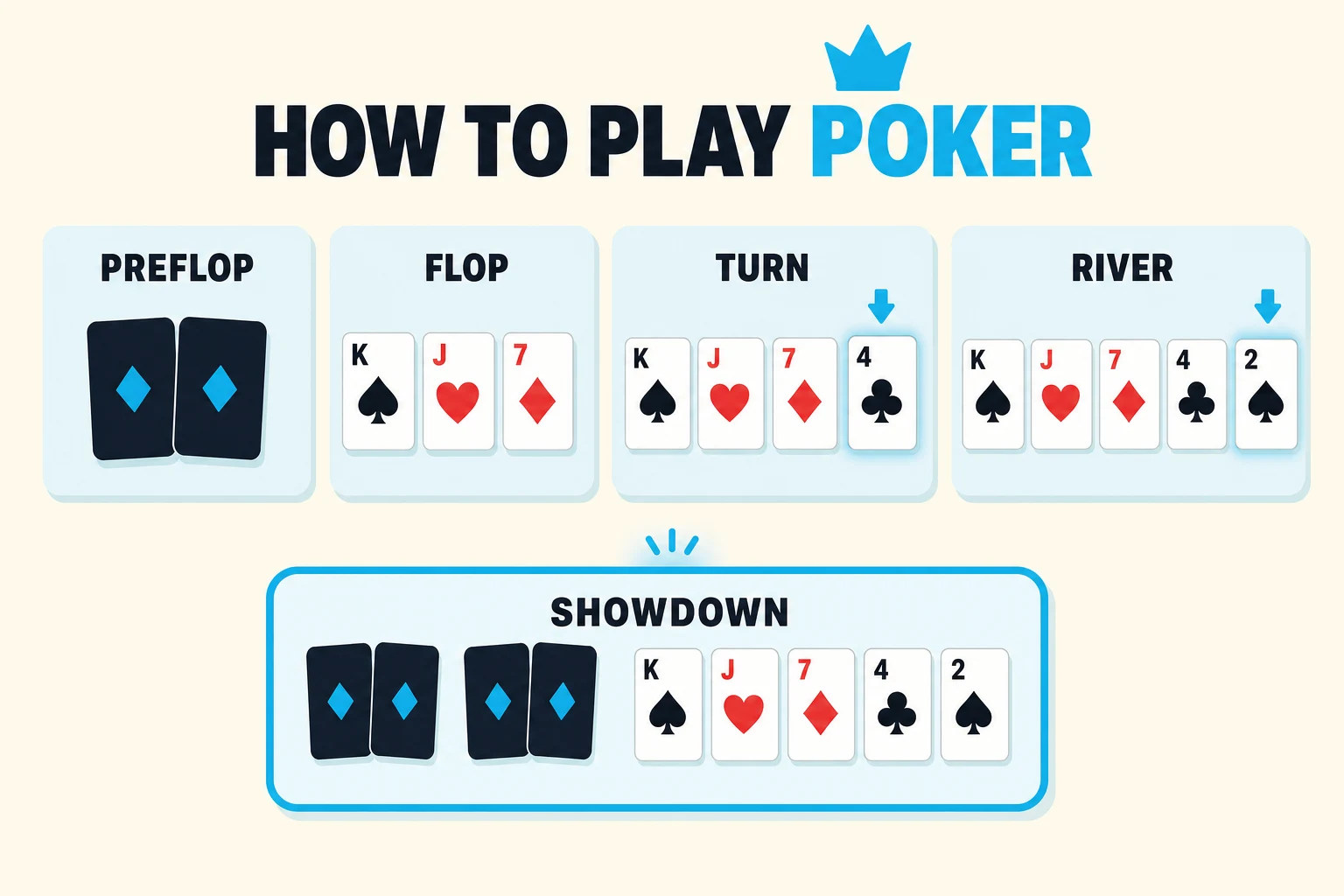
How a single hand of Texas Hold'em runs from blinds to showdown: the betting rounds, the legal actions on your turn, and what to practice once you understand the flow.
How to Study Poker: A Weekly Plan That Works
A study system you can keep: play a little, review one hand, drill the leak it exposes, learn one concept. The weekly structure and what to study first.
Poker Practice: A 15-Minute Daily Routine
Fifteen focused minutes a day beats a weekend marathon. The 5-5-5 routine: drill decisions, review one hand, learn one concept, repeat until it compounds.
Poker Trainer vs Solver: Which Do You Need?
A solver answers questions; a trainer builds habits. Which one your game actually needs right now, and the order that makes both worth the money.
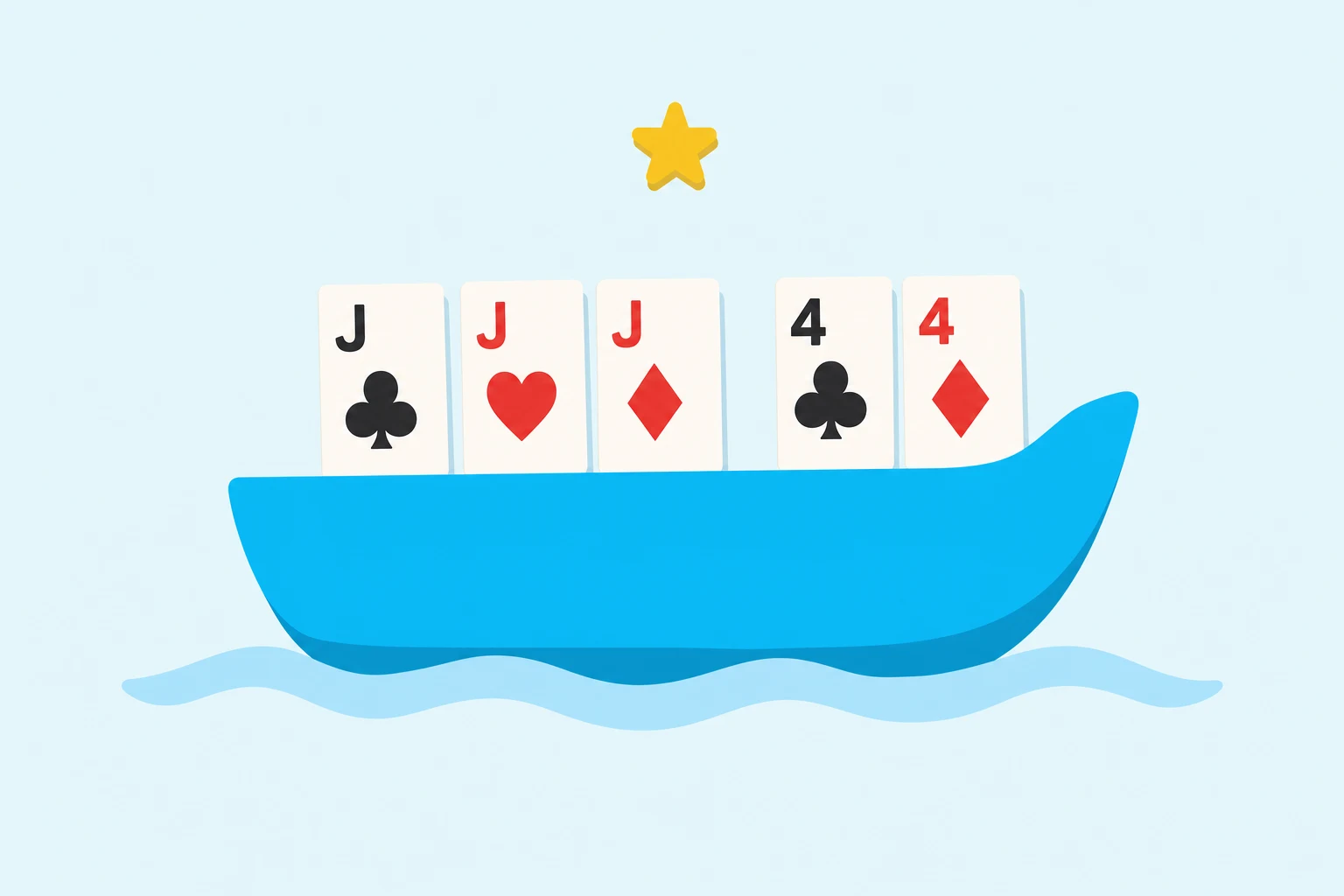
Why Is a Full House Called a Boat in Poker?
The nickname, where it probably came from, and the part that actually wins pots: knowing which boat beats which boat.
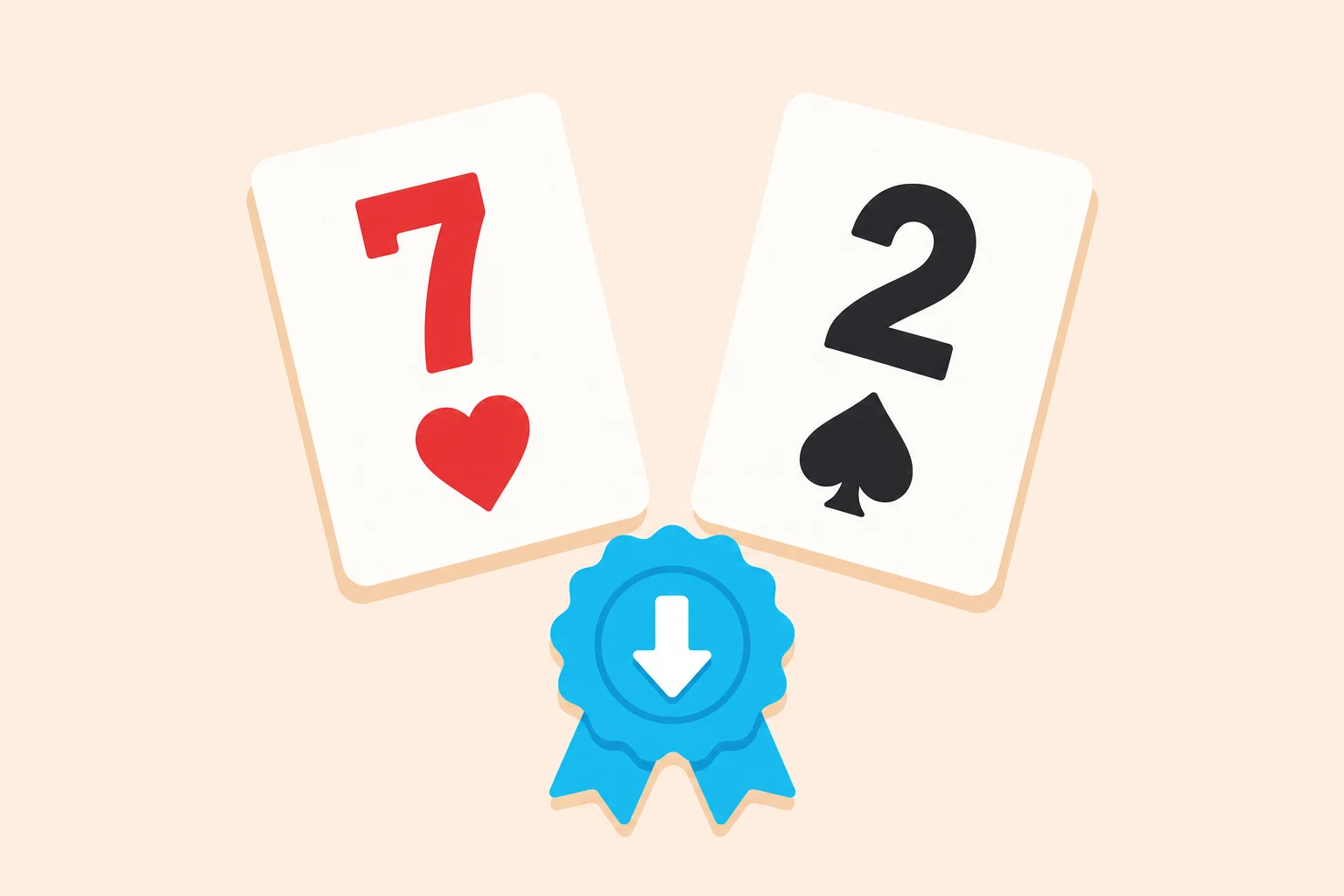
7-2 Offsuit: The Worst Hand in Poker
Why seven-deuce earned the title, the honest numbers behind it, and what the worst hand in the game teaches about every hand you should not play.
Poker rules for beginners: blinds, all-ins, and showdown
The enforceable rules of Texas Hold'em: who posts the blinds, the order of action, what each verb means, how all-ins and side pots work, and the rule mistakes that trip up new players.
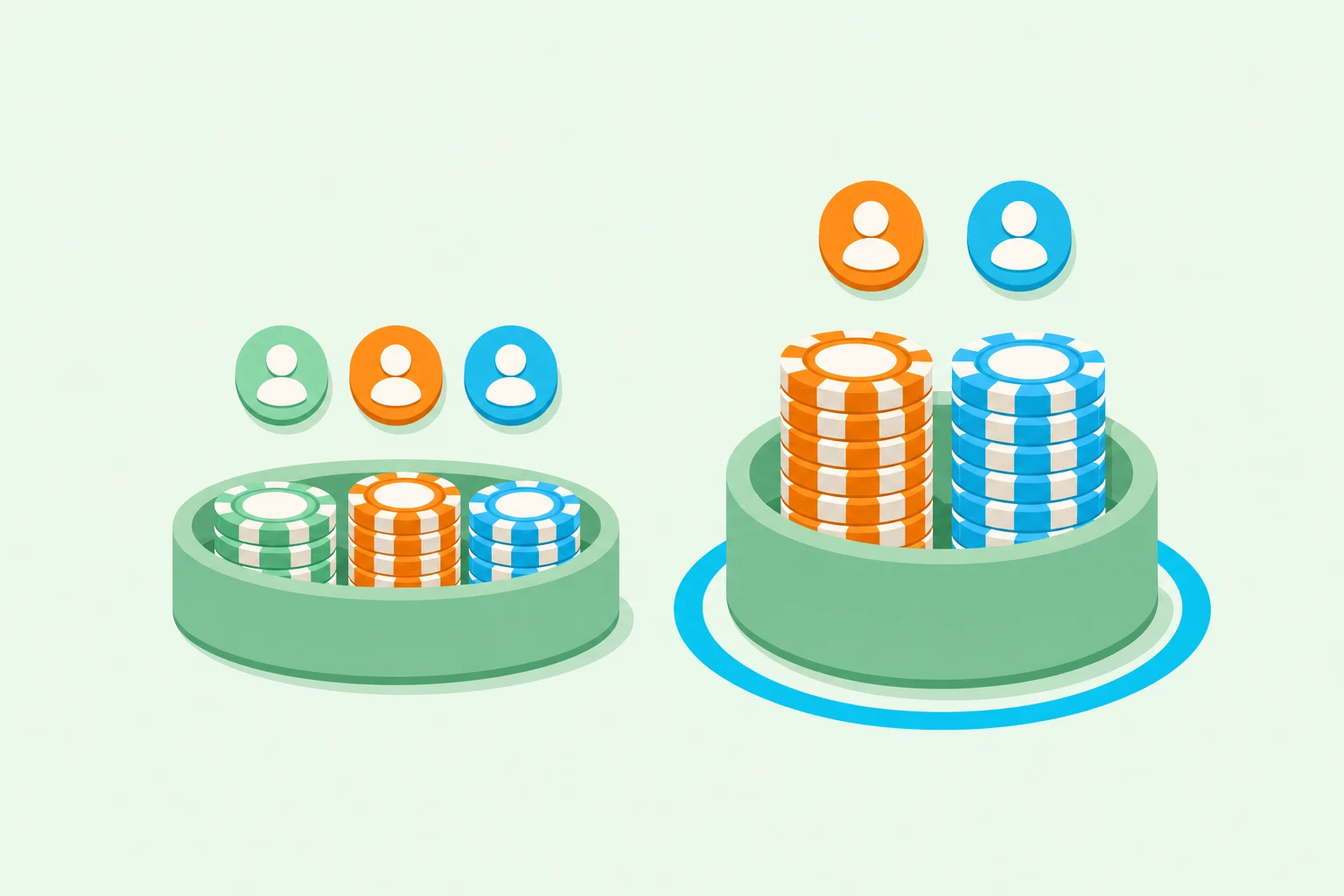
Side Pots Explained: Exactly How They Split
One rule generates every side pot: you can only win chips you matched. Two worked examples with real numbers, and the showdown order that confuses every home game.
Antes in Poker: What They Are and How They Change Play
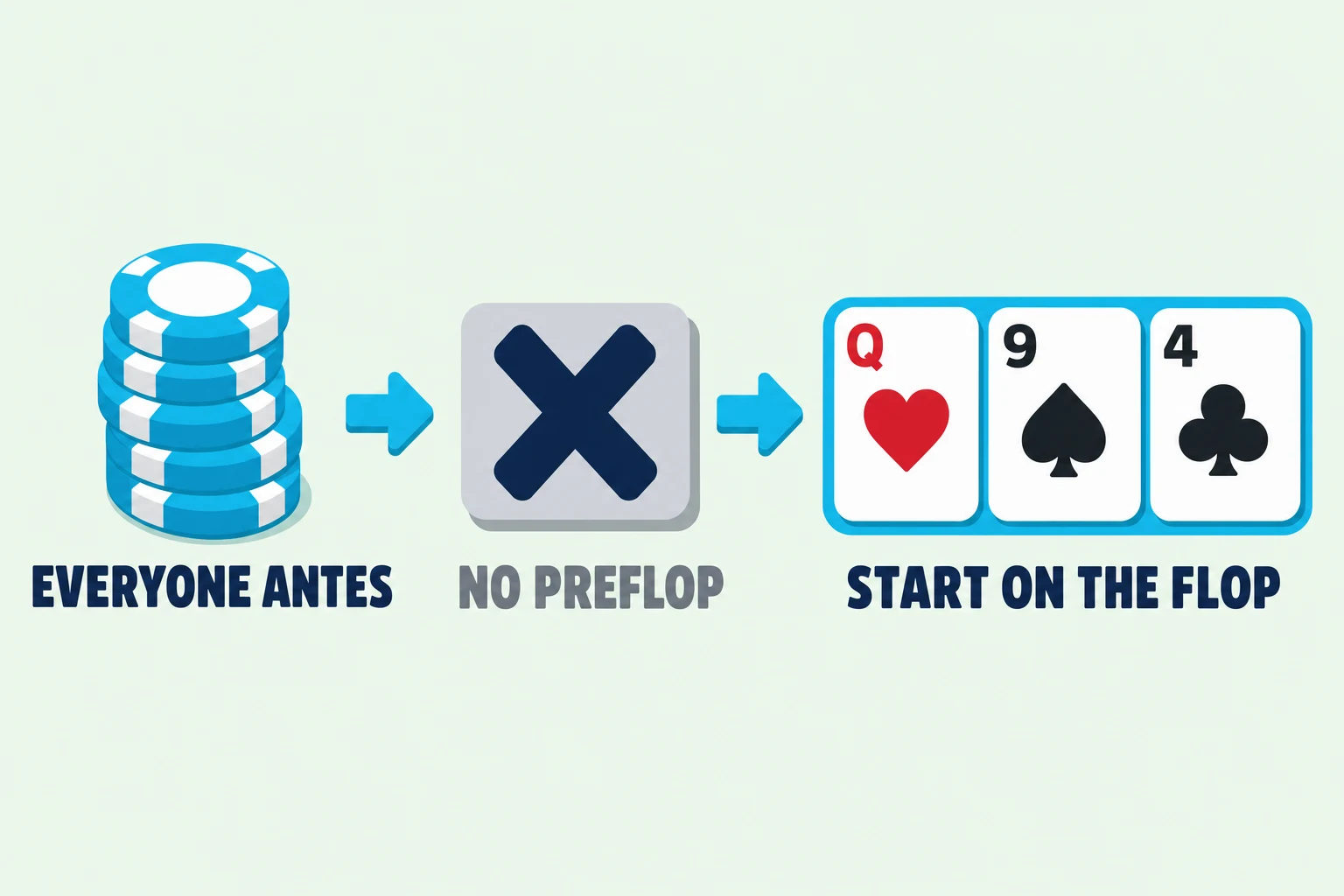
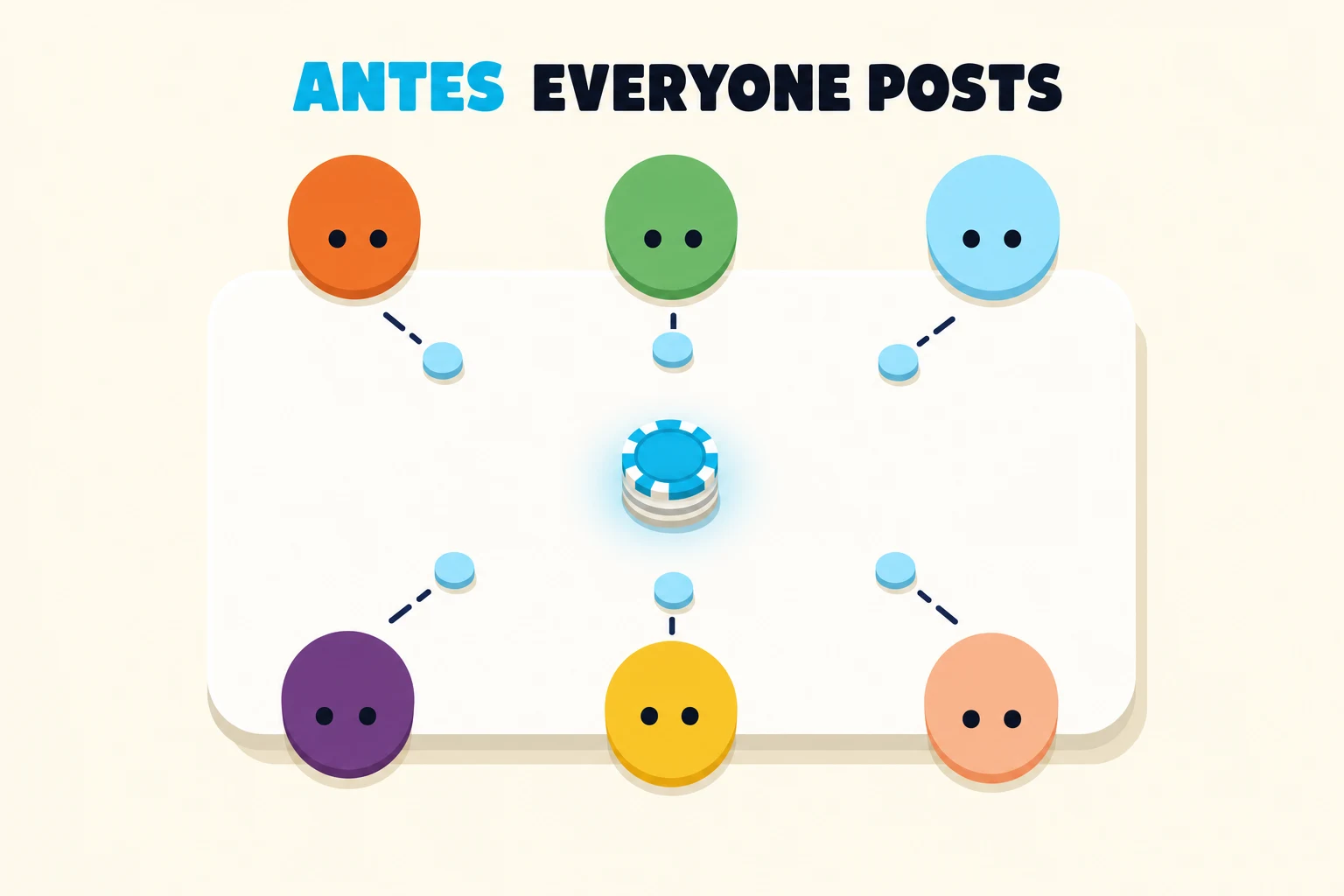
An ante is a forced bet every player posts before the deal. It fattens the preflop pot by two thirds, and correct strategy loosens with it: wider steals, wider defends, more action.
Calling in Poker: Rules, Prices, and the Station Leak
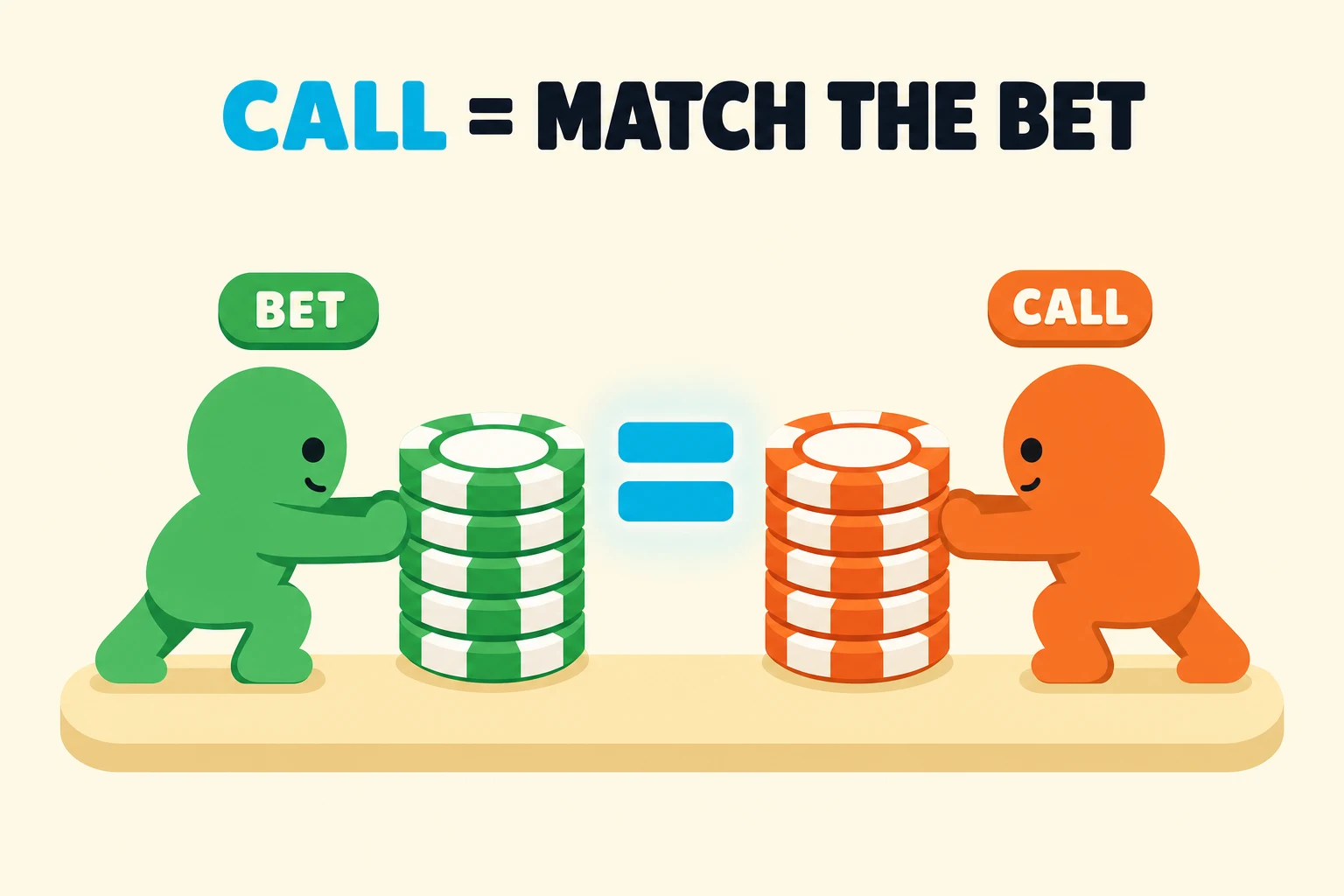
A call matches the bet in front of you, nothing more. When the price justifies it, calling prints; when it becomes a habit, it is the most expensive leak in low-stakes poker. The three-question filter that separates the two.
Capped Ranges in Poker: Spot Them, Pressure Them
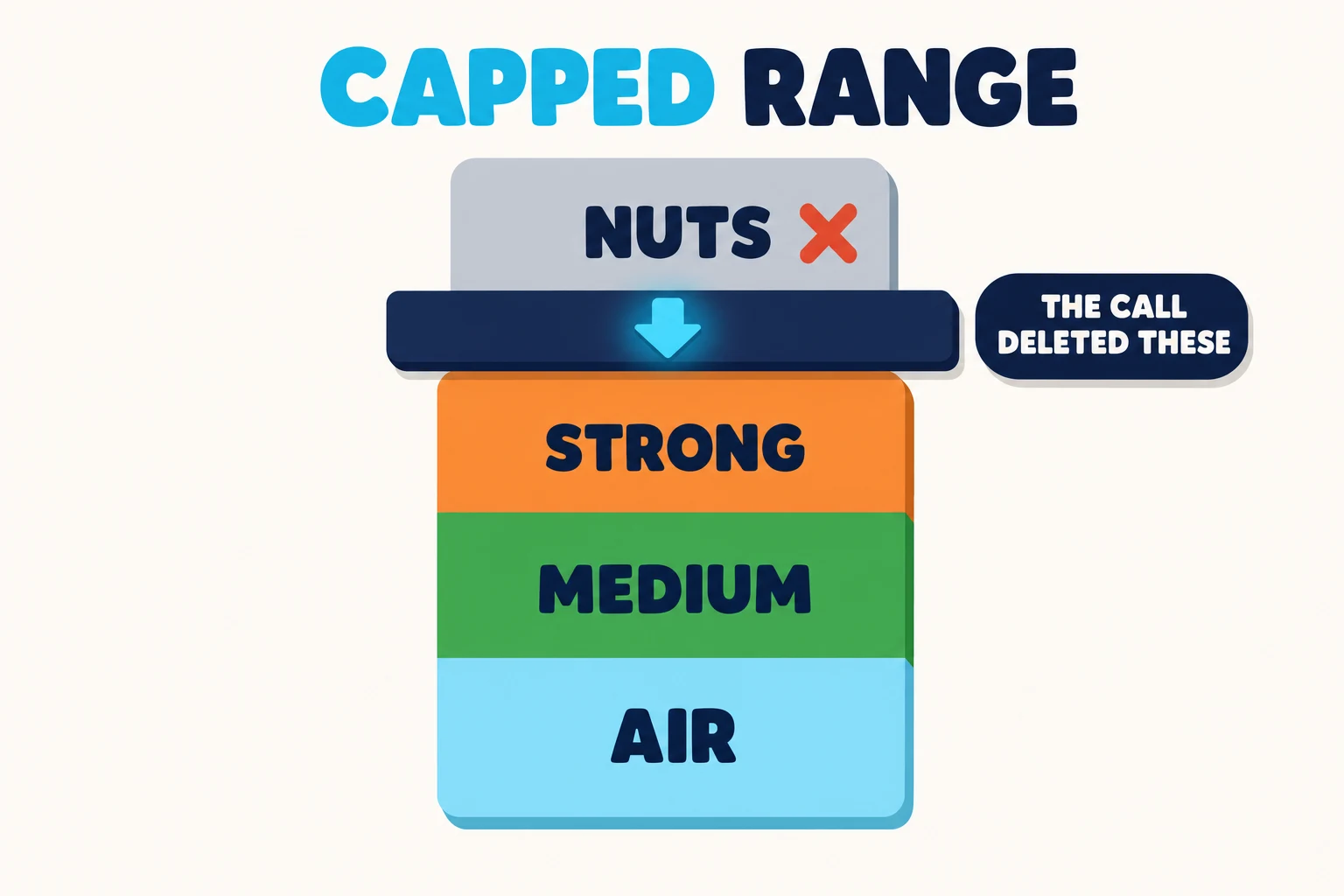
A range is capped when the line rules out its strongest hands: calls cap, and checks back cap. How to spot the moment it happens, the pressure playbook against a ceiling, and how to keep your own range whole.
Full House in Poker: Rules, Ties, and Which Boat Wins
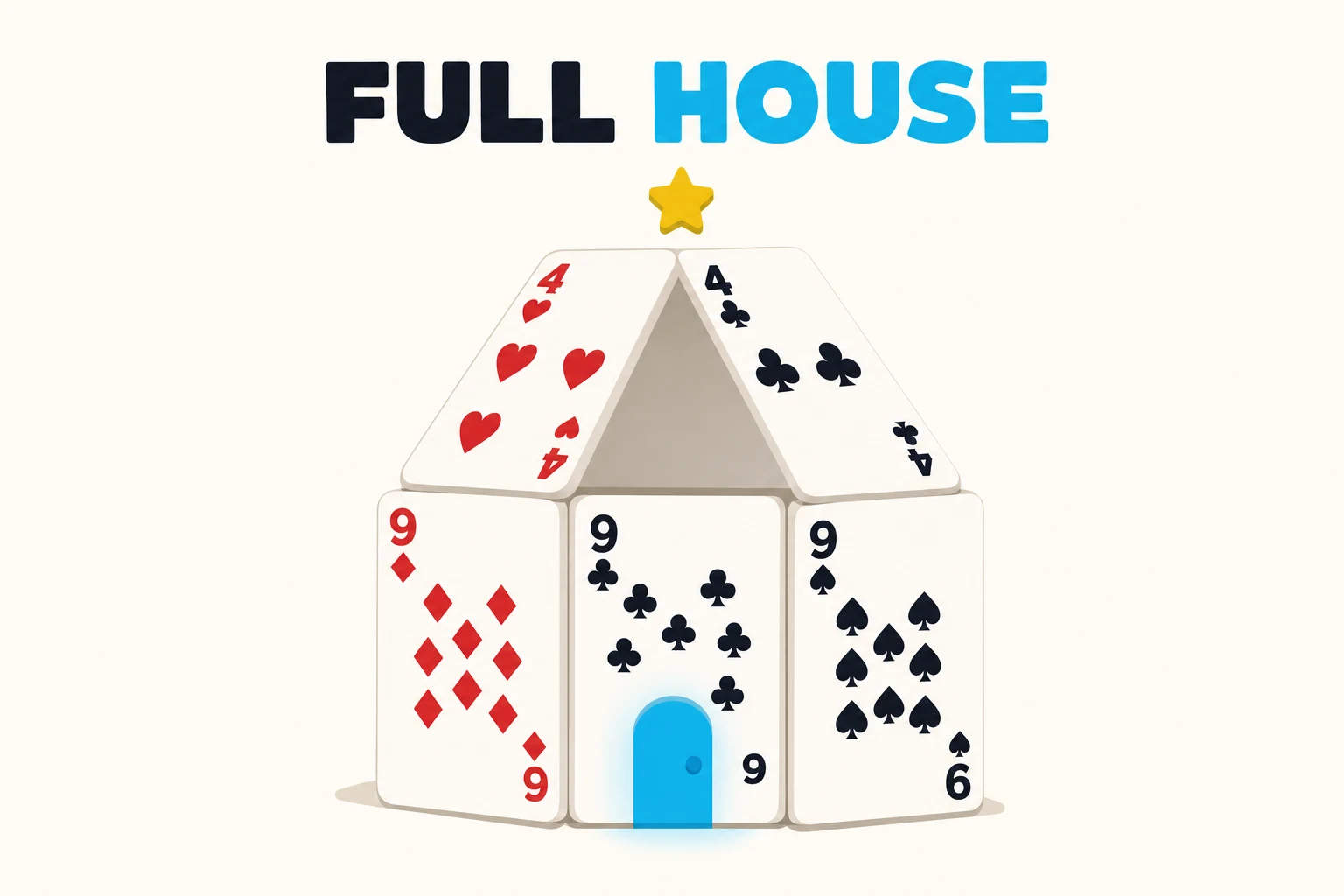
Three of one rank plus a pair of another. What a full house beats, what beats it, and the tie rule that decides boat-over-boat pots: the trips rank first, always.
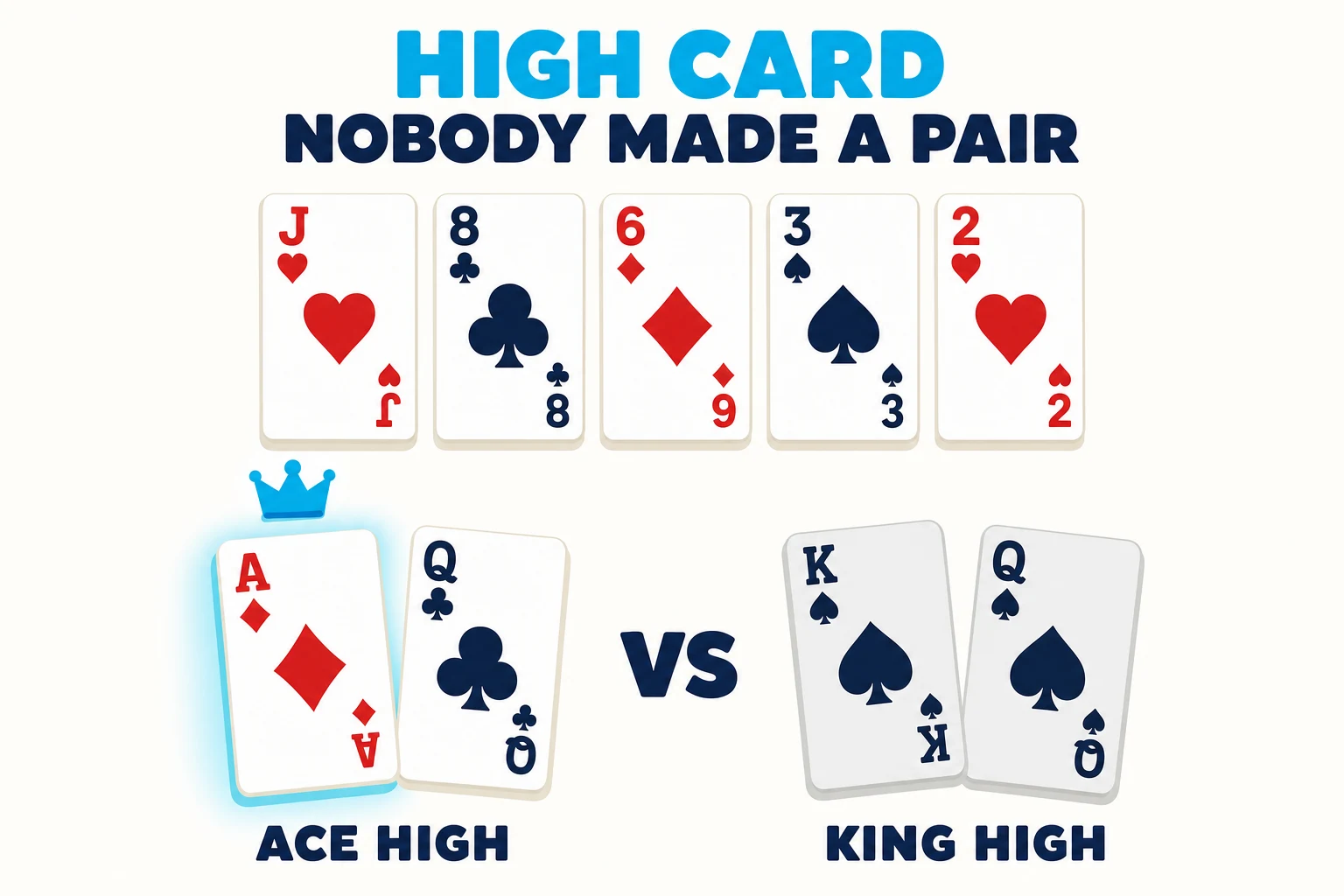
High Card in Poker: Who Wins When Nobody Has a Pair
When no one makes a pair, the highest card wins, and when those match, the next card decides, all the way through five. The comparison walk, the ties everyone argues about, and when ace-high is a real hand.
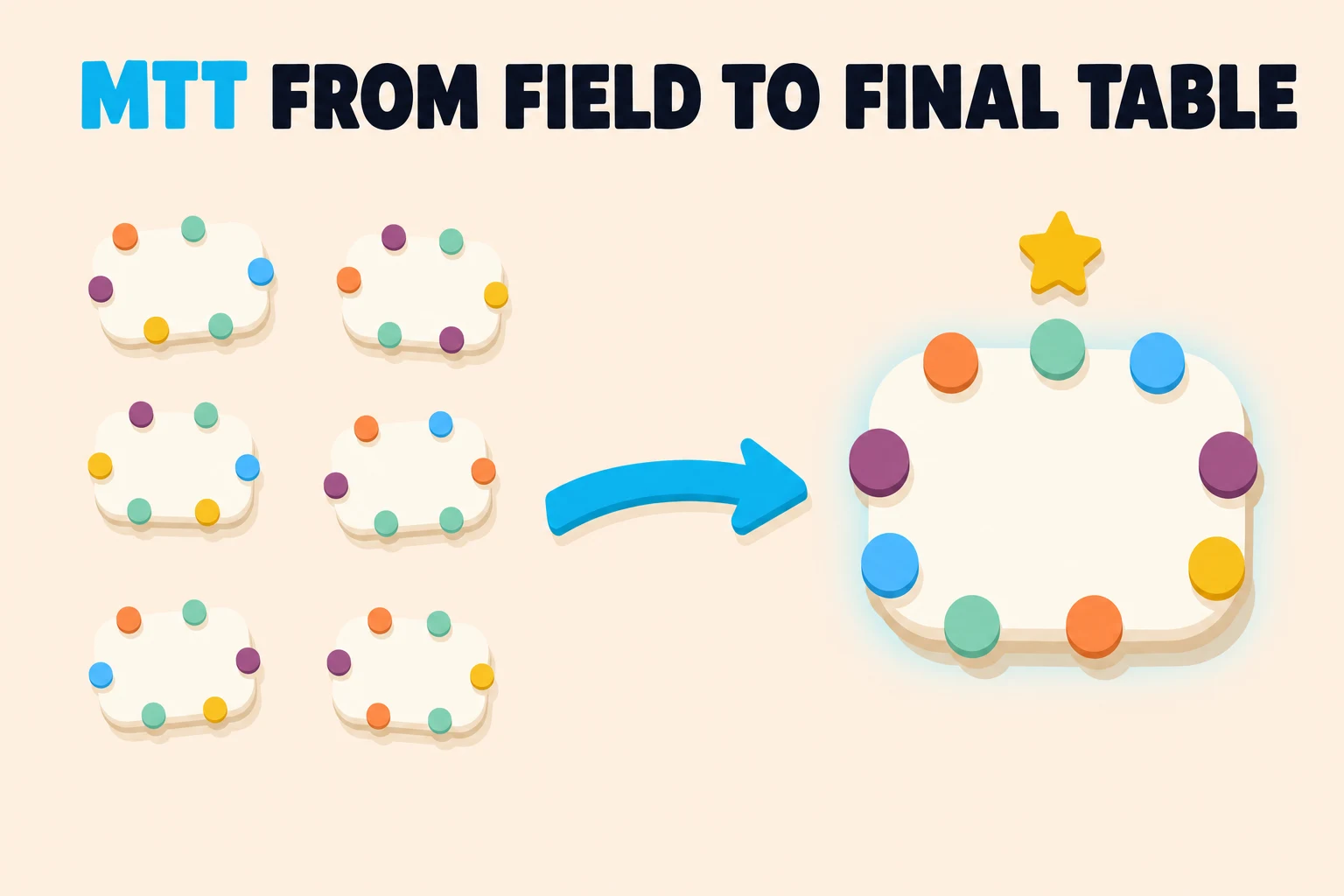
MTT Poker: Phase-by-Phase Strategy to the Final Table
MTT means multi-table tournament, and the strategy that wins one changes every few hours. The five phases, the one adjustment each demands, and why stack depth in big blinds decides everything.
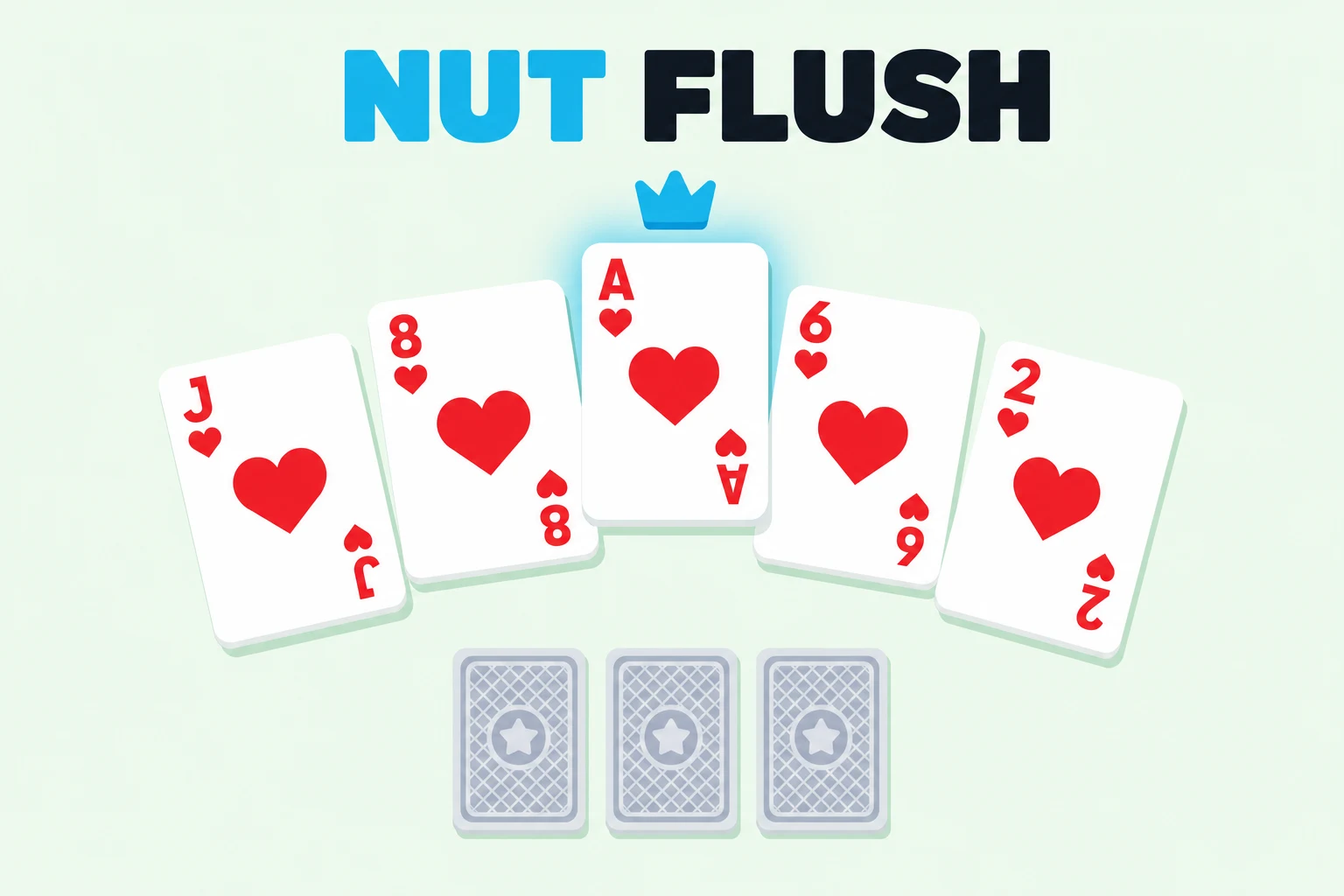
Nut Flush: How to Play It Made and as a Draw
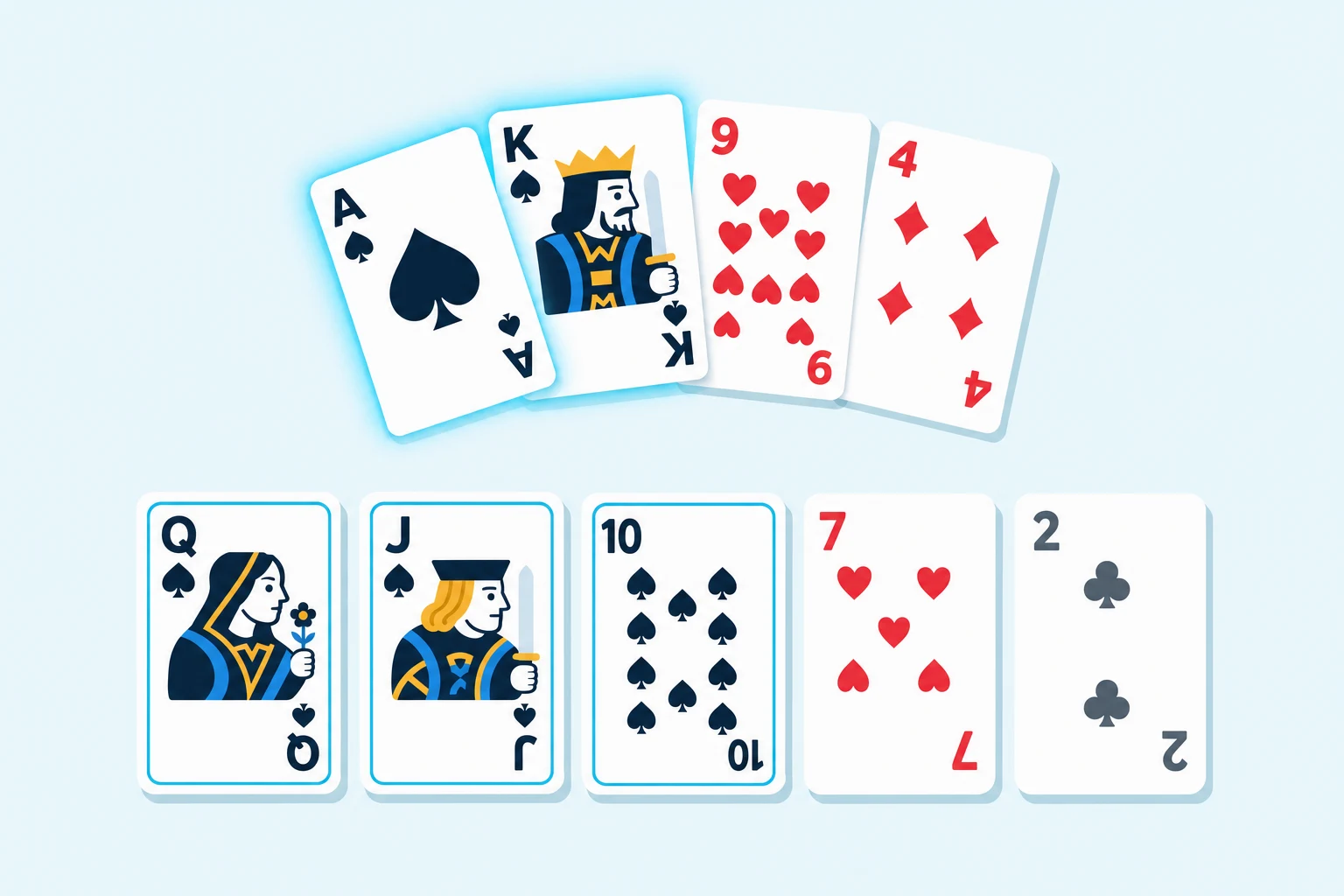
The nut flush is the best flush a board allows, usually the ace-high one. How to spot the nut card in two seconds, when the nut flush is not the nuts, and the math for playing the draw fast.
Poker Hand Probabilities: Odds of Every Hand, Exactly
Every poker hand's exact odds in one table, both dealt five cards and by the river in hold'em. Half of all five-card deals are high card; by the river you pair up or better 83 percent of the time.
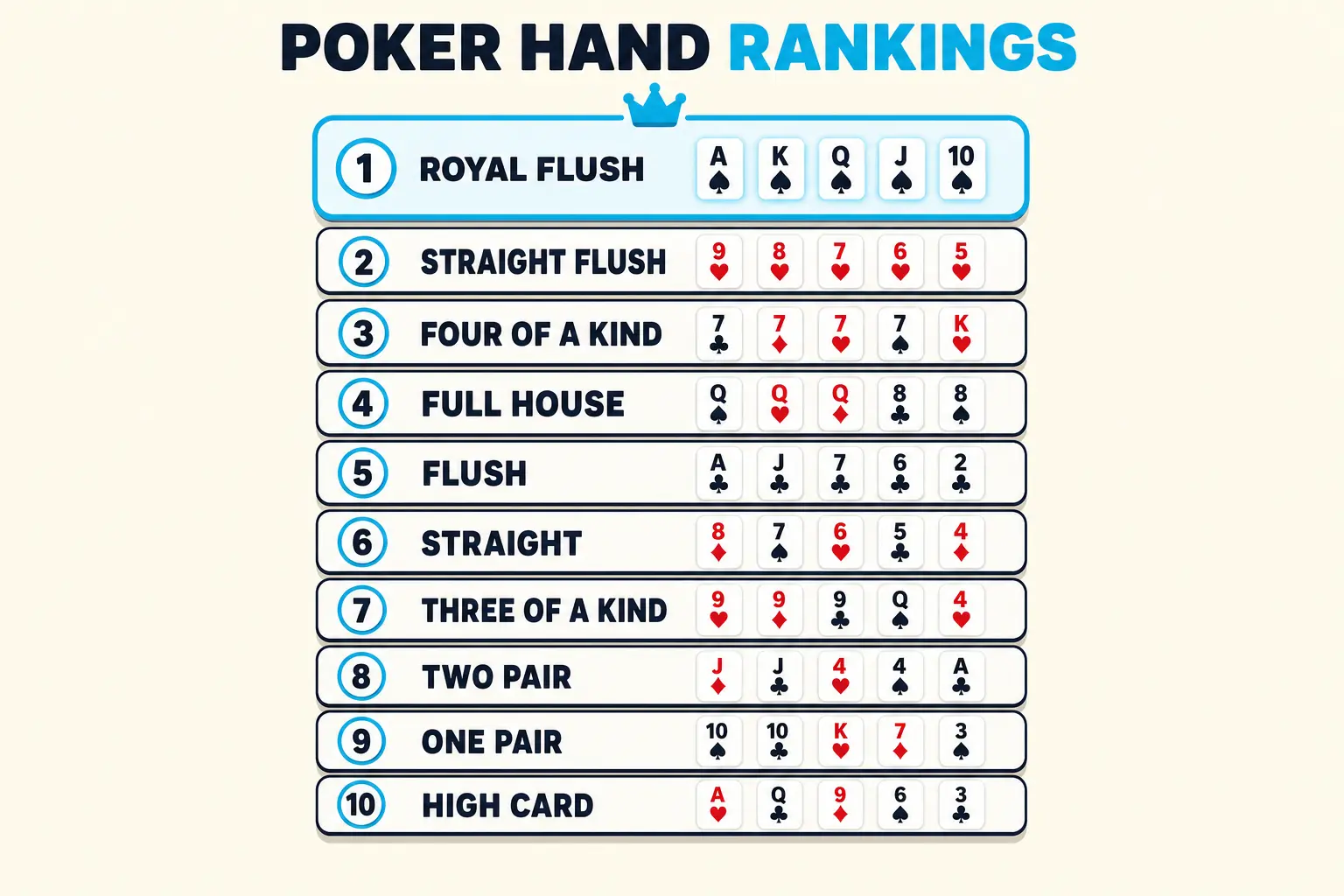
Poker hand rankings chart: every hand, ranked, with odds
Every poker hand from royal flush to high card, with example cards, the seven-card odds for each, and the tie-breaks that actually decide showdowns.
Poker Suits: Is Any Suit Higher Than Another?
In Texas hold'em, no suit outranks another, ever. Where the suit-ranking myth comes from, the two real exceptions, and when suits actually matter.
Pot Control in Poker: Size the Pot Your Hand Can Defend
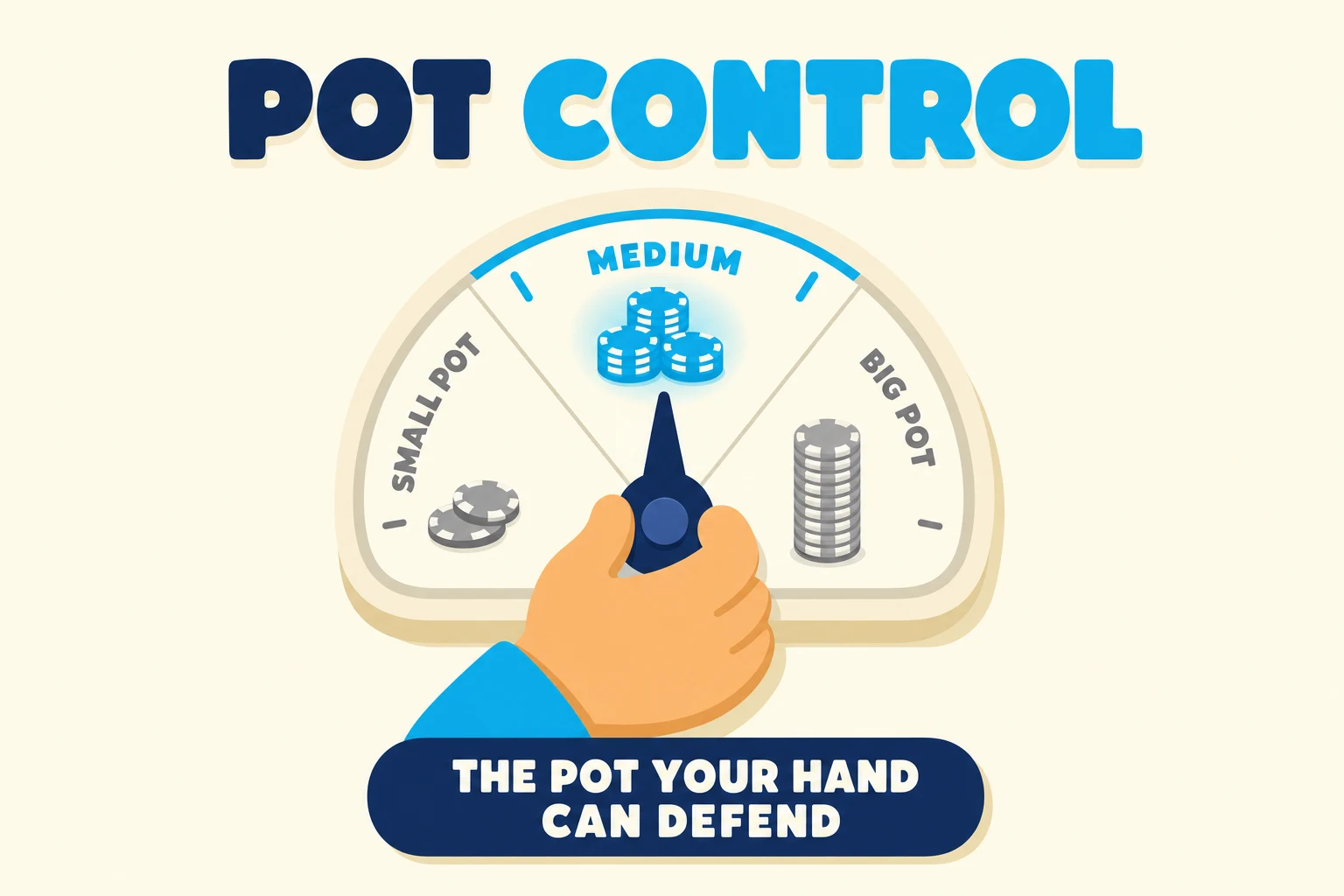
Pot control is not a synonym for checking scared. It means choosing, on purpose, the pot size your hand strength can defend. The mechanics, a worked hand, and the three spots where controlling the pot just burns value.
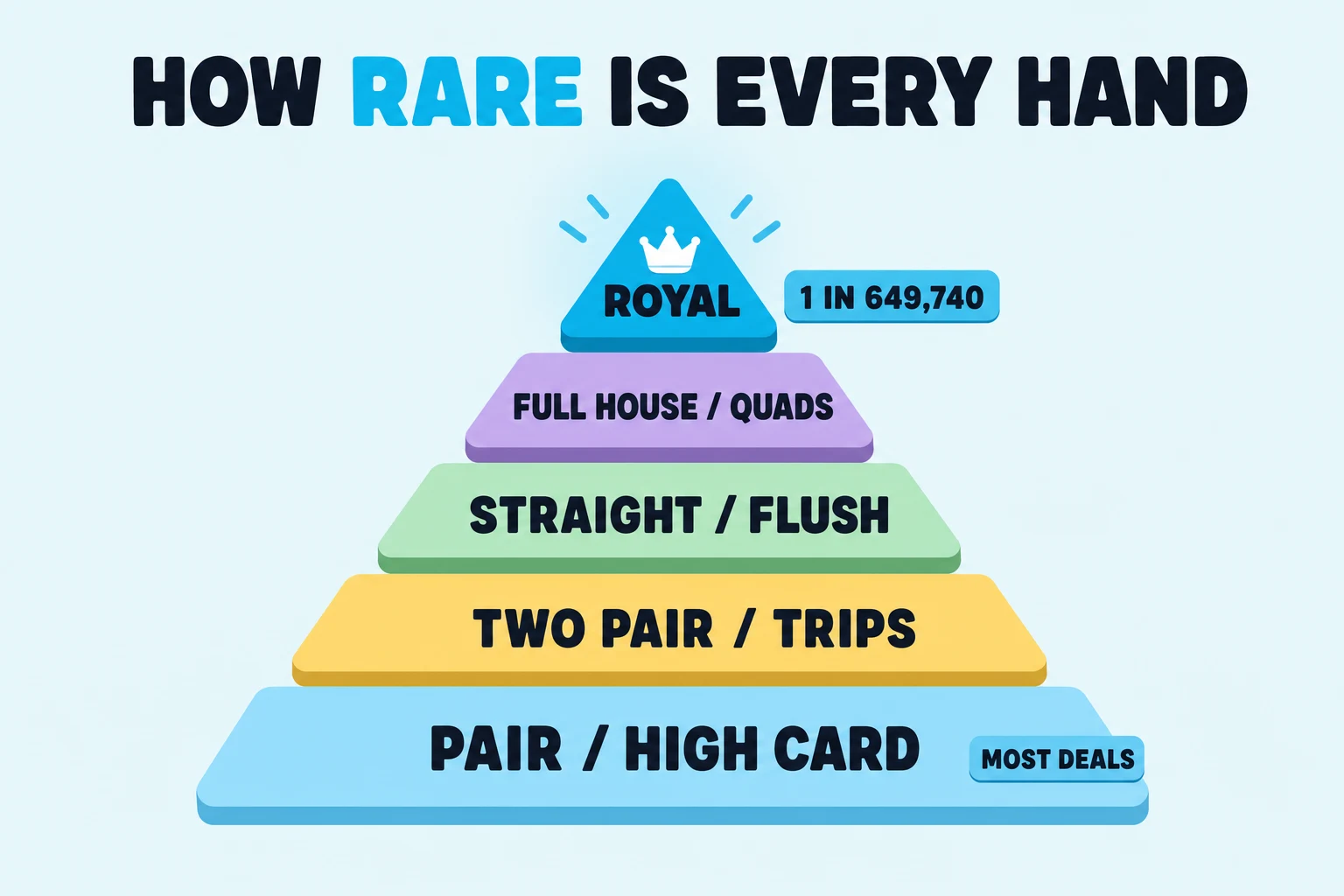
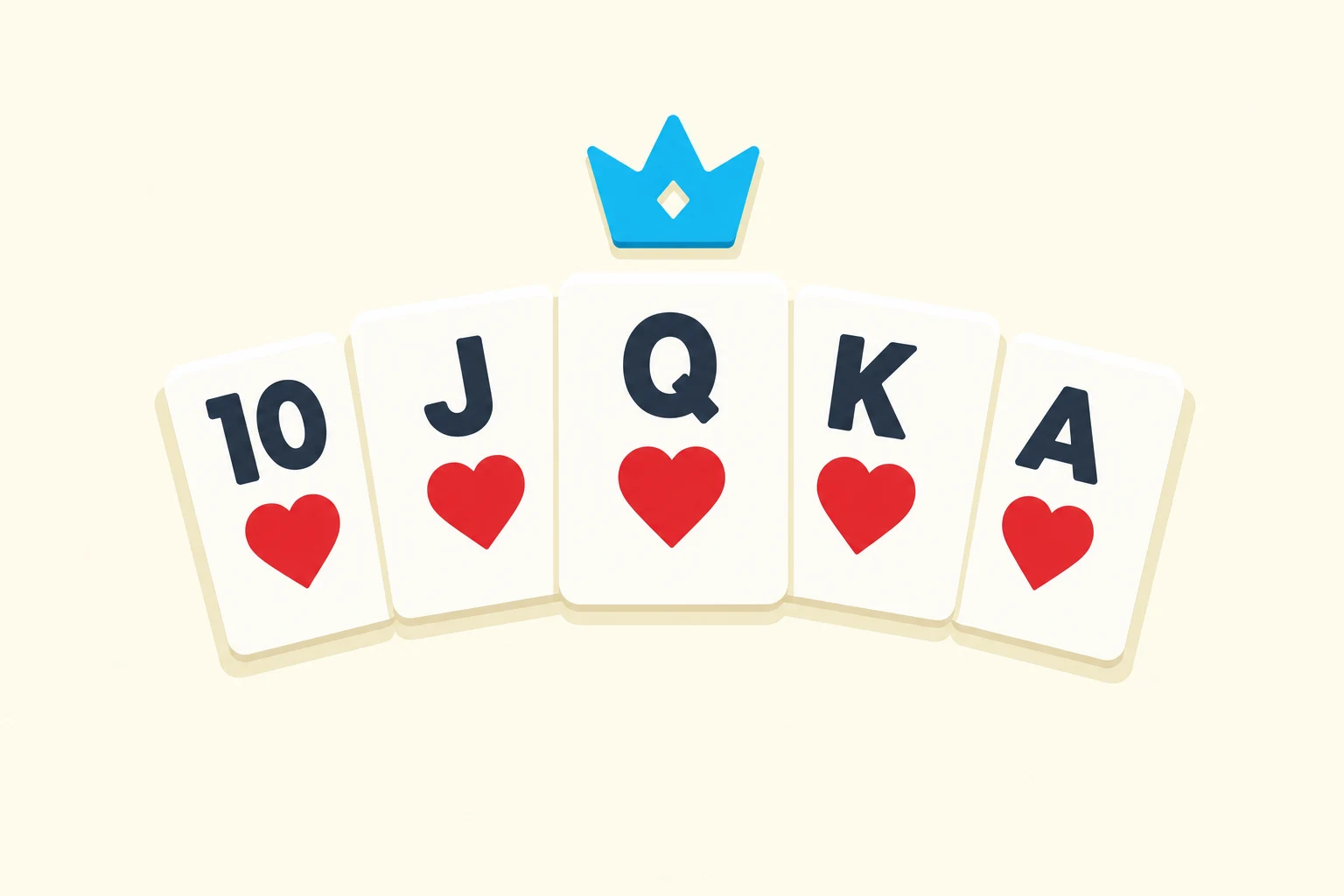
Royal Flush Odds: How Rare Is It, Really?
One deal in 649,740 makes a royal on five cards; hold'em's seven cards improve you to about 1 in 31,000 by the river. What those numbers feel like at a real table.
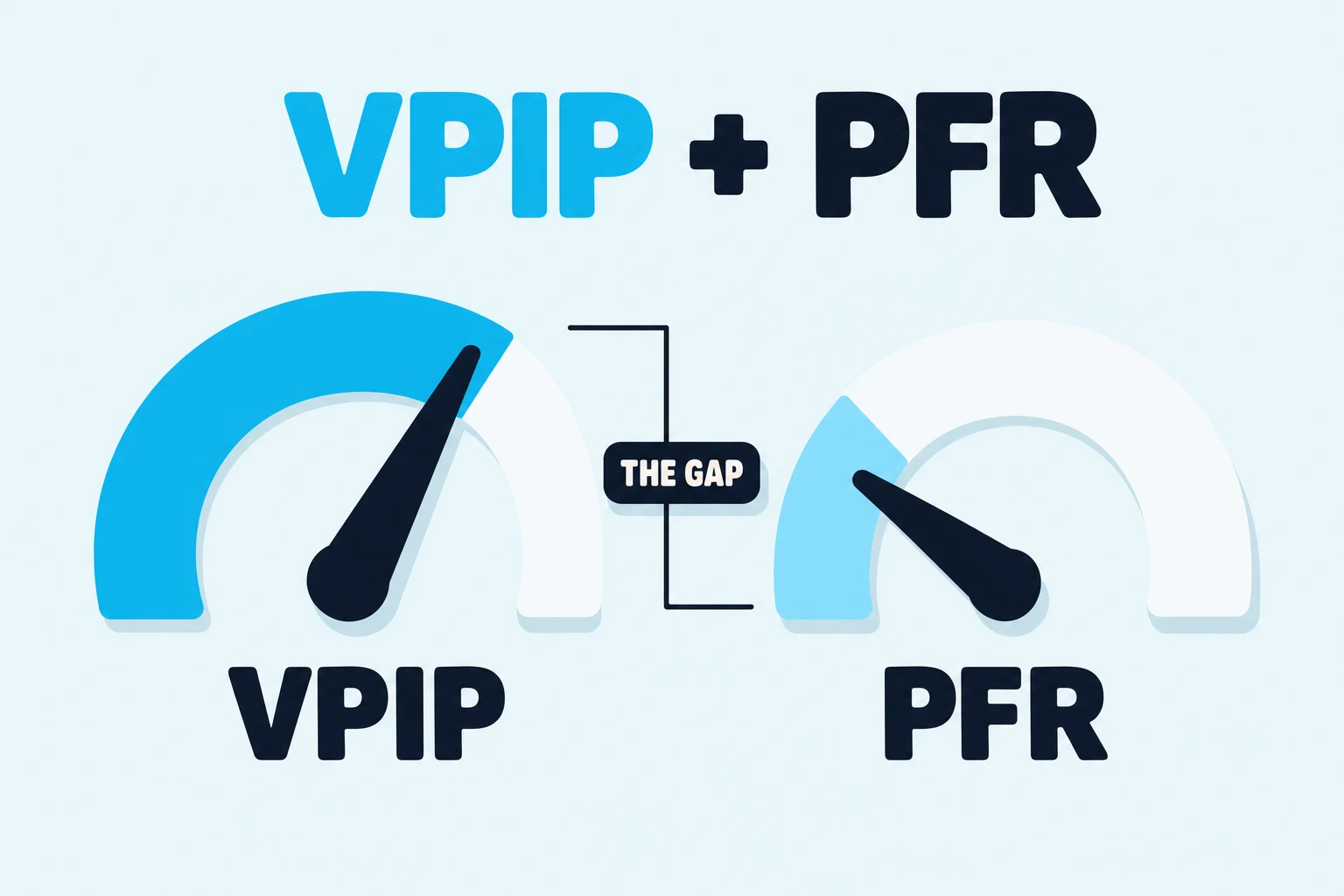
VPIP and PFR: What the Numbers and the Gap Tell You
VPIP counts how often a player puts money in voluntarily; PFR counts how often they come in raising. The two numbers together, and especially the gap between them, draw a player's whole portrait.
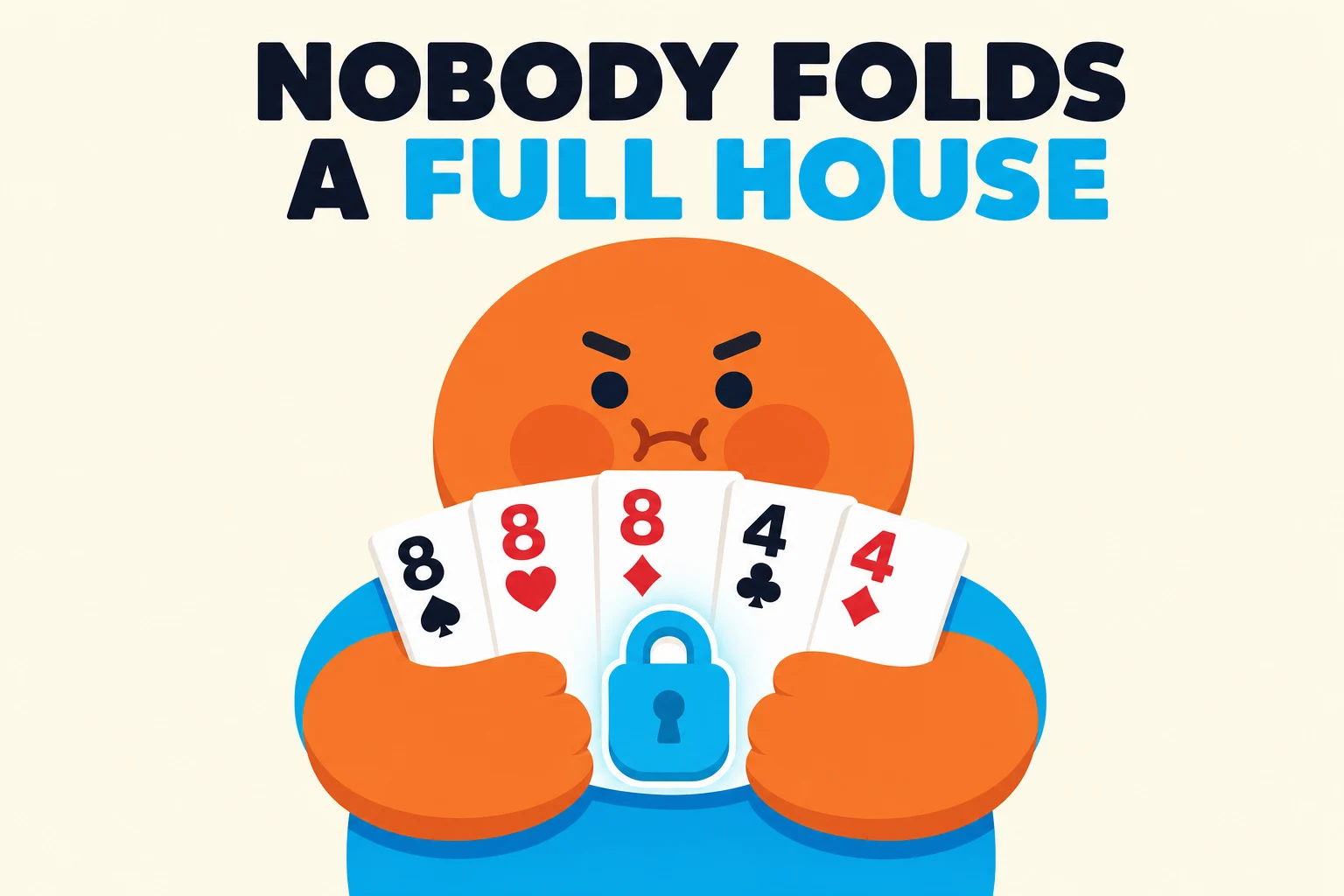
Zeebo's Theorem: Why Nobody Folds a Full House
No player is capable of folding a full house on any betting round, for any bet size. What the oldest poker theorem gets right, the two adjustments it pays for, and the three spots where it finally breaks.
How split pots actually work, with three side-pot scenarios
When two or more players show the same best five-card hand at showdown, the pot is divided evenly. The trickier case is the all-in pot that splits into a main pot and one or more side pots. Here is how each layer is built, who's eligible, and what happens to the odd chip.
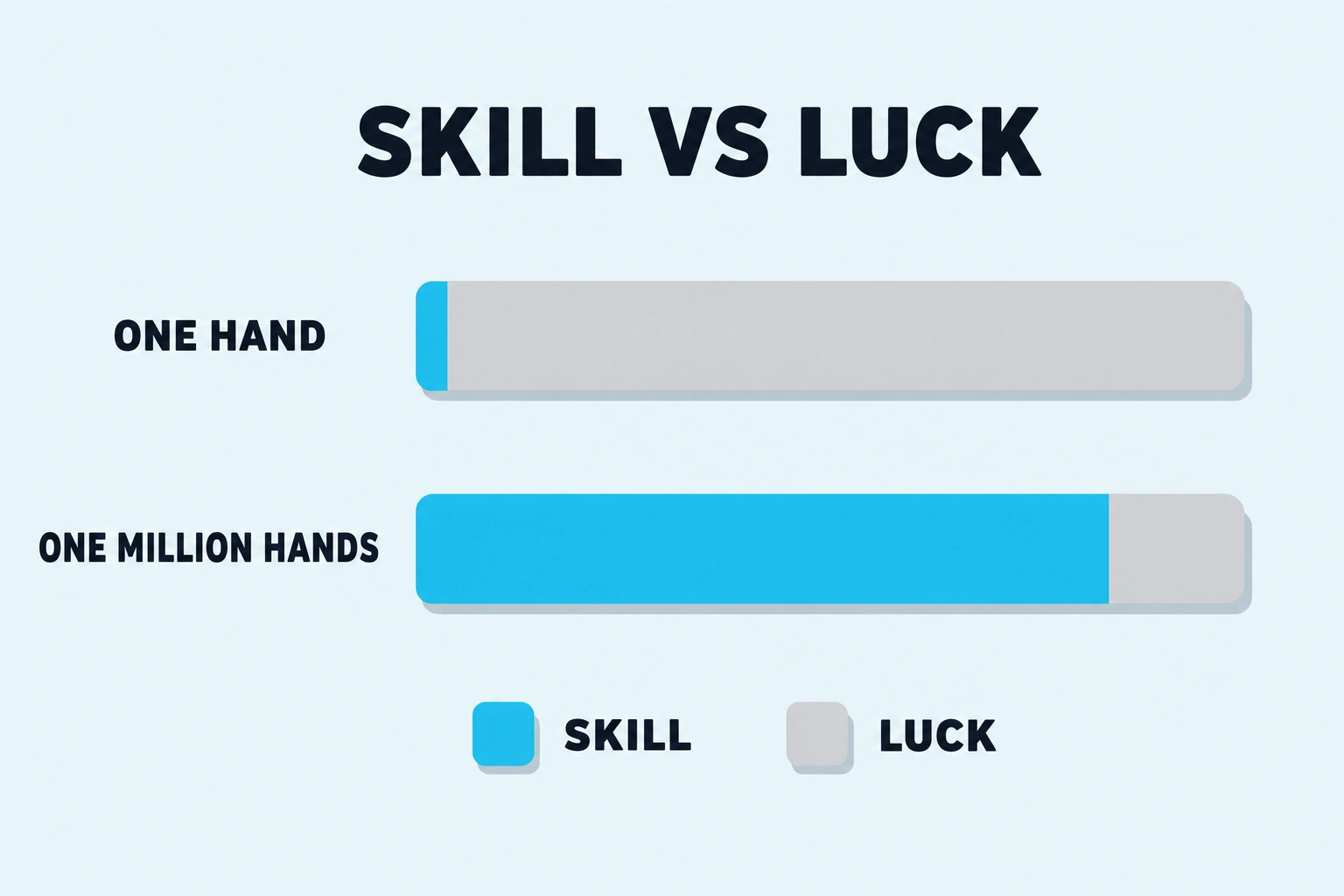
Is poker a game of skill? What the research actually shows
Five academic studies, plus a chart from our own AI evaluation, plus the math behind why one Friday night says nothing about whether you can play.
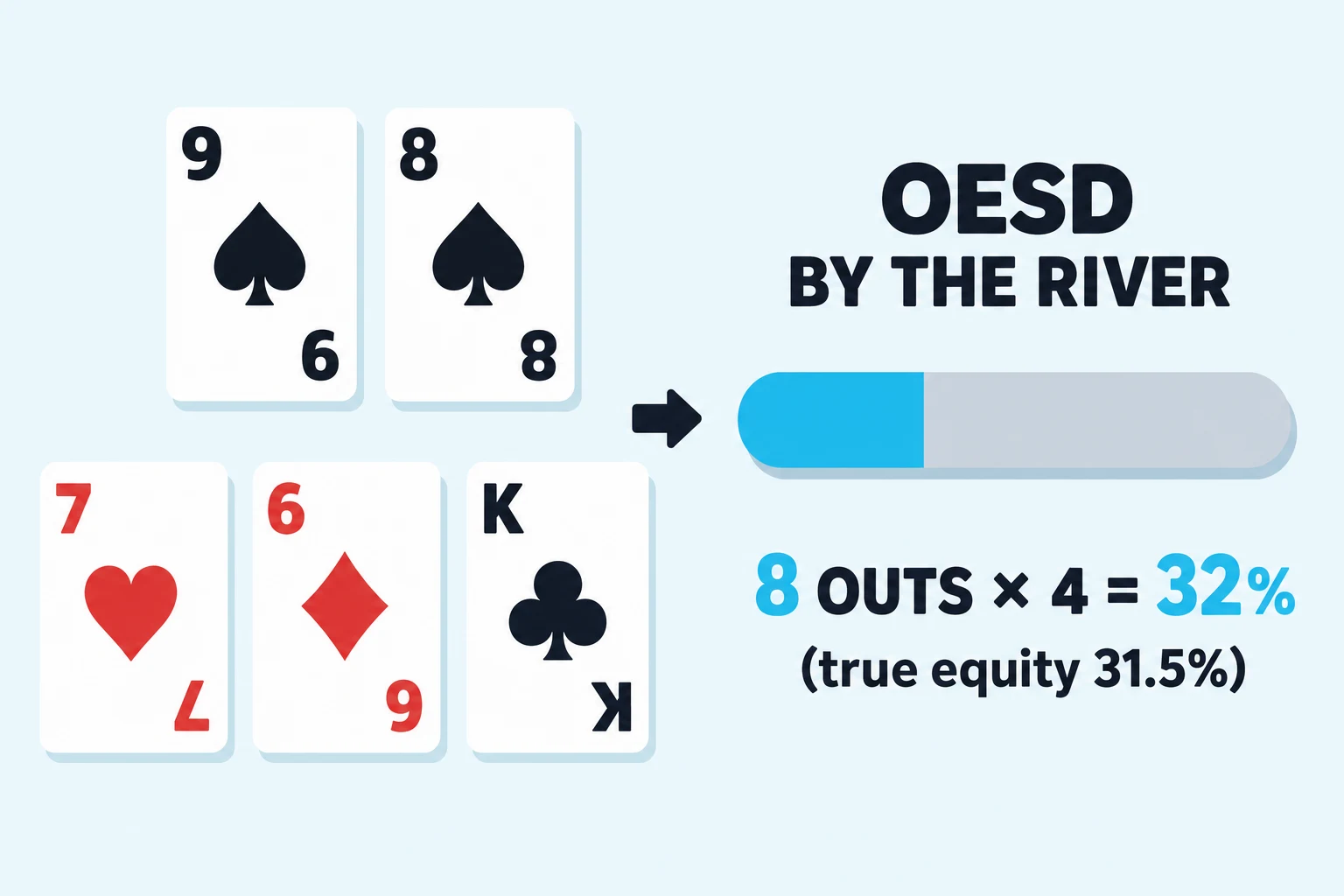
OESD Probability: 8 Outs, 31.5% by the River
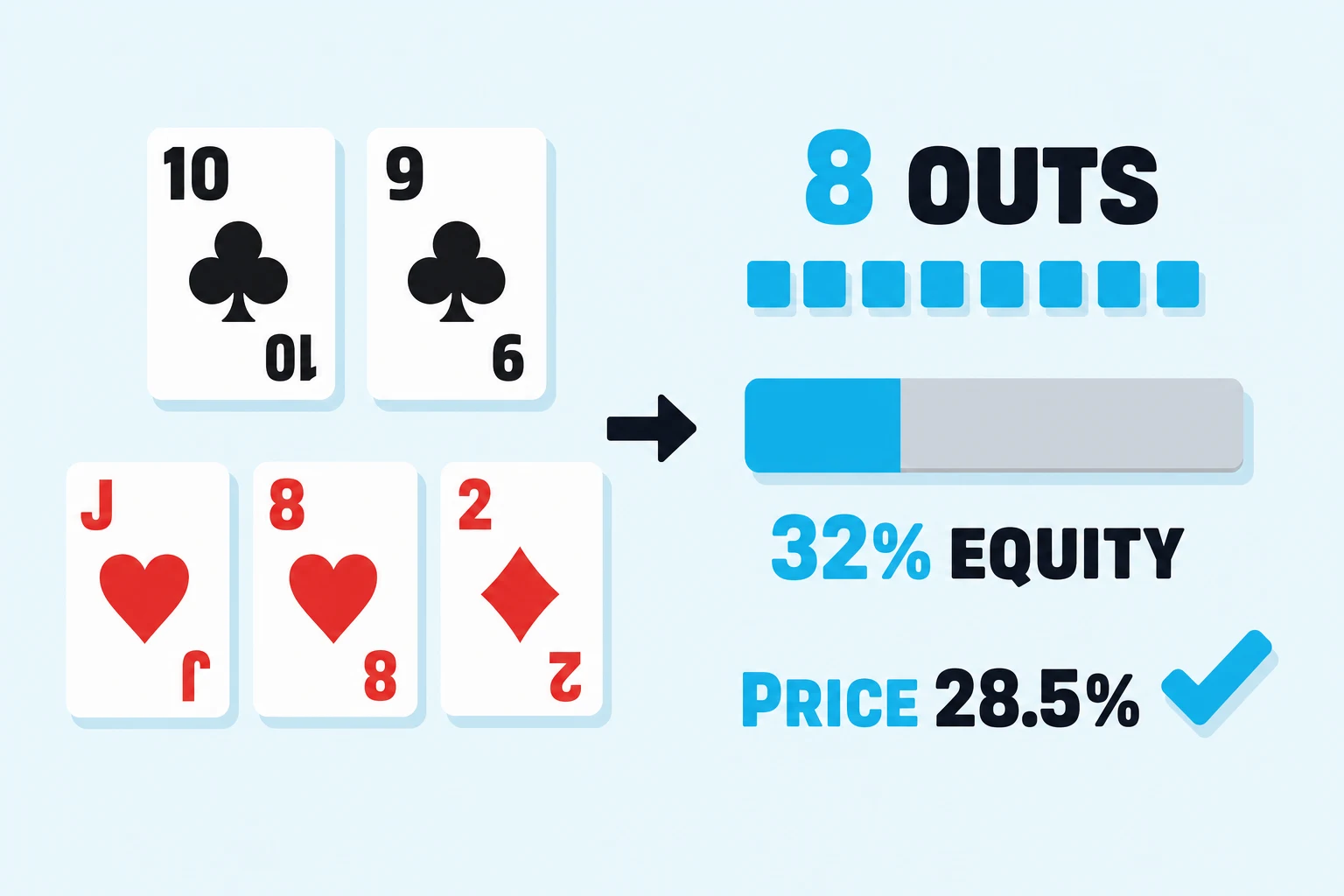
An open-ended straight draw is eight outs, and from the flop it gets there about a third of the time by the river. The math walked, three worked hands, and where the number lies.
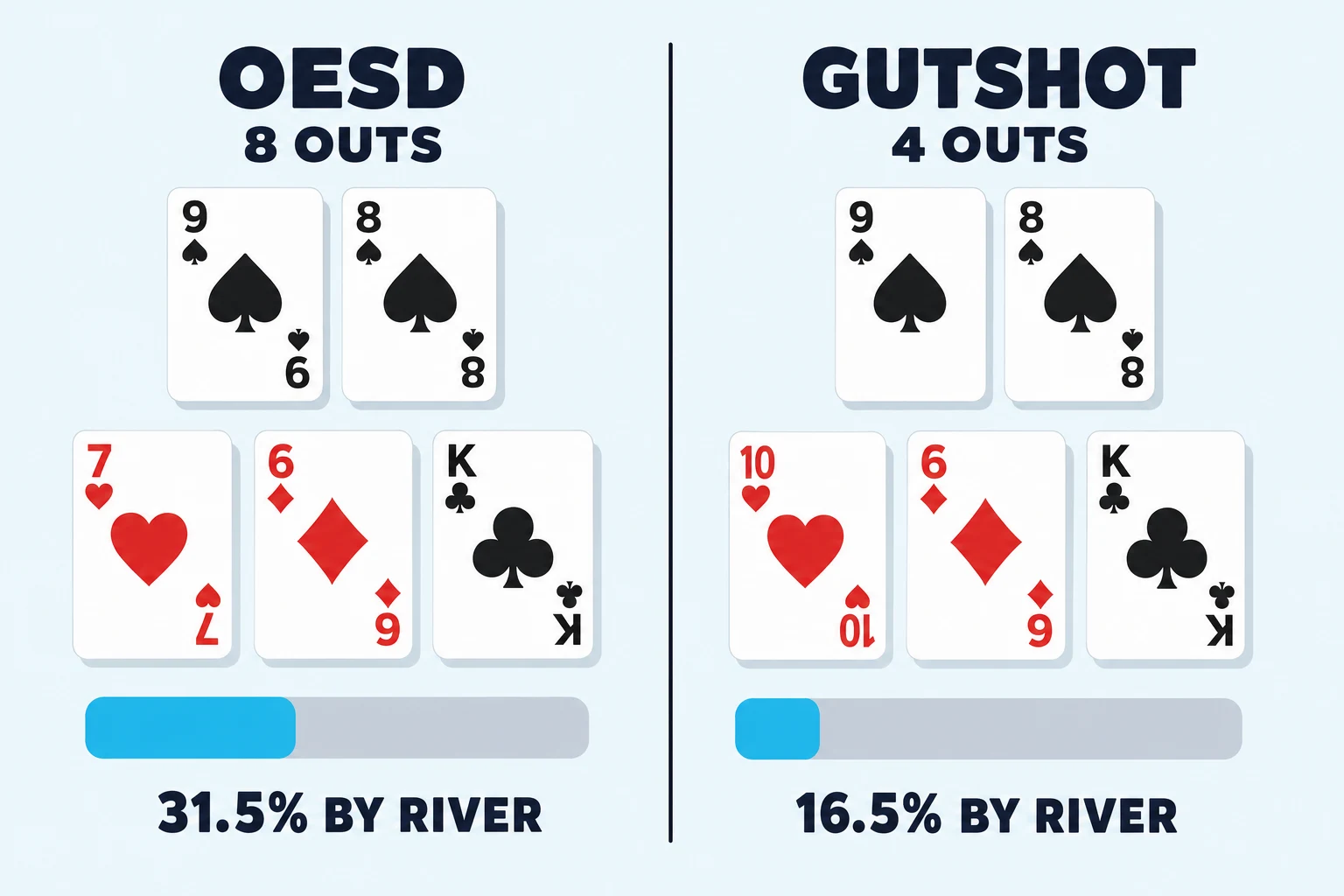
OESD vs Gutshot: Counting Straight Outs the Right Way
An OESD is 8 outs and 31.5% by the river. A gutshot is 4 outs and 16.5%. The math, three worked hands, and when the gap closes or widens.
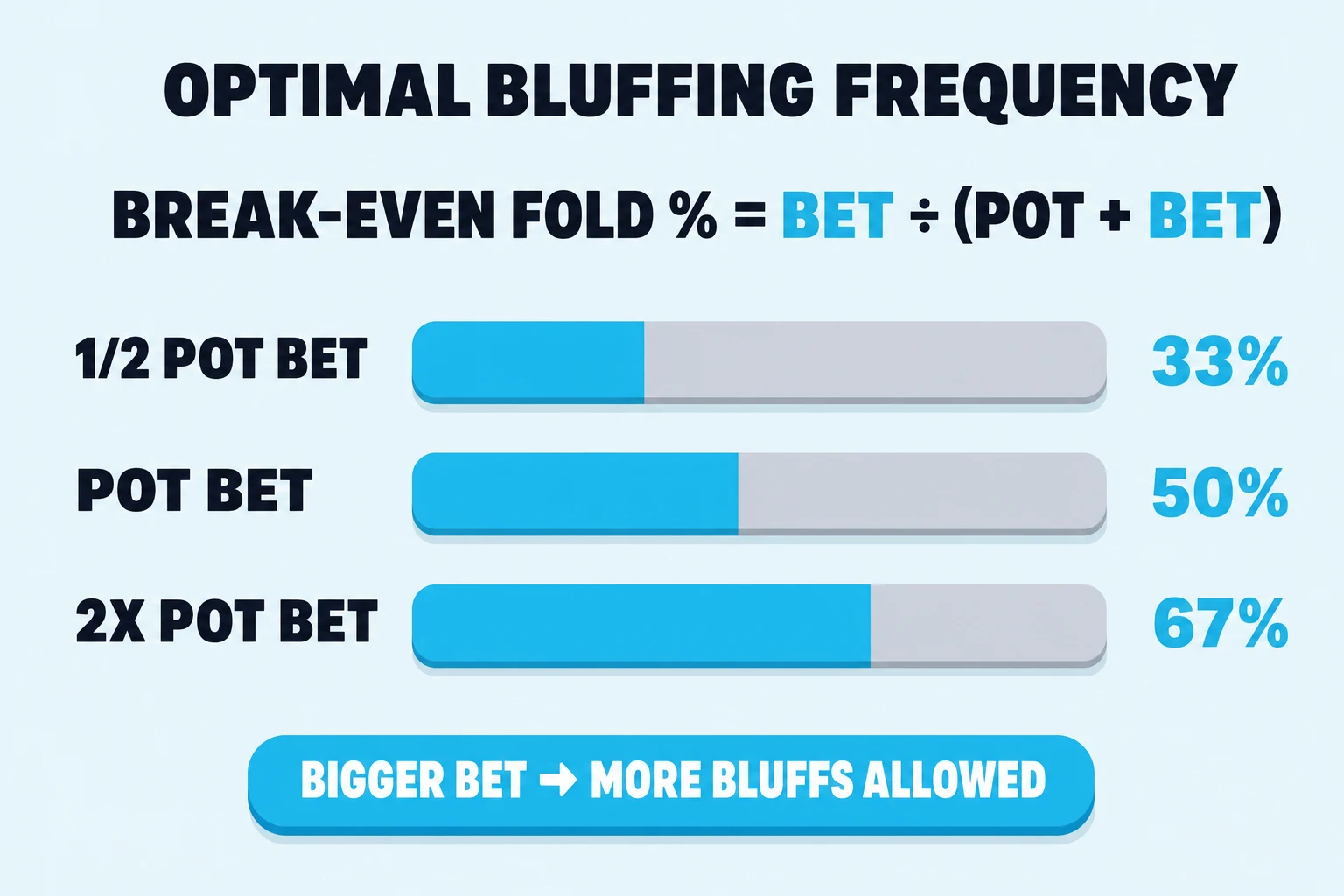
Optimal bluffing frequency: the formula and when it lies
The break-even formula for a bluff is risk over risk plus reward. The mirror is your minimum defense frequency. The third number, bluff share of the betting range, is set by the price your bet gives the caller.
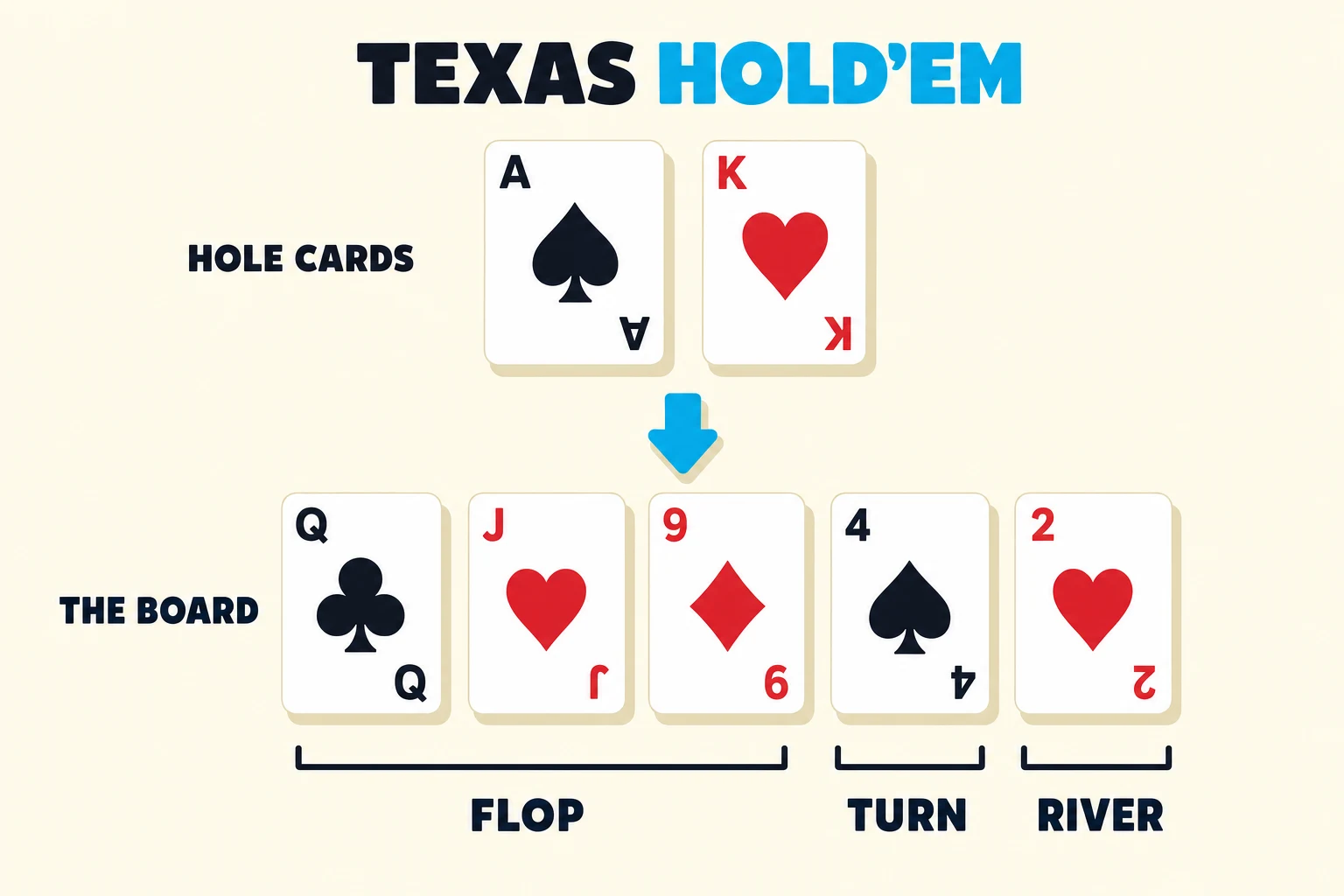
Texas Hold'em rules: a beginner's guide to a hand of poker
How a hand of Texas Hold'em is dealt, bet, and won. The four streets, the five legal actions on your turn, no-limit betting, the best-five rule, and the showdown.
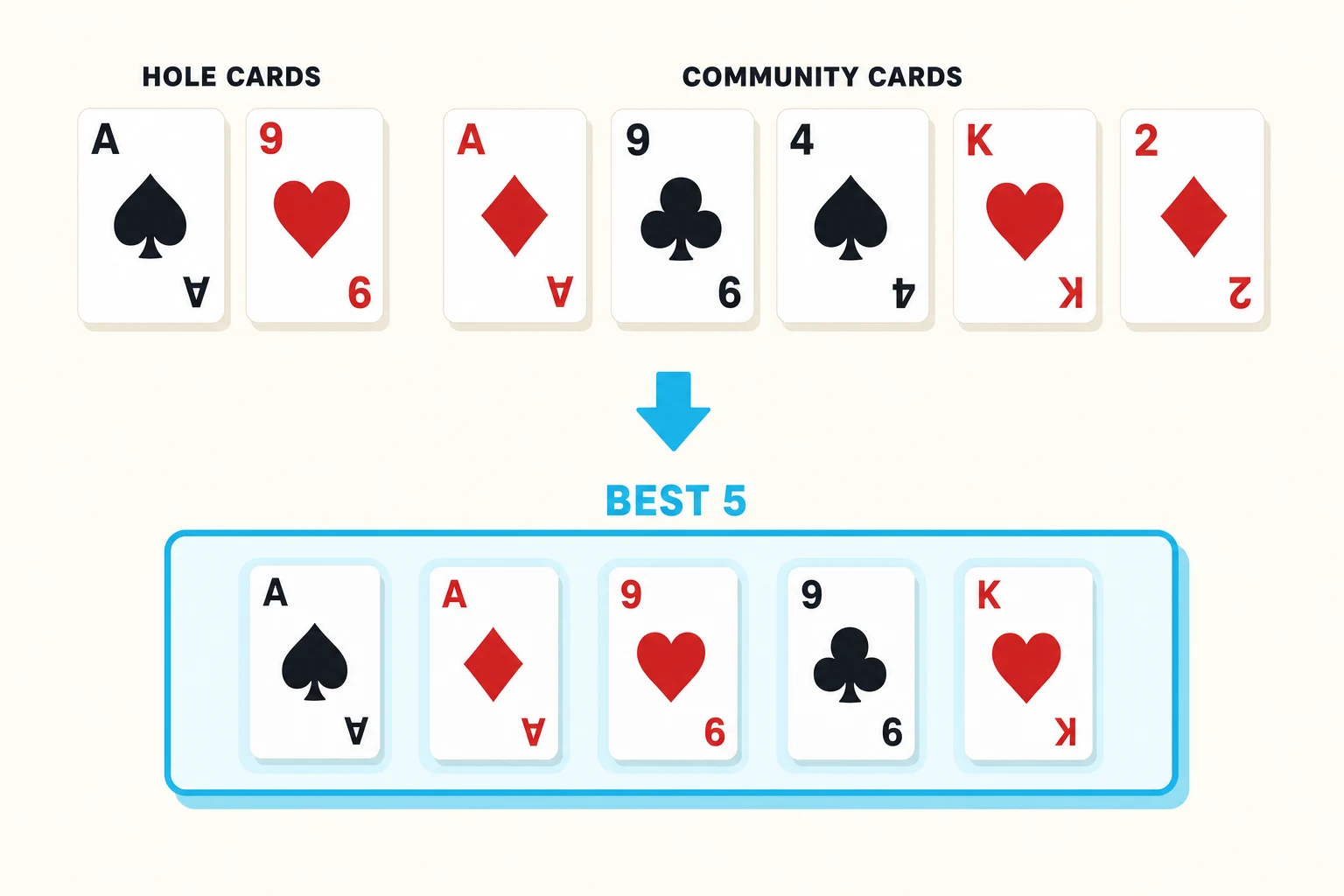
Texas Hold'em: the best five from seven cards rule
Your Hold'em hand is the best five cards drawn from your two hole cards and the five community cards. You can use zero, one, or both. Worked examples, ties, and the spots where the rule trips beginners.
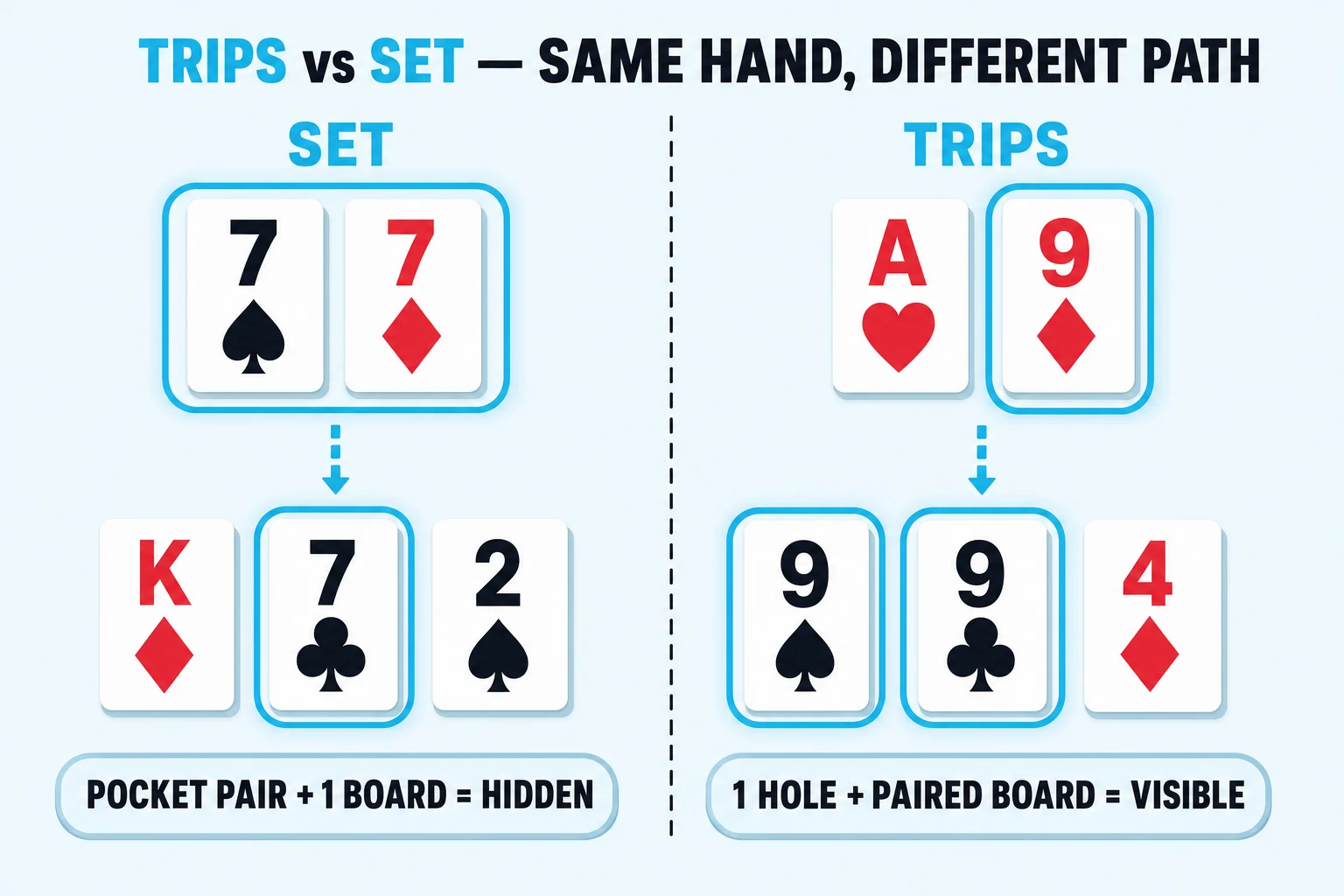
Trips vs Set: same hand, different stories
Both make three of a kind, but the path matters. Here is the one-glance test, three worked hands, and why a set quietly prints money while trips have to fight for it.
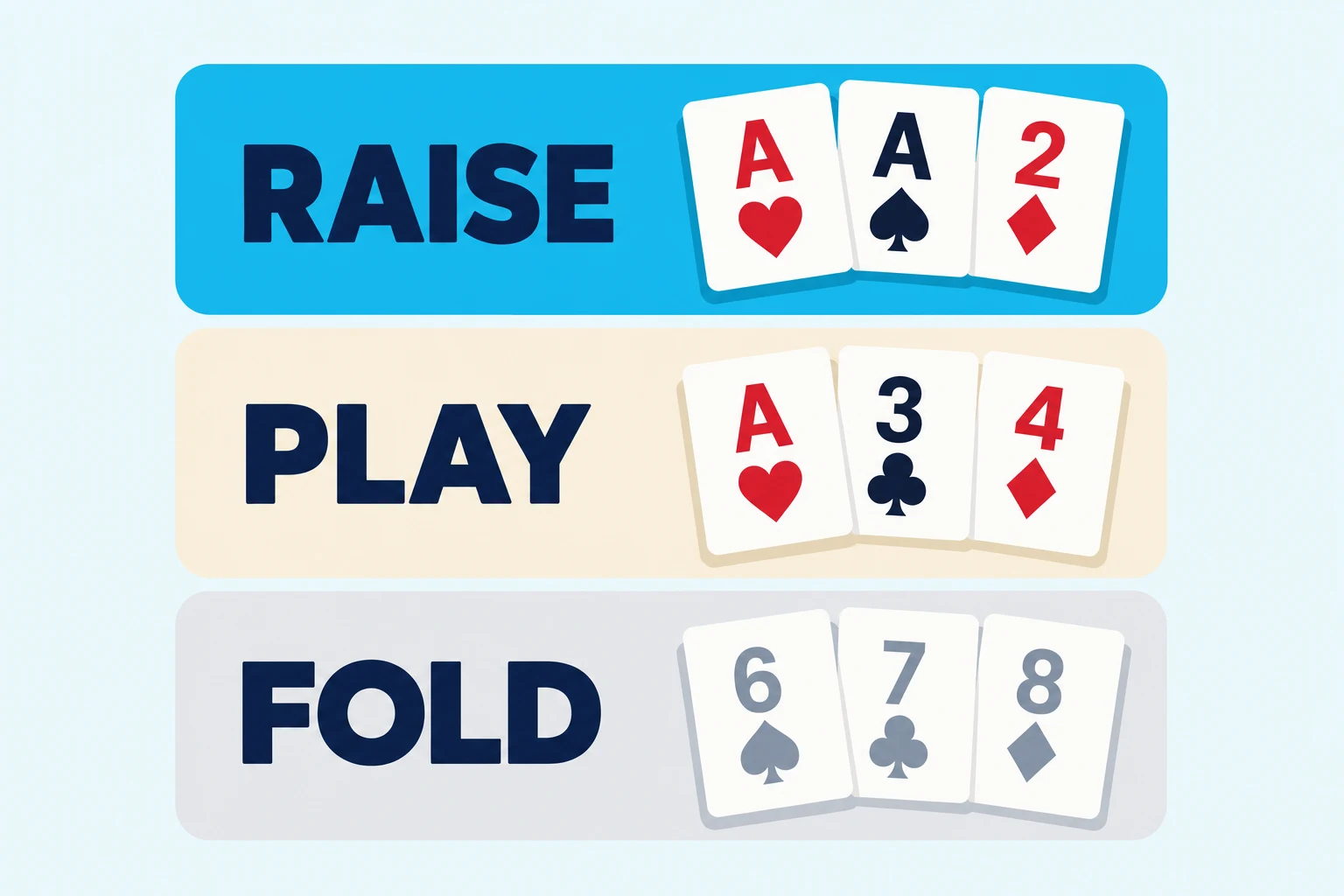
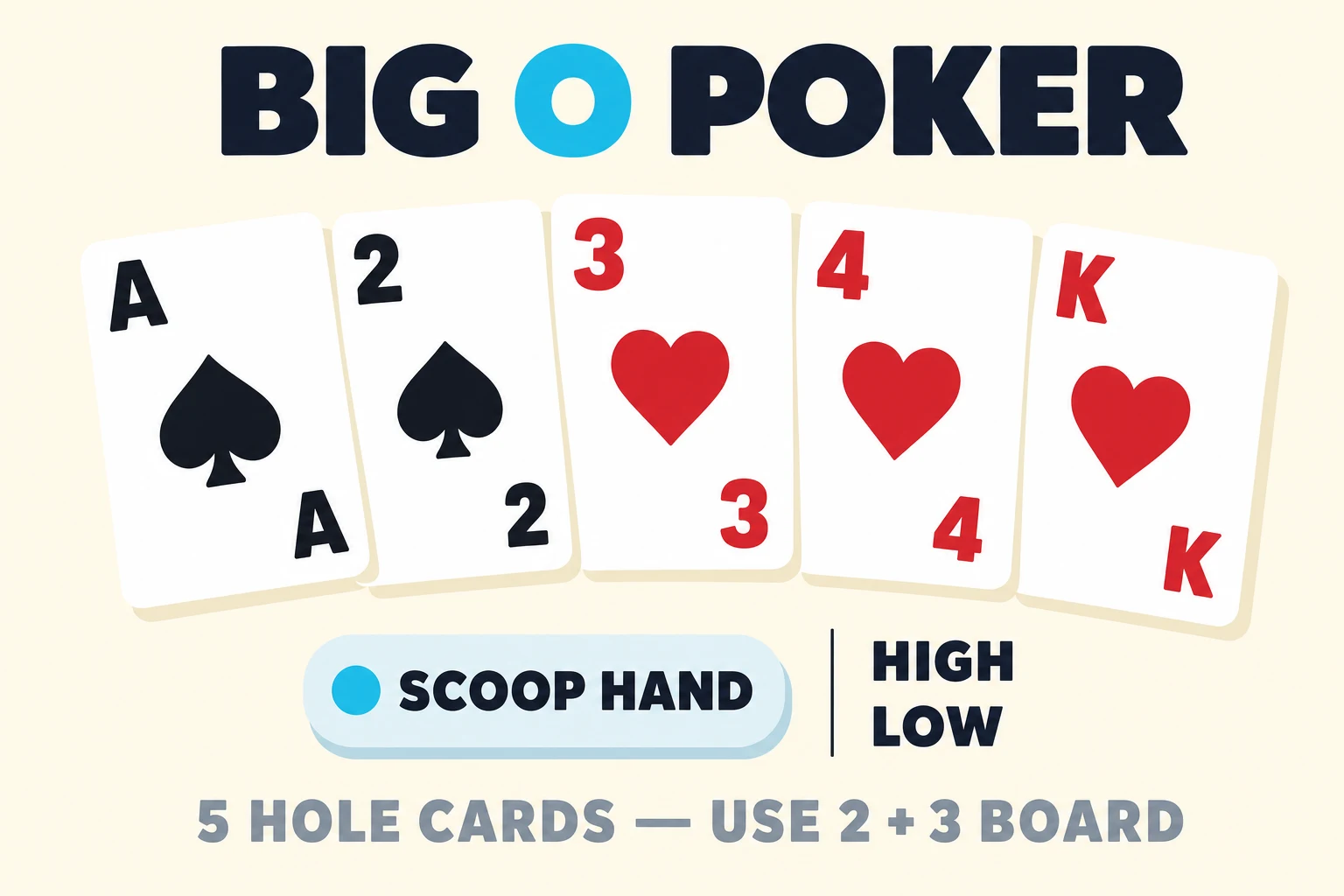
Best Big O Starting Hands: What to Raise, Play, and Fold
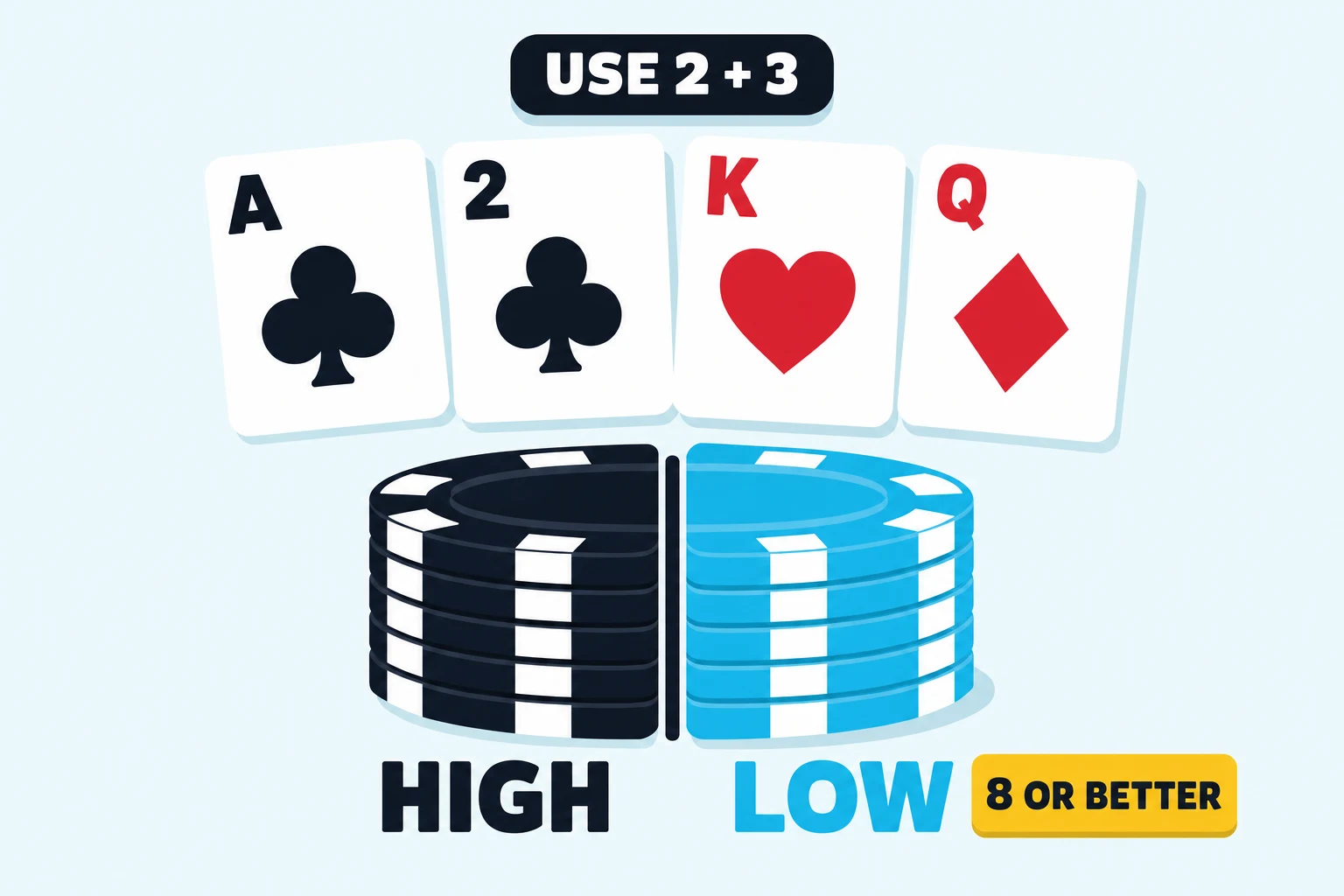
The best Big O starting hands are ace-based, lean on a deuce, and can win the high half as well as the low. The shapes worth raising, the ones worth a cheap look, and the reason raising a monster can be the mistake.
Big O Poker: Rules, Hand Selection, and Beginner Mistakes
Big O is 5-card pot-limit Omaha hi-lo with an 8-or-better qualifier. The rules, what makes a starting hand strong, three worked hands, and the five mistakes that drain bankrolls fast.
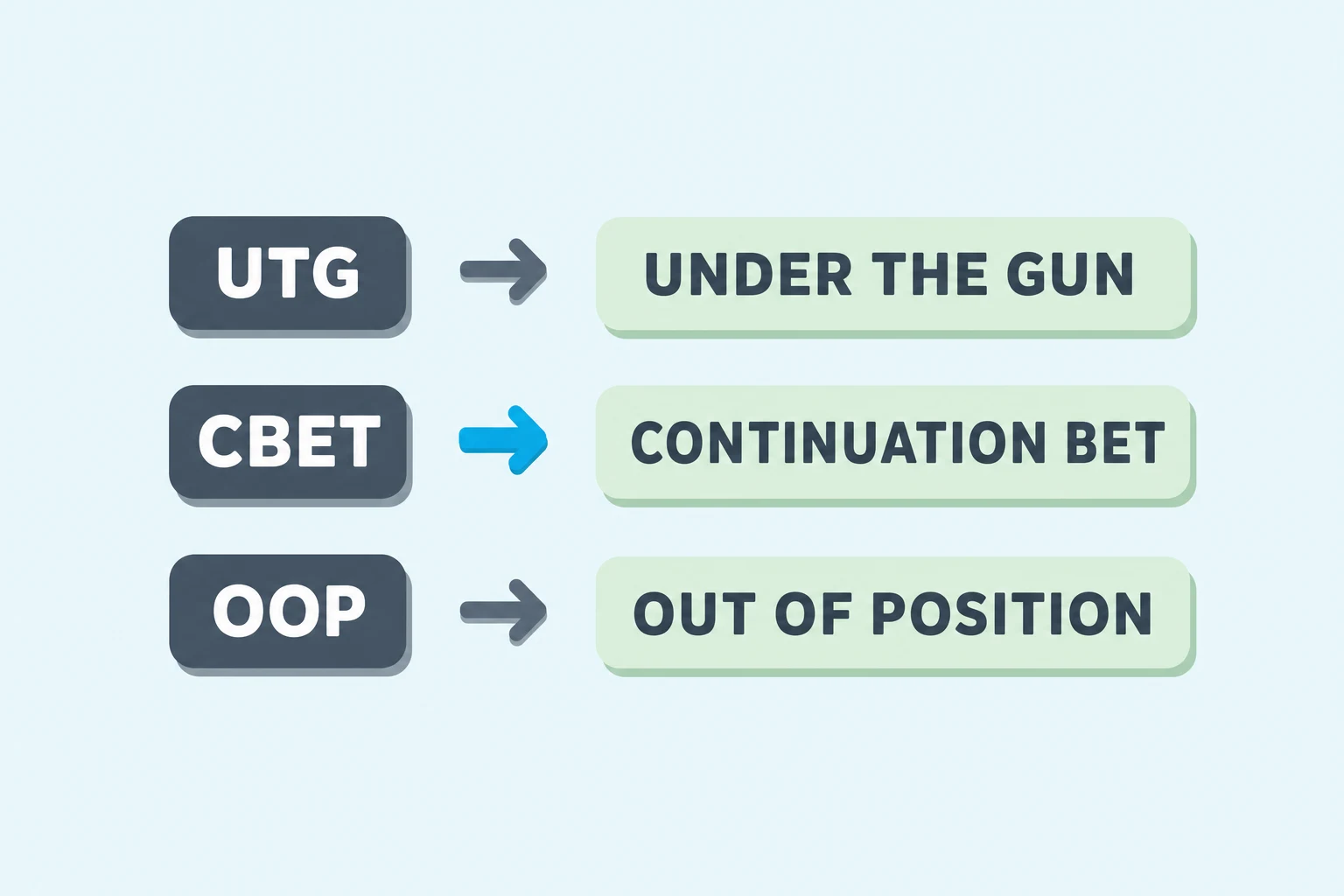
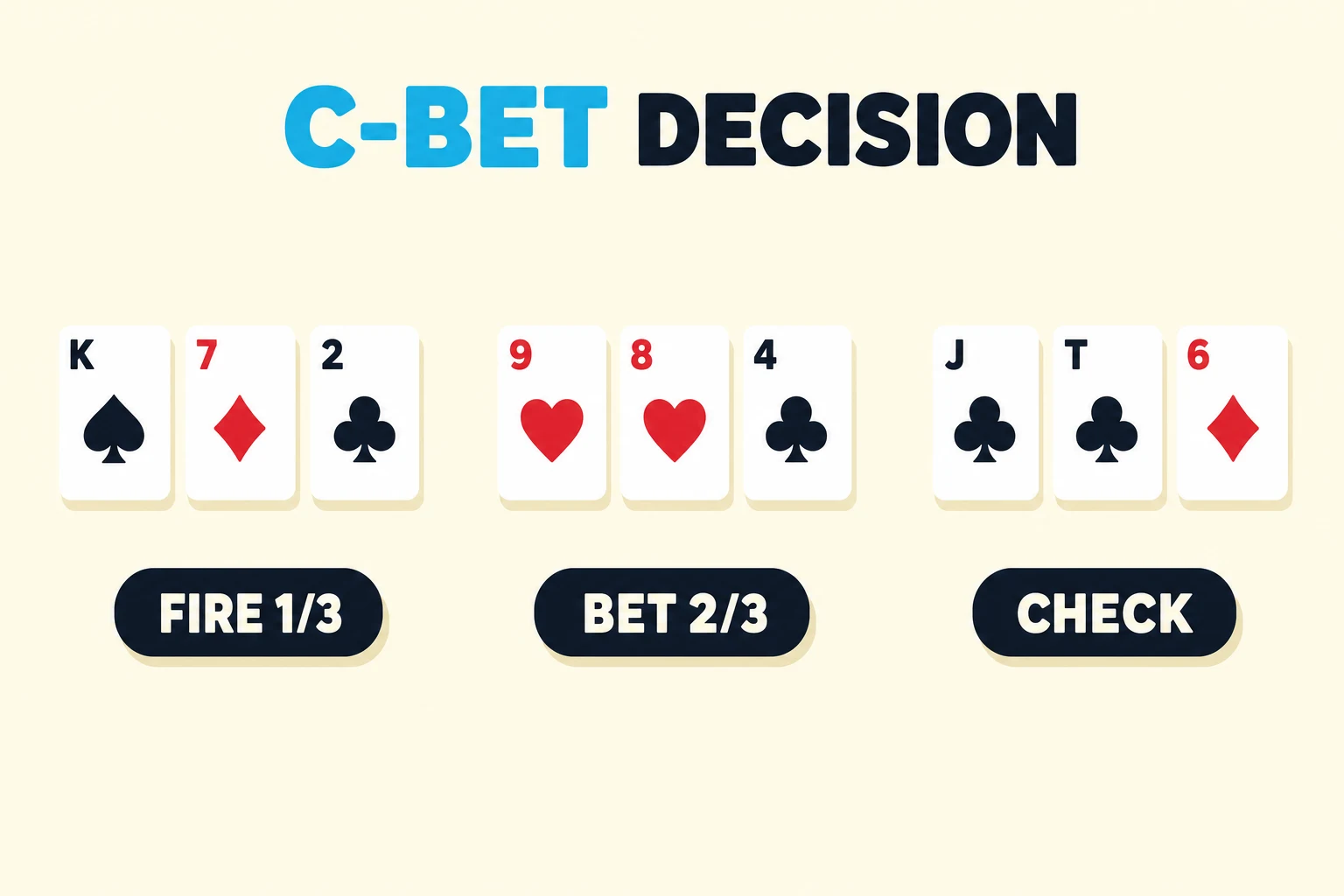
C-bet strategy: when to fire the flop and when to check
The preflop raiser's flop bet shouldn't be automatic. Three boards walked, the sizing pegs that work, and the spots where firing every flop quietly bleeds money.
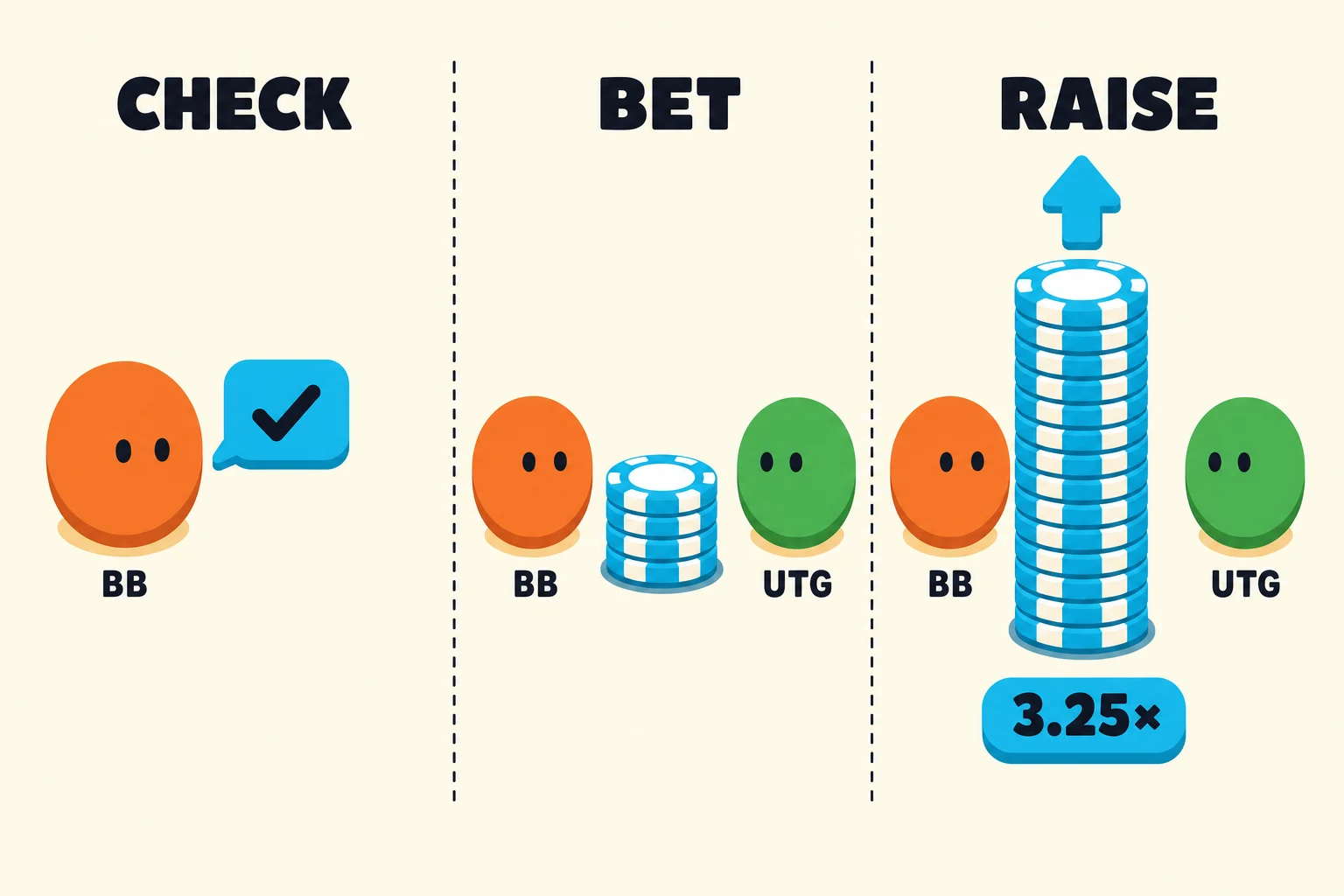
Check-raise strategy: when to fire, how big, and the trap
Check-raise turns a weak-looking check into a hard punch. Walk through the two camps, the sizing table, three worked hands, and where the move gets you in trouble.
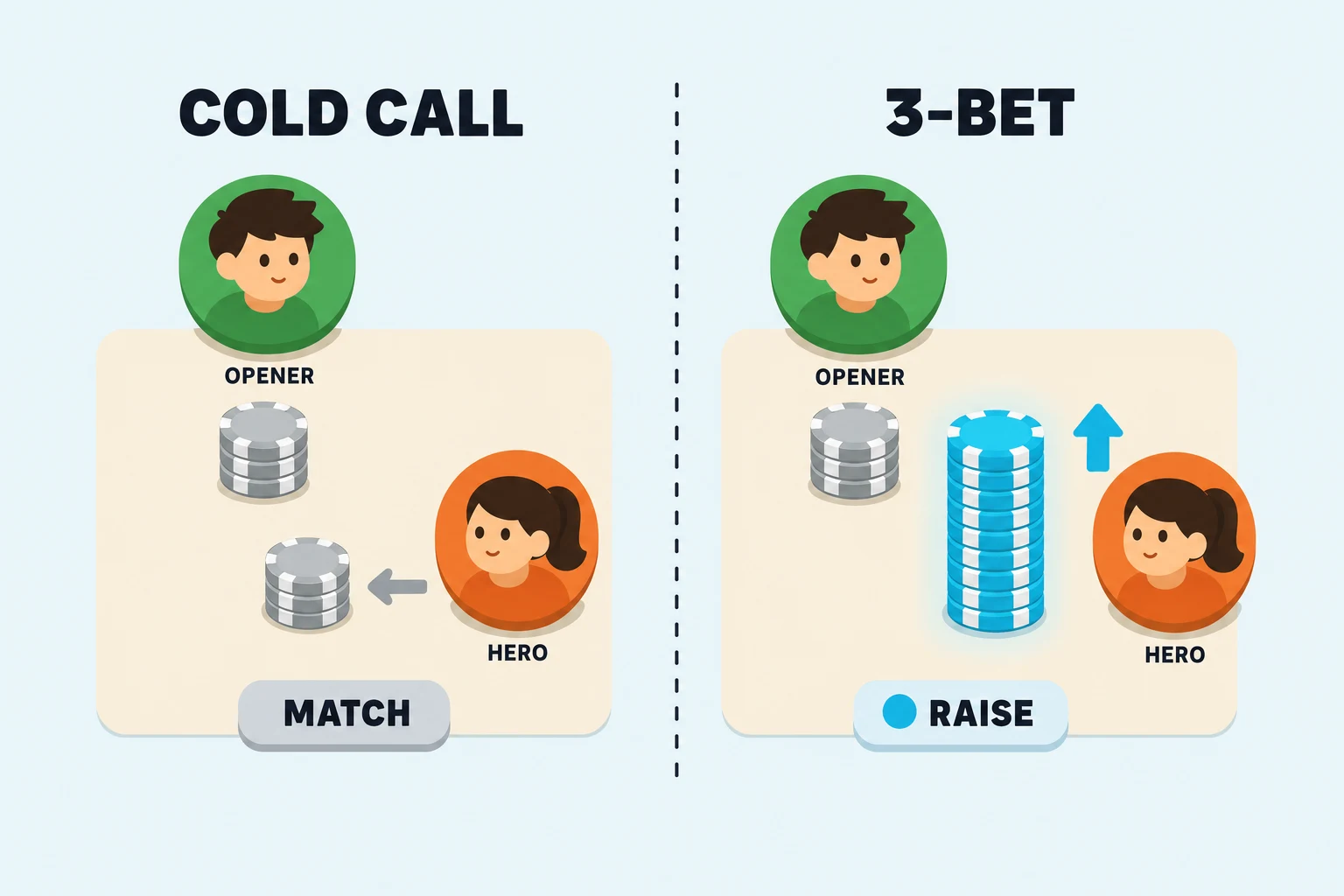
Cold call vs 3-bet: which to pick in late position
When the action folds to an opener and comes to you, the call/raise decision hinges on four switches. Walk through the table, three worked hands, and the spots where the rule lies.
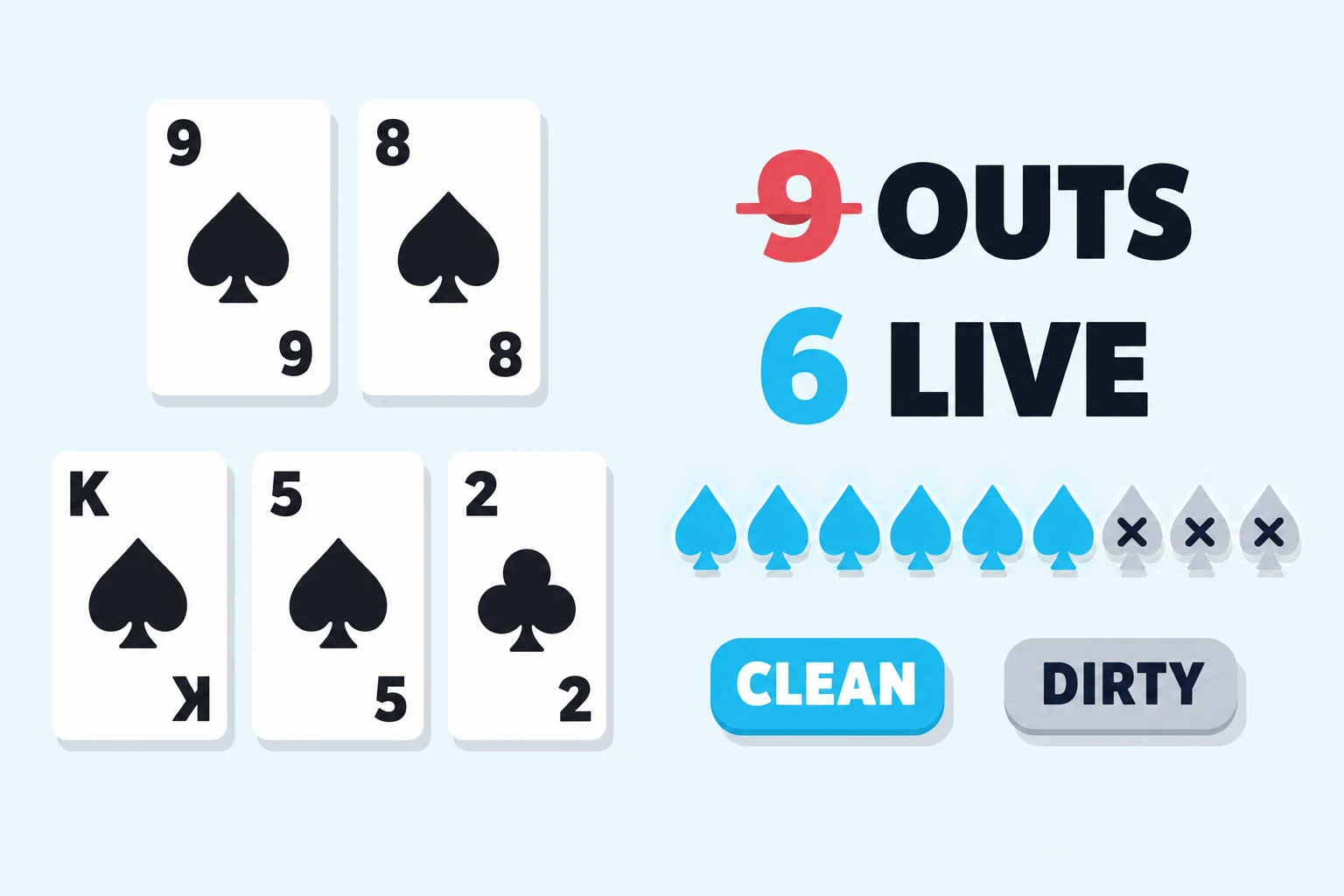
Counting outs: clean, dirty, and the ones in between
Some outs win you the hand. Some lose you more money when they hit. Three worked hands and a five-second routine for discounting outs at the table.
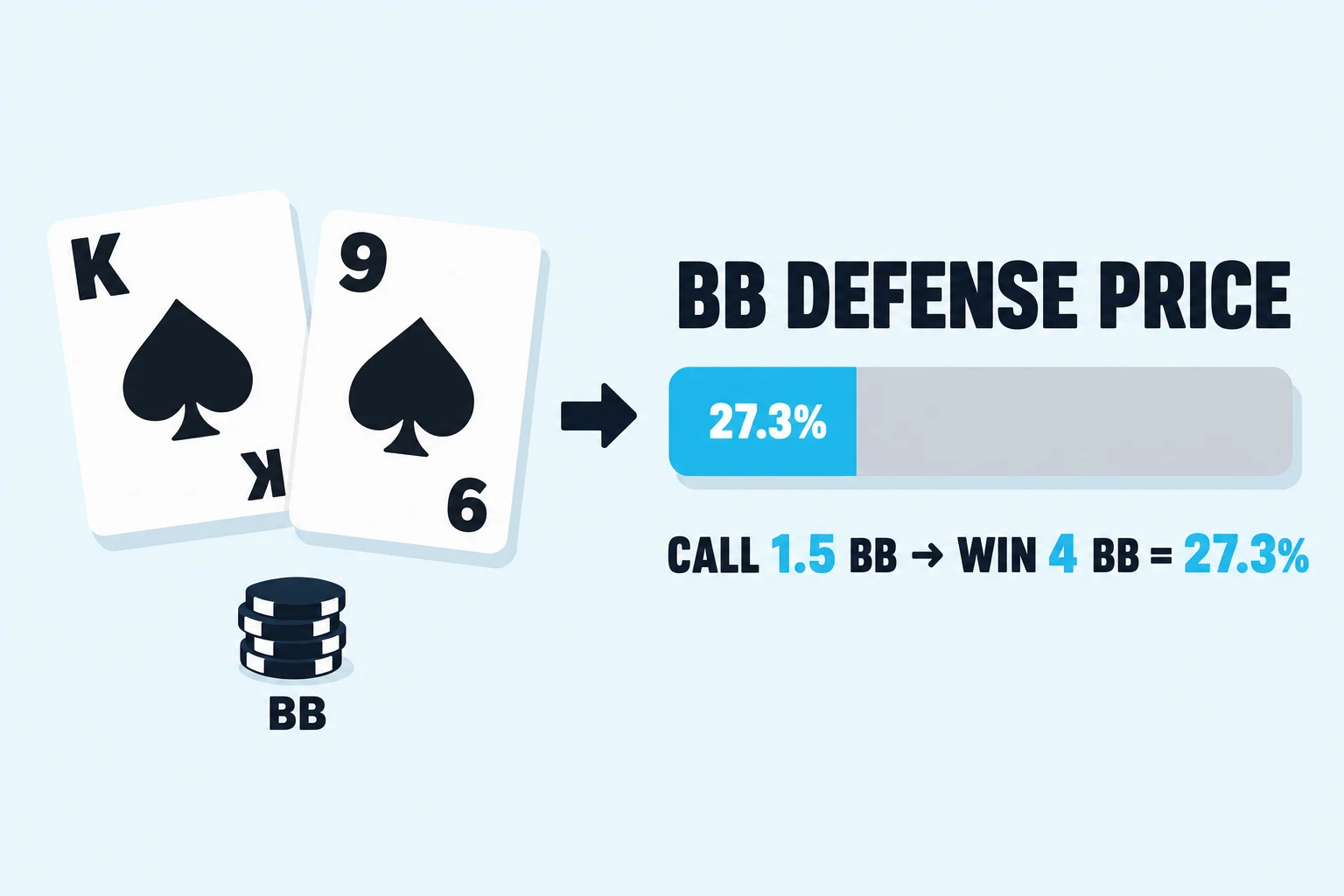
Defending Your Big Blind: A Math-First Guide
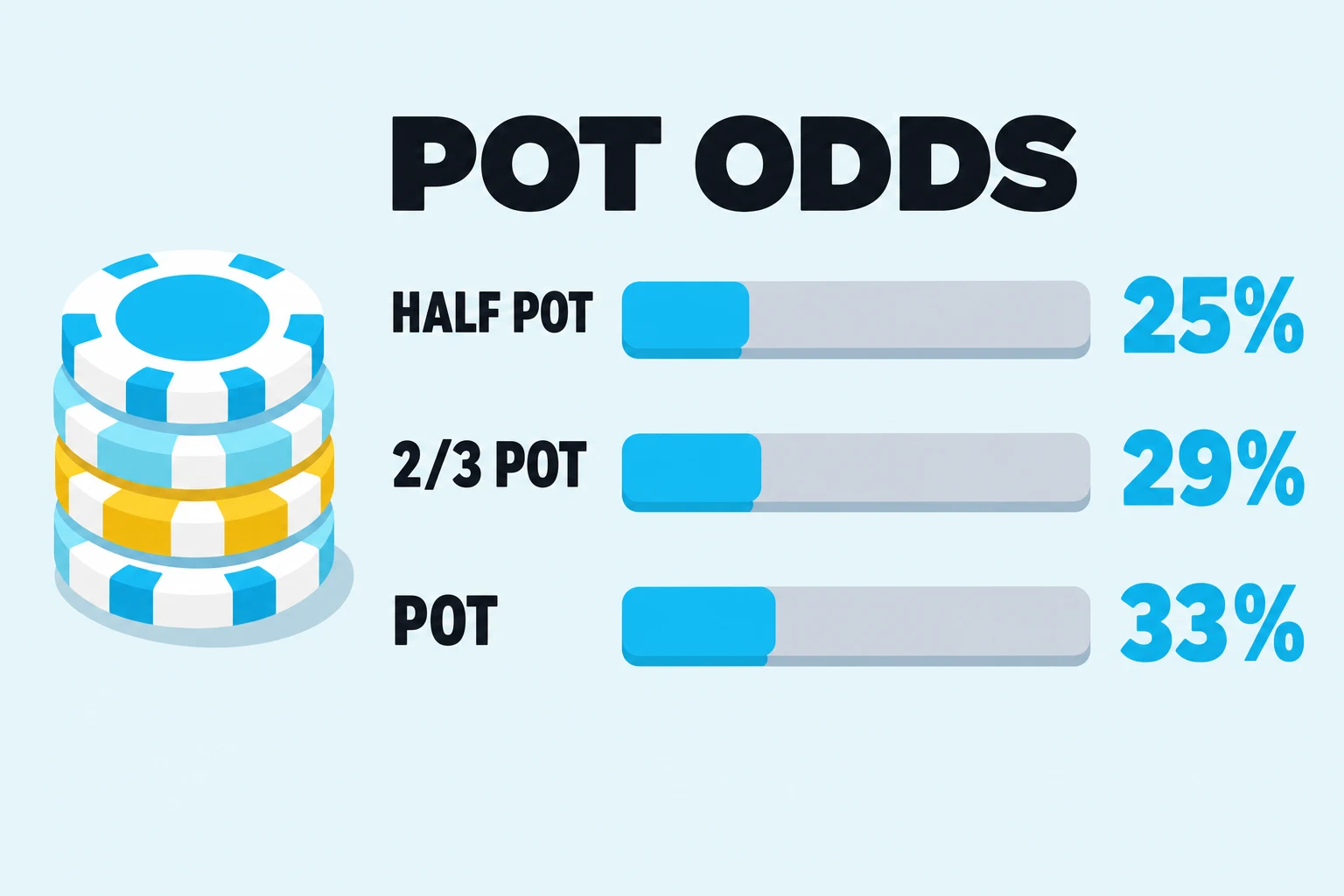
Facing a 2.5x button open from the big blind, you need 27.3% equity to call. The math walked, an MDF table, three worked hands, and the leaks the price hides.
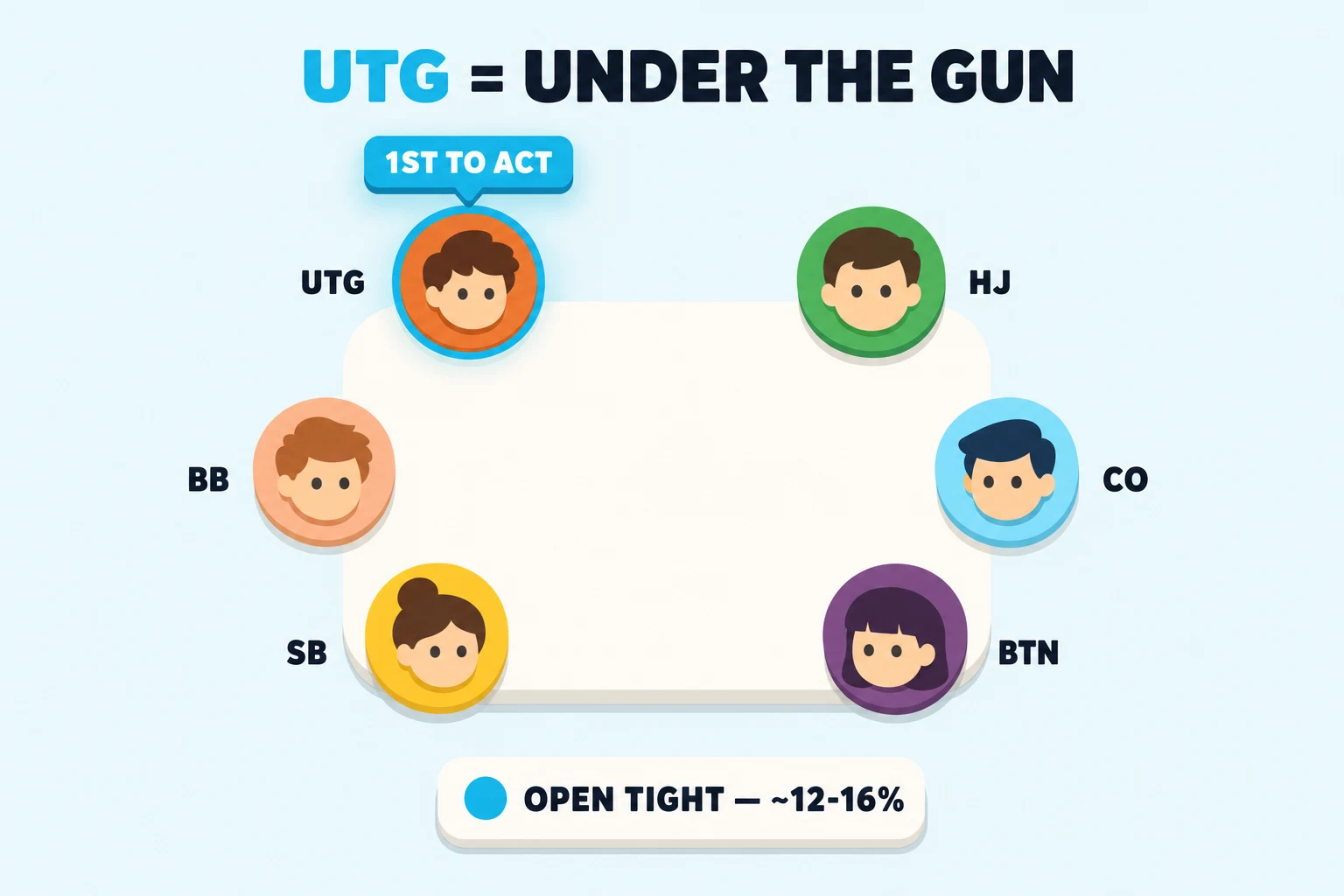
How to Play Under the Gun (UTG): Ranges and Leaks
Under the gun is the toughest seat preflop. Open tight, size to thin the field, and avoid the three leaks that cost UTG players the most.
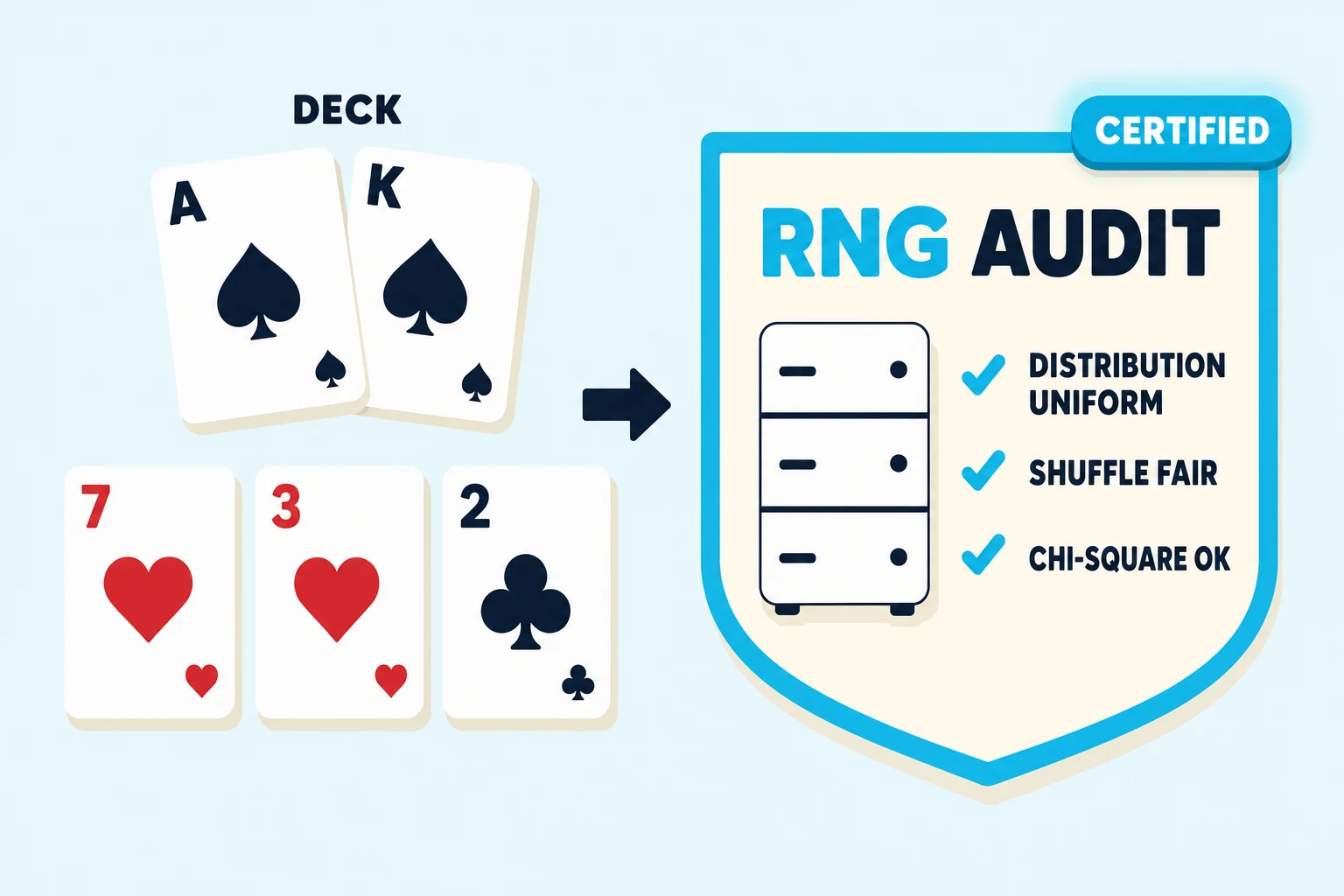
Poker RNG: shuffles, audits, and "is poker rigged"
How online poker shuffles a deck, what an RNG audit actually certifies, and why the patterns you notice at the table are almost always variance, not rigging.
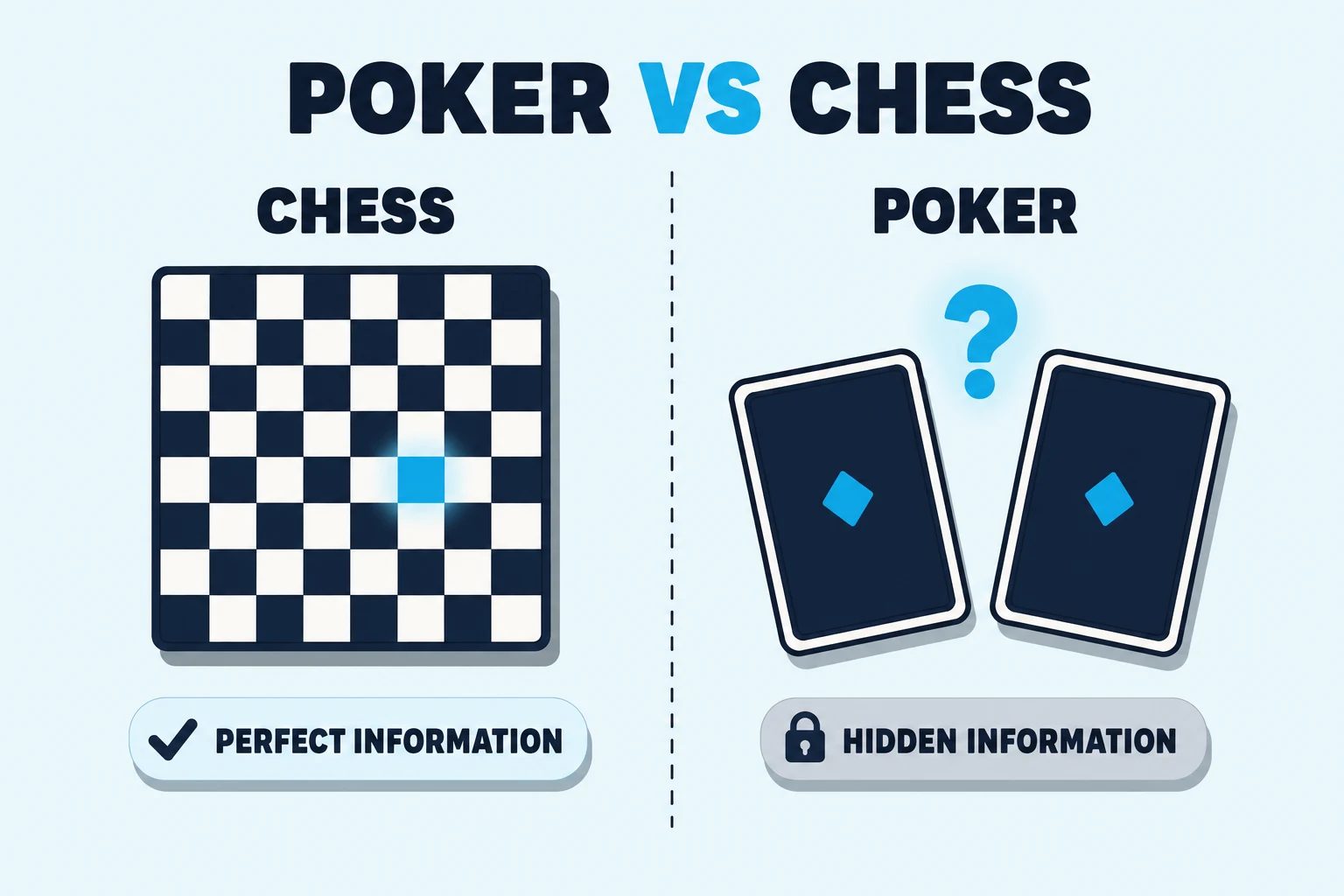
Poker vs Chess: Two Skill Games, Very Different Reps
Both reward thinking, but the thinking is shaped differently. Chess is perfect information; poker is decision-making under uncertainty — and that single split changes how you practice, how you measure progress, and what 'getting better' even means.
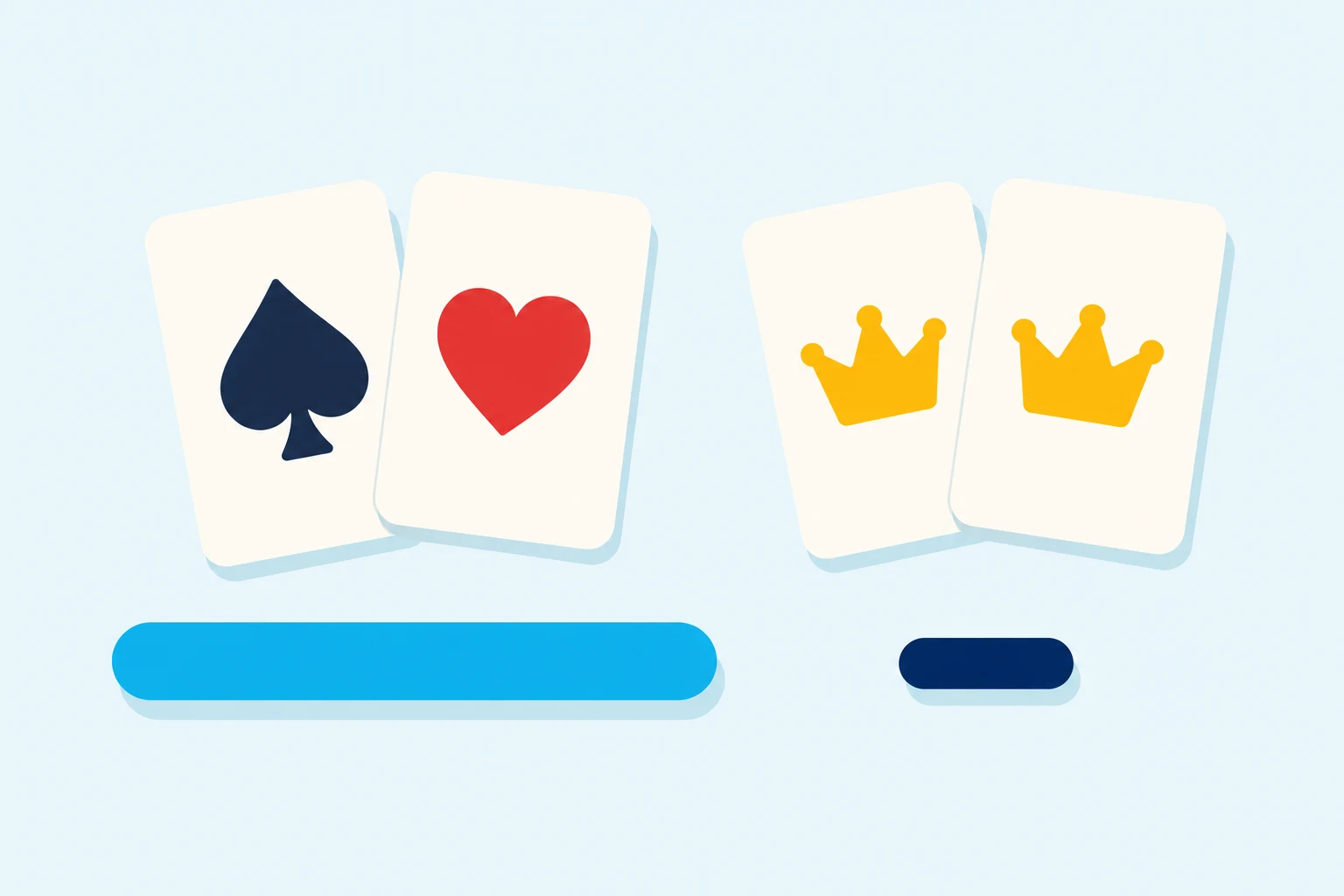
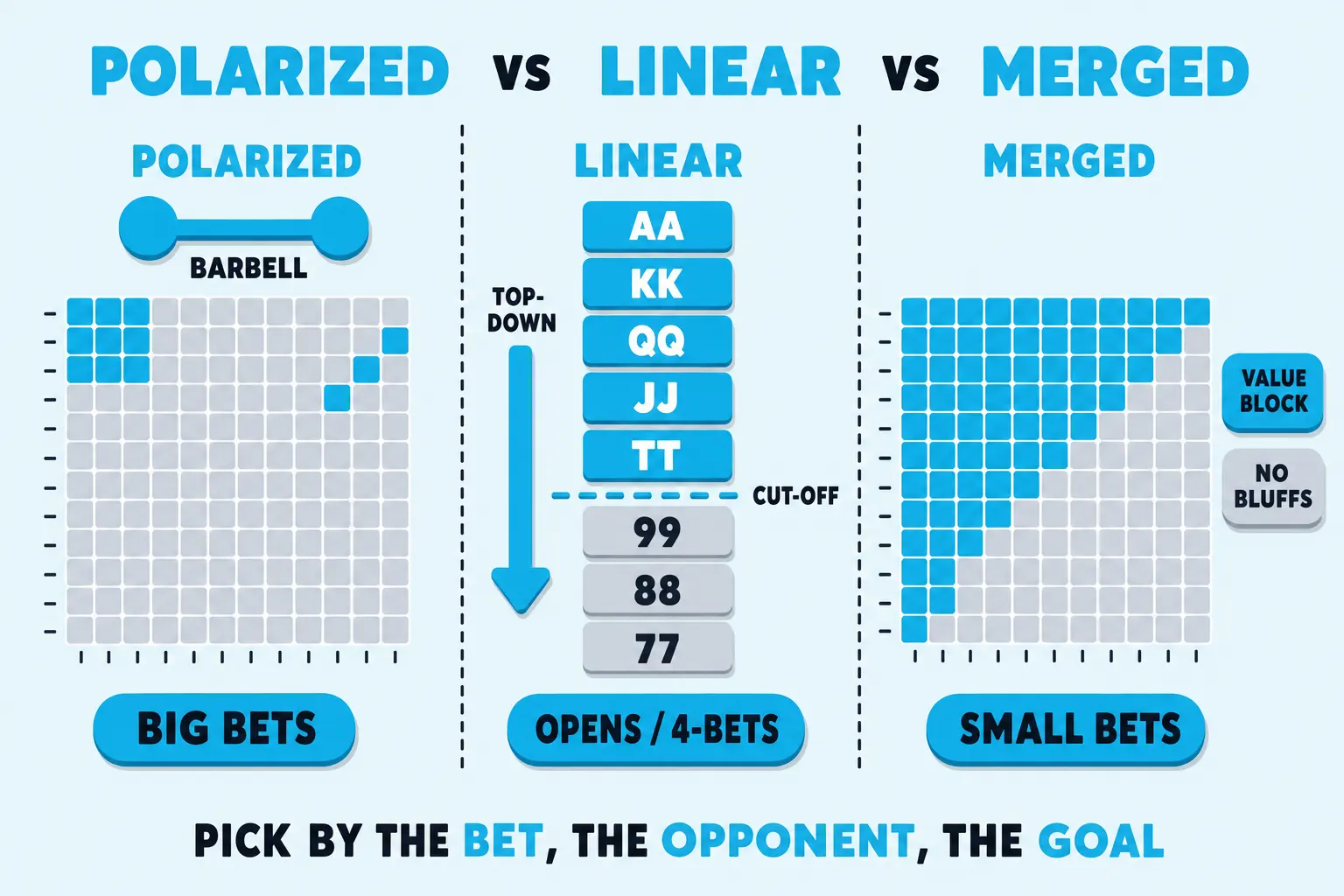
Polarized, linear, merged ranges: which one when
Three range shapes, three different jobs. The shape that matches your bet size, your opponent, and your goal — with worked hands and a three-question picker you can run at the table.
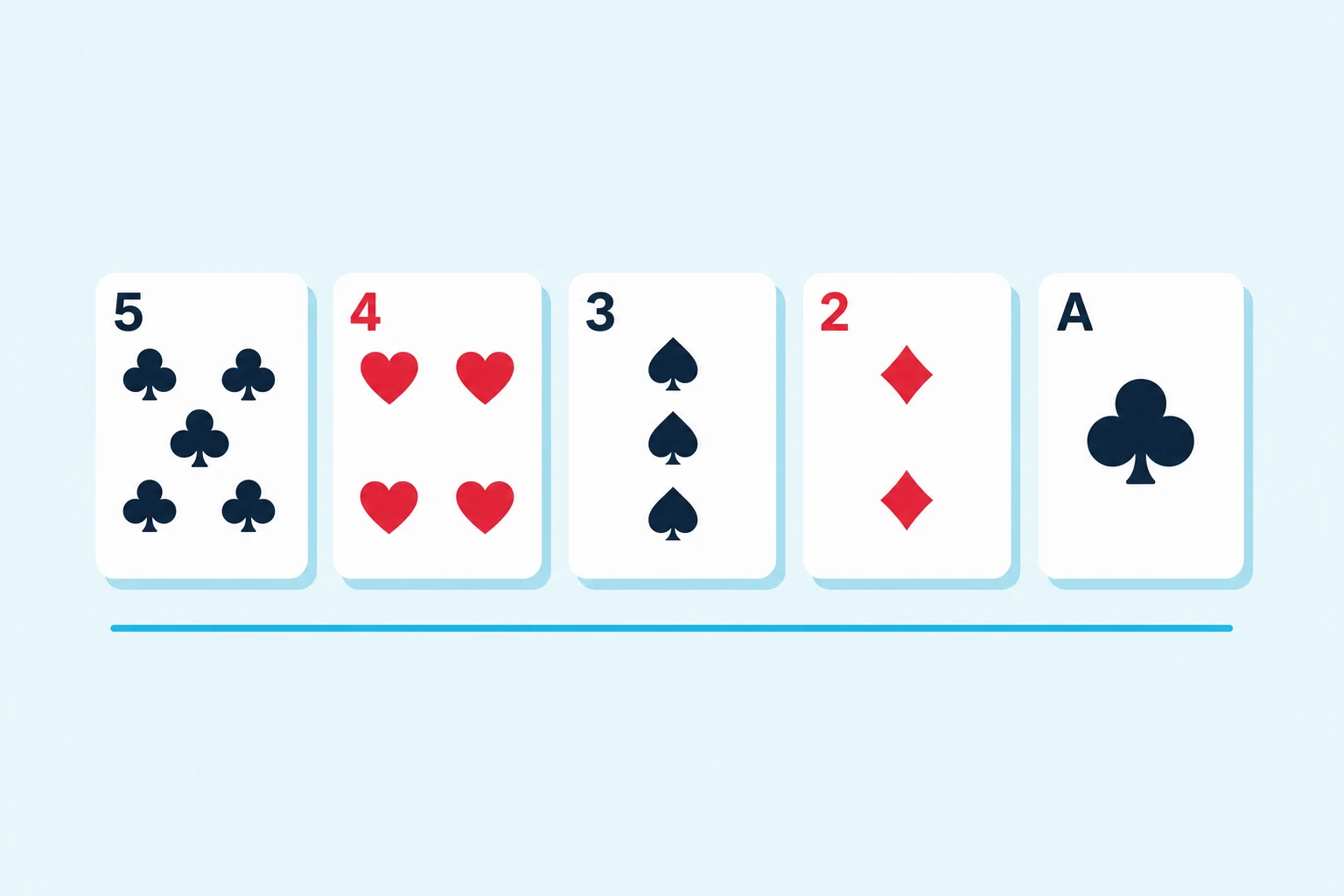
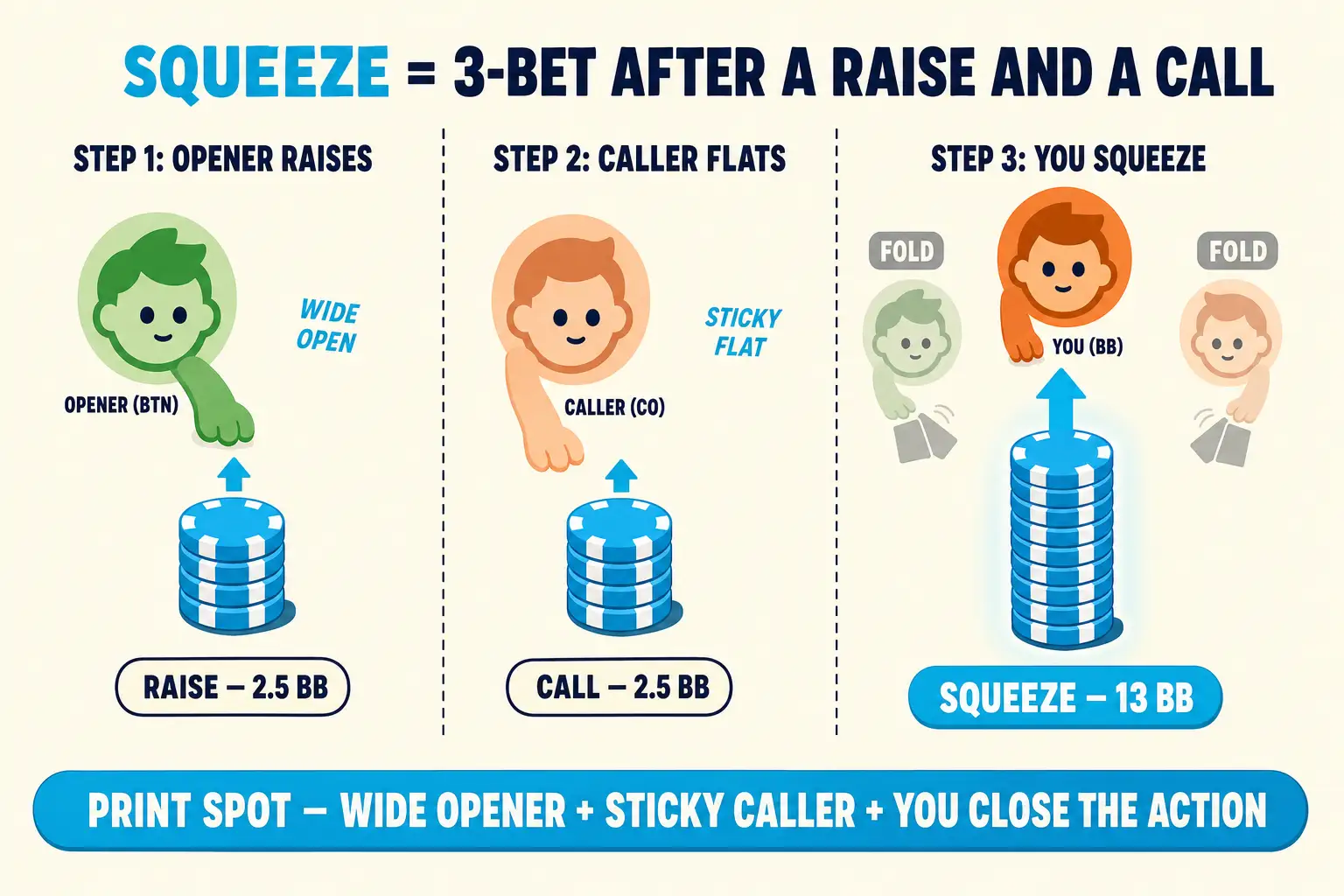
Squeeze play: when to fire, when to fold
A squeeze is a 3-bet over an open and a flat. It prints when three switches line up — wide opener, sticky caller, you closing the action. Walk through the table, three worked spots, and where the play breaks.
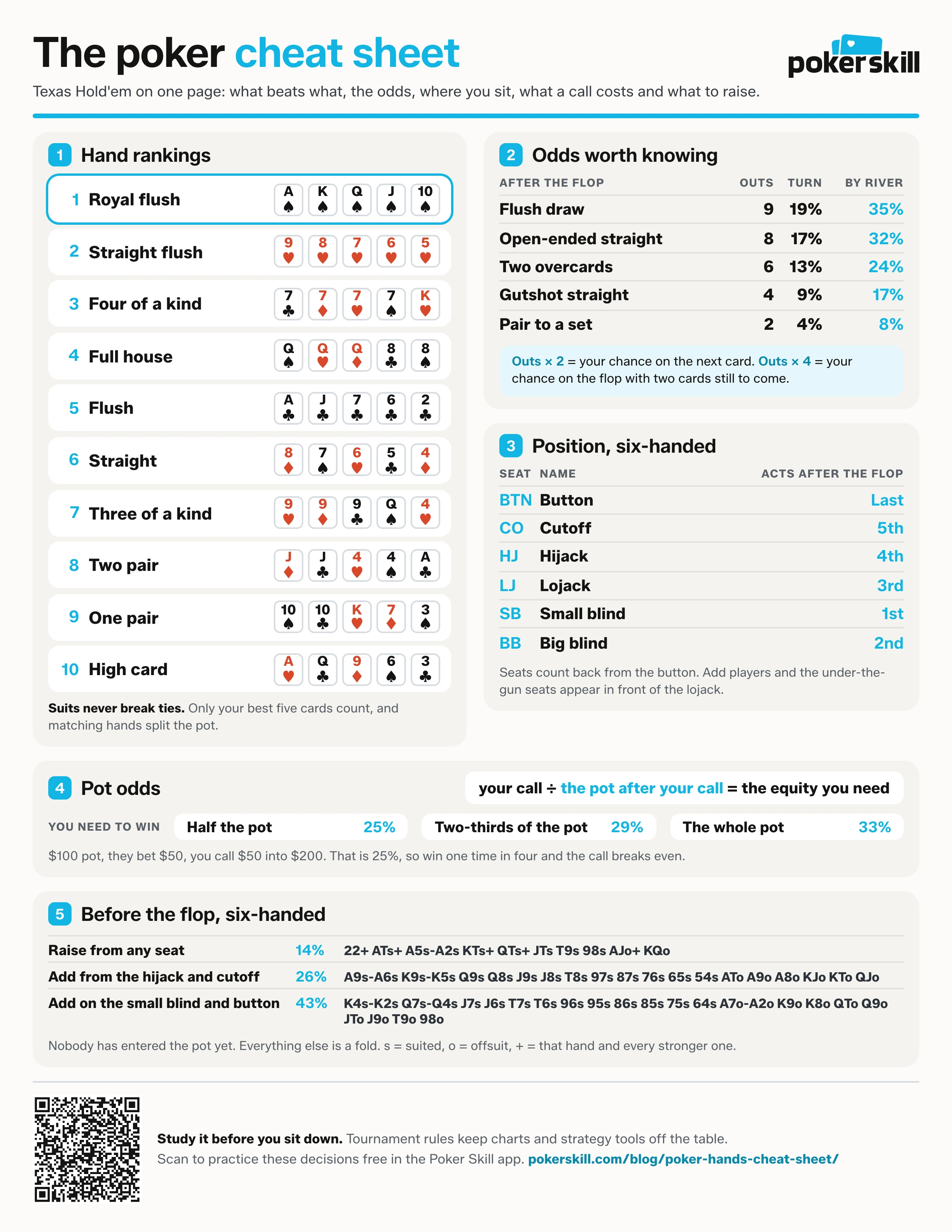
The Poker Cheat Sheet: Every Hand, Ranked at a Glance
Every Texas Hold'em hand, ranked from royal flush to high card, with the tie-break rule per category in one line and a real example for each.
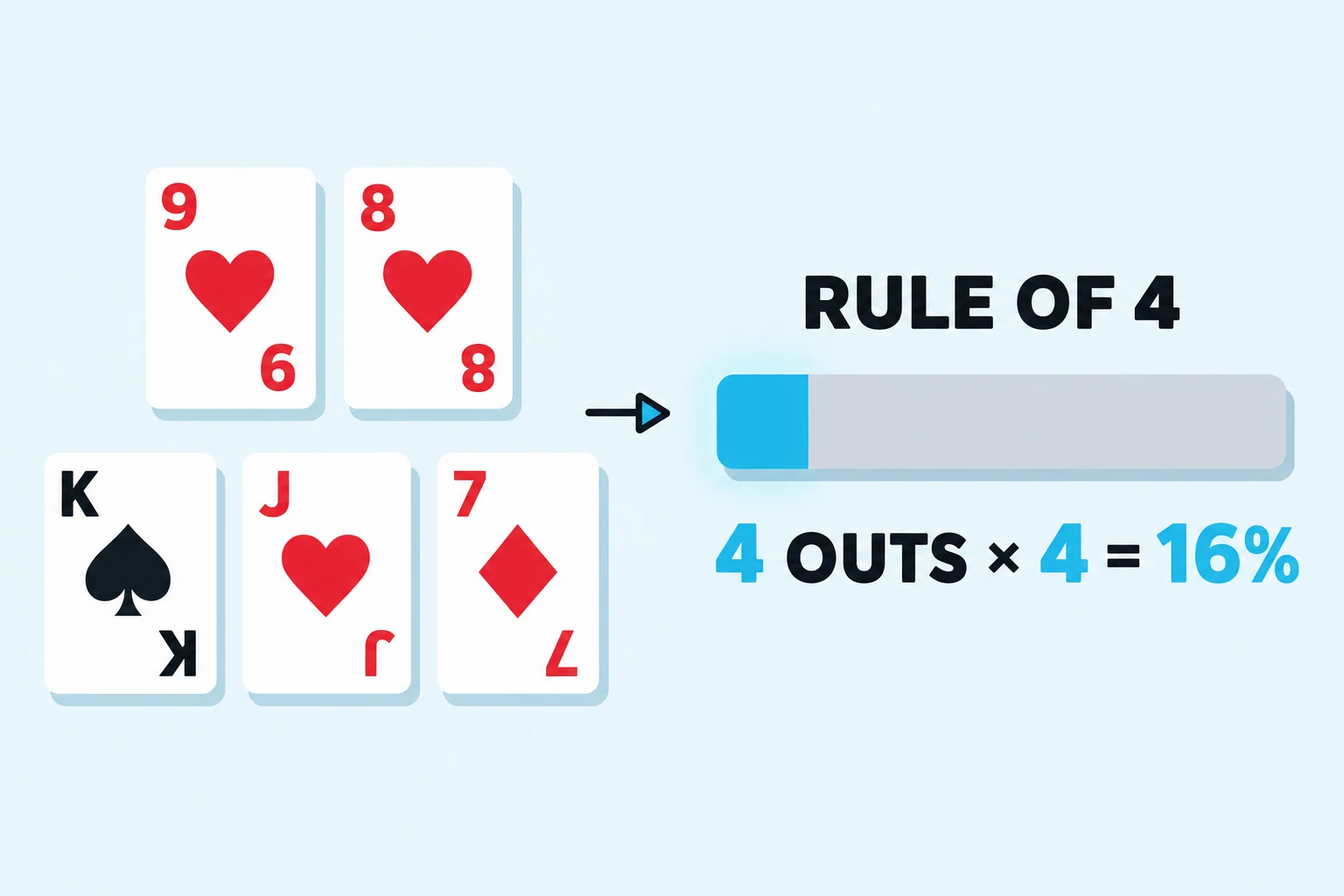
The Rule of 2 and 4: estimate poker equity in your head
Multiply your outs by 2 for the next card, by 4 for the river. Worked hands, the spots where the shortcut overstates, and a live-play pattern you can run in two seconds.
Wet vs Dry Boards: How Texture Decides Your Sizing
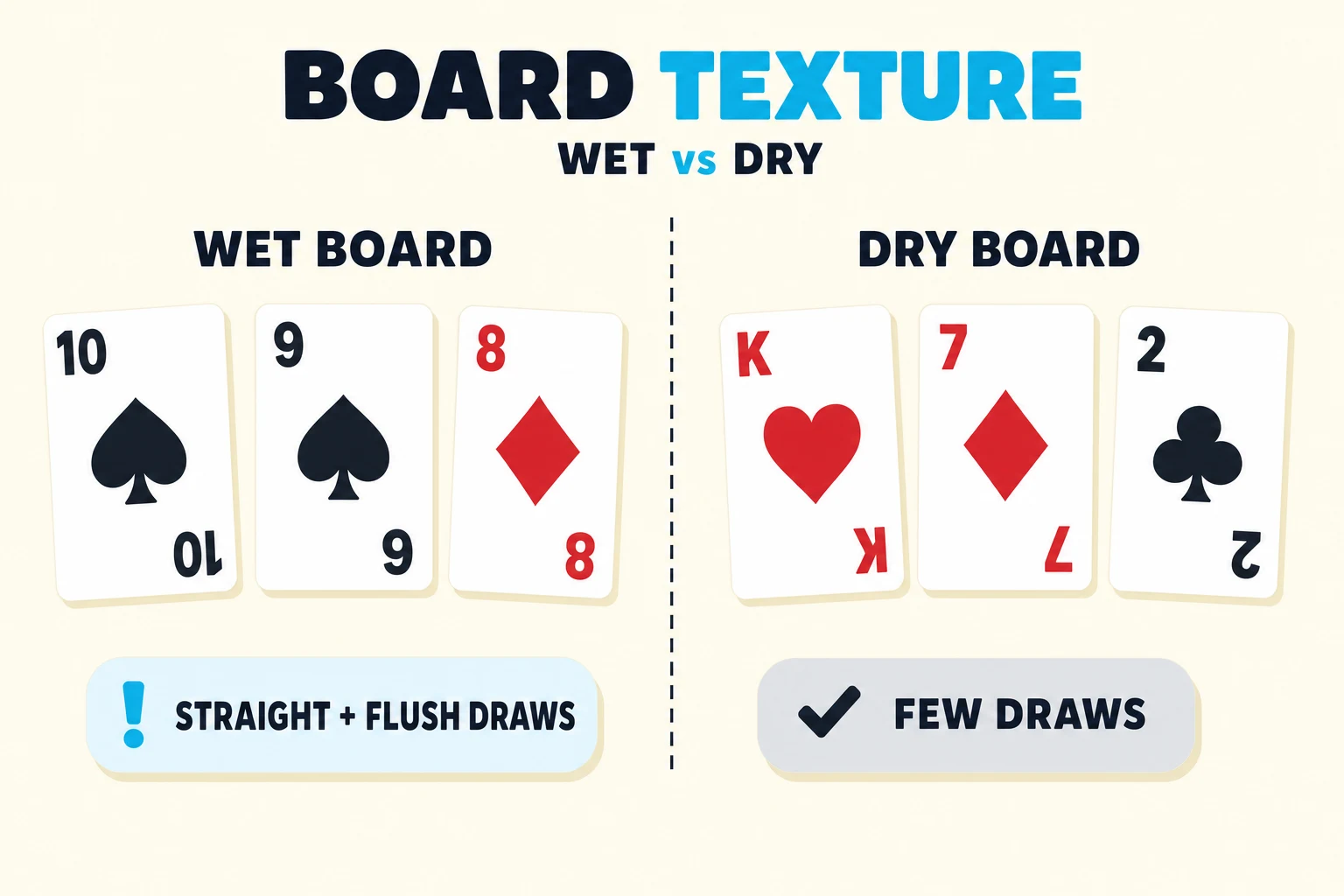
Wet boards have live draws and shift hand strength fast; dry boards don't. Bet bigger to protect on wet, smaller and frequent on dry — with six worked flops and the spots where the rule lies.
Why Poker AI Is Hard (Especially 6-Player No-Limit)
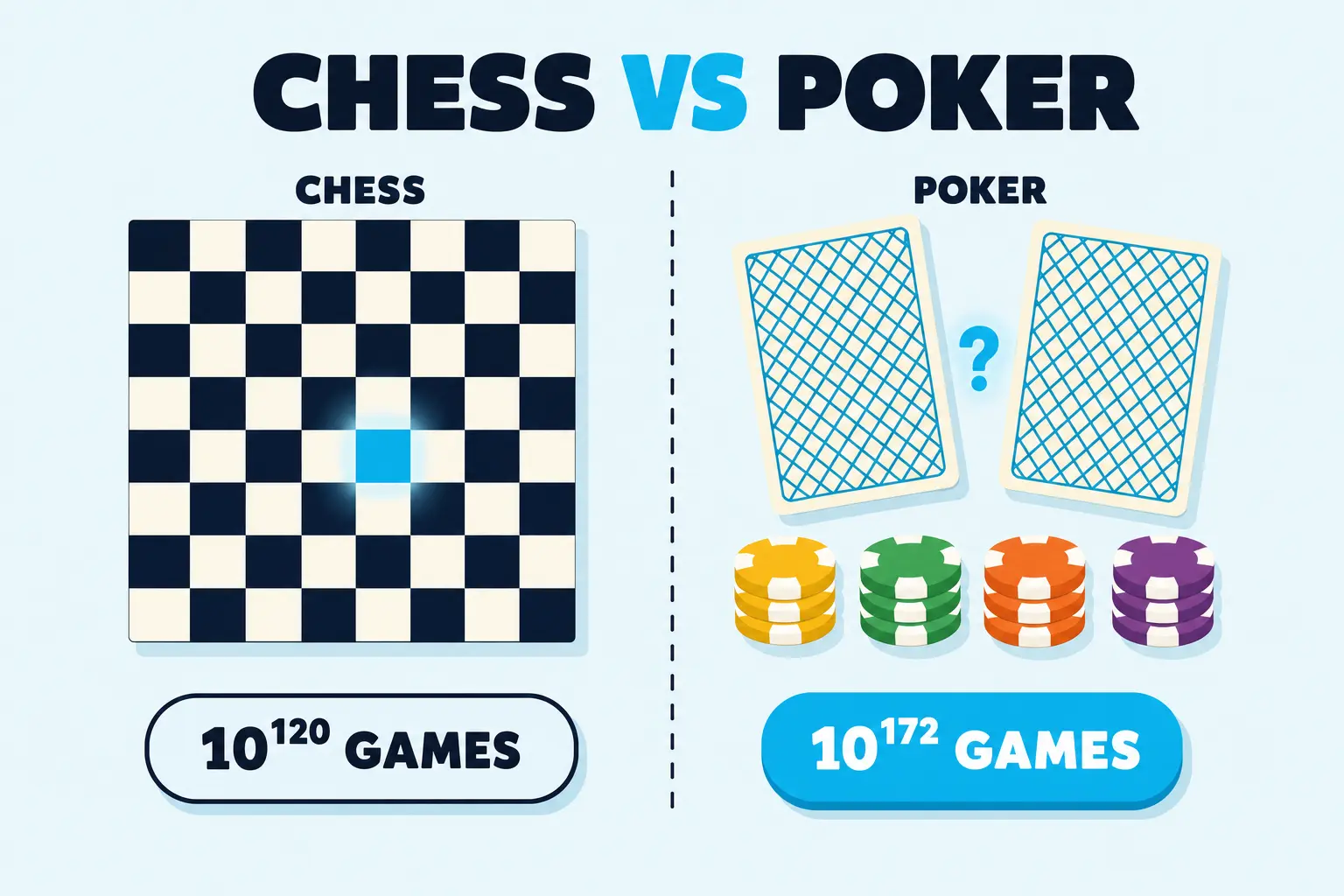
Chess has 10^120 possible games. A conservative floor for six-player no-limit hold'em is more than 10^172 decision points, even before fully pricing the extra multiway betting branches. Here is why poker has stayed harder for AI long after Deep Blue, and what that means for the human game across the table.
Poker Odds Explained: Outs, Equity, Pot Odds, and EV
The four numbers that decide every drawing hand: how many outs you have, what they're worth in equity, the price the bet is asking, and the EV of the call.