
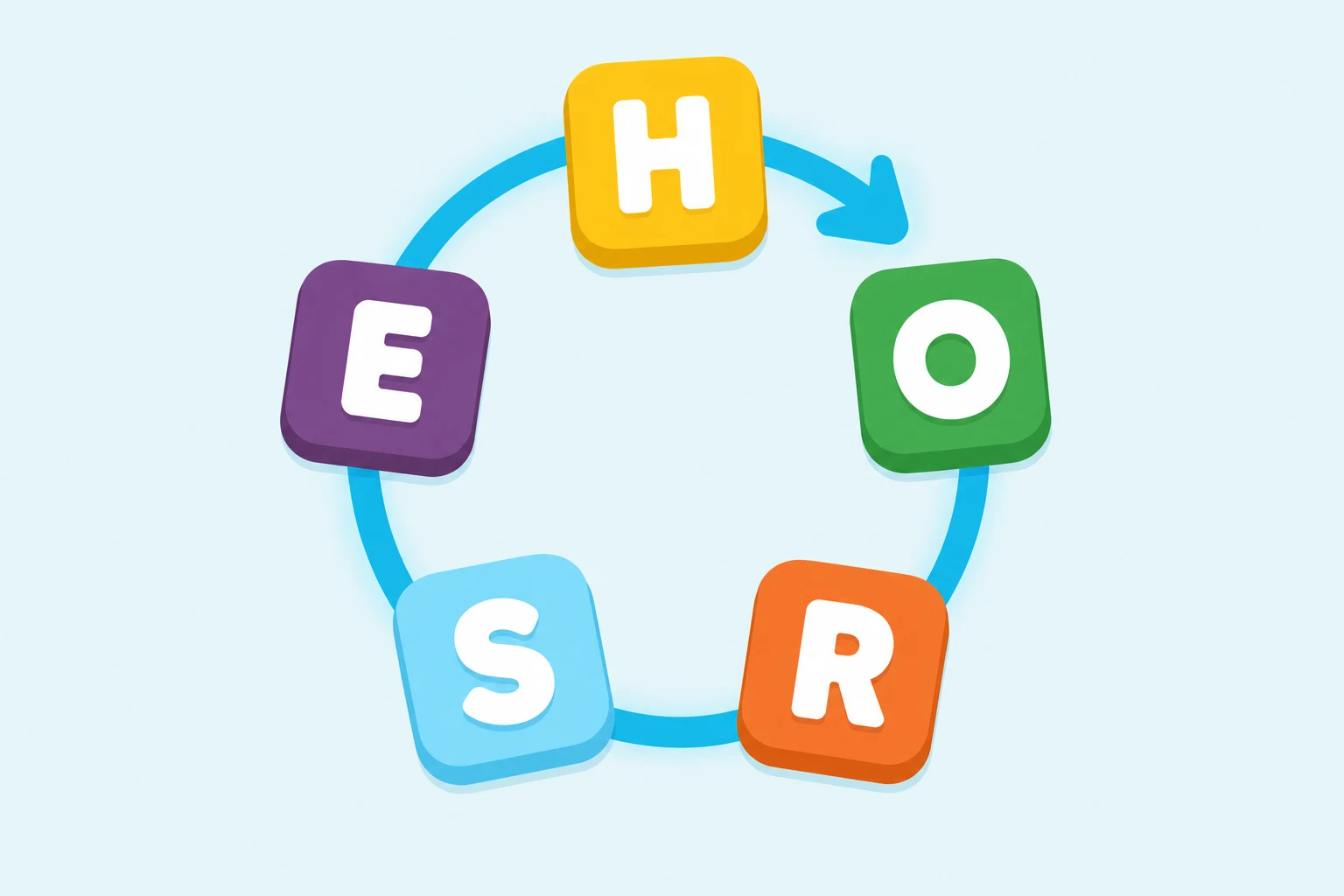
HORSE poker is a mixed-game format that rotates through five limit games in a fixed order: hold’em, Omaha eight-or-better, razz, seven-card stud, and stud eight-or-better. The letters spell the rotation.
The format is back in the spotlight: the last bracelet of the 2026 World Series summer is the $25,000 H.O.R.S.E. high roller, with the Player of the Year race hanging on its final table. Poker’s best treat HORSE as the real test of skill for a simple reason: anyone can be good at one game. HORSE is one of several rotations, and mixed games in poker lays out how it compares with 8-game and dealer’s choice. This article walks through all five, what changes when the felt rotates, and how to survive the games you barely know.
The five games at a glance
| Letter | Game | Who wins the pot | The trap for hold’em players |
|---|---|---|---|
| H | Limit hold’em | Best high hand | Fixed bets mean you can’t protect a hand with pressure |
| O | Omaha eight-or-better | Split: best high and best qualifying low | You must use exactly two of your four cards |
| R | Razz | Lowest hand, ace to five | Everything you know about hand strength inverts |
| S | Seven-card stud | Best high hand | No community cards; memory does the work position used to do |
| E | Stud eight-or-better | Split: best high and best qualifying low | Chasing half a pot with a hand that only wins low |
Two structural facts sit under the whole table. Every game in HORSE is played with limit betting: fixed bet sizes, no shoving, no pot-sized bluffs. And the game changes on a schedule, typically each orbit in a cash game and each level in a tournament, so nobody gets to stay in their comfort zone for long.
How to play HORSE, step by step
To play HORSE you play five limit poker games in a fixed order, one at a time, switching on a set schedule: hold’em, then Omaha eight-or-better, then razz, then seven-card stud, then stud eight-or-better, then back to the start. The seats and the chips stay where they are, but the forced bets, the action order and the hand you are trying to make all change with the game. The job is knowing which game is live and which habits just stopped applying.
The acronym is the running order in the standard rotation, so one look at the posted order tells you which game is next.
The dealer calls the switch, and it comes on a schedule: after a set number of hands or a set amount of time. If you sat out a hand, ask before you look at your cards.
The two flop games, hold’em and Omaha eight-or-better, use a button and blinds. The other three are stud games with no button at all: every player posts an ante and a forced bring-in starts the action. In seven-card stud and stud eight-or-better the lowest upcard brings it in. In razz the highest upcard does, because the low hand wins.
Every game in the rotation is limit, so the bet size is decided for you on each street. You never pick your own number, and nobody shoves over the top of you.
Two games send half the pot to a qualifying low (the O and the E), and if no low qualifies the high hand takes all of it. One sends the whole pot to the lowest hand (the R), and two are high only (the H and the S).
Folding an orbit there costs a few forced bets. Guessing costs a bet on every street.
How the rotation works
The dealer announces the change and the room shifts from one game to the next in the H-O-R-S-E order, then loops back to hold’em. The letters are the running order, and the last one, stud eight-or-better, supplies the E.
Best high hand wins. The game you already know, with fixed bets instead of a stack you can shove.
Split pot. Half to the best high hand, half to the best qualifying low, and you use exactly two of your four cards.
Lowest hand wins, ace to five. The button disappears and the highest upcard brings it in, because the low hand is the good one.
Best high hand wins, with no community cards. The lowest upcard brings it in.
Split pot again, dealt exactly like seven-card stud. Then the dealer calls hold’em and the loop starts over.
The switch comes on a schedule: typically each orbit in a cash game and each level in a tournament. The flop games (H and O) use blinds and a button like the poker you know. The stud games (R, S, E) drop the button entirely: everyone posts an ante, and a forced bet called the bring-in starts the action instead. The skill being tested isn’t any single game. It’s noticing which game you’re in and how fast your defaults need to change, which is exactly why mixed games reward students over specialists.
The flop games: hold’em and Omaha eight-or-better
Limit hold’em plays like the hold’em you already know with the aggression dialed down to fixed units. Big pairs go up in value, bluffs go down, and folding on early streets matters more because you can’t win the pot later with one big bet. Of the five games, Poker Skill teaches only hold’em, in its no-limit form, so its lessons on hand values and position are practice for the H and none of the letters after it.
Omaha eight-or-better is the first real curveball. You get four hole cards and must use exactly two of them with exactly three board cards. At showdown the pot splits: the best high hand takes half, and the best qualifying low hand, five unpaired cards ranked eight or below, takes the other half. No qualifying low, and the high hand scoops everything. You can use one two-card combination for high and a different one for low, which is why the best starting hands, like A-2-3-K with a suited ace, aim at both halves at once.
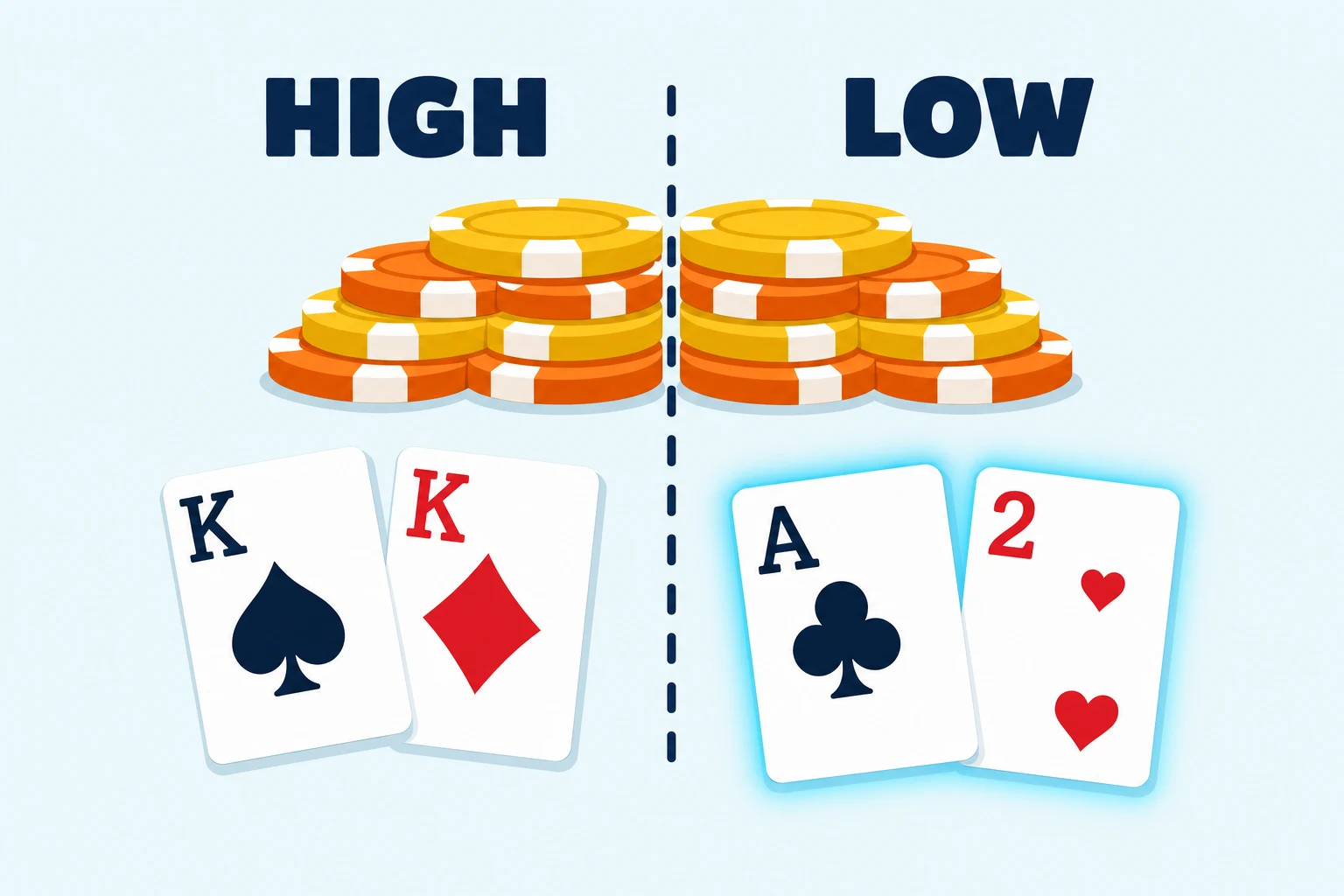
The trap: scooping is the goal, splitting is the consolation, and chasing only the low half usually means putting in full bets to win back half of them.
The stud games: no community cards
Seven-card stud deals every player their own hand: two cards face down plus one face up (the doorcard) to start, then three more up cards and a final down card, with a betting round after each. The lowest doorcard posts the bring-in to start the action in stud high. The full walkthrough lives in the seven card stud rules. There’s no flop to share, so the information game changes completely: you read opponents by the boards in front of them and, critically, by the cards you watched leave the deck. Folded upcards are gone forever, and the player who watched two kings hit the muck while their opponent proudly bets a third is playing a different sport.
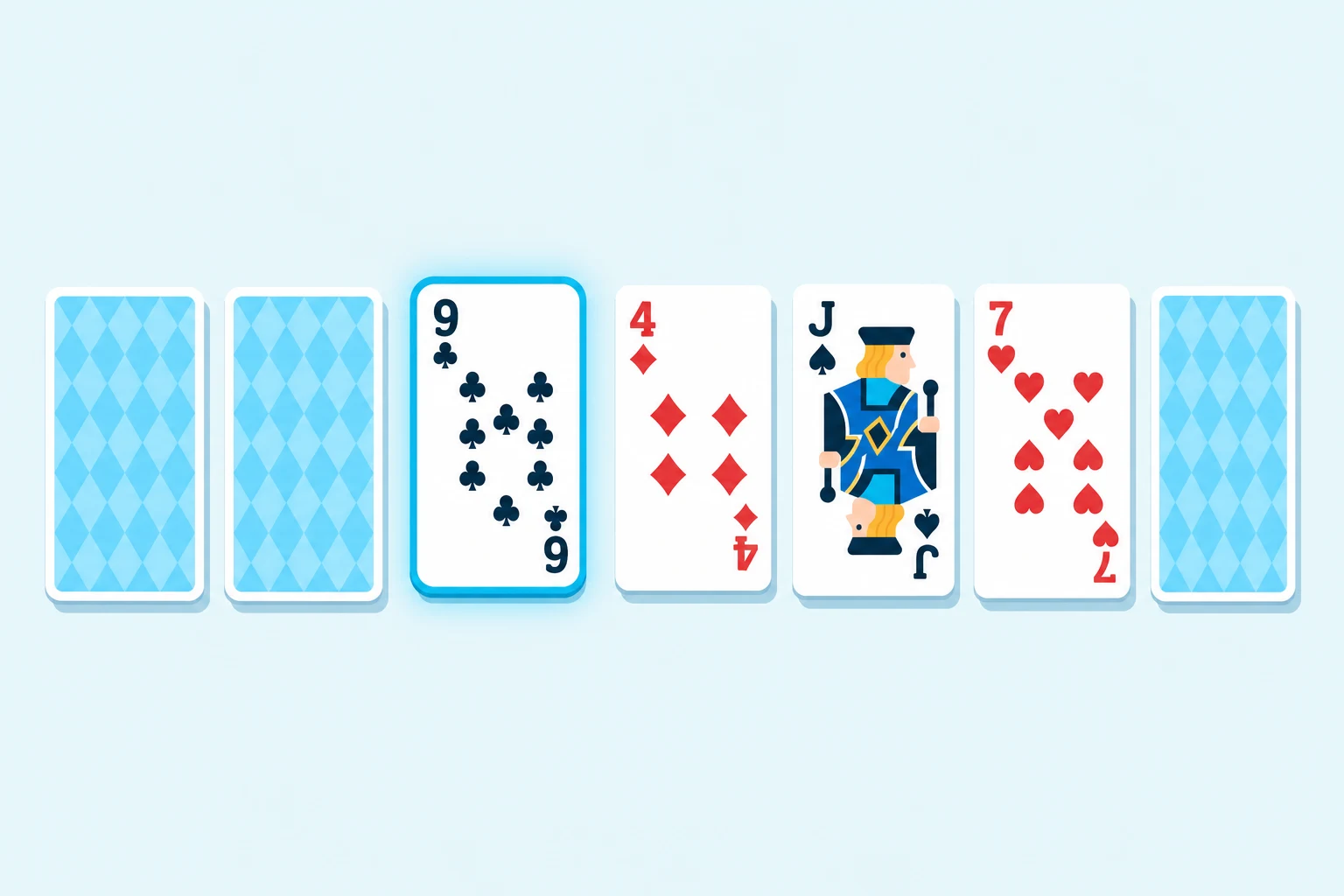
Stud eight-or-better runs on the same skeleton with the Omaha-style split pot bolted on: best high takes half, a qualifying eight-or-better low takes half. The starting-hand discipline is brutal and simple: three low cards that work together are playable, and pretty-looking high hands that can never make a low are quietly bleeding half the pot away.
Razz: the upside-down game
Razz is seven-card stud with the goal inverted: the lowest hand wins the whole pot. Hands are read ace-to-five, meaning aces are always low, and straights and flushes don’t count against you. The best possible hand is 5-4-3-2-A, called the wheel. Pairs are poison. And in a fitting inversion, the bring-in is posted by the highest doorcard instead of the lowest. The full game is covered in the razz poker rules.
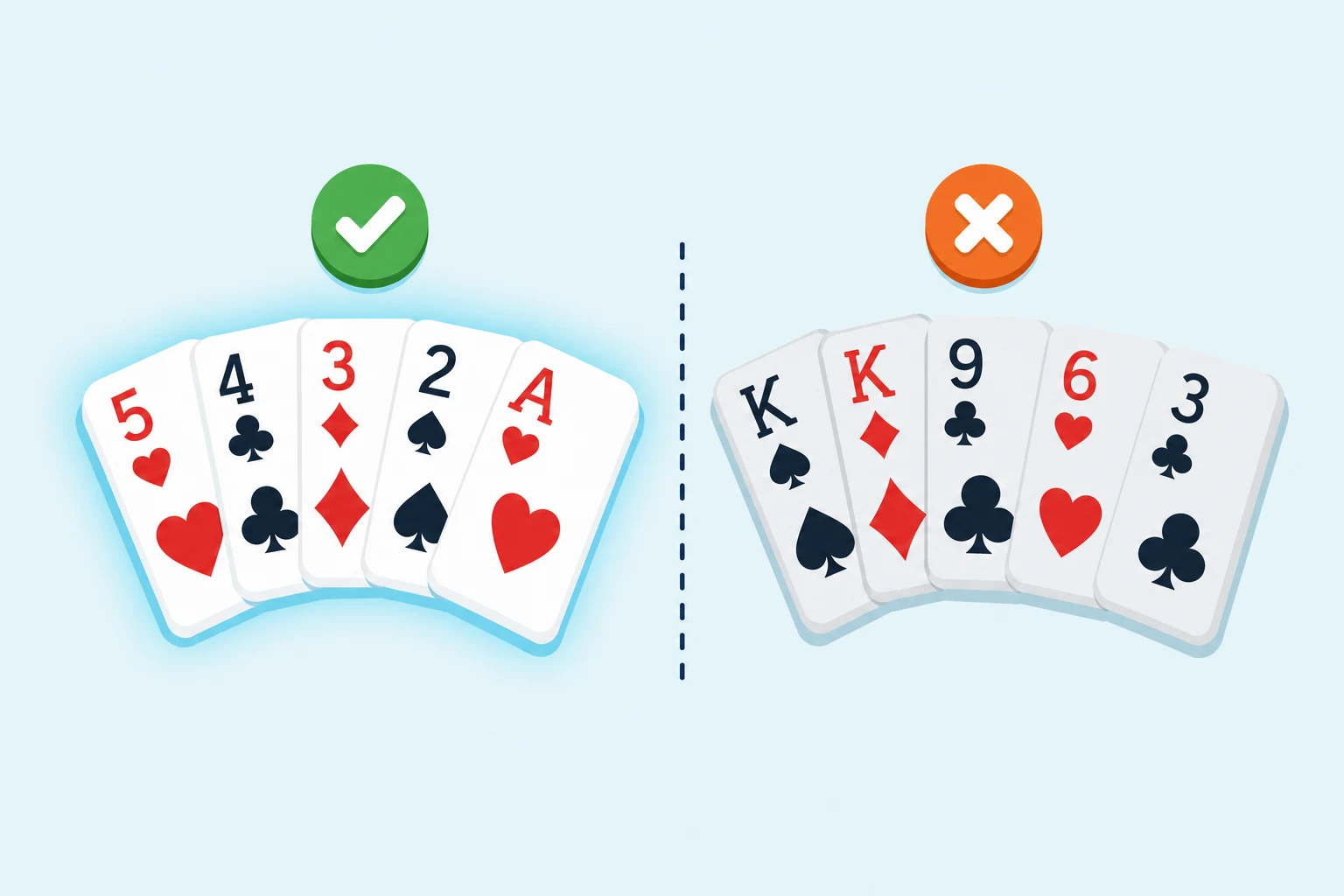
Razz is where hold’em players donate the most, not because the rules are hard but because their instincts fire backward for a full orbit. The fix is mechanical: before acting, read your hand out loud in your head as its five lowest cards, and treat any pair the way you’d treat a busted draw in hold’em.
Why limit changes everything
No-limit players arrive in HORSE expecting to pressure people off hands and discover that the lever is gone.
| The no-limit habit | What limit does instead |
|---|---|
| Bet any amount up to your stack | Every bet is one fixed unit, decided for you on each street |
| Push someone off a real hand | You can rarely bet anyone off a hand at all |
| Bluff as a lever | Bluffing works only in small, well-chosen doses |
| Protect a hand with pressure | Arithmetic replaces aggression: single bets decide the calls |
| What replaces aggression is arithmetic: with pots offering 6-to-1 and 8-to-1 by the later streets, single bets decide whether calling is right, and small repeated errors, one loose call here, one missed value bet there, become the entire difference between winning and losing sessions. Limit poker is quieter than no-limit. It is not softer. |
Surviving your weak games
Nobody plays all five games equally well, including the professionals at the $25K. The practical difference is that strong mixed-game players know which games are their weak ones and adjust their ambition accordingly. In your weak games, tighten your starting standards hard and take the free education of watching showdowns. Don’t invent creative lines in a format where you can’t yet tell creative from wrong. Save the ambition for your strong games and the hands you’ve actually studied. One orbit of disciplined folding in razz costs a few antes. One “it’s probably like hold’em” call on fifth street costs real bets, every rotation, all night.
Self-check: which game is this?
No button. Everyone has posted an ante, each player has two cards face down and one face up, and the dealer tells the player showing the king to open the betting.
Show the answer
Razz. The ante and the bring-in tell you it is one of the three stud games, so it is R, S or E. The king settles it: in seven-card stud and stud eight-or-better the lowest upcard brings it in, and razz is the one that reverses it, because in razz the low hand is the good one and the king is the worst card on the table.
Where this fits
HORSE compresses the whole argument for deliberate practice into one table: the players who win are the ones who turned each unfamiliar format into a studied one, a hi-lo split at a time. You don’t need a casino mixed game to start, either. Learning to read a razz board or count a stud deck is the same skill-building loop as any other part of poker: small reps, honest feedback, one format at a time.
Frequently asked questions
What games are in HORSE poker?
Five, and they are dealt in this order: limit hold'em, Omaha eight-or-better, razz, seven-card stud, and stud eight-or-better. Two of them are flop games with a button and blinds, three are stud games with antes and a bring-in, two split the pot with a qualifying low, and one is won by the lowest hand. All five are played with limit betting.
What does the E stand for in HORSE poker?
Eight-or-better, as in seven-card stud eight-or-better, the split-pot version of stud. It is dealt exactly like seven-card stud, and at showdown half the pot goes to the best high hand and half goes to the best qualifying low, meaning five unpaired cards ranked eight or below. If no low qualifies, the high hand takes it all.
Is HORSE always limit betting?
In practice, yes. The classic rotation is fixed-limit in all five games, including the World Series version. You'll occasionally find home games or exotic mixes that change the betting structure, but if someone invites you to HORSE, assume limit.
Which HORSE game is hardest for hold'em players?
Razz, and it isn't close. The rules take two minutes; the problem is that every instinct about hand strength points backward, and limit betting means the bleeding is slow enough that people don't notice for months. Stud's card-memory demands are the runner-up.
Can I play HORSE without knowing all five games?
You can sit down, and the table will happily let you. A better plan: learn the rules of all five before you play, then expect to be genuinely competent in only one or two at first. Play tight in the others, watch every showdown, and treat your first sessions as paid lessons that cost less if you fold more.