
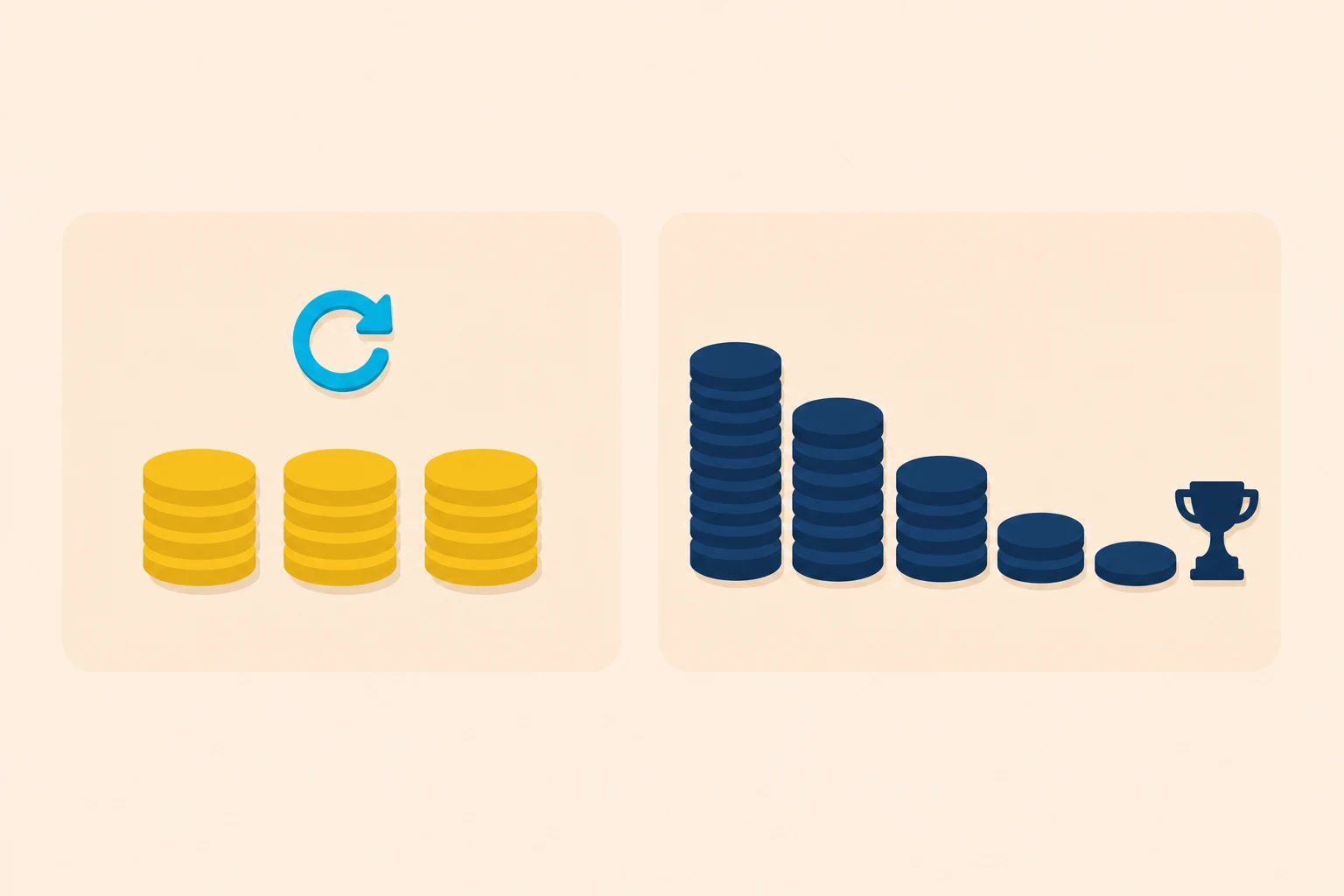
Cash or Tournaments First? Choosing Your Learning Format
Most people learn faster in cash games, because the spots repeat. Tournaments suit a smaller group, and a single table beats a big field for learning. How to tell which you are.
Plain-English lessons for rules, hand flow, rankings, and core poker concepts.
Most people learn faster in cash games, because the spots repeat. Tournaments suit a smaller group, and a single table beats a big field for learning. How to tell which you are.
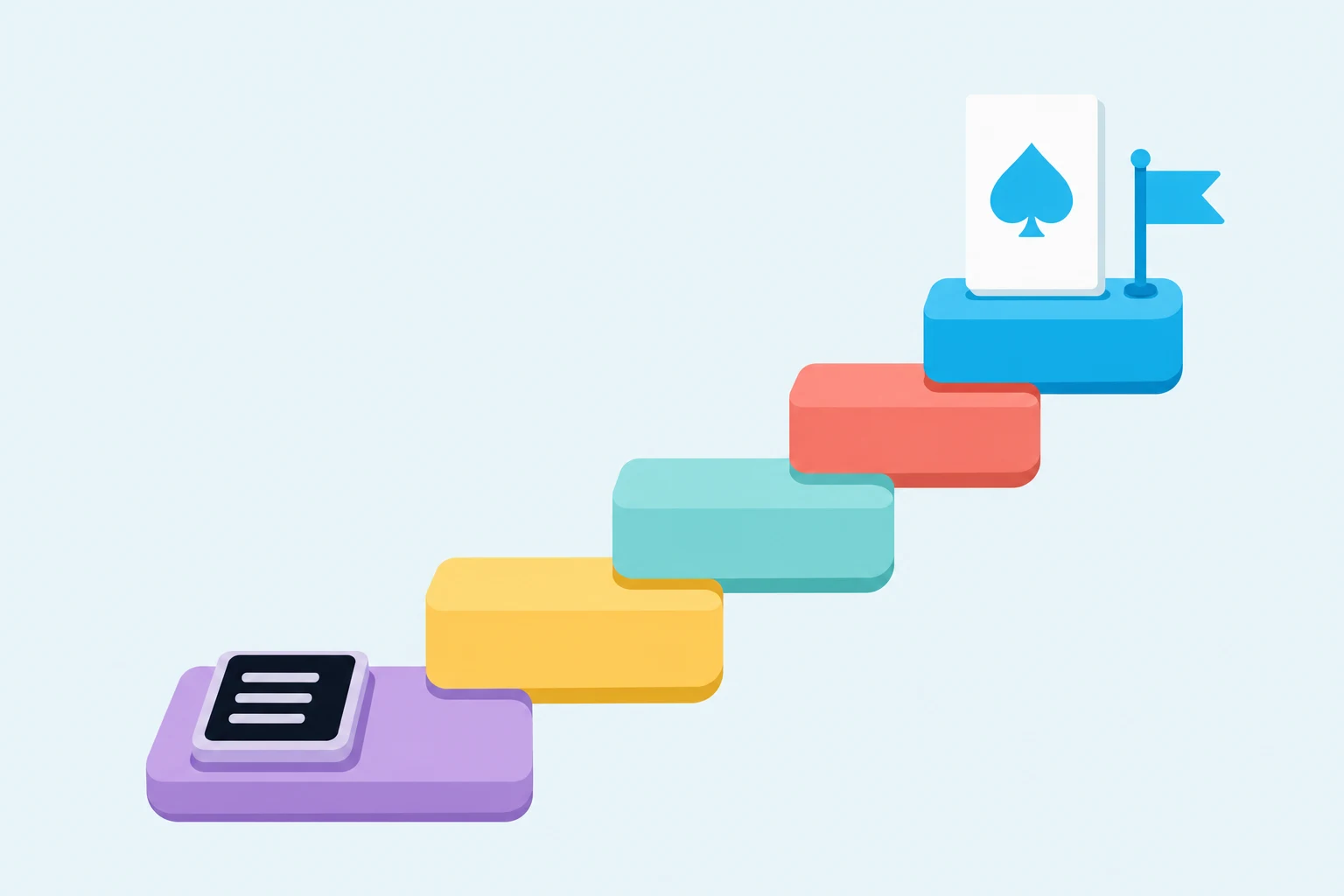
Six ordered steps from the rules to real decisions, each one free, each one ending at a check you can run on yourself. The order is what most beginners are missing.
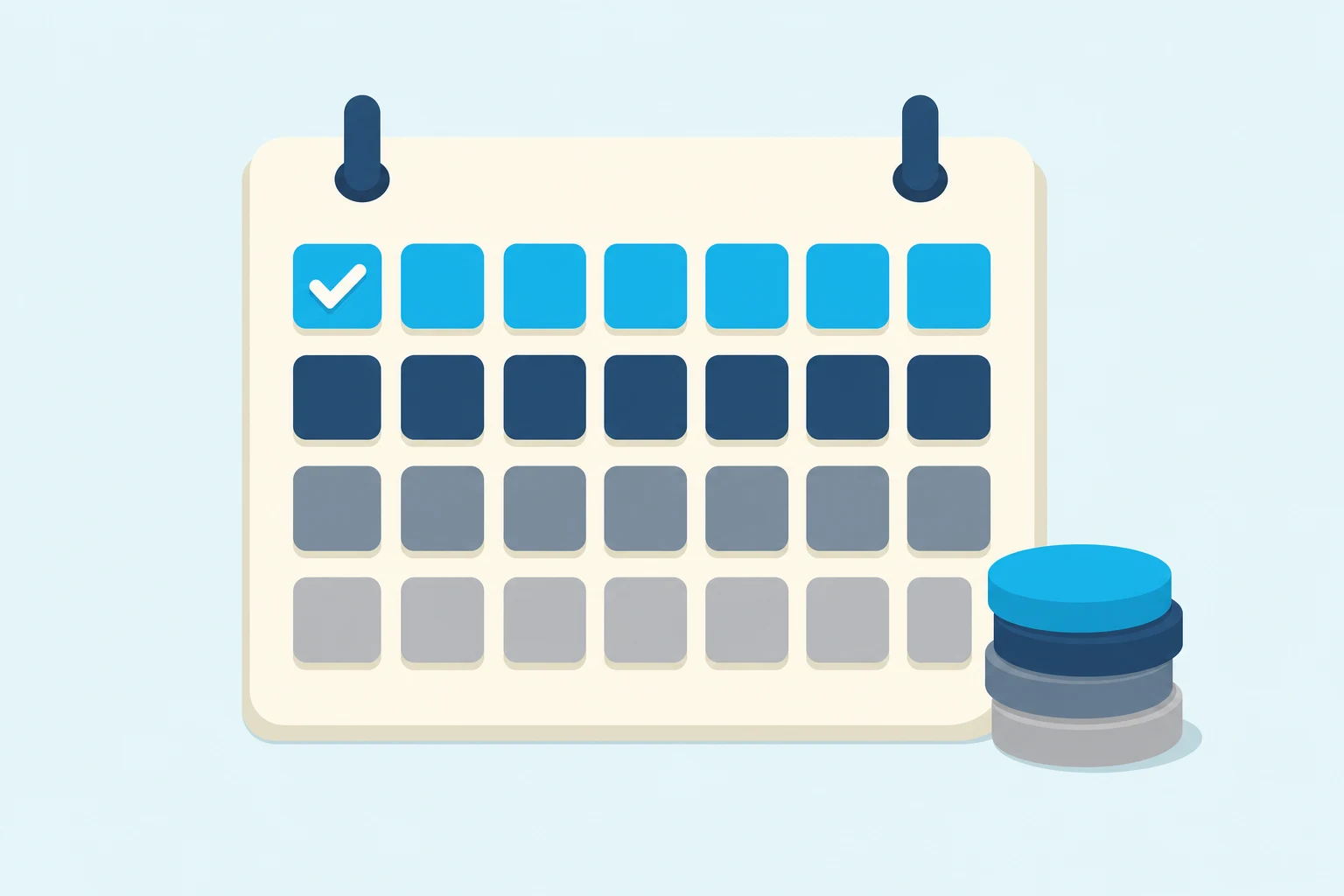
Thirty days, one plan. Rules and rankings in week one, preflop discipline in week two, postflop numbers in week three, and a review habit that survives week four.
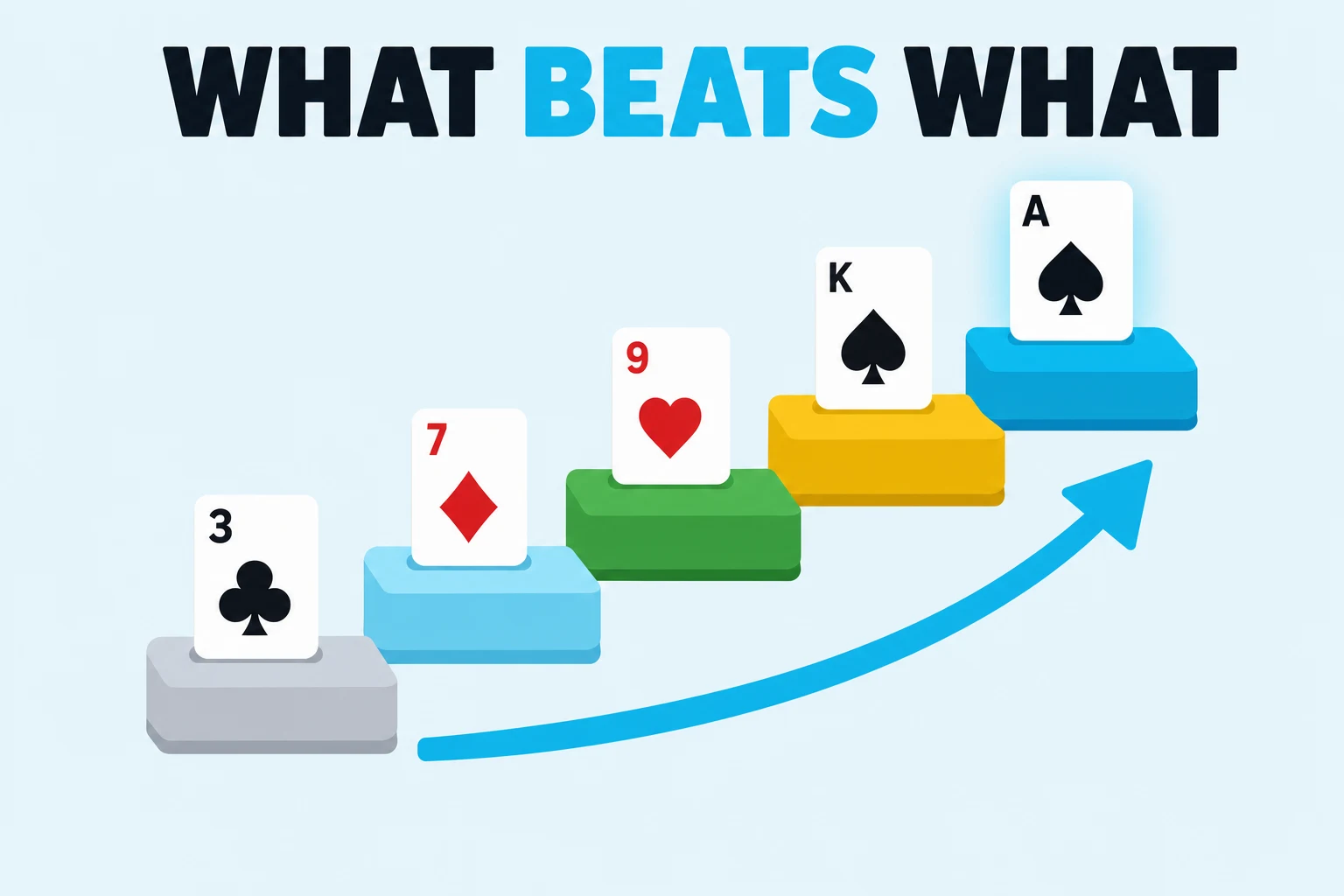
What beats what in poker: the ten Texas Hold'em hand names in order, with drawn answers to the matchups people ask about and the tie-break rules that settle two hands in the same category.
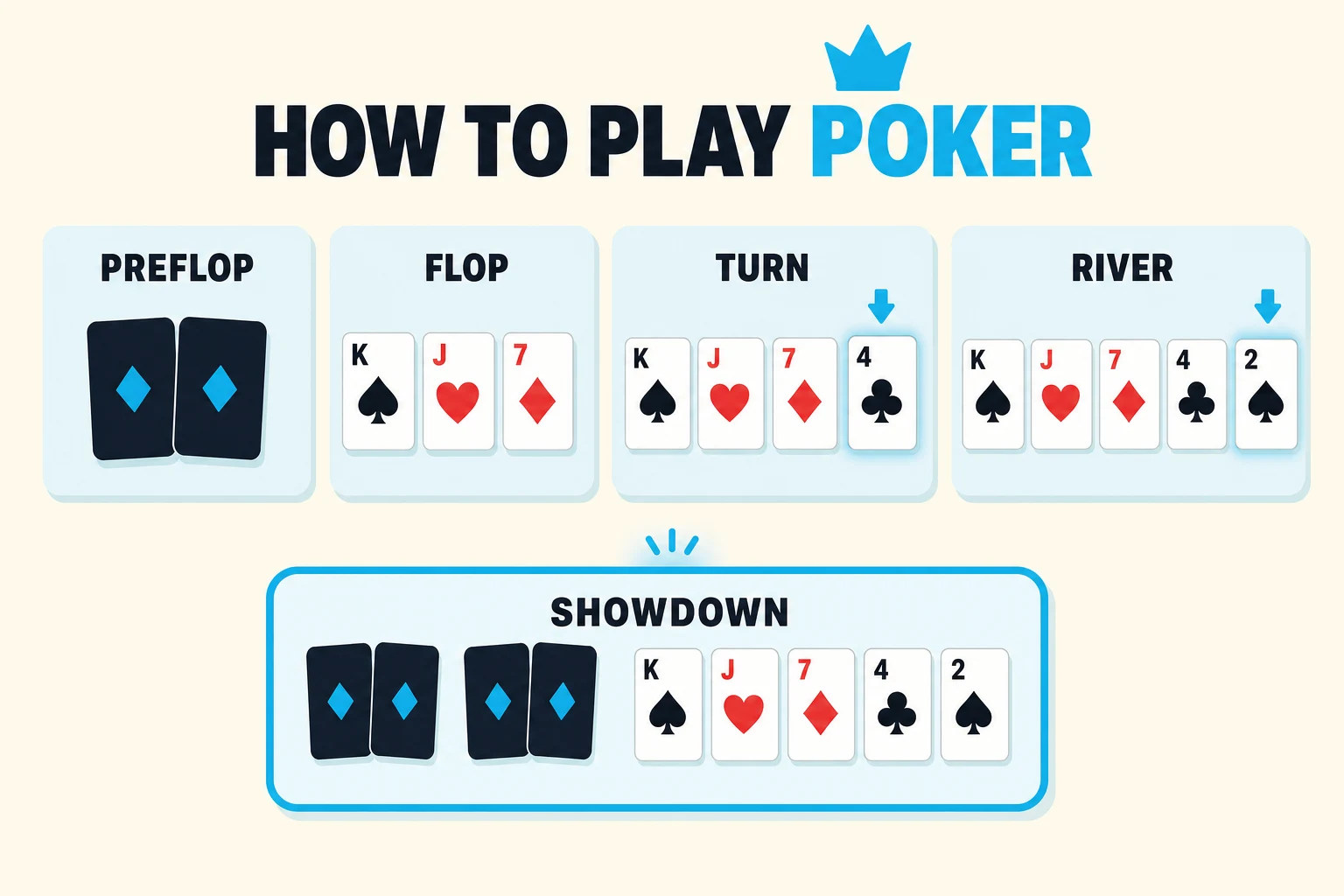
The rules of poker for a first game: how to set the table up, deal Texas Hold'em, run the betting rounds and settle the pot at showdown.
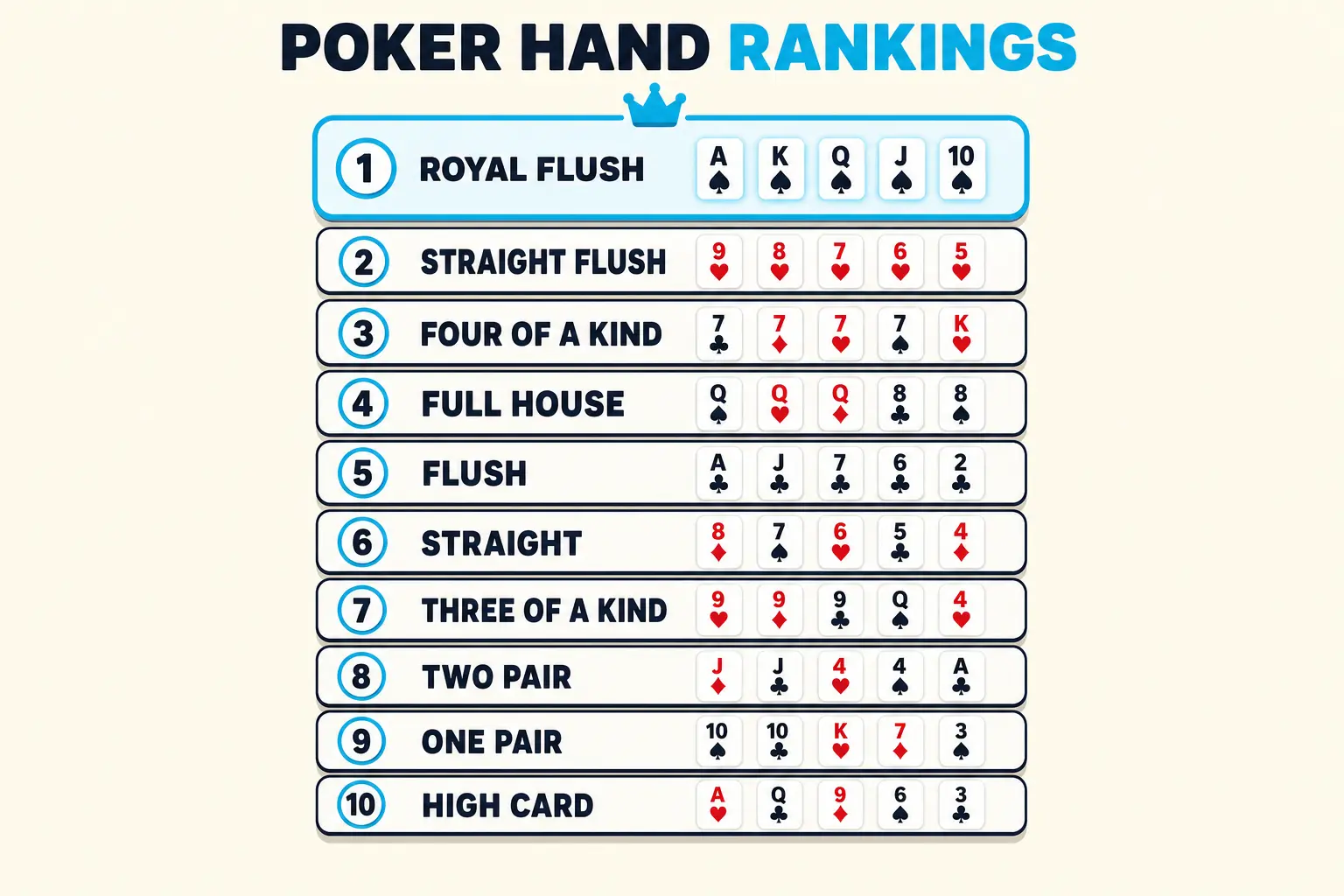
Every poker hand from royal flush to high card, with example cards, the odds of making each one and the tie-breaks that decide showdowns, on a chart you can print.
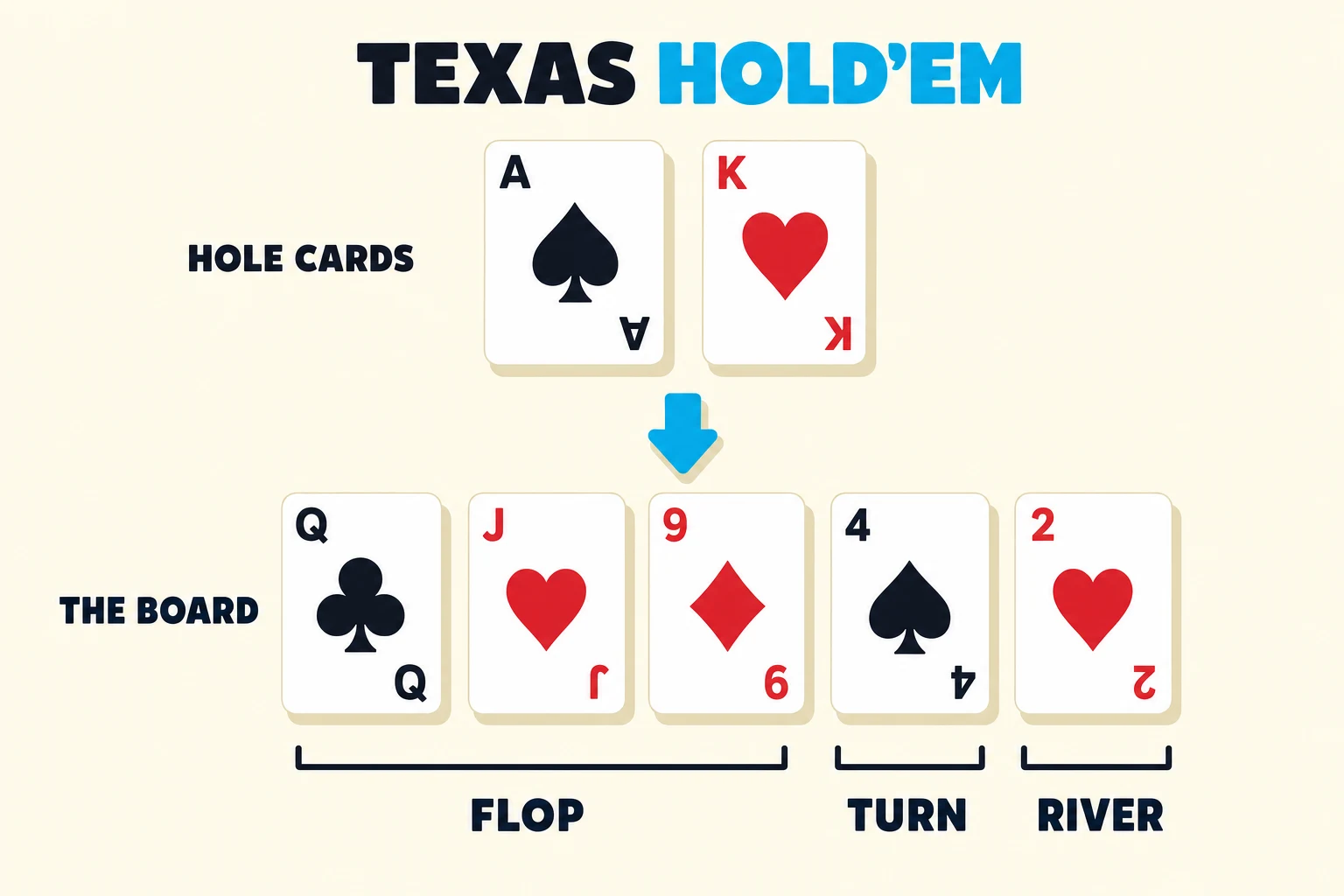
How a hand of Texas Hold'em is dealt, bet and won, from the blinds to the showdown, with the five legal actions, no-limit betting and the best-five rule.
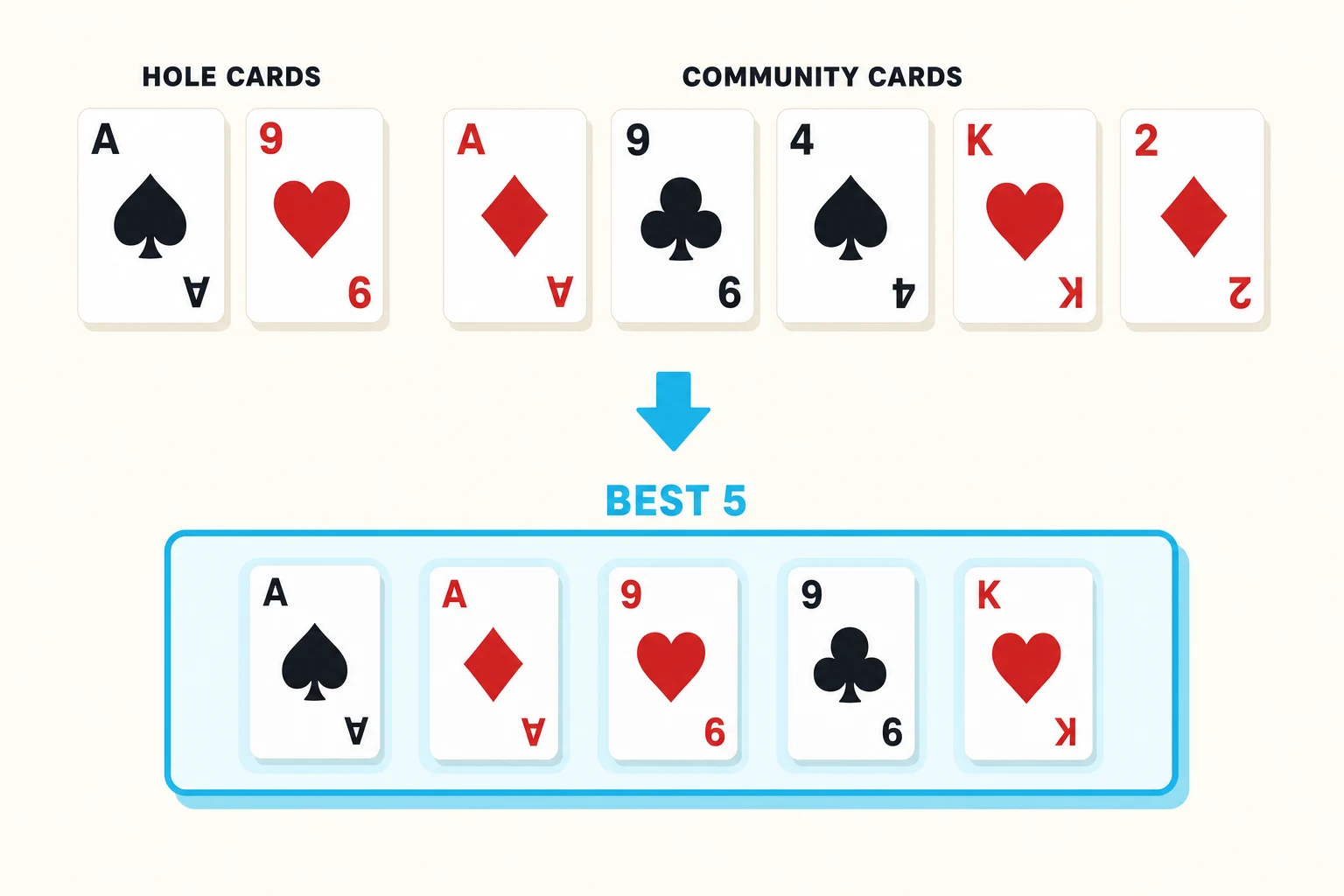
Your Hold'em hand is the best five cards from your two hole cards and the five community cards. You can use both, one or neither. Worked hands, the tie-breaks and the three ways the rule gets misread.
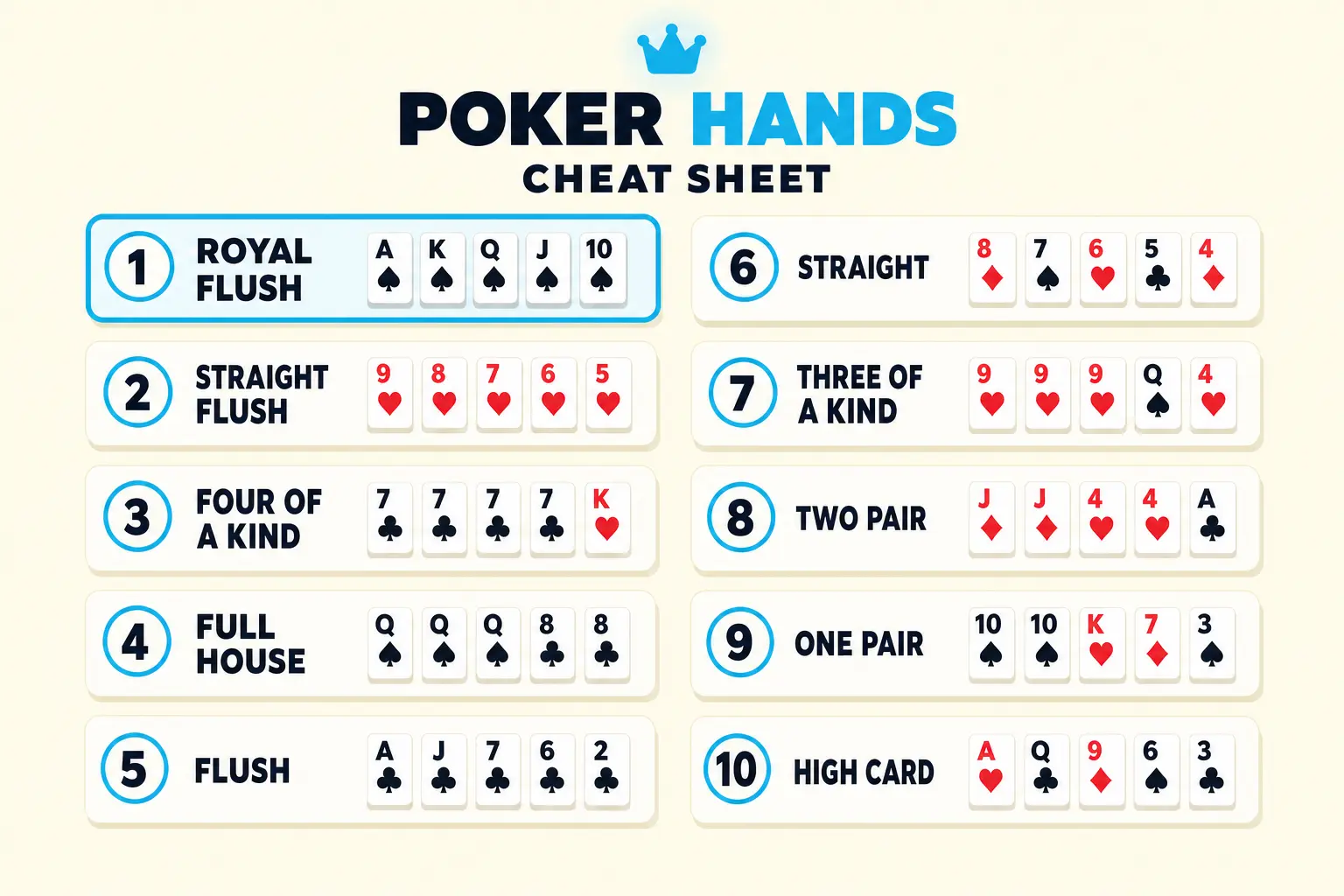
Hand rankings, the odds worth knowing, where you sit, what a call costs and which hands to open before the flop, on one printable page. Free PDF and PNG, no email.