
Pot-limit Omaha deals you four hole cards instead of two, requires you to use exactly two of them, and caps every bet at the size of the pot. Those three changes turn hold’em into a different game wearing the same clothes, and it’s the game everyone just watched decide a bracelet: Joshua Wang beat ten-time champion Erik Seidel heads-up in the $3,000 six-handed PLO at this year’s World Series, leaving Seidel one short of eleven. If you’re hold’em-fluent and PLO-curious, this guide covers the rules in two minutes and then the part that actually costs money: the habits that don’t transfer.
The rules in two minutes
The skeleton is hold’em: blinds, a button, a flop, a turn, a river, and the best five-card hand at showdown. Two rules change everything else.
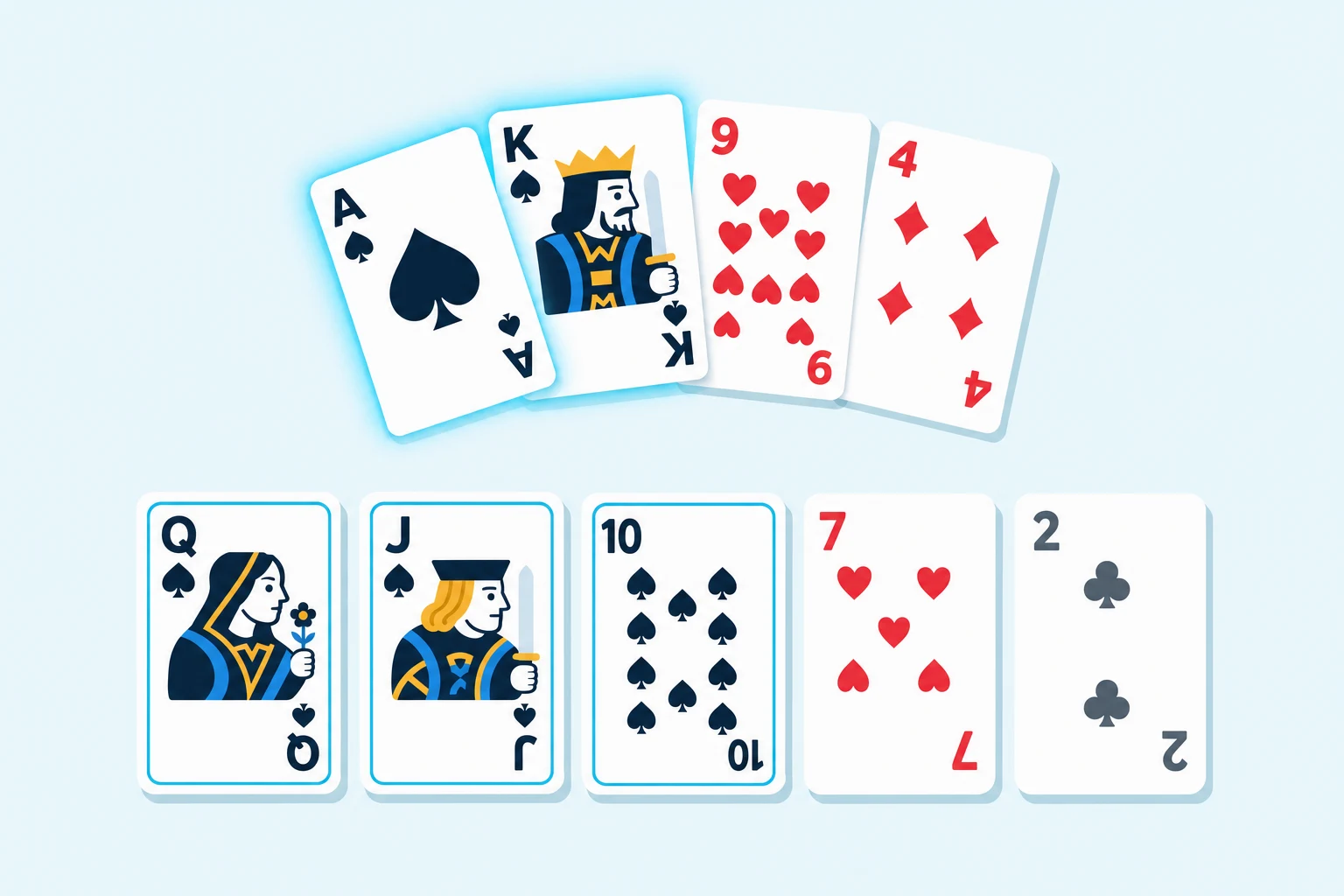
First, you get four hole cards and must use exactly two of them with exactly three community cards. Not one, not three, always two plus three. Holding four hearts doesn’t give you a flush when two hearts hit the board, because only two of yours can play. This rule is the source of nearly every beginner misread, so drill it until it’s reflex.
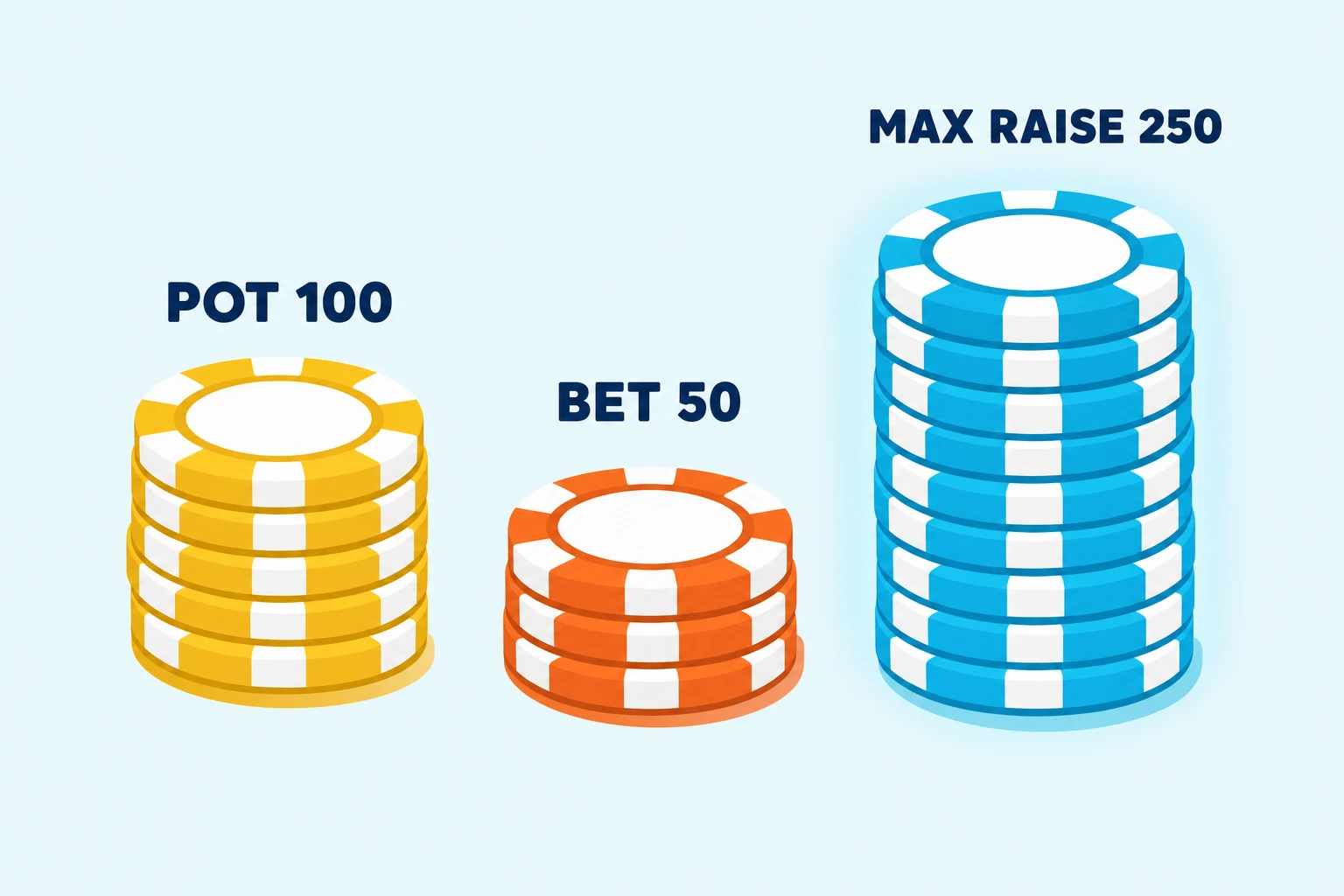
Second, the betting is pot-limit: the most you can bet or raise is the size of the pot. When you’re facing a bet, the math works like this: you match the bet first, then you can raise by everything in the pot including your call. With 100 in the pot and a bet of 50 in front of you, you call 50, the pot becomes 200, and you can raise 200 more, 250 total. No shoving 100 big blinds over a limp, no overbet jams. Pressure in PLO builds street by street, like a wave instead of a cliff.
PLO vs hold’em at a glance
| Hold’em | Pot-limit Omaha | |
|---|---|---|
| Hole cards | 2 | 4, use exactly 2 |
| Preflop favorite’s edge | Often huge (aces vs a suited connector are 4-to-1) | Rarely large (even aces are a mild favorite) |
| Typical winning hand | One pair wins plenty | Straights, flushes, and boats do the winning |
| Overpair on the flop | Often strong | Often a bluff-catcher at best |
| Betting | Usually no-limit | Capped at the pot |
The table’s theme is one idea repeated: hands you were taught to treasure are worth less, and the bar for a confident hand is higher.
Why equities run close
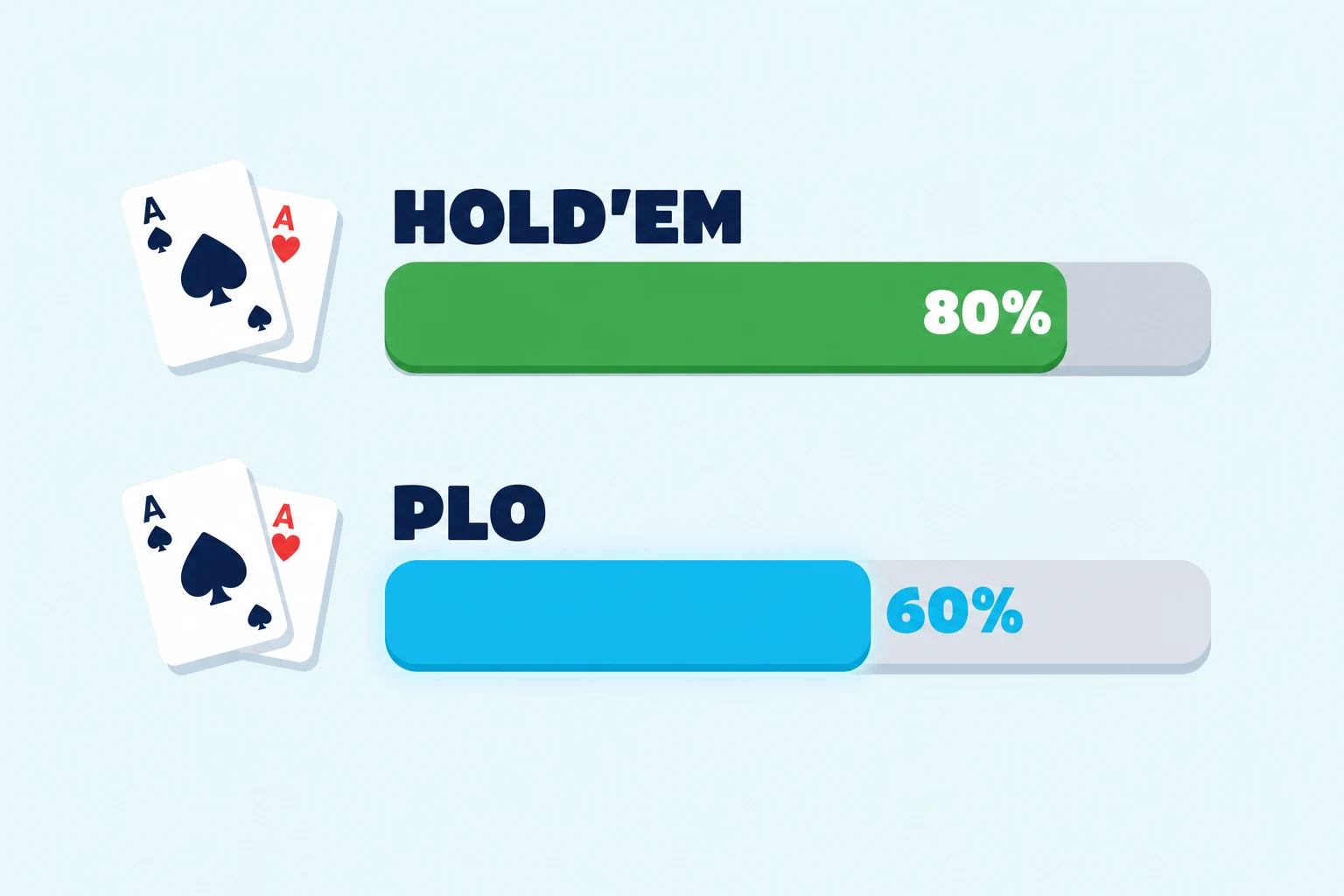
Four hole cards make six two-card combinations, so every player’s hand connects with far more flops in far more ways. The practical result: preflop and flop equity gaps shrink dramatically. In hold’em, aces against a suited connector are roughly a 4-to-1 favorite. In PLO, aces with weak side cards against a well-coordinated rundown like T-9-8-7 are closer to a 6-to-4 favorite, sometimes barely better than a coin flip, and on many flops the rundown becomes the favorite before the aces player has noticed the game changed.
This is why the Wang and Seidel finale played the way high-level PLO always does: stacks moving in with both players live, over and over. Close equities aren’t a bug in the format. They’re the format, and the winners are the players who play the post-flop streets better, not the ones dealt the prettier starting hand.
Play for the nuts, keep a redraw
In hold’em you can win comfortably with the third-best flush. In PLO, with everyone holding six combinations, the second-nut hand at showdown is how stacks disappear. The standing doctrine of the game is to build pots when you hold or draw to the nuts, and to fold the pretty hands that can only make second-best. The nut check is a Hold’em lesson in Poker Skill too: K♥ 9♥ on Q♥ 7♥ 2♣ is a non-nut flush draw there, because a player holding the A♥ with another heart makes the better flush.
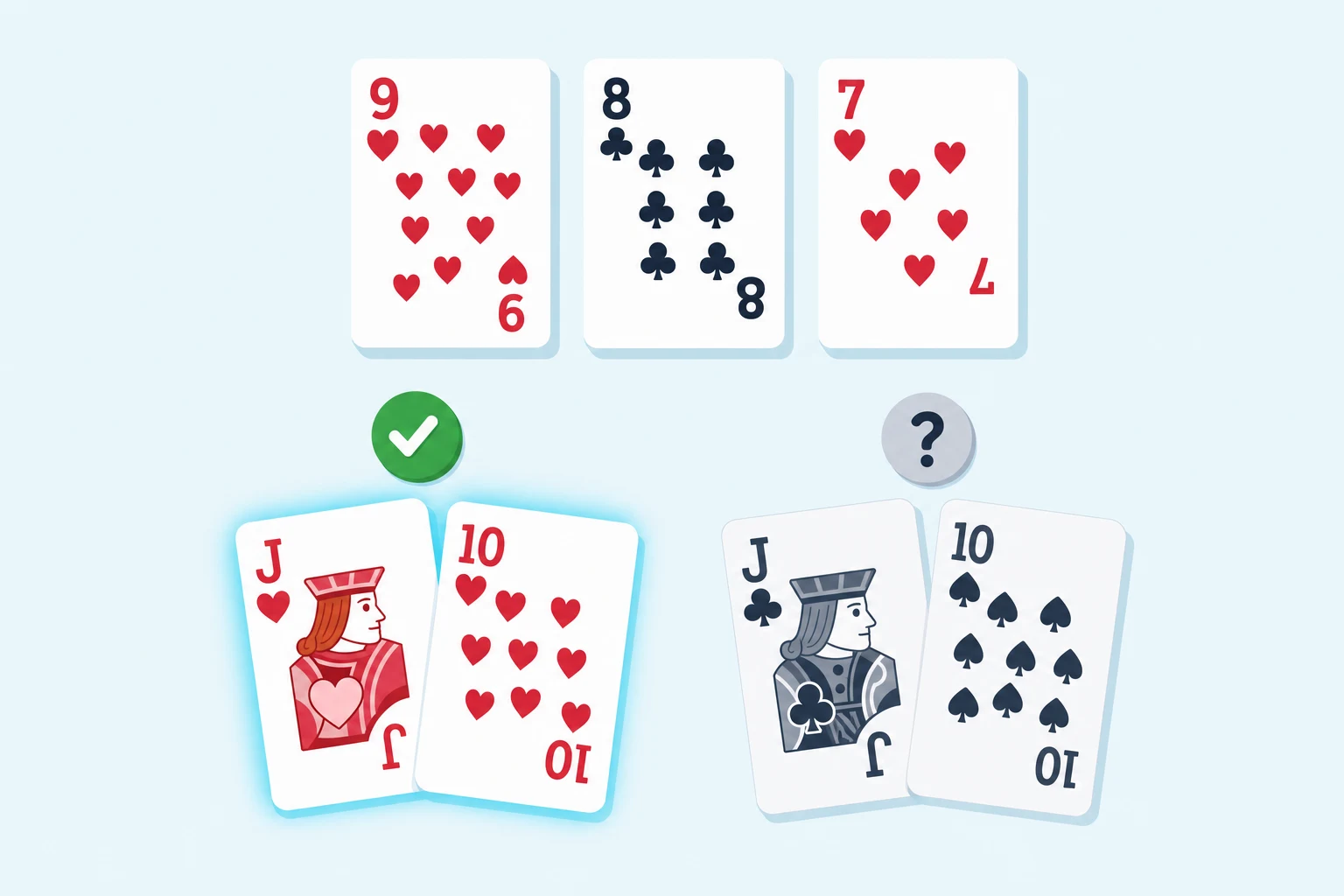
The concept that separates real PLO players is the redraw: a strong made hand that can still improve. Flop the same straight as your opponent, and the chips usually go in. If your side also holds a flush draw or a set, you’re free-rolling: you split when nothing comes and scoop when your extra outs arrive. If theirs does and yours doesn’t, the “same hand” is quietly a disaster.
The hold’em habits that cost money
The expensive mistakes hold’em converts make are predictable enough to list. They overvalue bare aces, treating A-A-7-2 with no suits like a monster when it’s really a one-street hand that hates every coordinated flop. They fall in love with top pair and overpairs, which in PLO are bluff-catchers on most textures, not value hands. They chase non-nut draws, paying full price to make the second-best flush. And they slowplay strong made hands without redraws, giving six-combination hands free cards in a game where free cards flip pots. Each habit is rational in hold’em. Each one bleeds in Omaha, slowly enough that players blame variance for months.
Starting hands: four cards that work together
Good PLO starting hands are teams, not celebrities. You want all four cards coordinated: double-suited rundowns like J-T-9-8, big pairs with connected, suited side cards like A-A-J-T double-suited, and broadway combinations that can flop the nut straight with redraws. A hand with three working cards and one disconnected straggler, the dangler, plays closer to a three-card hand against opponents holding four. If you take one filter to your first session, take this one: does this hand make nut hands, and do its parts work together? If either answer is no, fold and enjoy watching what would have happened. The pot odds you’re offered rarely rescue a hand built to make second-best.
Where this fits
PLO rewards exactly what a practice habit builds: pattern fluency in spots you haven’t memorized yet. The exactly-two rule needs reps before it’s reflex, close equities punish autopilot aggression, and nut-awareness is a trained skill, not a talent. If the split-pot version appeals to you, the Omaha hi-lo (O8) rules are the same four cards with half the pot going to a qualifying low, and that game also anchors the O in HORSE, where it plays with limit betting and a whole different rhythm. Either way, the path in is the same: small stakes, tight starting hands, and honest reviews of every big pot you play.
FAQ
Can I use three of my hole cards in Omaha? No. Exactly two of your four hole cards combine with exactly three board cards, every hand, no exceptions. Four hearts in your hand with two on the board is not a flush, and misreading this rule at showdown is the classic first-session Omaha story.
Is PLO harder than hold’em? It’s more complex mechanically: more combinations to read, and more board textures where the nuts change street to street. The equities running closer also means variance is higher, so results lie to you longer. Whether that’s “harder” depends on you, but it certainly punishes autopilot more.
Why is Omaha played pot-limit instead of no-limit? With equities so close, no-limit Omaha would let players shove preflop as near coin flips constantly, and the skill in the game lives post-flop. Capping bets at the pot keeps early streets affordable, builds pots gradually, and makes the later streets, where the real edges are, actually get played.
What bankroll swings should I expect in PLO? Bigger than hold’em at the same stakes. Close equities mean even well-played hands run into live opposition, so winning players still ride longer and deeper swings. Start at stakes where a twenty-buy-in downswing is an annoyance, not an emergency.