
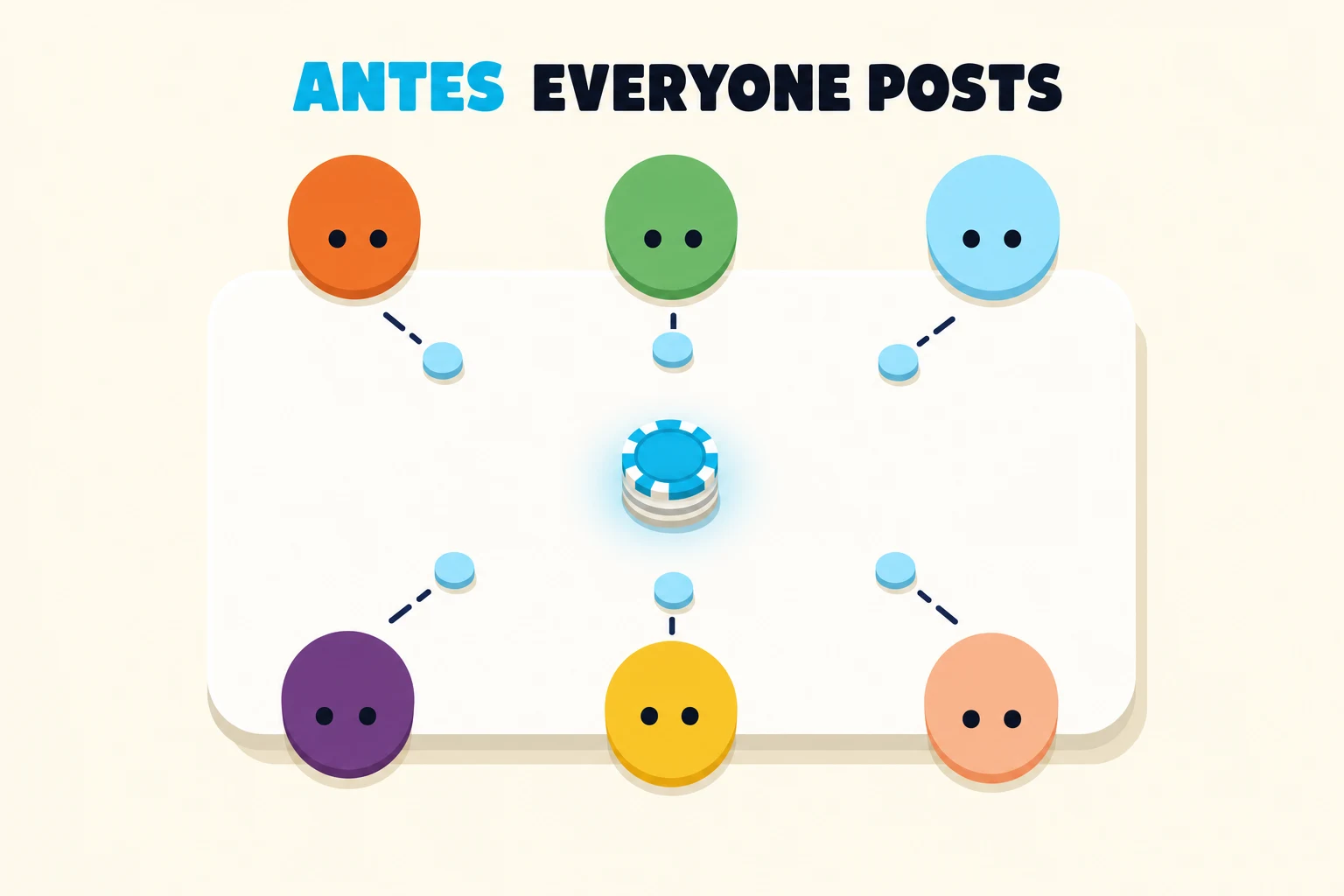
An ante is a small forced bet that every player posts before the cards are dealt. Blinds come from two seats; antes come from everyone. That one difference fattens the starting pot by about two thirds in a standard tournament, and correct strategy loosens to chase it: open more hands, steal more pots, defend your blind more often.
Ante vs blind
The blinds are positional: the small blind and big blind post because the button says it is their turn, and the obligation rotates. An ante is universal: every seat pays it, every hand, no rotation and no escape. Blinds are also live bets that count toward calling a raise; antes are pure dead money, thrown into the middle with no further rights attached. Poker Skill drills the live half early: with 50 already posted in the small blind and 300 to match, you call by adding the 250 that is missing. Cash games mostly run on blinds alone. Tournaments add antes after the first few levels precisely because dead money forces action, and forced action is what shrinks a field.
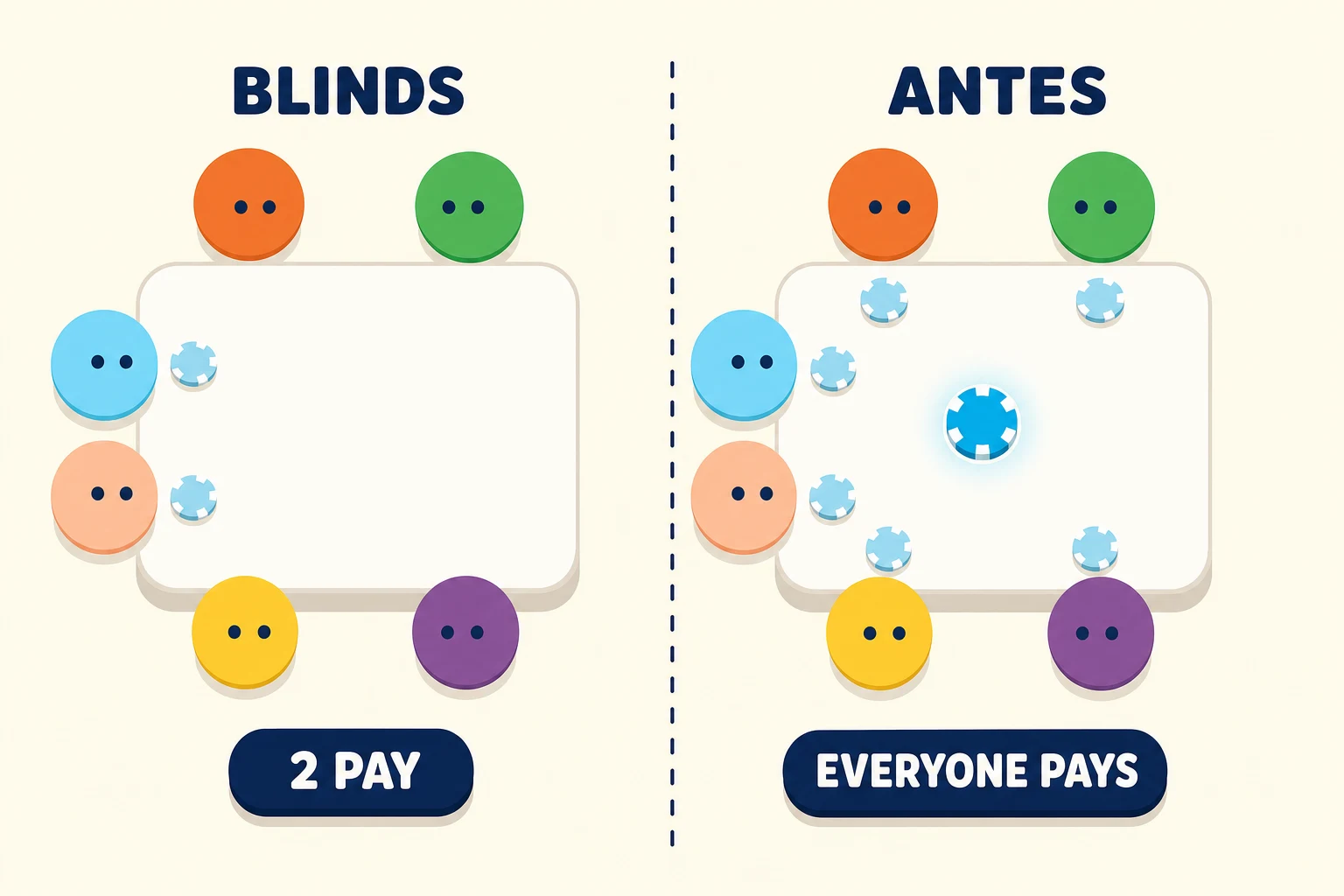
Modern tournaments almost all use the big blind ante: instead of nine players each tossing in a chip and the dealer counting the mess, the player in the big blind posts one ante for the whole table, and the obligation rotates with the blind. One player pays nine times as much once per orbit, everyone pays the same amount per orbit overall, and the game moves visibly faster. Speed is the entire reason card rooms adopted it.
How big antes actually are
Tournament antes are sized against the big blind. The modern standard is a big blind ante equal to one big blind per hand, which works out to each player paying about one ninth of a big blind per hand at a full table. Older formats charged each player individually, usually 10 to 15 percent of the big blind per hand, which lands in the same total range. Stud games flip the proportions entirely: with no blinds at all, antes plus the bring-in are the only forced money, and fighting for those antes with third-street steals is a core part of stud strategy. The number worth memorizing for hold’em tournaments is simple: once antes kick in, every orbit costs you roughly two and a half big blinds instead of one and a half. Your stack drains two thirds faster for sitting still. That quiet tax is the second reason tight players go broke in the ante era even when they never lose a showdown.
The pot math
Everything antes do to strategy flows from one table. Nine-handed, blinds at 0.5 and 1 big blind, with a standard big blind ante of 1 big blind:
| No ante | With ante | |
|---|---|---|
| Pot before any action | 1.5 bb | 2.5 bb |
| A 2.5x steal must work | 62.5% | 50.0% |
| A 2.2x steal must work | 59.5% | 46.8% |
| Equity the big blind needs to defend vs 2.5x | 27.3% | 23.1% |
The starting pot grows 67 percent. Every other number in the table is that one fact wearing different clothes.
Why antes loosen correct play
Take the steal row. Folded to you on the button with 1.5 big blinds out there, a 2.5x raise risks 2.5 to win 1.5, so pure math says both blinds must fold 62.5 percent of the time just to break even before your cards matter. That is a high bar, and it keeps trashy hands in the muck. Add the ante and the same raise risks 2.5 to win 2.5: now 50 percent folds pays for itself, and every fold rate above that is pure profit before the hand even has equity. Hands just below a normal button range become clear opens, not because they got prettier, but because the price of the steal dropped while the prize grew.
Defense loosens for the same reason. Facing a 2.5x open in the big blind with no ante, you call 1.5 more into a 4 big blind pot, so you need about 27 percent raw equity for the call to make sense. With the ante in the middle, the same 1.5 calls into 5, and the bar drops to about 23 percent. Four points sounds small; it is the difference between folding and defending the bottom quarter of your range, dozens of hands per session. Fold them all with antes running and you are burning the discount, exactly as the aggressive players two seats over hope you will. The full pot odds machinery behind these numbers works the same way postflop; antes just move the starting line.
A worked orbit
Blinds 500/1,000, big blind ante 1,000, nine players. You are in the cutoff with Q♦8♦, a hand that sits on the edge of the opening range in ante-free games. The pot already holds 2,500. You open to 2,200; only the big blind calls, and they check a flop of K♣7♦2♦ to you. Notice what already happened: your raise needed everyone behind you to fold less than half the time to show an automatic profit, you have a flush draw as backup when called, and the pot you are now betting into started two and a half blinds deep instead of one and a half. From here the hand plays like any other flop, but the antes decided the part that matters, which is that you were in the hand at all. Being in more hands with the right discount, in position, is most of what “good tournament player” means in the middle stages.
When this lies to you
Loosening has edges. First, wider is not weaker: the discount justifies opening more hands; it never justifies limping 9♣3♦ because the pot looks juicy. The extra hands you play should still be raised, still be chosen for playability, and still be folded to heavy resistance. Second, the steal math assumes the blinds can fold. Against a table that defends everything, the ante discount shifts from your steals to your value hands, so widen the hands that want a call, not the pure bluffs. Third, multiway pots dilute the prize: dead money is only cheap to attack when one raise can claim it. And once stacks drop under about 15 big blinds, the ante era’s real gift is shove math, not open math, which is the MTT phase map’s territory.
A live-play pattern
Before folding any borderline hand in late position, count the preflop pot in big blinds out loud, including every ante. If the number starts with 2.5 instead of 1.5, remind yourself the steal only needs to work half the time, then look at the two players in the blinds and ask whether they fold that often. Answer honestly and the borderline hand usually plays itself. This habit costs three seconds and repairs the single most common ante-era leak, which is playing hour-six prices with hour-one instincts.
Frequently asked questions
What is an ante in poker? An ante bet is a forced bet every player at the table posts before the deal, separate from the blinds. Antes seed the pot with dead money so there is always something worth fighting for, which speeds up the game and punishes players who fold all night. Poker Skill’s lesson on bets and raises starts from what blinds share with antes: they are forced, and they go in before any cards are dealt.
What is the difference between an ante and a blind? Blinds are posted by two rotating positions and count toward those players’ preflop calls. Antes are posted by everyone and count toward nothing; they are pure pot-sweetener. Most tournaments use both at once from the middle levels on.
What is a big blind ante? A convention where the big blind posts the entire table’s ante in one chip stack, rotating with the position. The total cost per orbit is the same as everyone anteing individually, but the dealer handles one payment instead of nine, so hands per hour go up. It is the standard in nearly all modern tournaments.
Do cash games have antes? Usually not; blinds alone drive the action, and some games add straddles for the same pot-sweetening effect. A few live cash games run a button ante, and when they do, the strategy shift is the same one this article describes: more dead money, looser correct play.
What does “ante up” mean? It is the dealer’s call for everyone to post their antes before the deal, and it long ago escaped poker into everyday English as an invitation to pay your share or raise your commitment. At the table it means one literal thing: chips in, cards coming.