
Best App to Learn Poker: A Beginner's Learning App Checklist
Seven five-minute tests that separate a poker learning app that teaches from one that just deals cards. Run any app through them tonight, including ours.
Hands-on practice notes, drills, examples, and poker decision reps.
Seven five-minute tests that separate a poker learning app that teaches from one that just deals cards. Run any app through them tonight, including ours.
Six books for new players, in the order a beginner should actually read them, with what each one teaches, who it fits, and what it will not cover.
A practice app earns its place by handing you a decision and then telling you why your answer was wrong. Four that do it, what each one drills, and where the free paths stop.
GTO Wizard, Postflop+, PokerTrainer, and Poker Skill, compared by what they actually train, who each one fits, and what the free versions really give you.
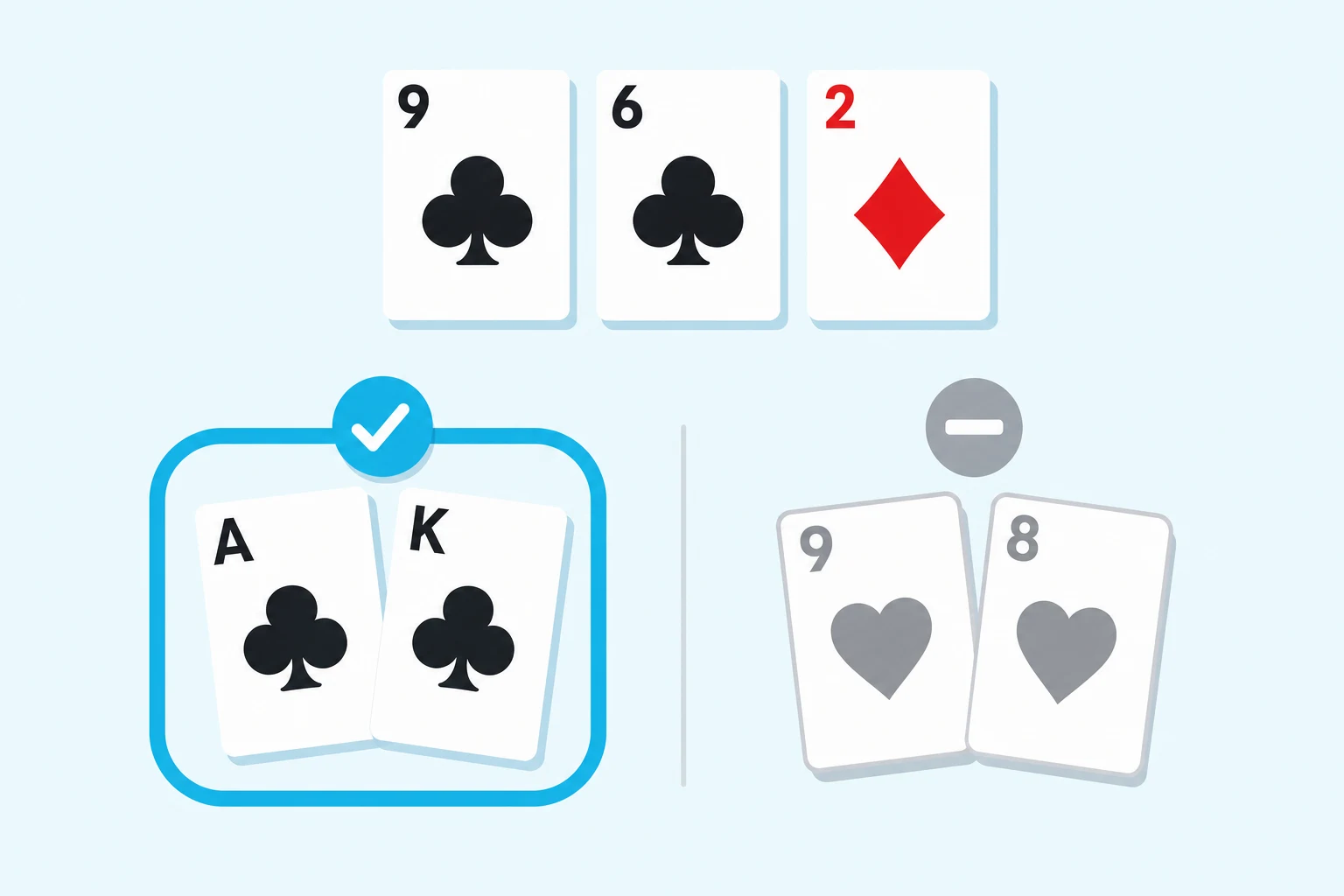
A good bluff blocks the calls you fear, can still improve and attacks a player who folds. Which hands qualify, which never should and where the folds actually live.
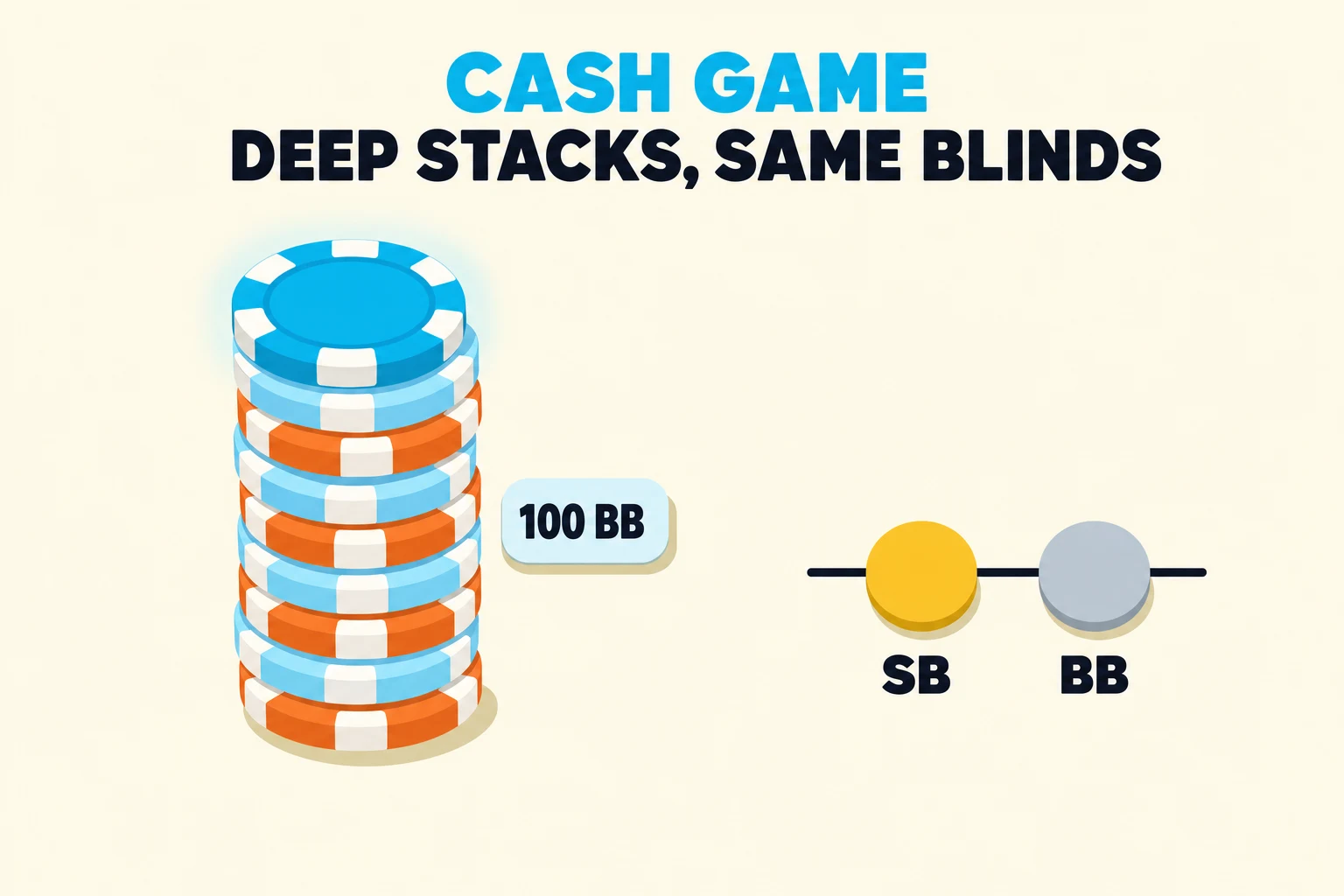
Cash games reward a specific discipline: deep stacks, no ICM, and the freedom to leave. Here are the six pillars that follow from those facts, the five leaks that punish them, and one hand played all the way to the river.
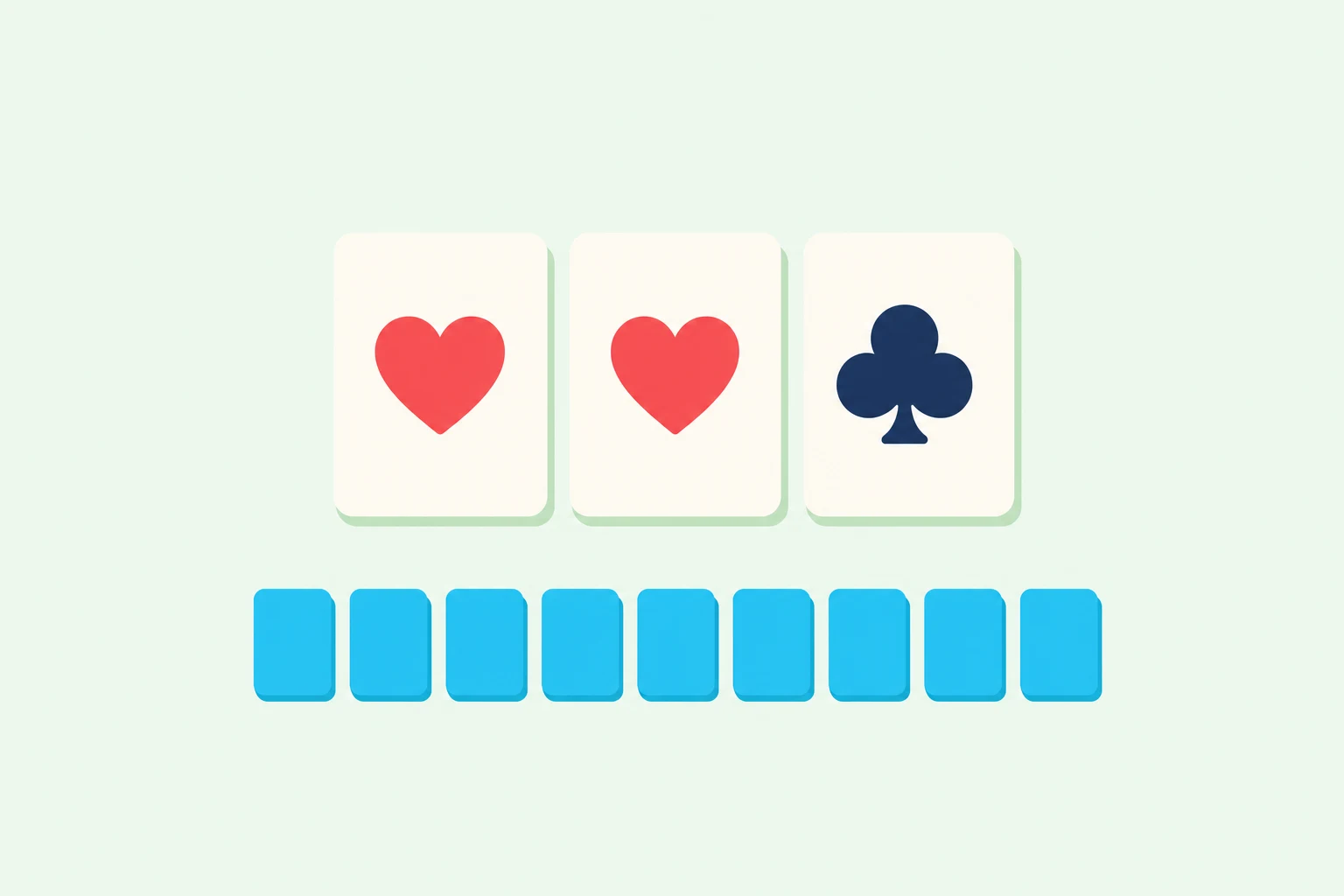
A flush draw is strong enough to raise with and weak enough to fold. Which one it is comes down to the price you are getting and how much pressure you can apply, street by street.
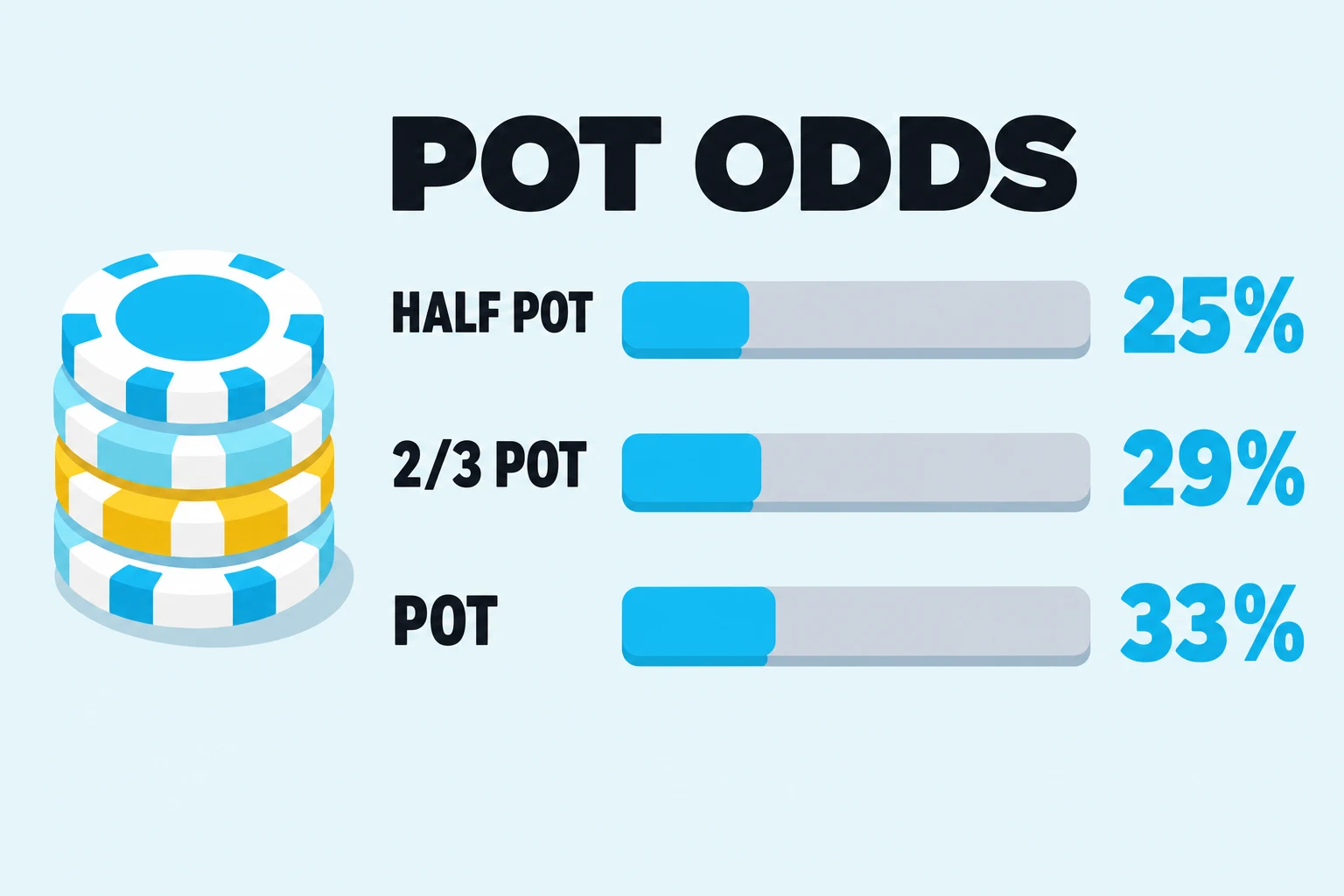
One division, one comparison. Here is the version you can run in five seconds at the table, the price chart for every common bet size, and three hands priced from flop to river.
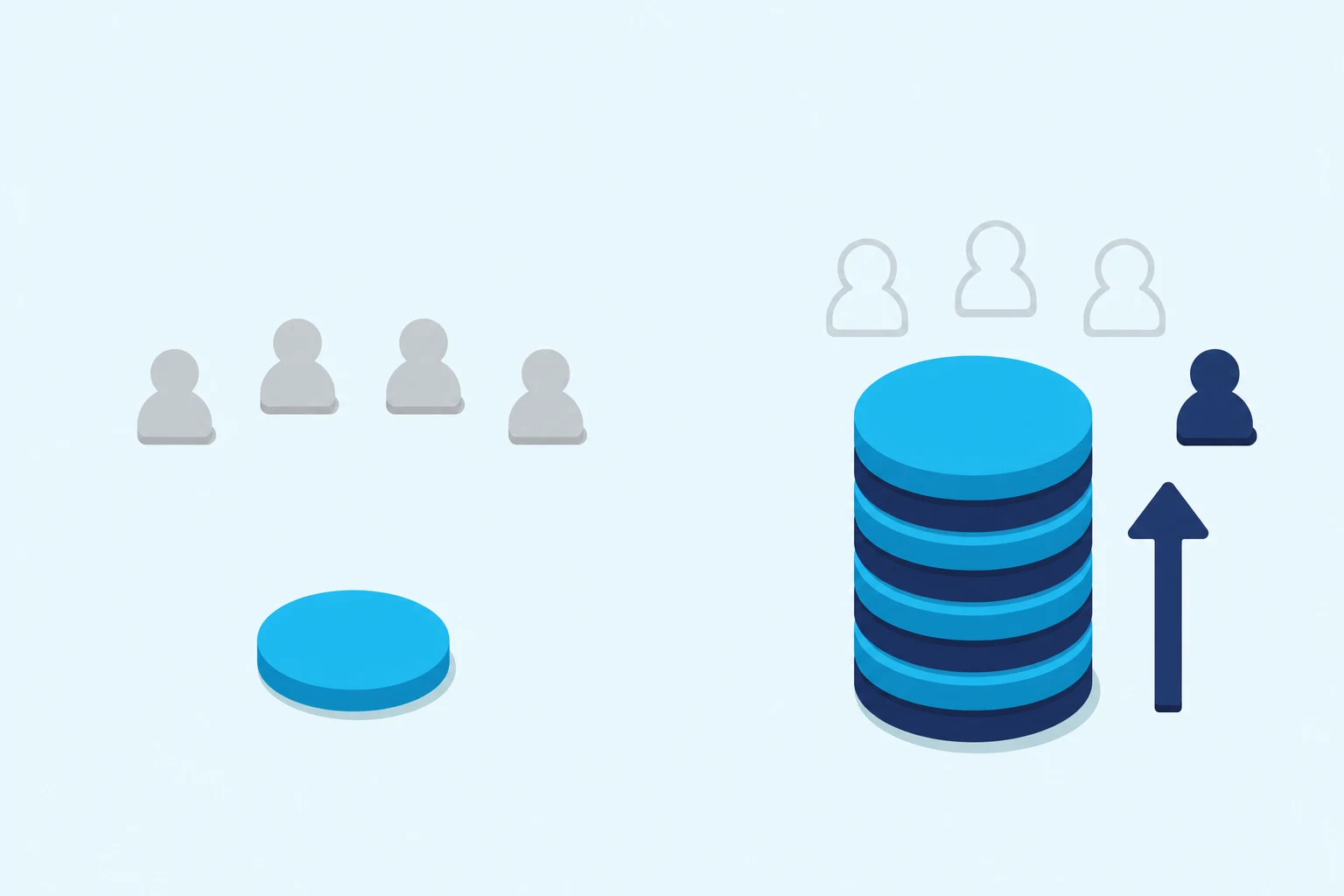
Raising with big cards is not showmanship. It charges worse hands, cuts the field down, and takes the lead into the flop. Here is what limping quietly costs you instead.
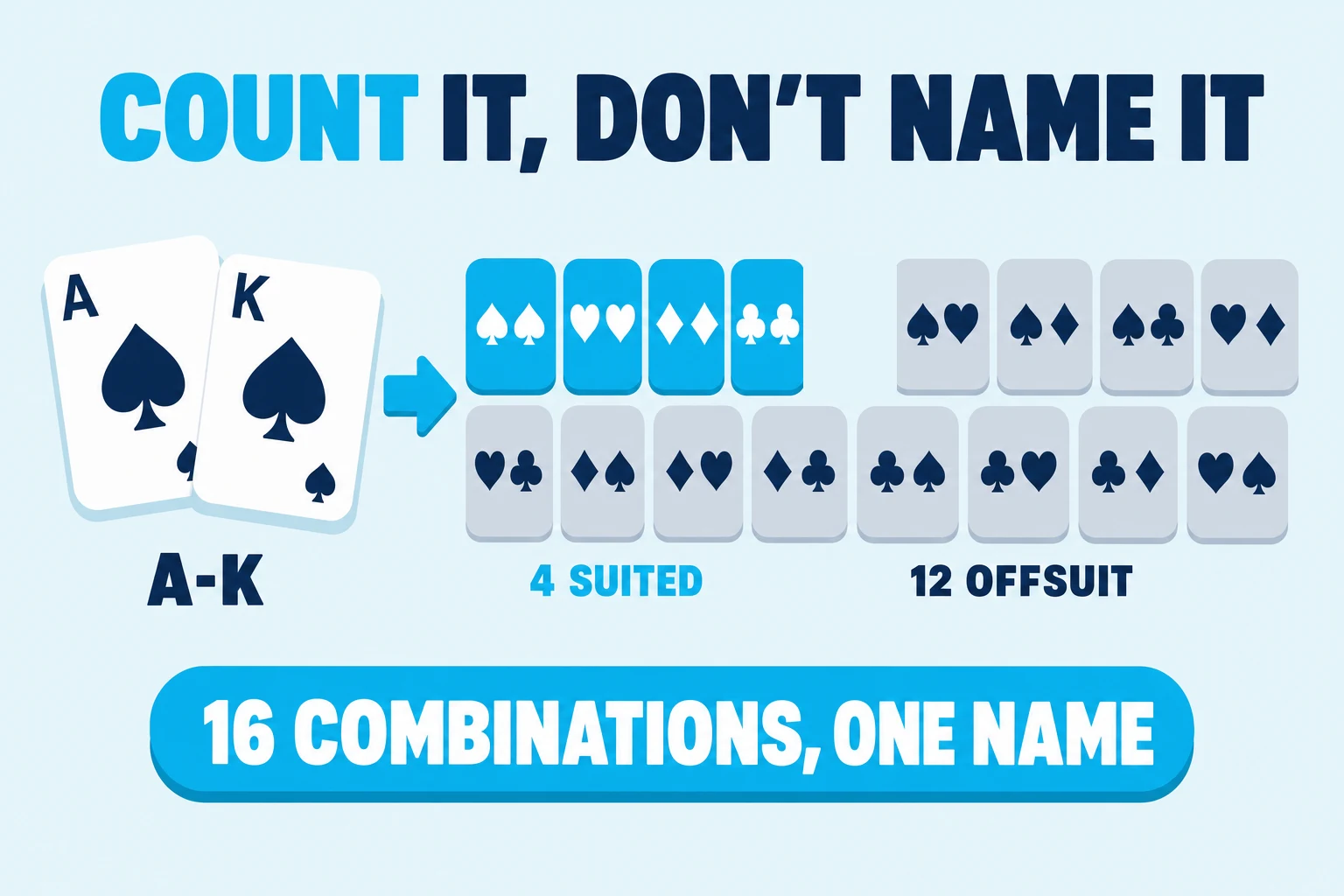
A range is every hand a player can hold right now, not the one hand you guessed. Write it down, count its combinations, and cut it street by street.
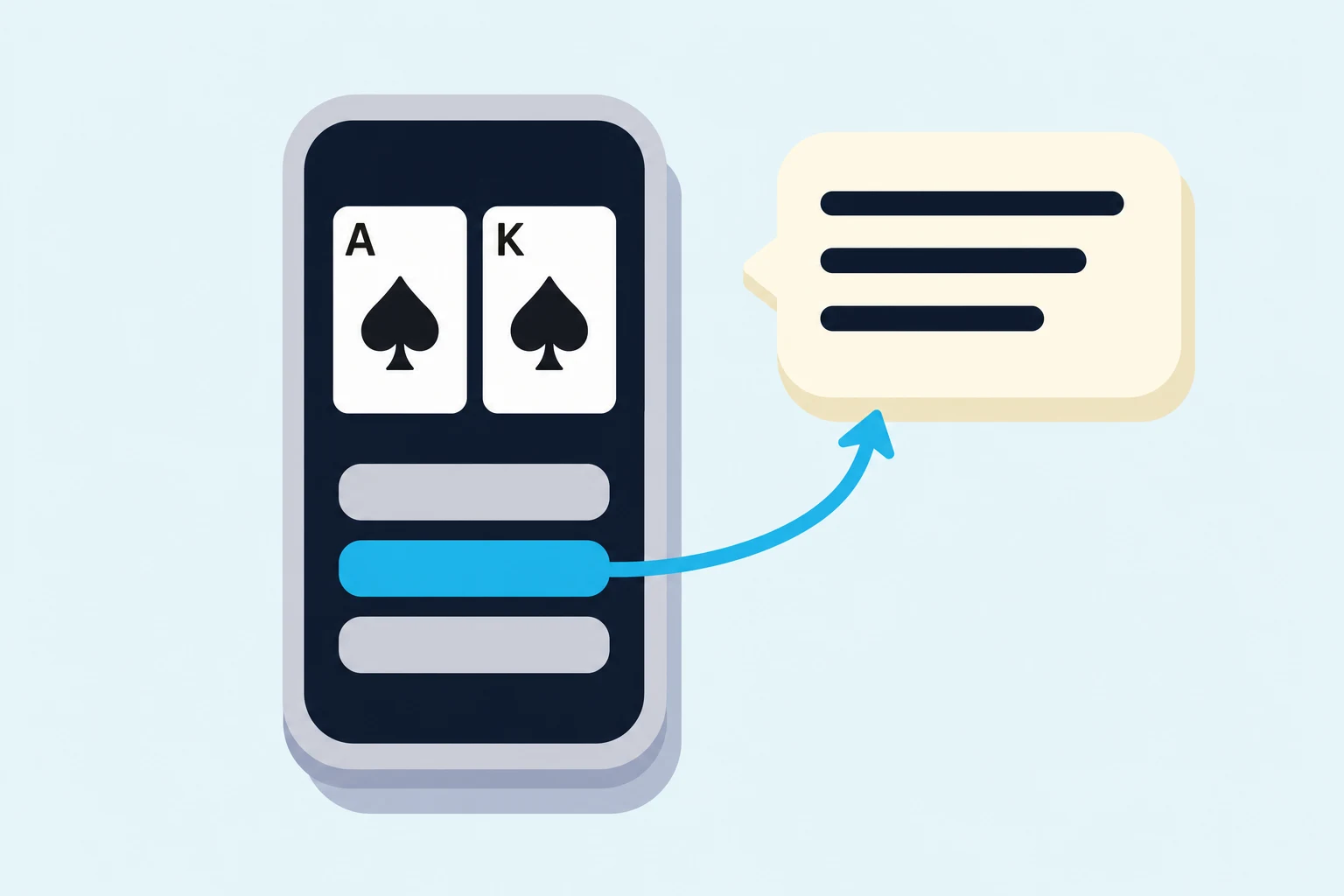
A trainer deals you a decision, grades your answer, and tells you why. How that loop works, the four kinds you will meet, and who actually needs one.
Four subscription course libraries, what each one lists as its price, who each one actually fits, and where a video library stops being the right purchase.
The grid looks arbitrary until you know why each hand is in it. Learn the widest seat, subtract a band for every seat earlier, then drill only the borderline hands.
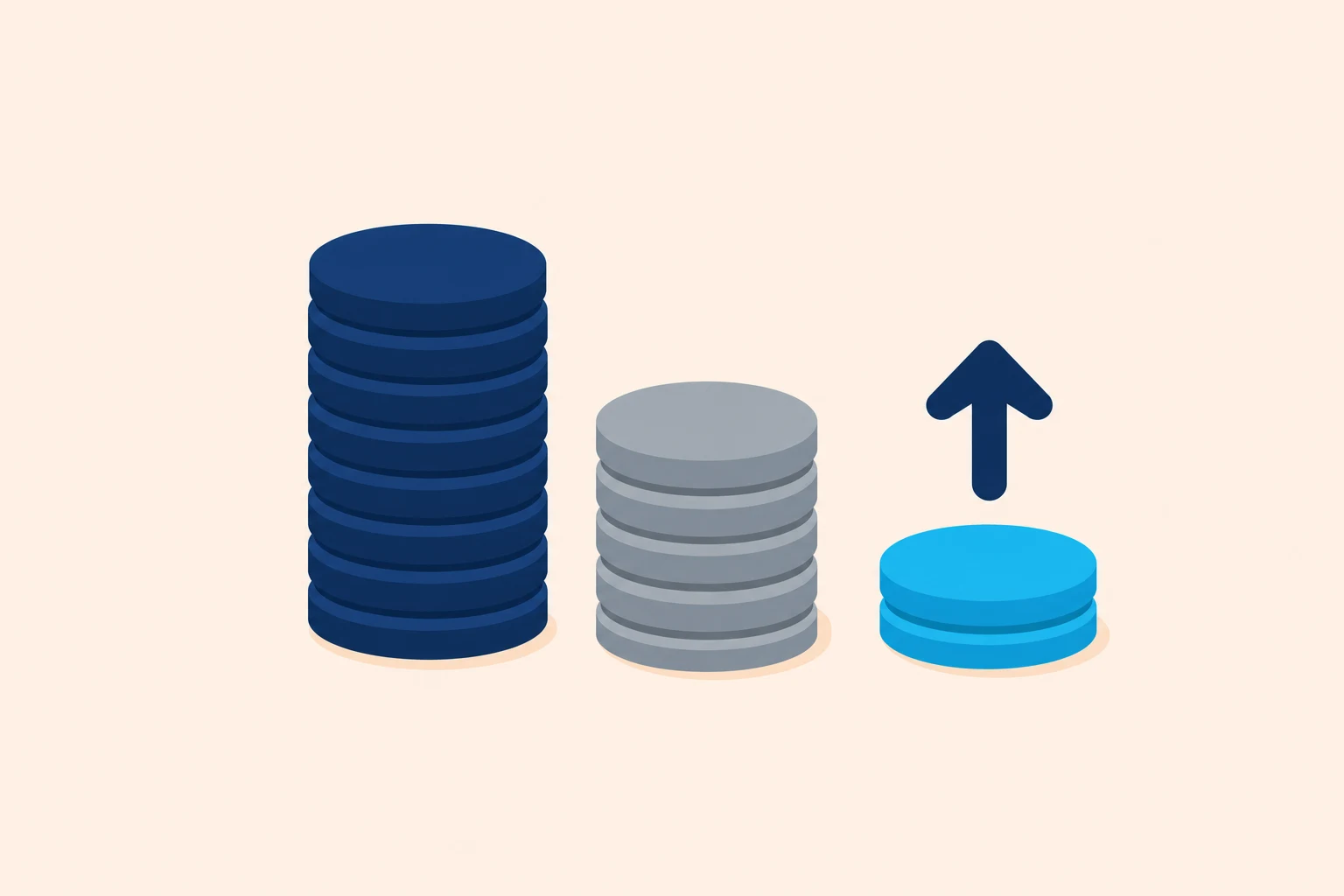
Below a certain stack, raising small and folding to the reraise quietly costs more than going all in. Where that line sits, why fold equity does the work, and the leaks around it.
Stop, stand up, name the trigger, set a re-entry condition. The five-step cooldown, the triggers behind it and the warning signs you can check mid-session.
Improvement is a loop, not a syllabus. Find the one leak costing you the most, pick the lever that fixes that kind of leak, and judge yourself on decisions instead of nights.
One topic a week, three short blocks, and a review that ends in a written sentence. The whole week is on this page: what to study, in what order, and how long each block takes.
Fifteen focused minutes a day beats a weekend marathon. The 5-5-5 routine: drill decisions, review one hand, learn one concept, repeat until it compounds.
A solver answers questions; a trainer builds habits. Which one your game actually needs right now, and the order that makes both worth the money.
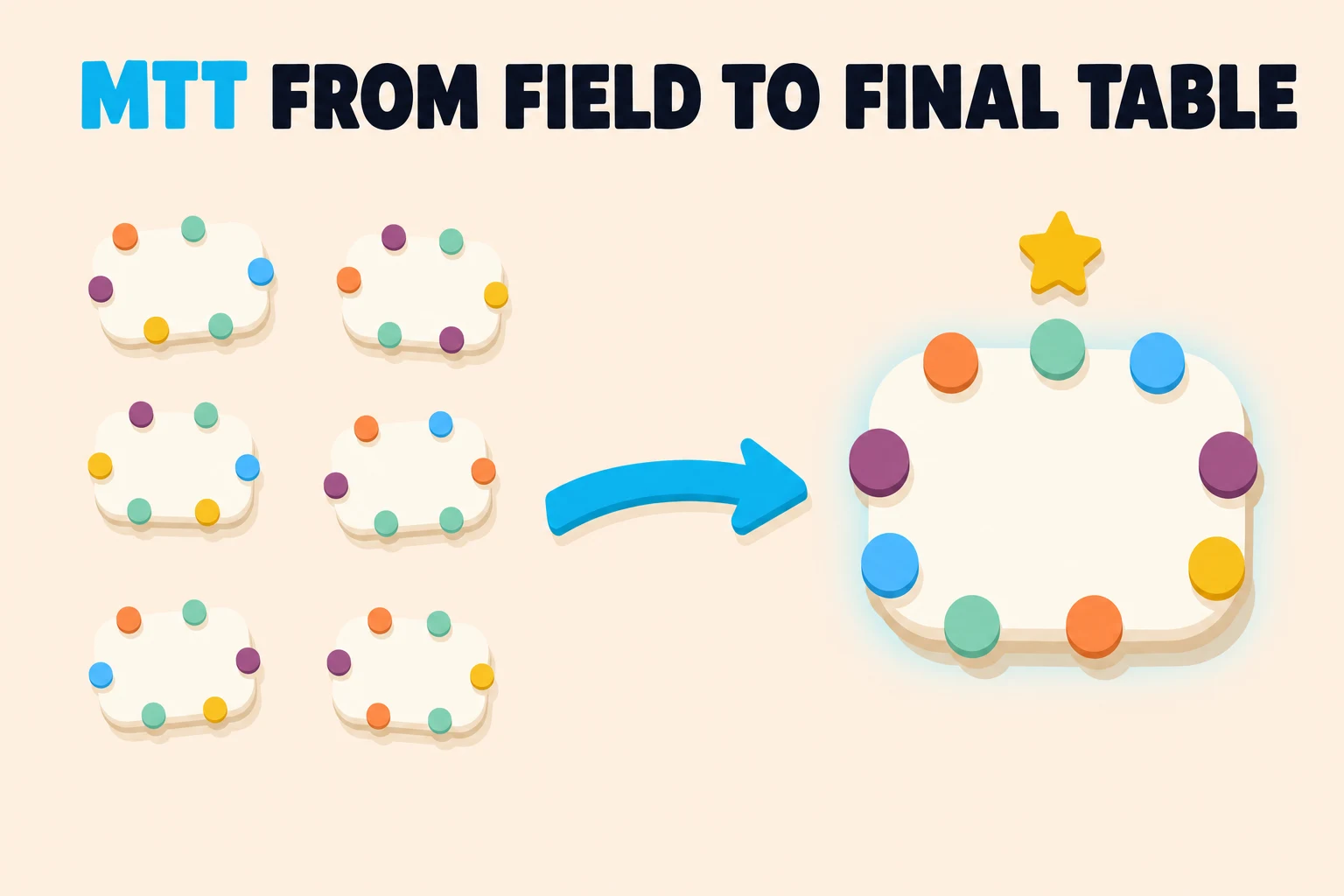
MTT means multi-table tournament, and the strategy that wins one changes every few hours. The five phases, the one adjustment each demands, and why stack depth in big blinds decides everything.
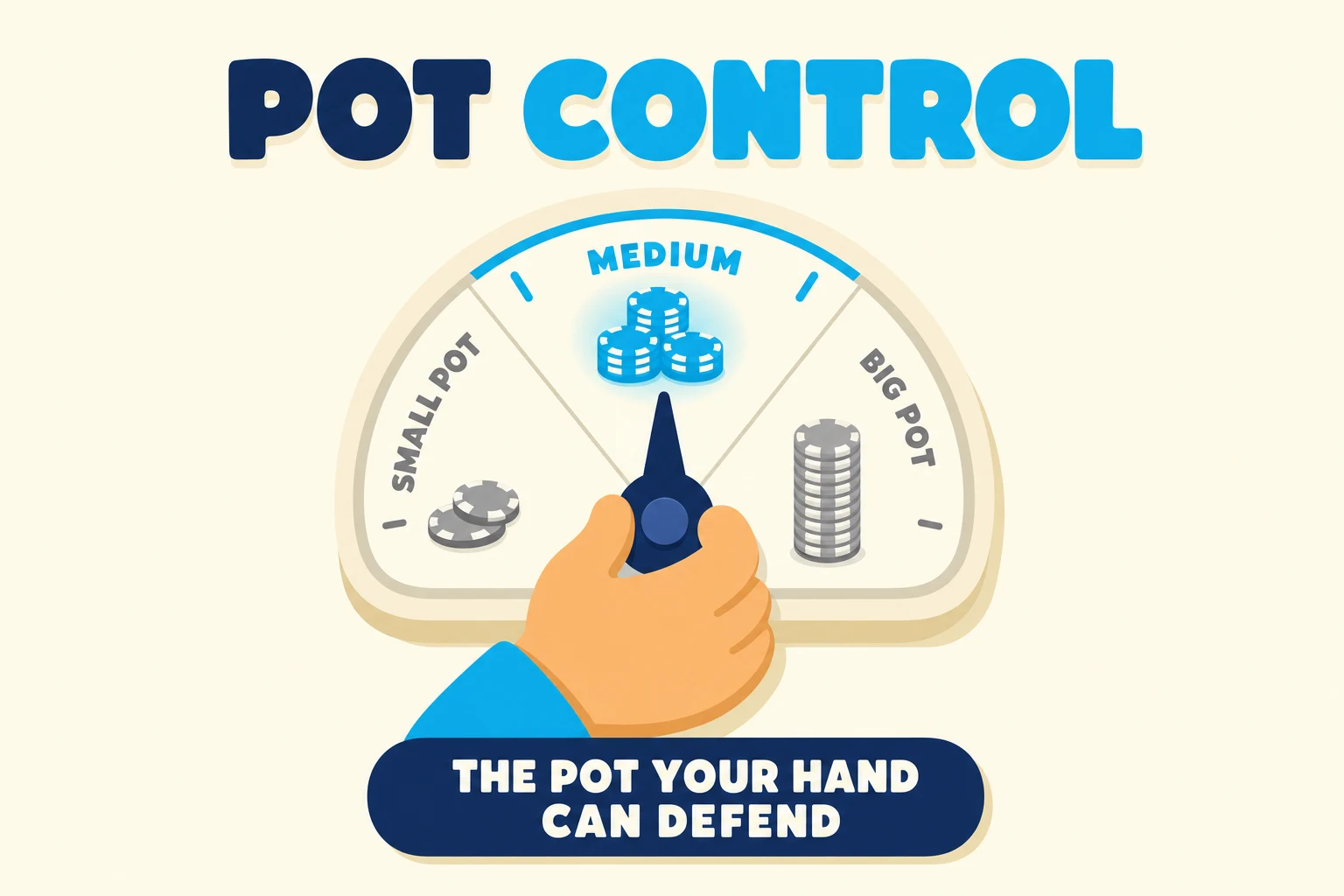
Pot control is not a synonym for checking scared. It means choosing, on purpose, the pot size your hand strength can defend. The mechanics, a worked hand, and the three spots where controlling the pot just burns value.
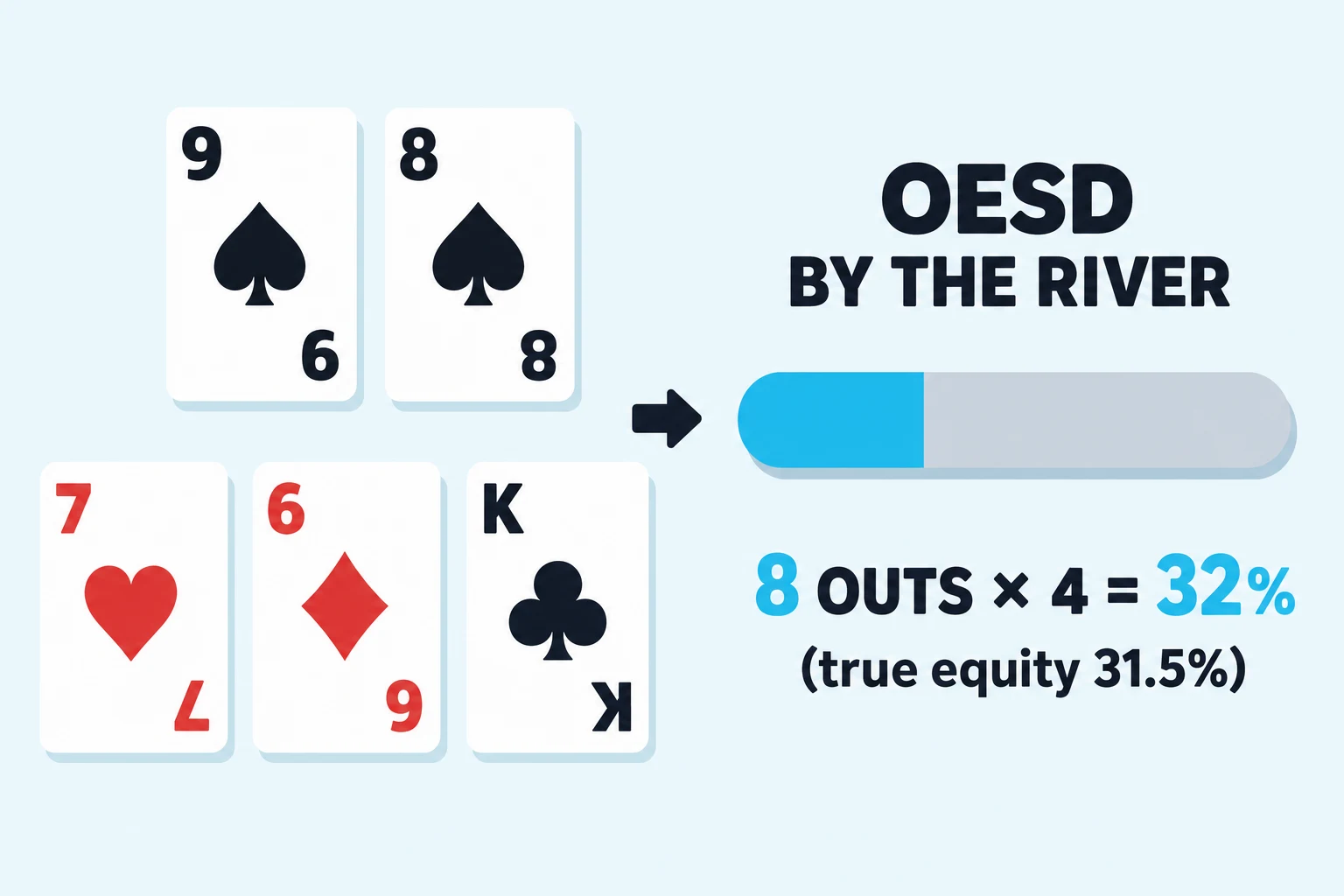
An open-ended straight draw is eight outs, and from the flop it gets there about a third of the time by the river. The math walked, three worked hands, and where the number lies.
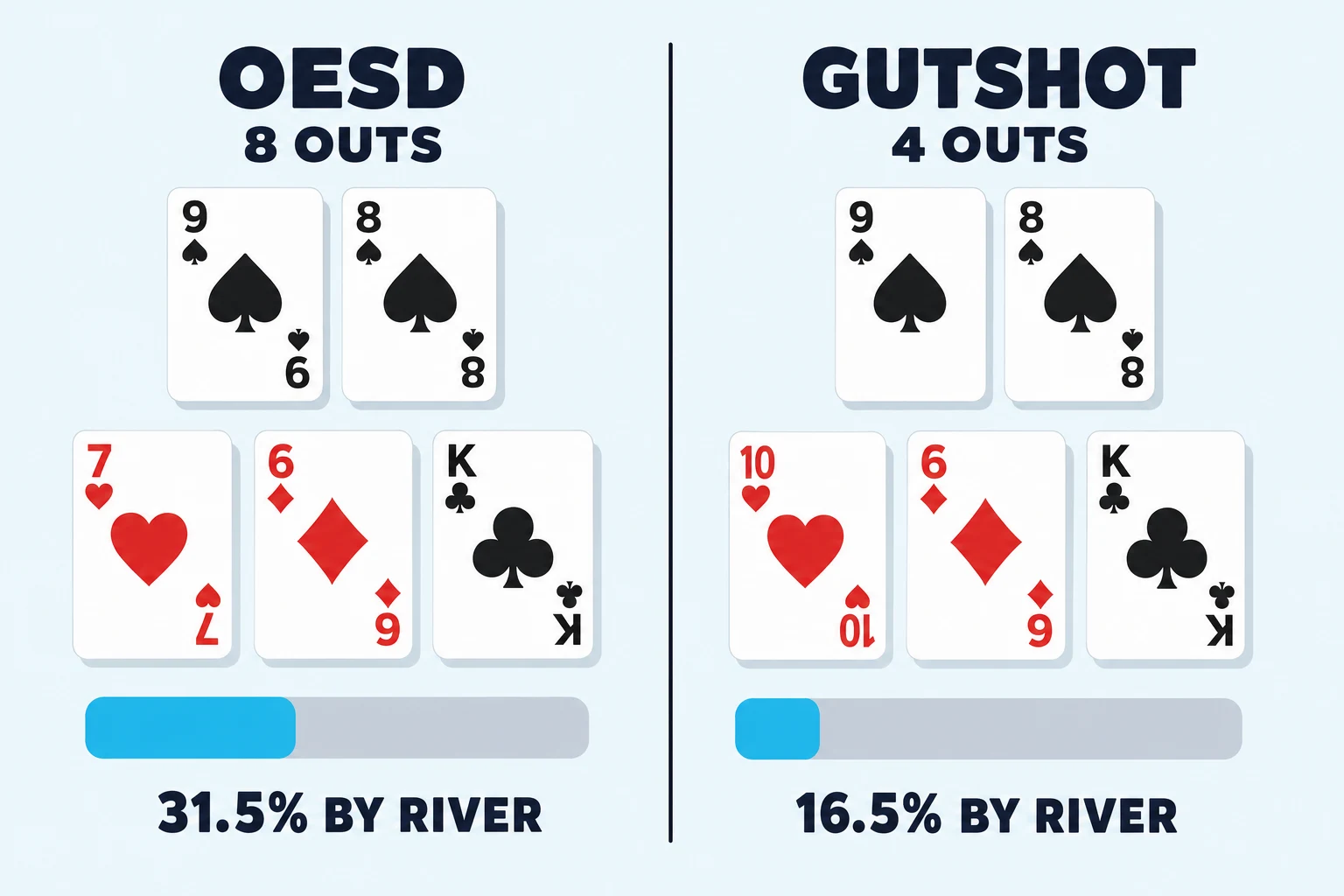
An OESD is 8 outs and 31.5% by the river. A gutshot is 4 outs and 16.5%. The math, three worked hands, and when the gap closes or widens.
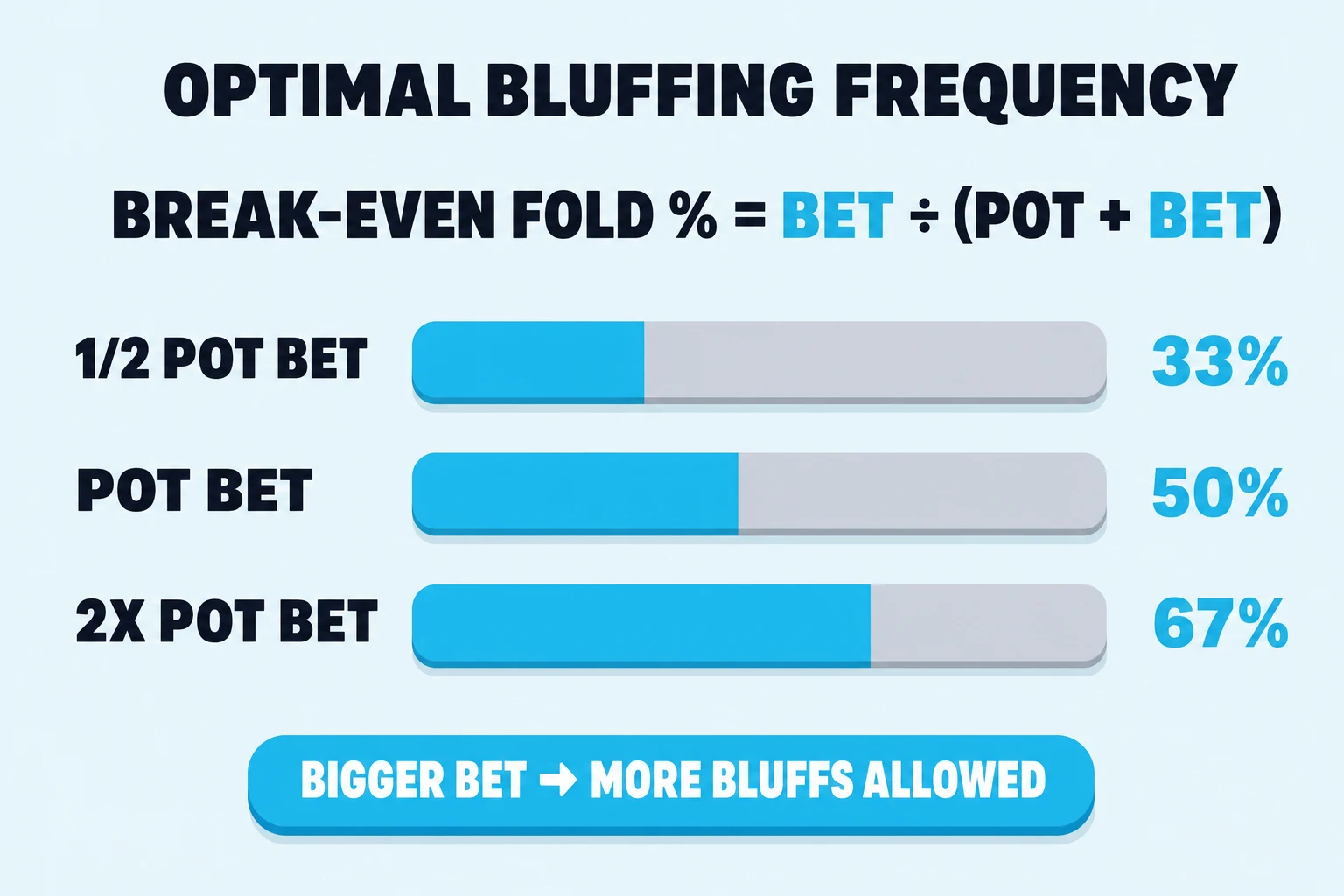
The break-even formula for a bluff is risk over risk plus reward. The mirror is your minimum defense frequency. The third number, bluff share of the betting range, is set by the price your bet gives the caller.
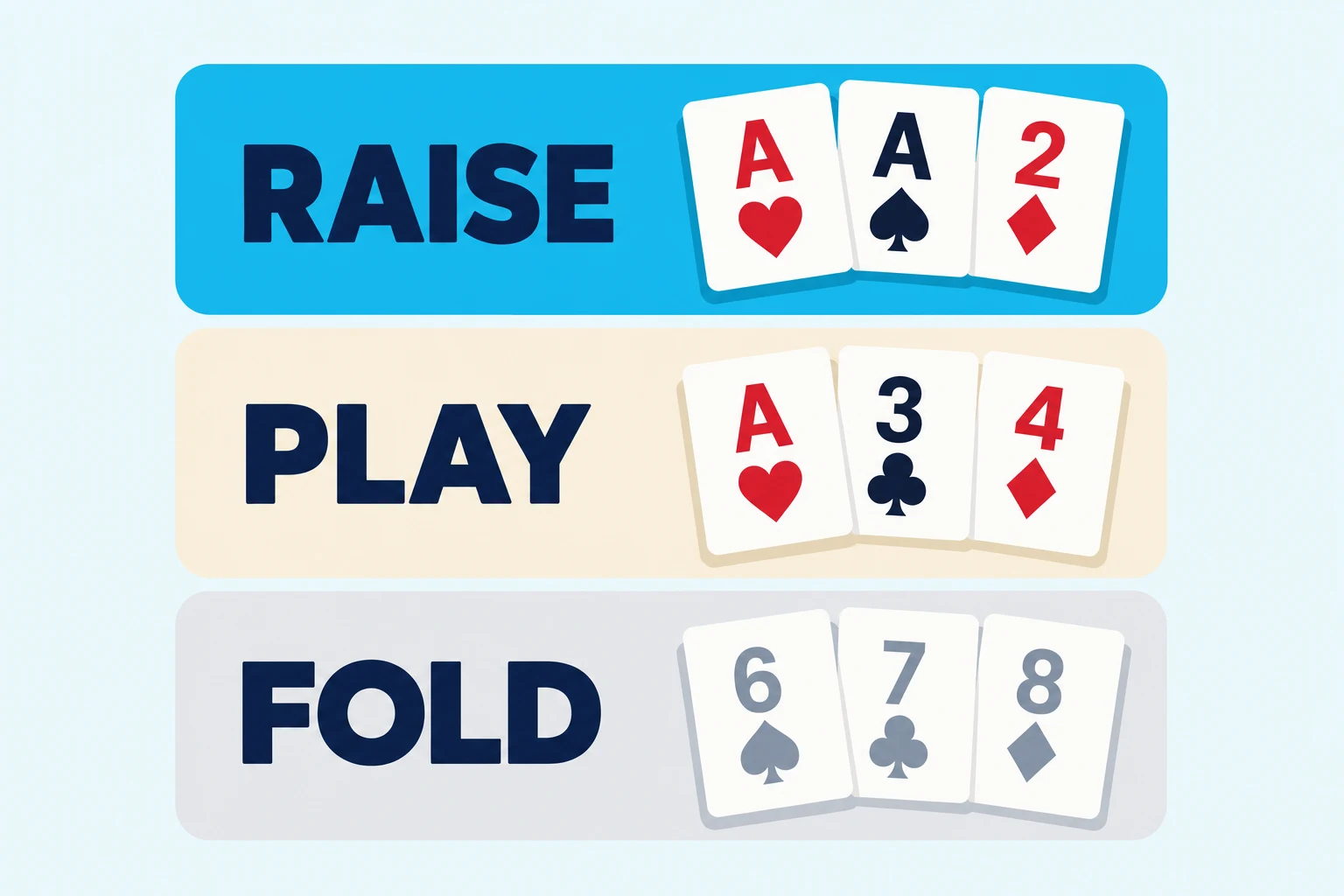
The best Big O starting hands are ace-based, lean on a deuce, and can win the high half as well as the low. The shapes worth raising, the ones worth a cheap look, and the reason raising a monster can be the mistake.
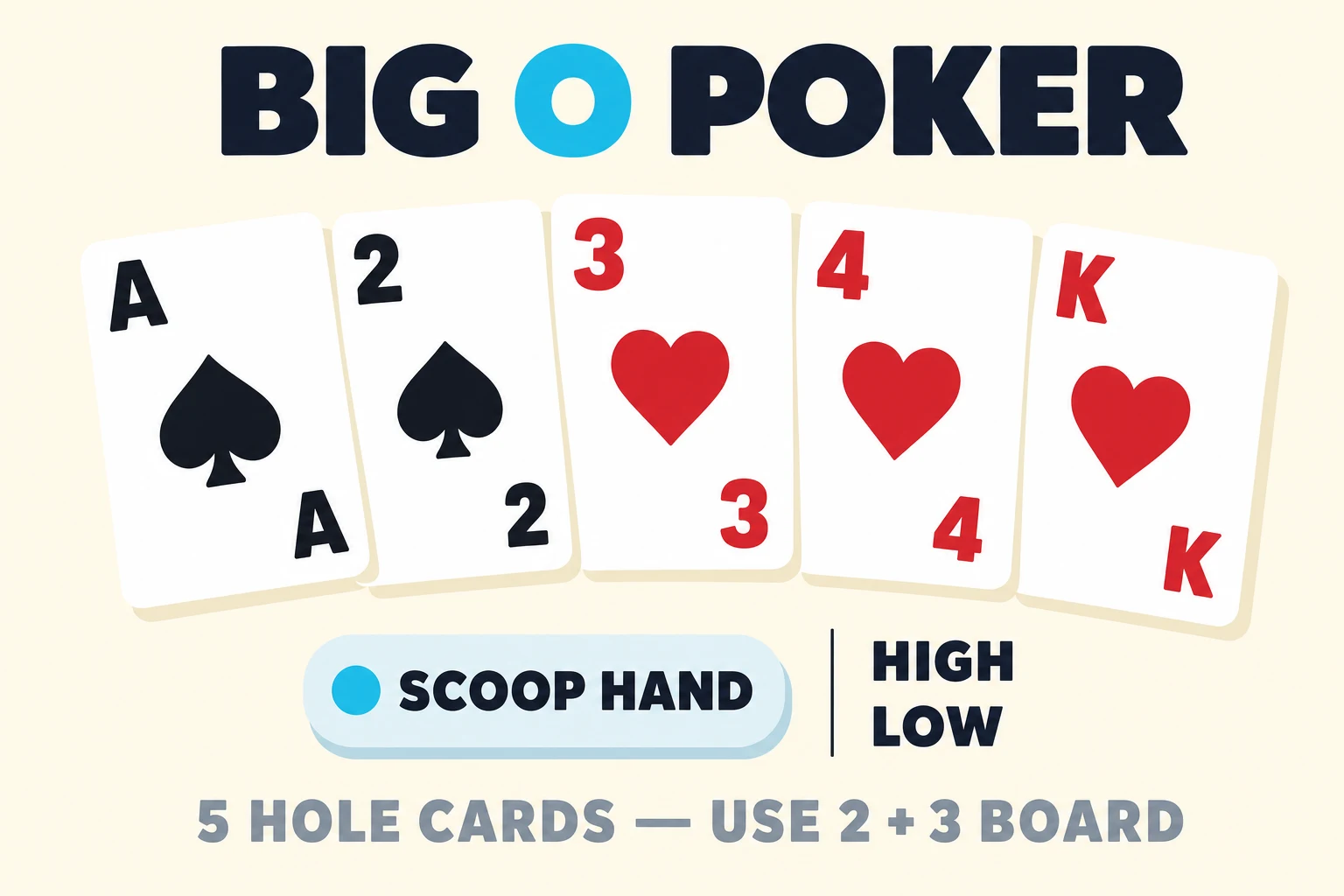
Big O is 5-card pot-limit Omaha hi-lo with an 8-or-better qualifier. The rules, what makes a starting hand strong, three worked hands, and the five mistakes that drain bankrolls fast.
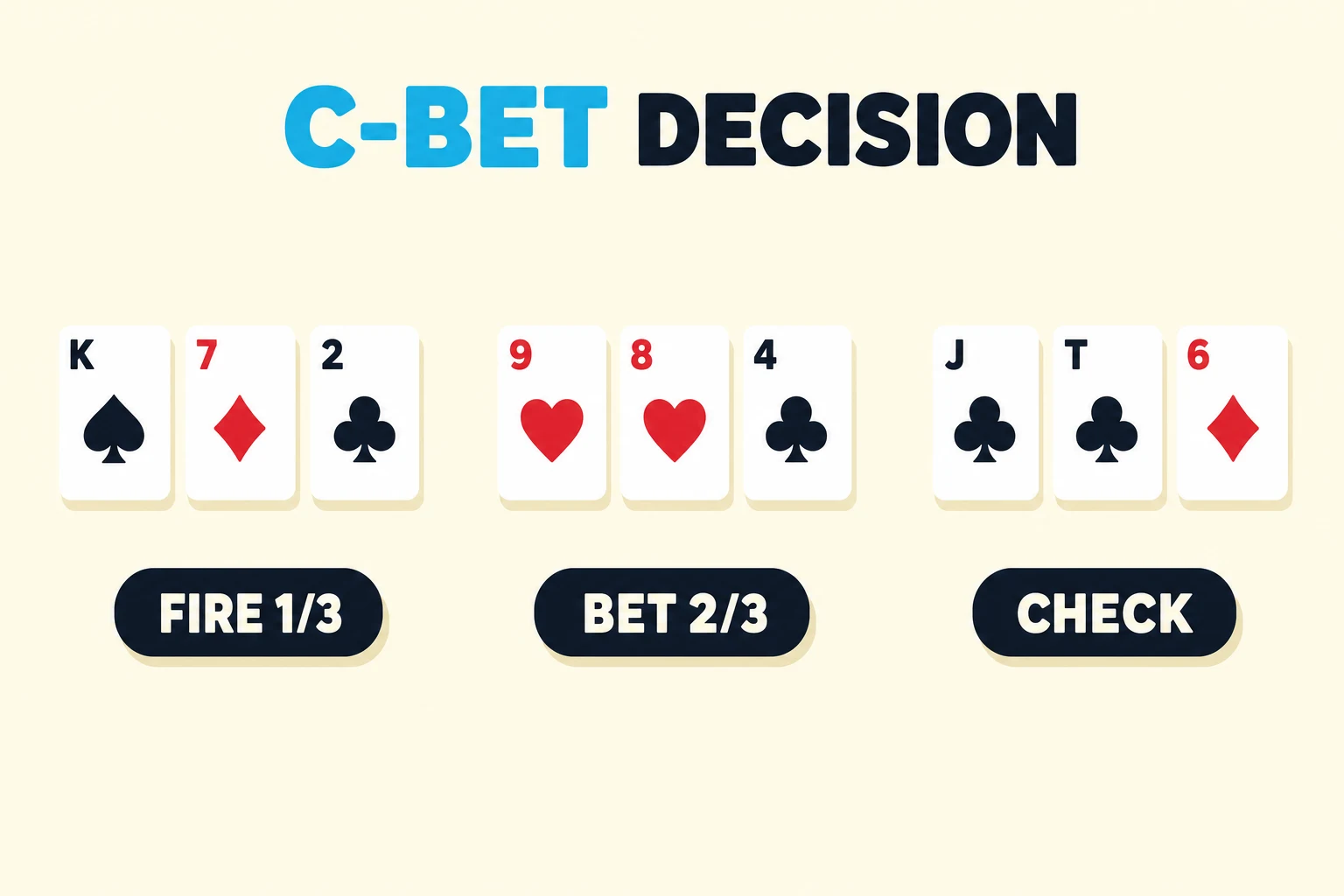
The preflop raiser's flop bet shouldn't be automatic. Three boards walked, the sizing pegs that work, and the spots where firing every flop quietly bleeds money.
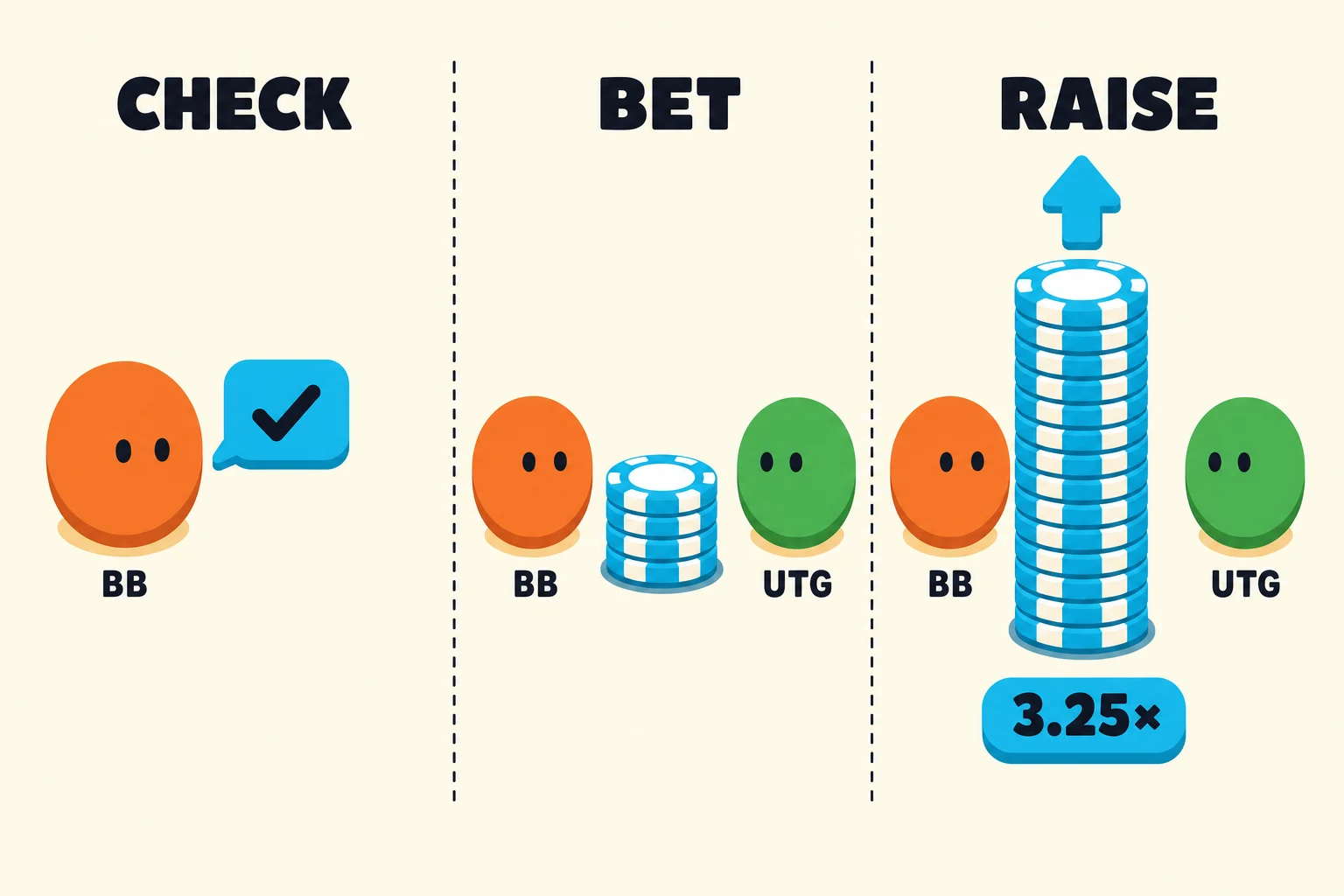
Check-raise turns a weak-looking check into a hard punch. Walk through the two camps, the sizing table, three worked hands, and where the move gets you in trouble.
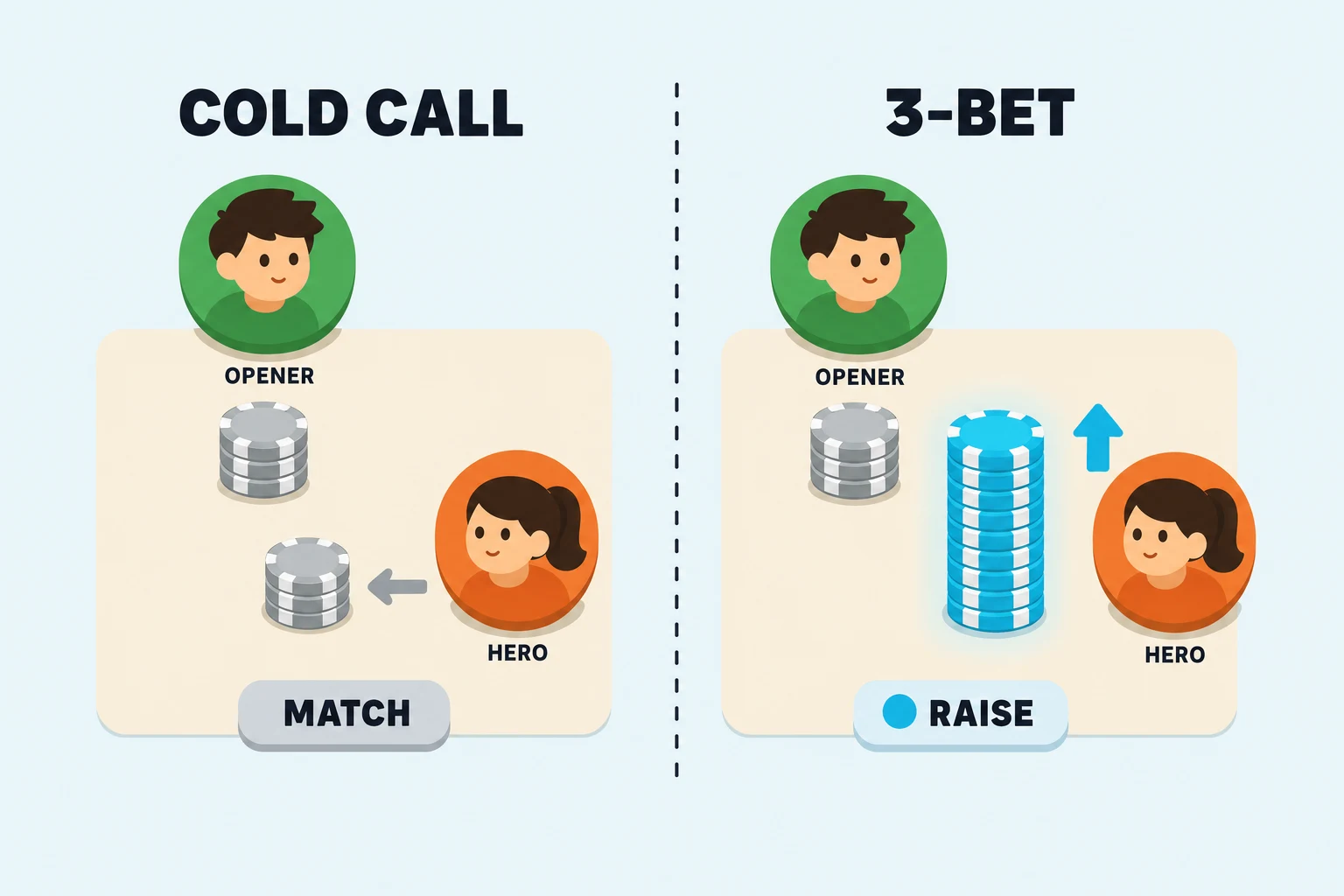
When the action folds to an opener and comes to you, the call/raise decision hinges on four switches. Walk through the table, three worked hands, and the spots where the rule lies.
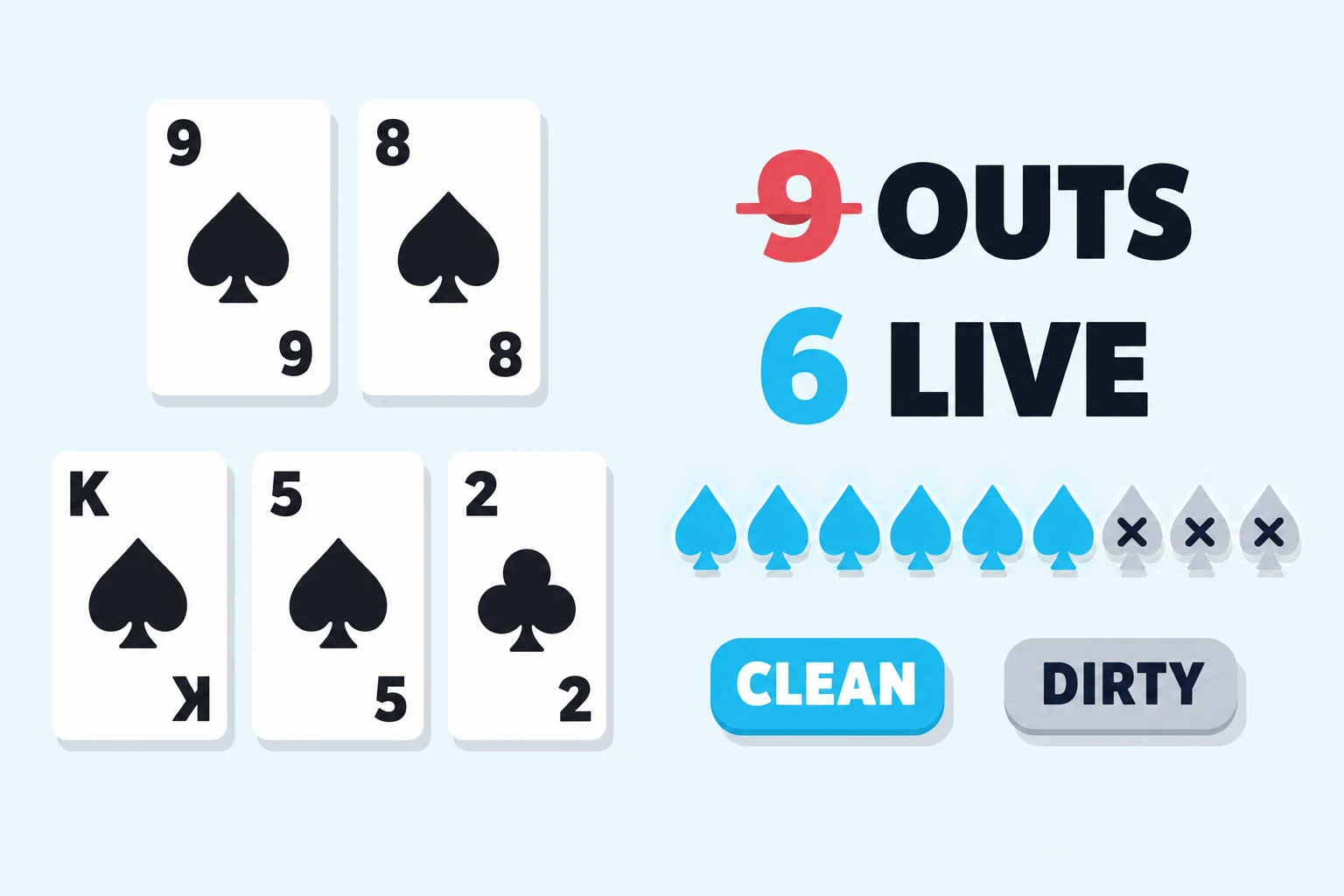
Some outs win you the hand. Some lose you more money when they hit. Three worked hands and a five-second routine for discounting outs at the table.
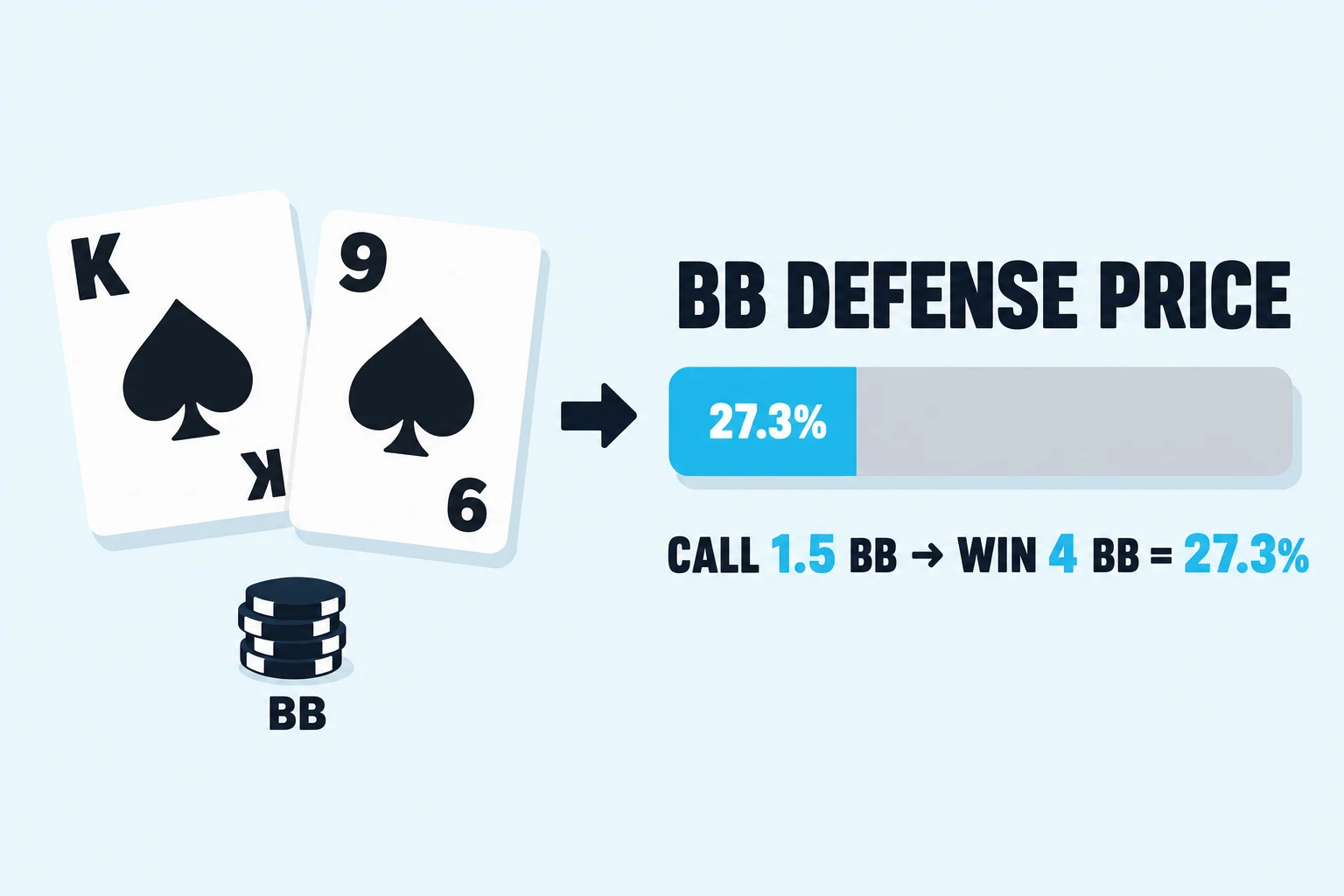
Facing a 2.5x button open from the big blind, you need 27.3% equity to call. The math walked, an MDF table, three worked hands, and the leaks the price hides.
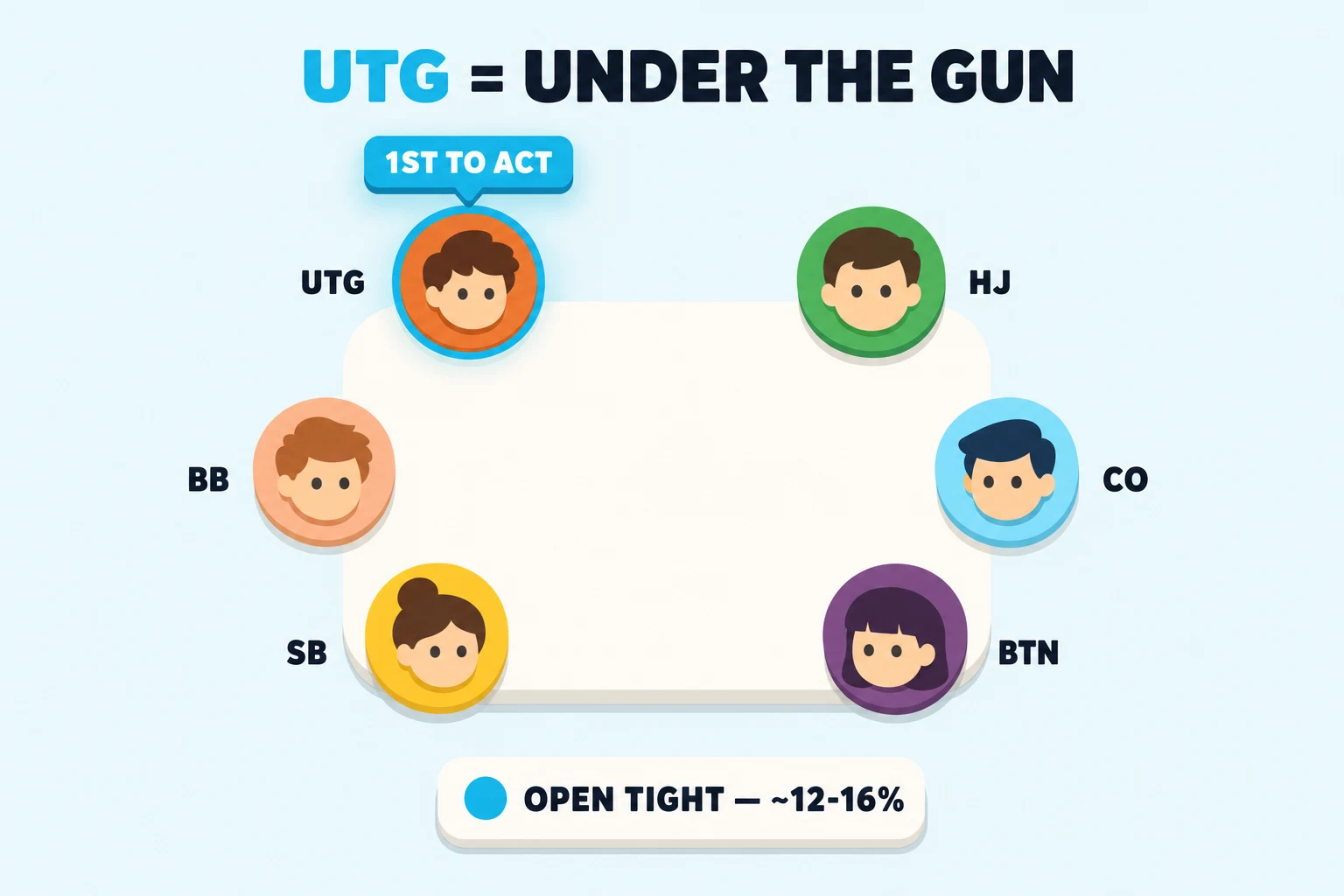
Under the gun is the toughest seat preflop. Open tight, size to thin the field, and avoid the three leaks that cost UTG players the most.
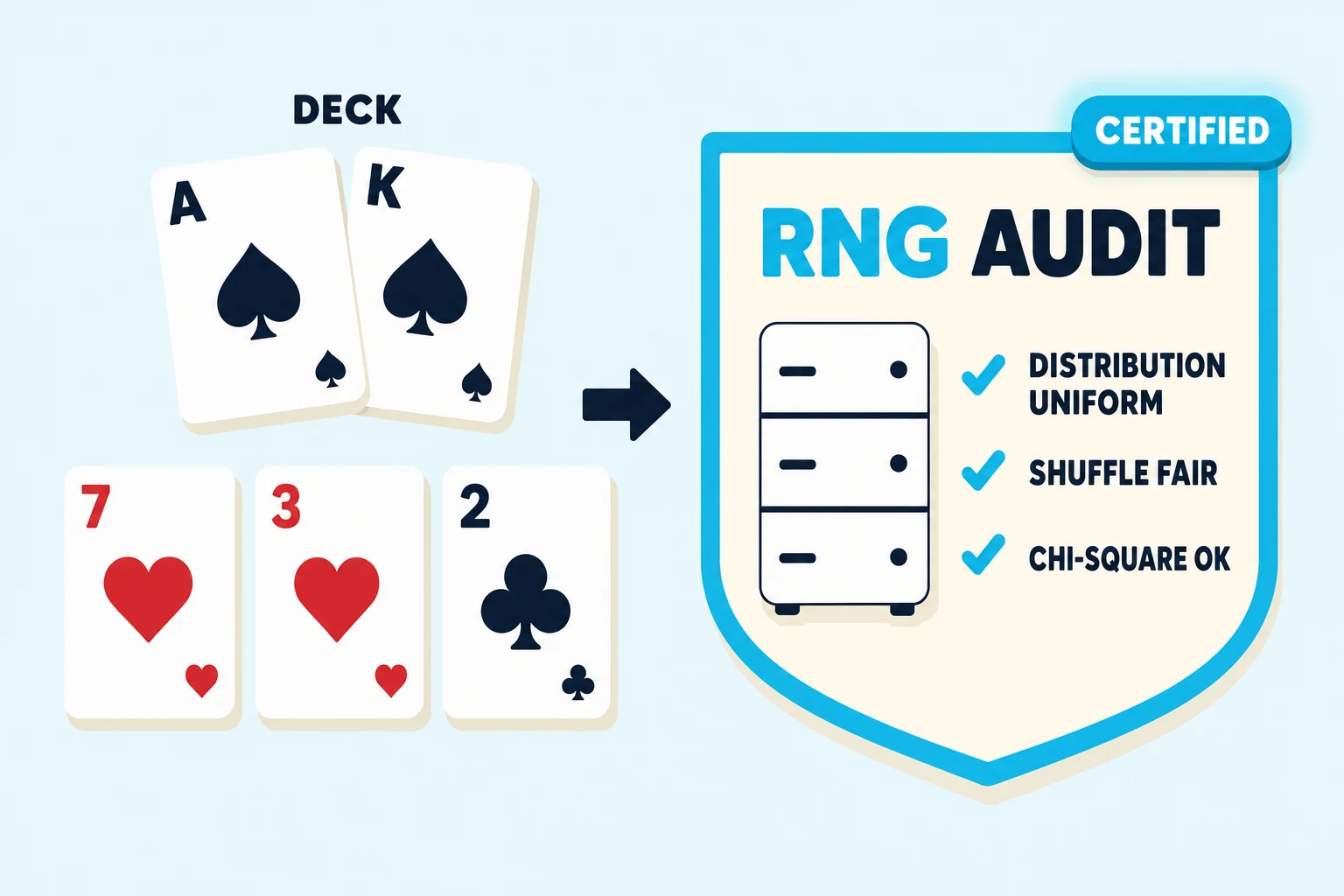
How online poker shuffles a deck, what an RNG audit actually certifies, and why the patterns you notice at the table are almost always variance, not rigging.
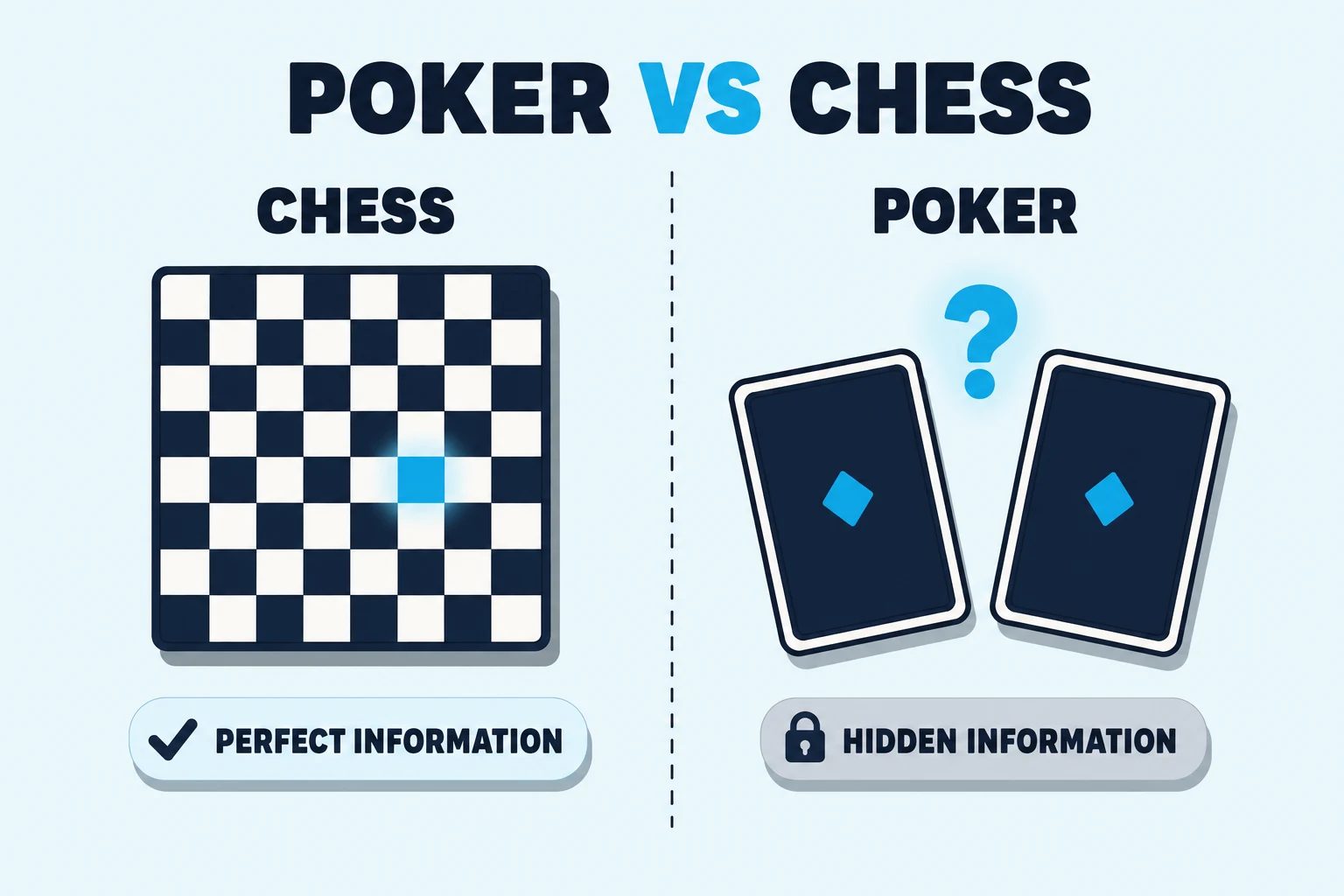
Both reward thinking, but the thinking is shaped differently. Chess is perfect information; poker is decision-making under uncertainty — and that single split changes how you practice, how you measure progress, and what 'getting better' even means.
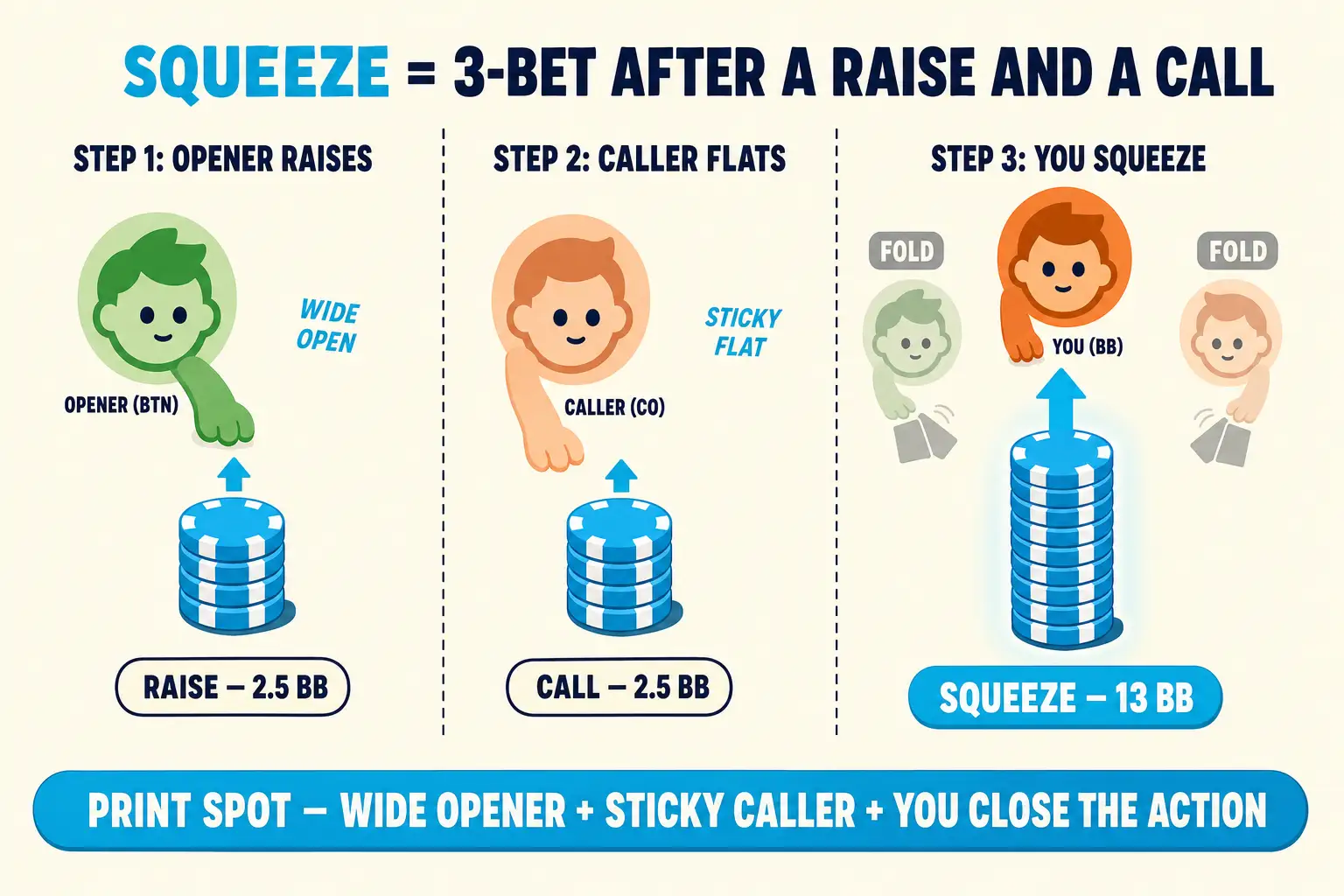
A squeeze is a 3-bet over an open and a flat. It prints when three switches line up — wide opener, sticky caller, you closing the action. Walk through the table, three worked spots, and where the play breaks.
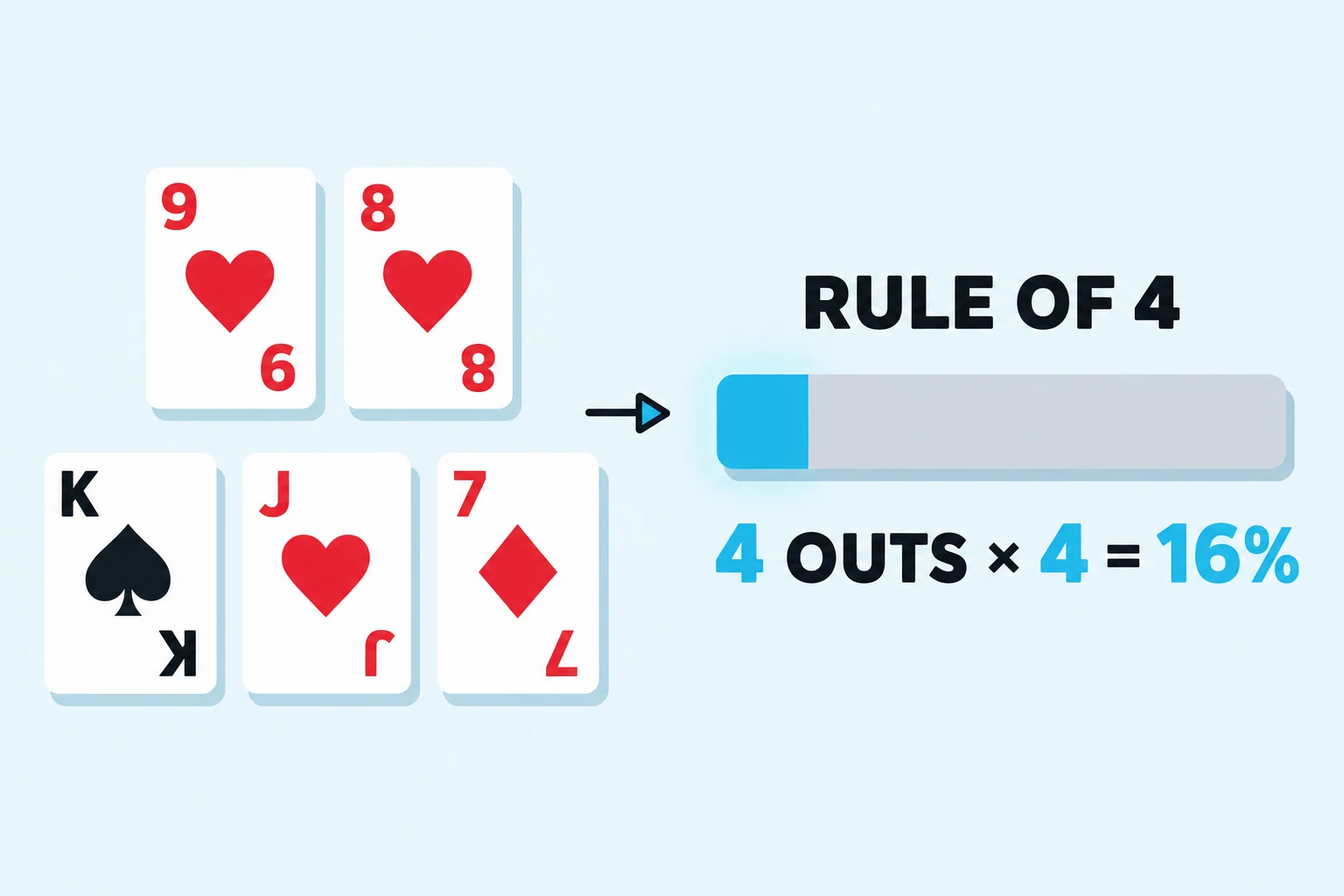
Multiply your outs by 2 for the next card, by 4 for the river. Worked hands, the spots where the shortcut overstates, and a live-play pattern you can run in two seconds.
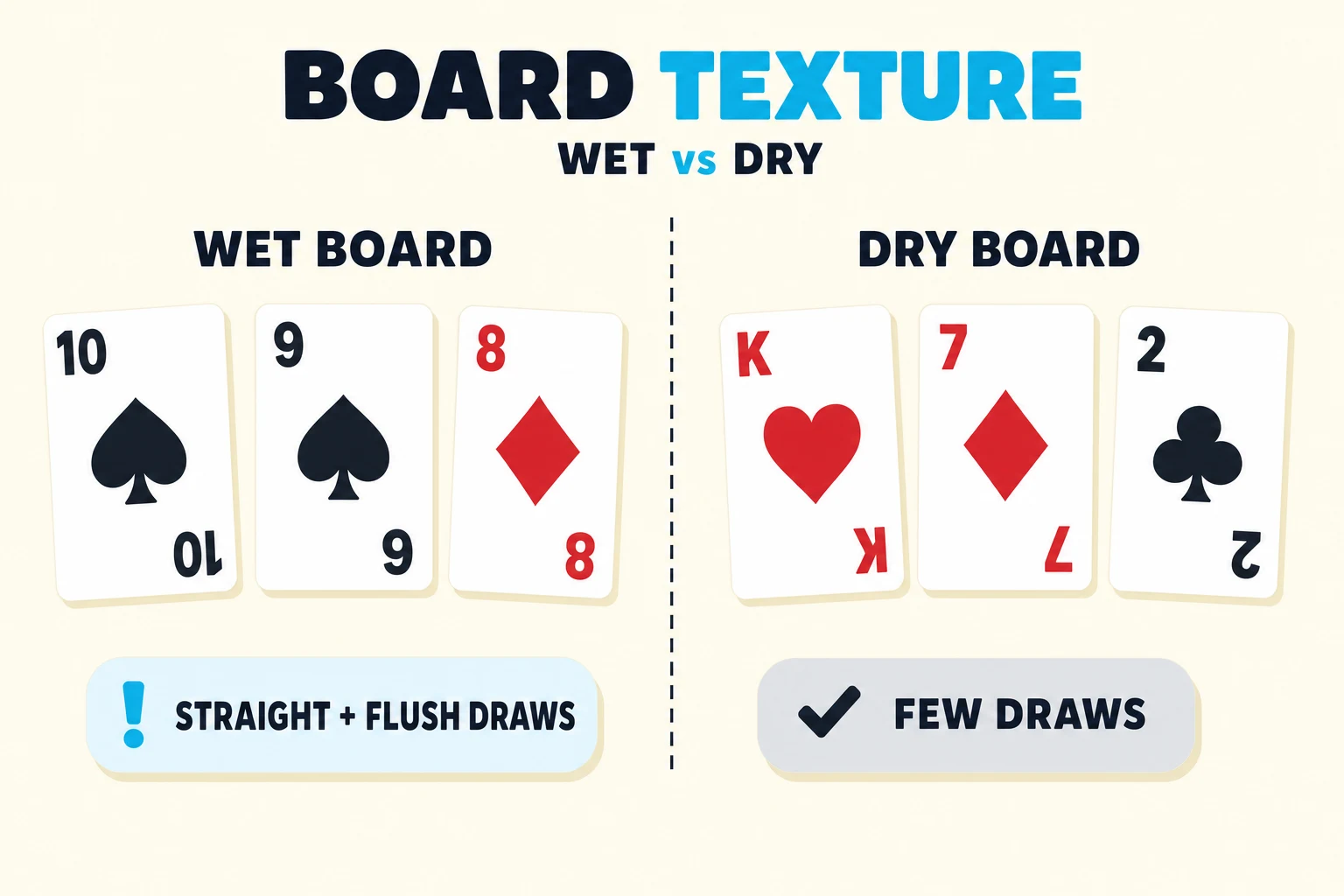
Wet boards have live draws and shift hand strength fast; dry boards don't. Bet bigger to protect on wet, smaller and frequent on dry — with six worked flops and the spots where the rule lies.
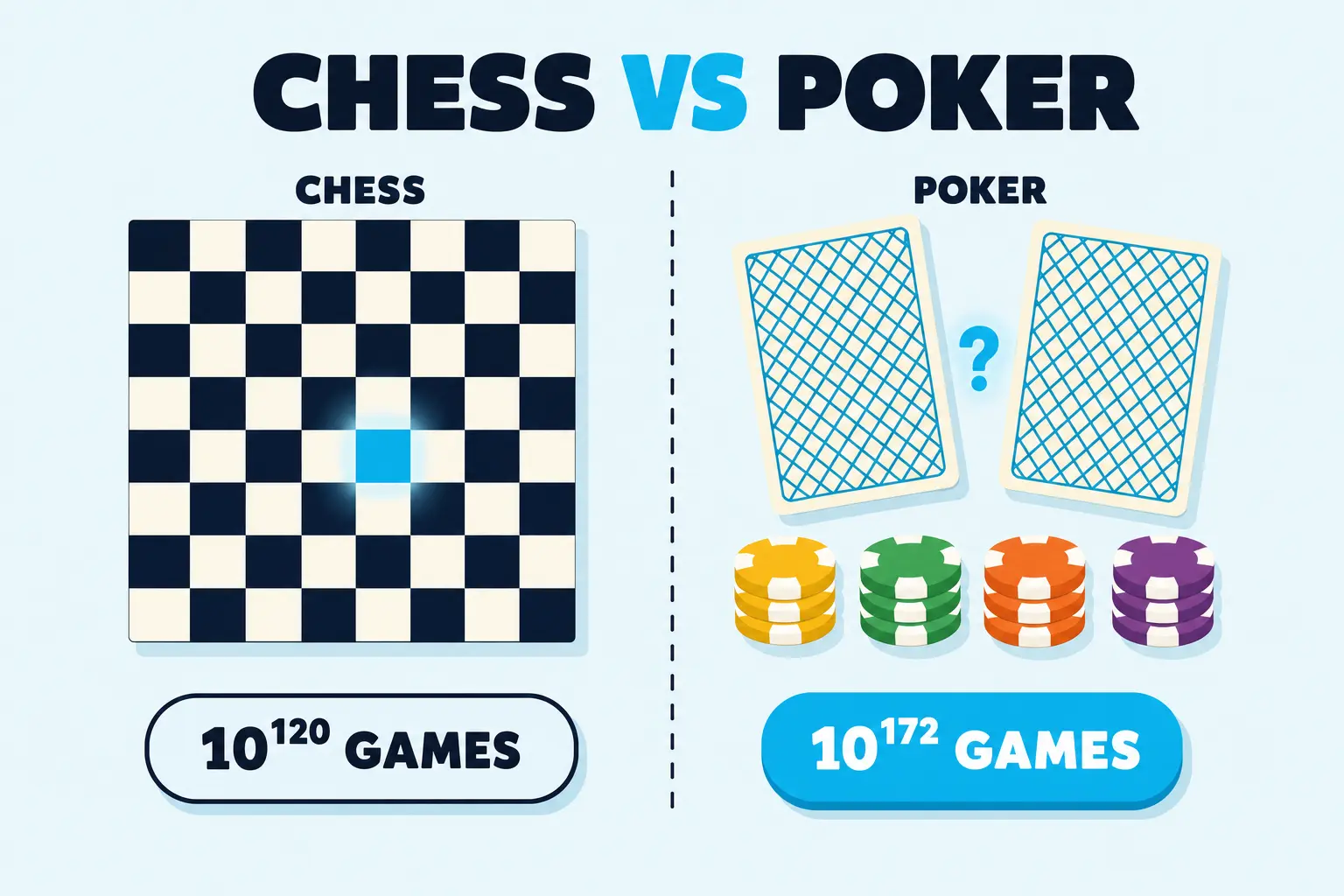
Chess has 10^120 possible games. A conservative floor for six-player no-limit hold'em is more than 10^172 decision points, even before fully pricing the extra multiway betting branches. Here is why poker has stayed harder for AI long after Deep Blue, and what that means for the human game across the table.
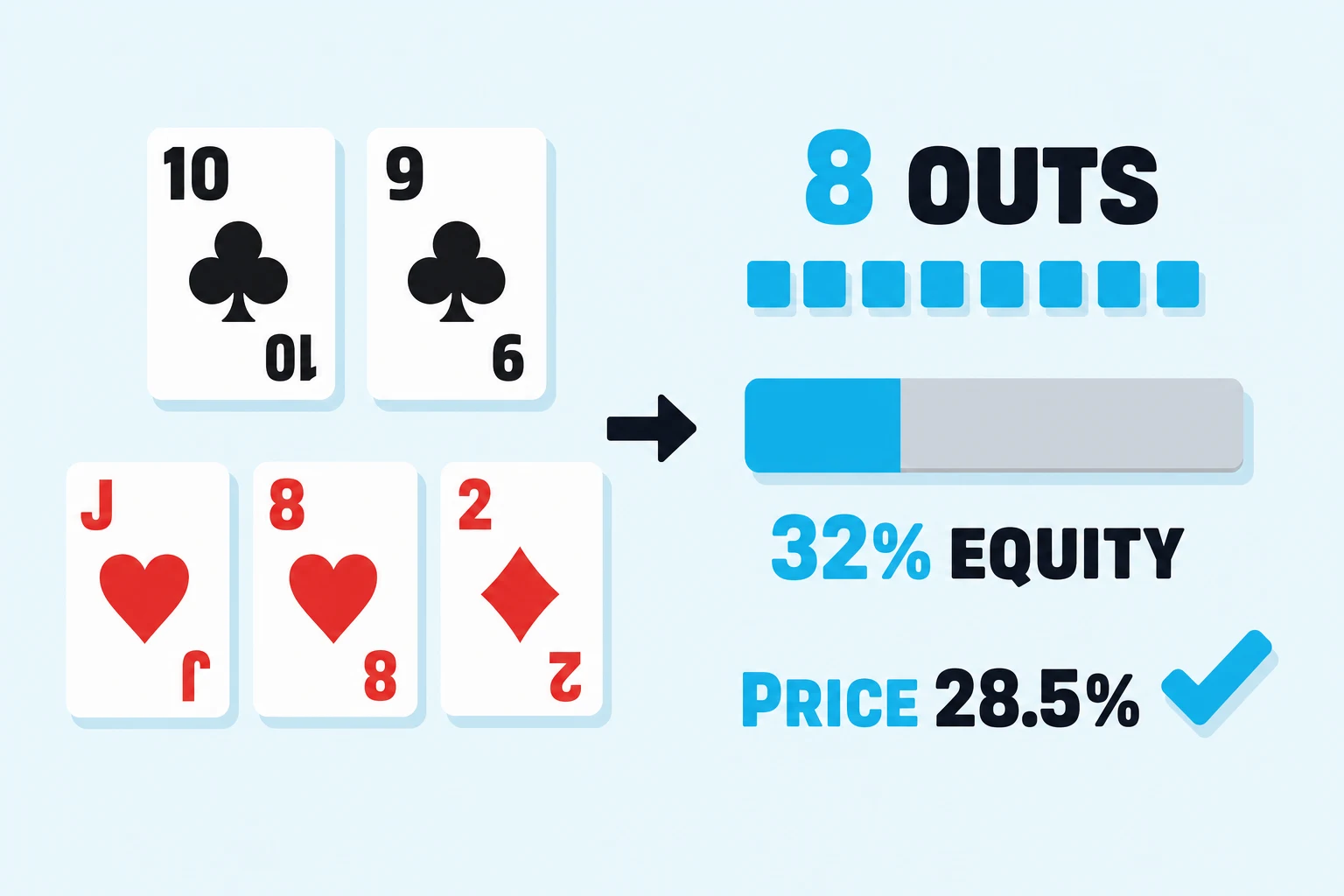
The four numbers that decide every drawing hand: how many outs you have, what they're worth in equity, the price the bet is asking, and the EV of the call.