
AA vs KK: The Odds of Poker's Most Famous Cooler (and Friends)
Aces beat kings a bit over four times in five, and you meet the matchup about once in every 26 times you are dealt kings. The exact numbers, and the other famous races.
Focused concept explainers for poker terms that are easy to confuse.
Aces beat kings a bit over four times in five, and you meet the matchup about once in every 26 times you are dealt kings. The exact numbers, and the other famous races.
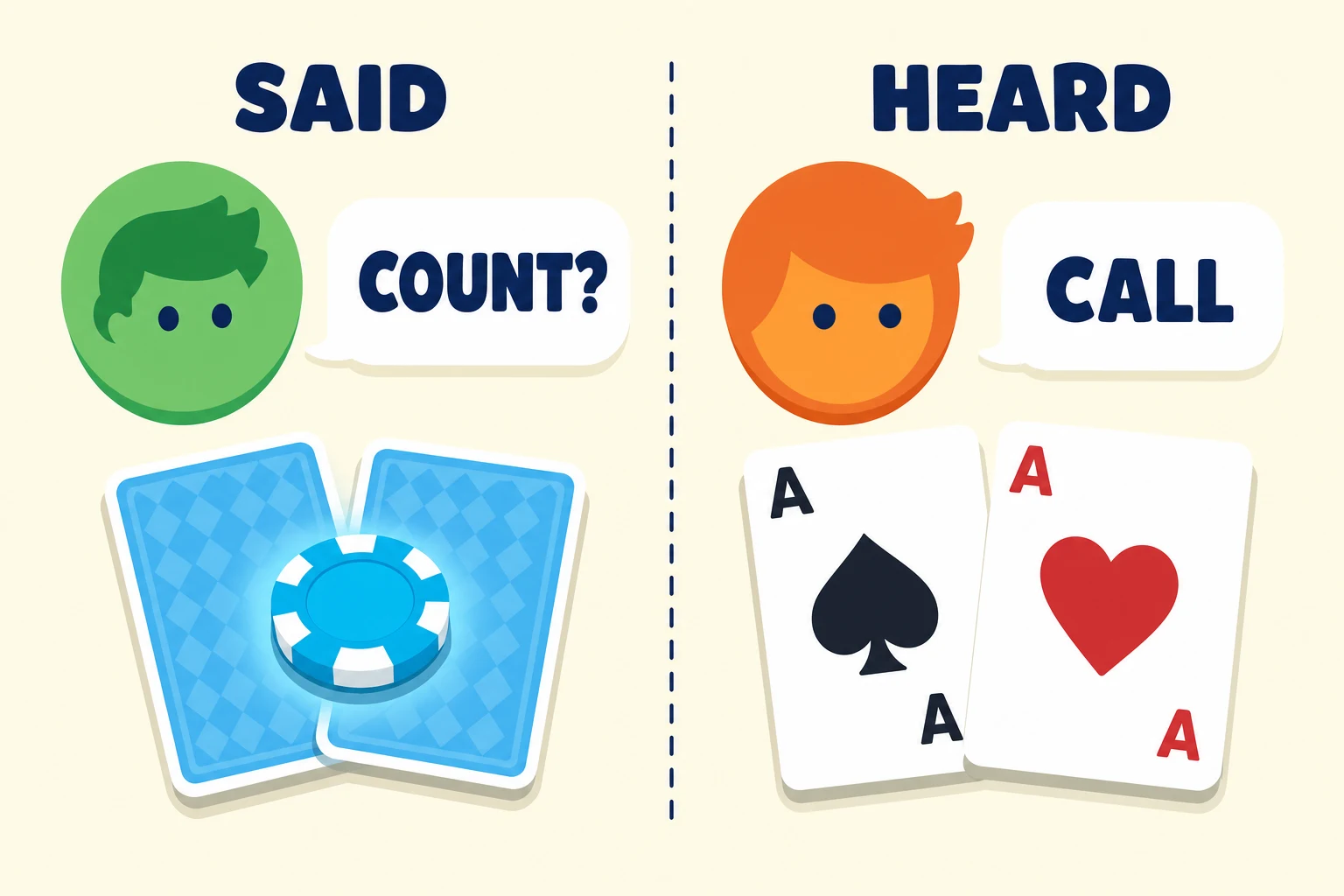
Angle shooting lives in the gap between what the rules say and what they meant. The six classic angles, why they work, and the five-step routine that protects your action.
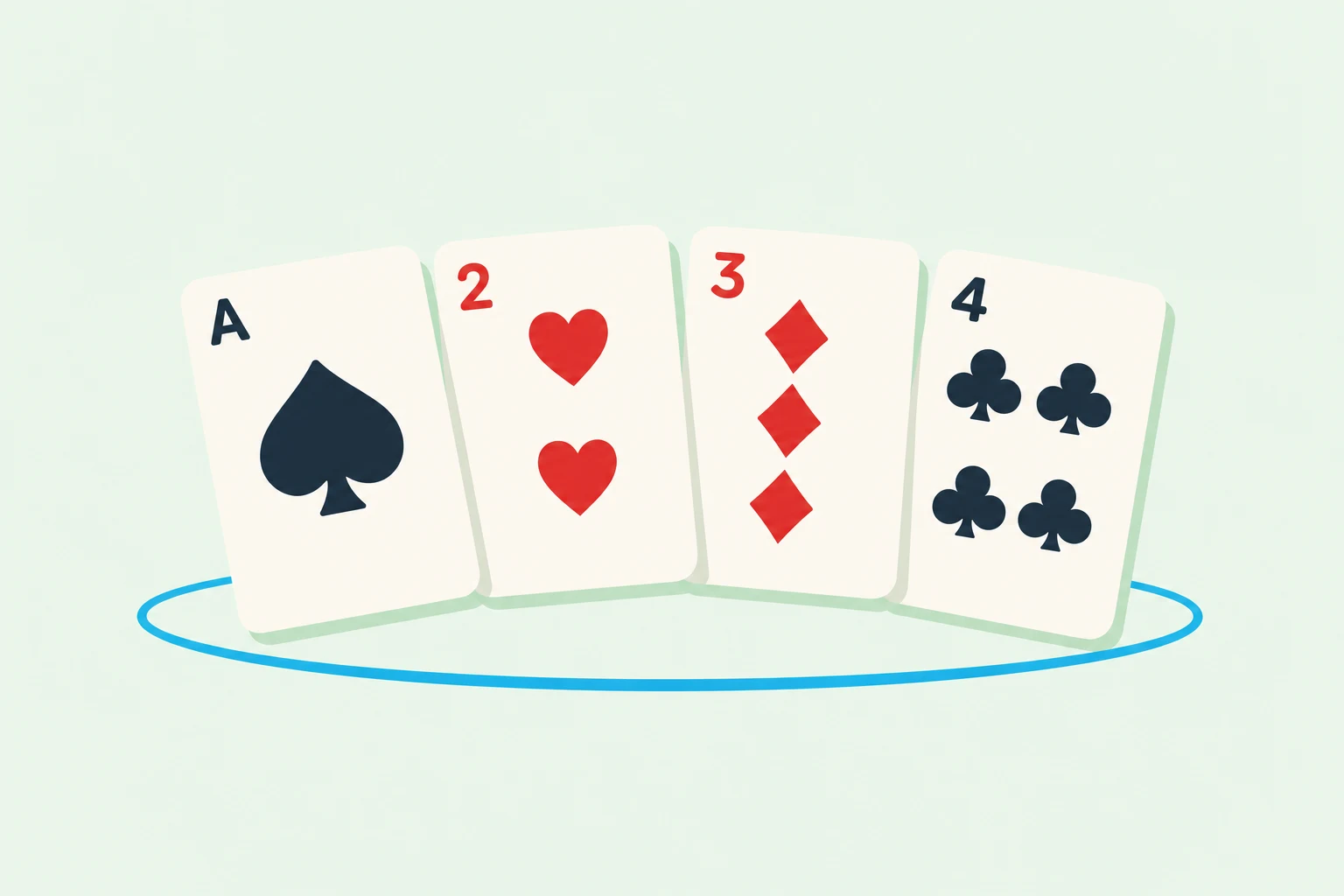
Four cards, three draws, and a ranking system where suits decide whether your hand counts. What a badugi is, how hands compare, and which starting hands are worth playing.
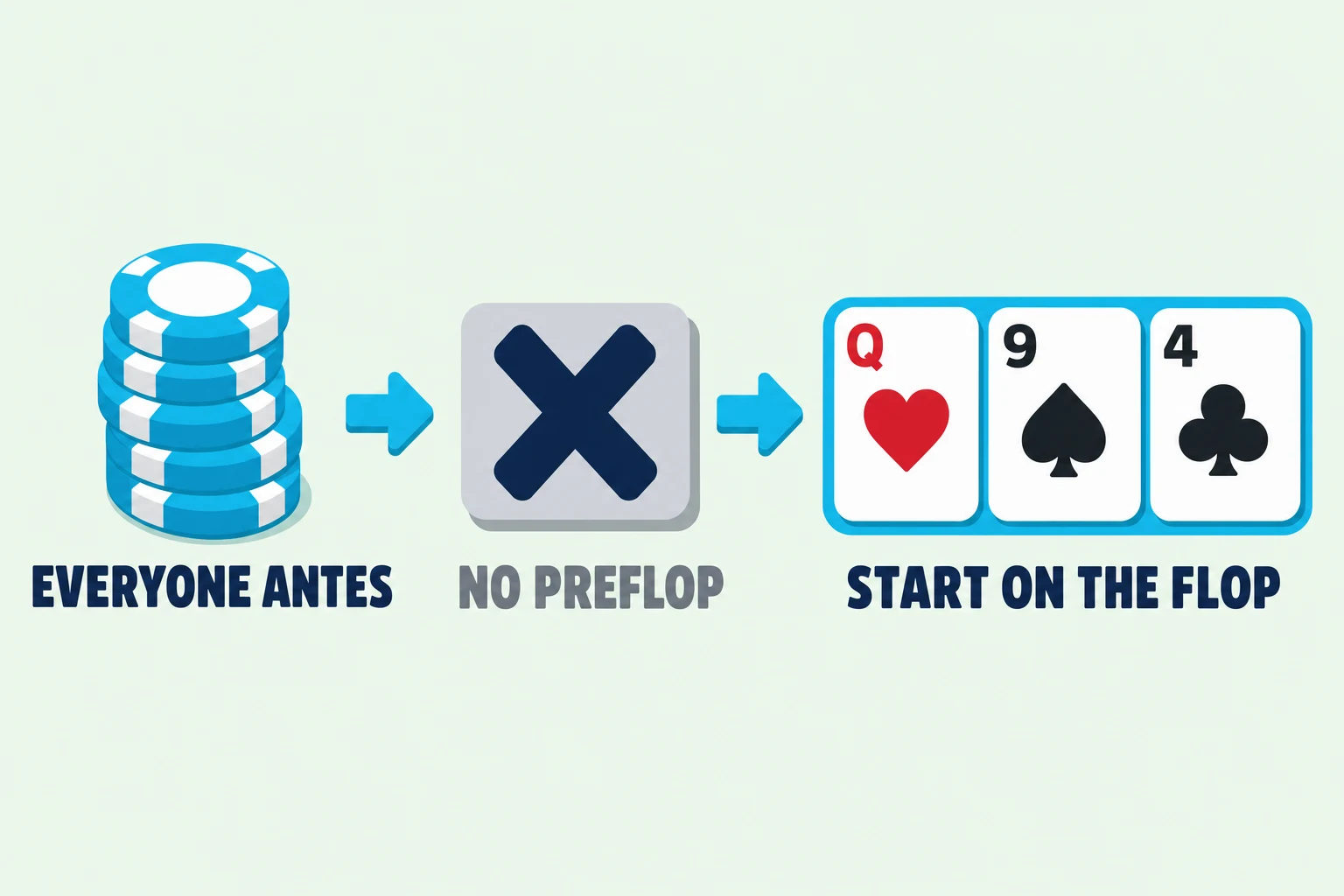
Everyone antes, nobody folds, and the hand starts on the flop. What a bomb pot is, how double-board versions work, and how to adjust when one hits your table.
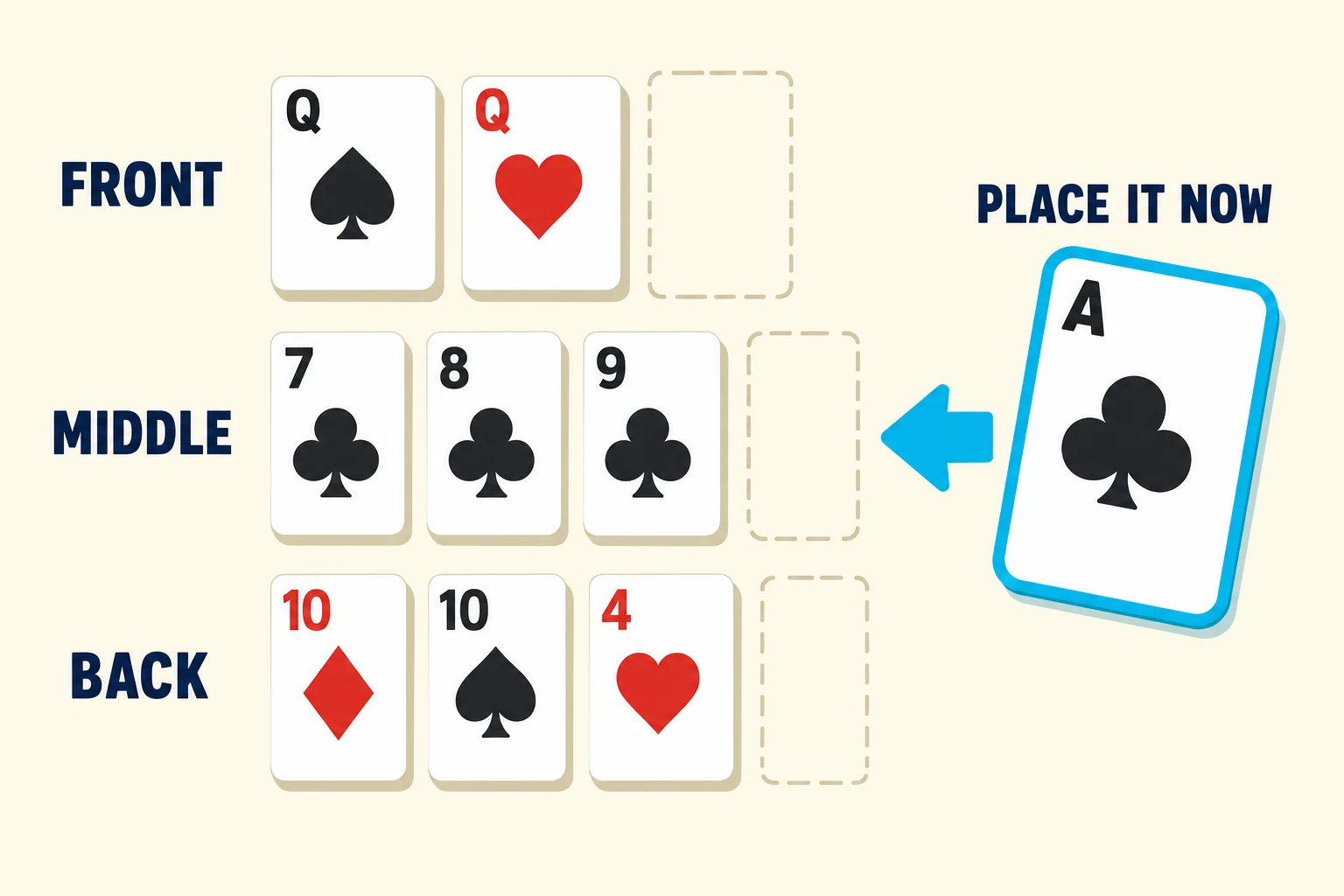
Thirteen cards, three rows, and a game scored in points instead of chips. How to set a legal hand, how scoring and royalties work, and what Fantasyland is.
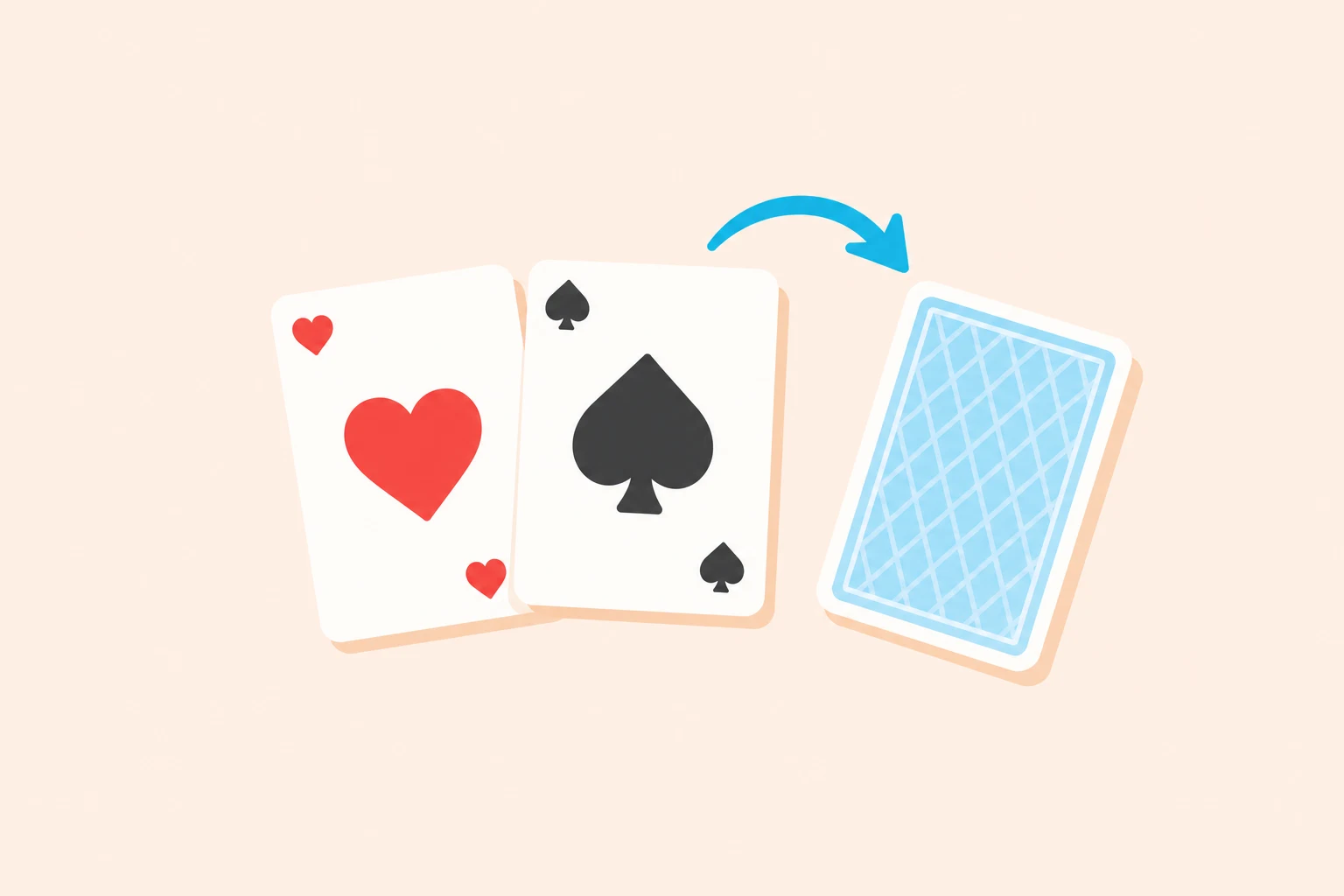
Three hole cards, one discard after the flop betting round. How crazy pineapple plays, how it differs from pineapple and lazy pineapple, and what the extra card does to hand values.
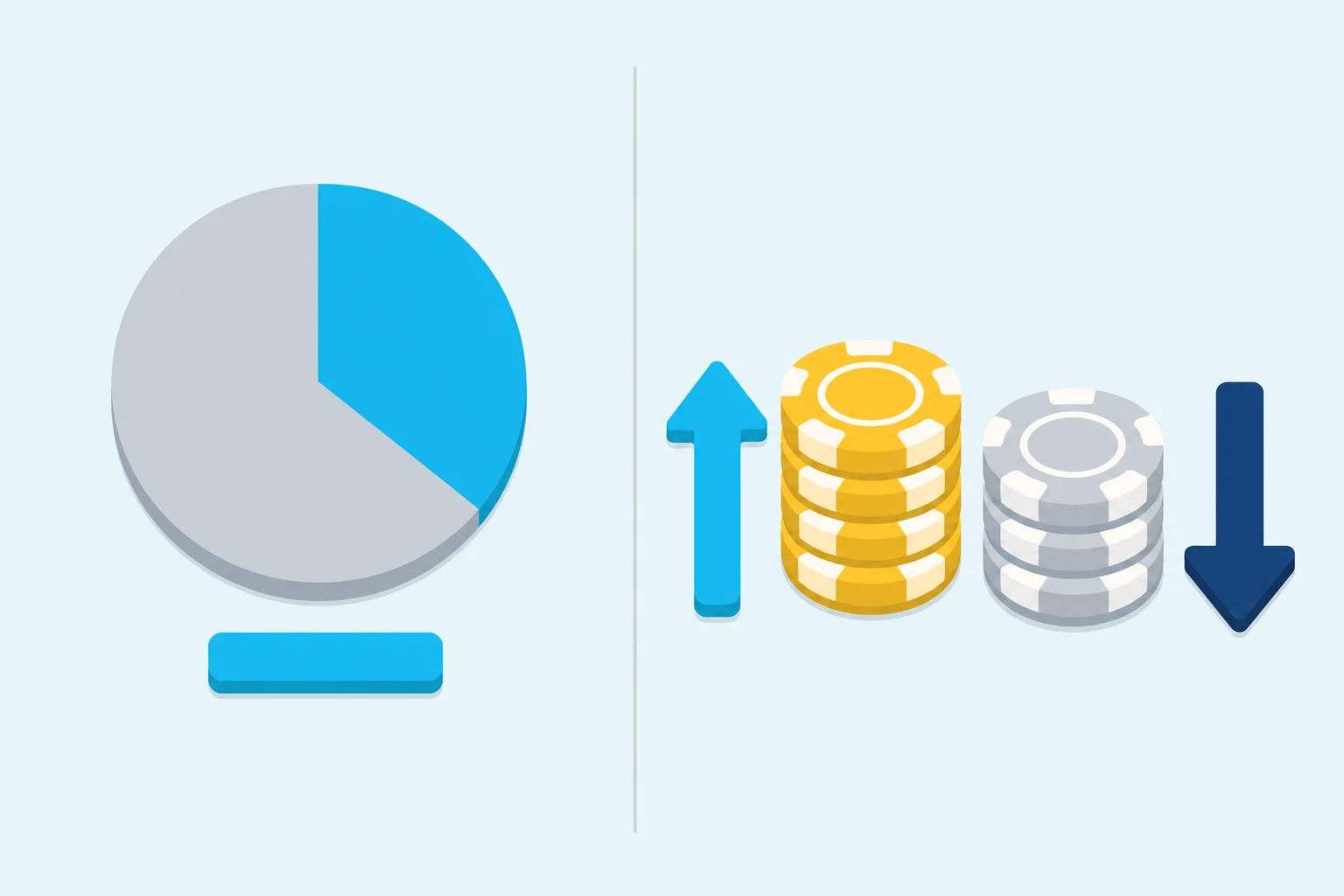
Equity is your share of the pot right now. EV is what the decision earns once the price is counted. Why the same draw is a call on the flop and a fold on the turn.
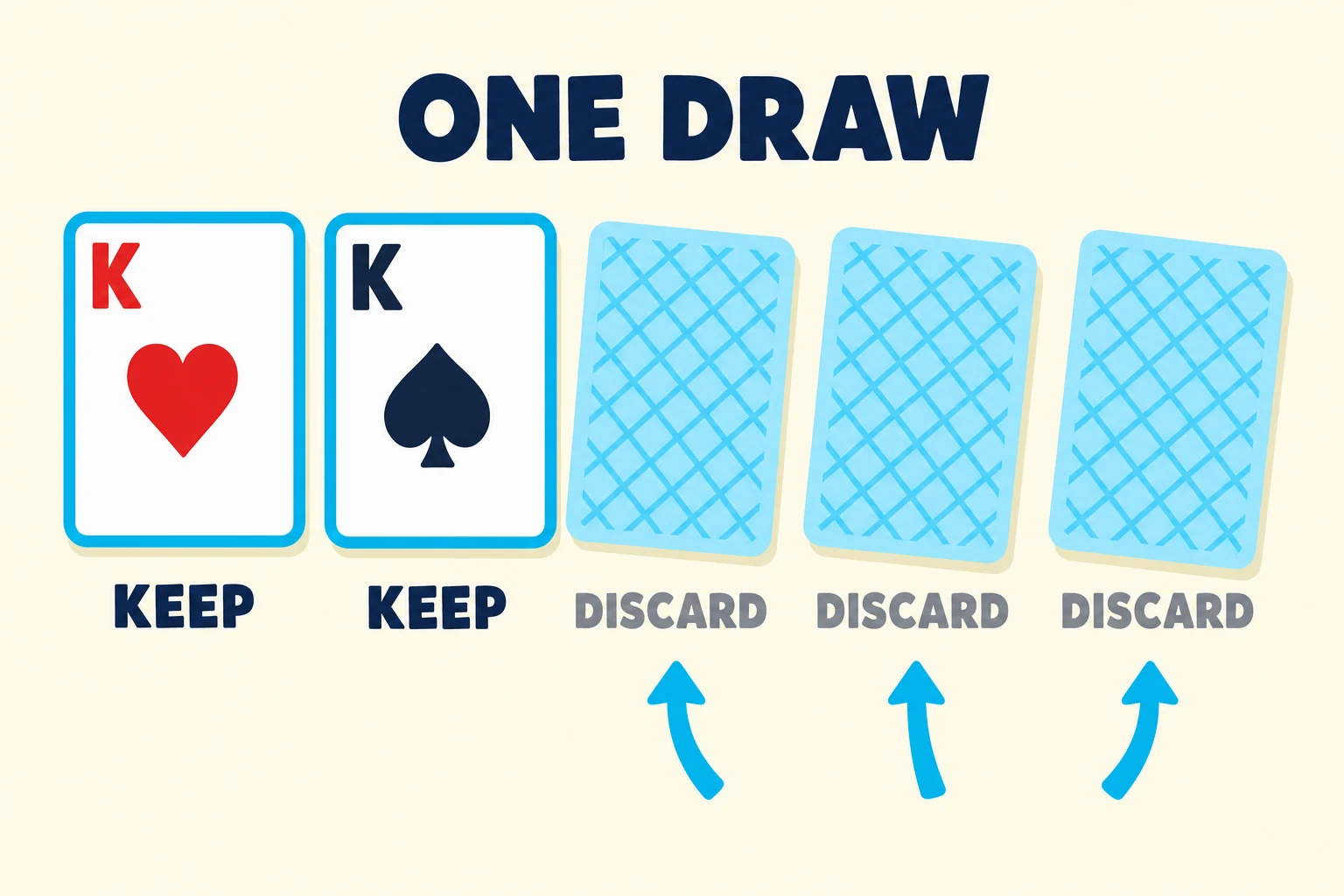
Five cards each, two betting rounds, and one chance to swap. How five card draw is dealt at home, what the draw counts tell you, and which hands are worth playing.
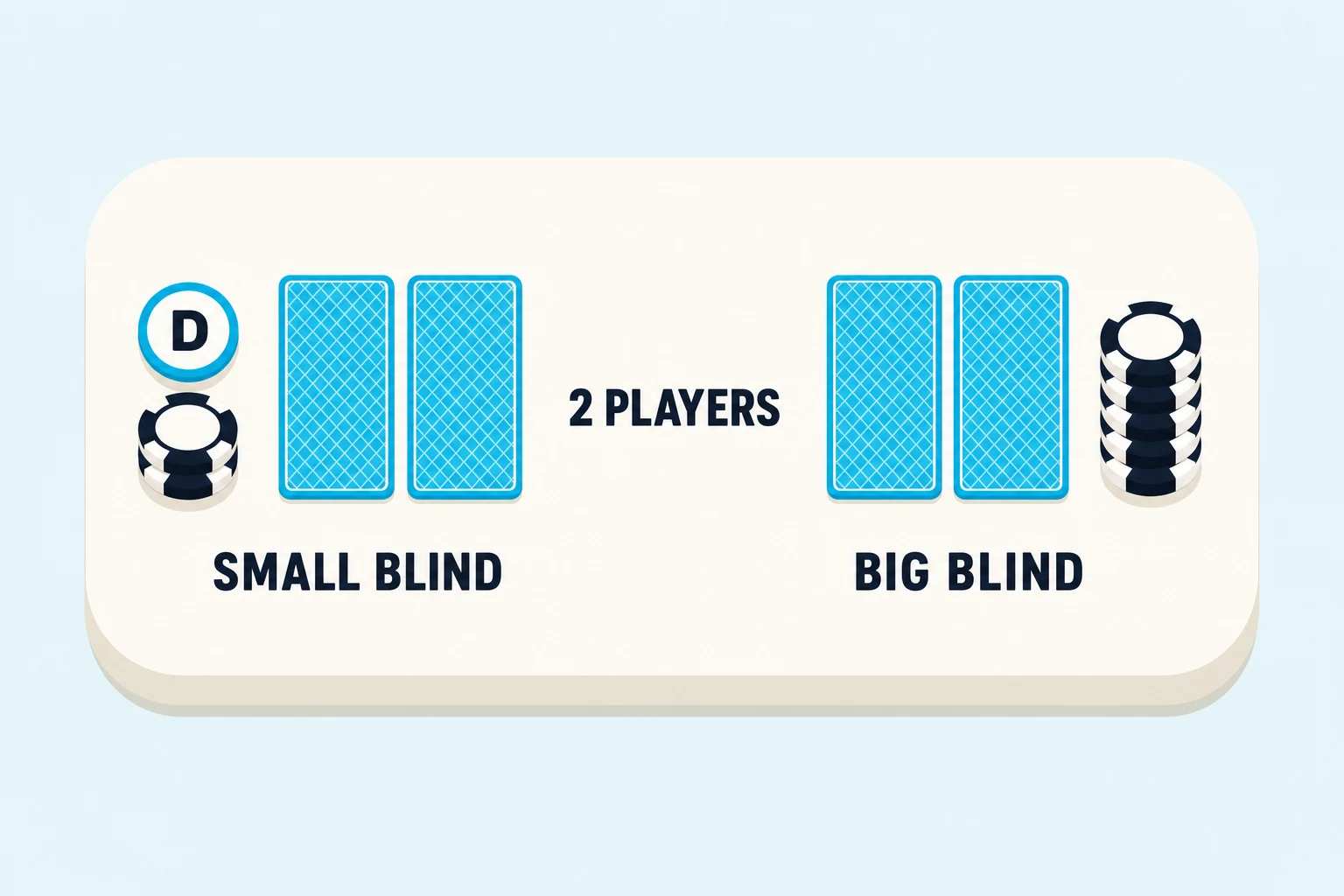
Two players, two blinds, and a seat order that inverts at the flop. How heads-up poker is dealt, why the button posts the small blind, and how ranges and aggression change.
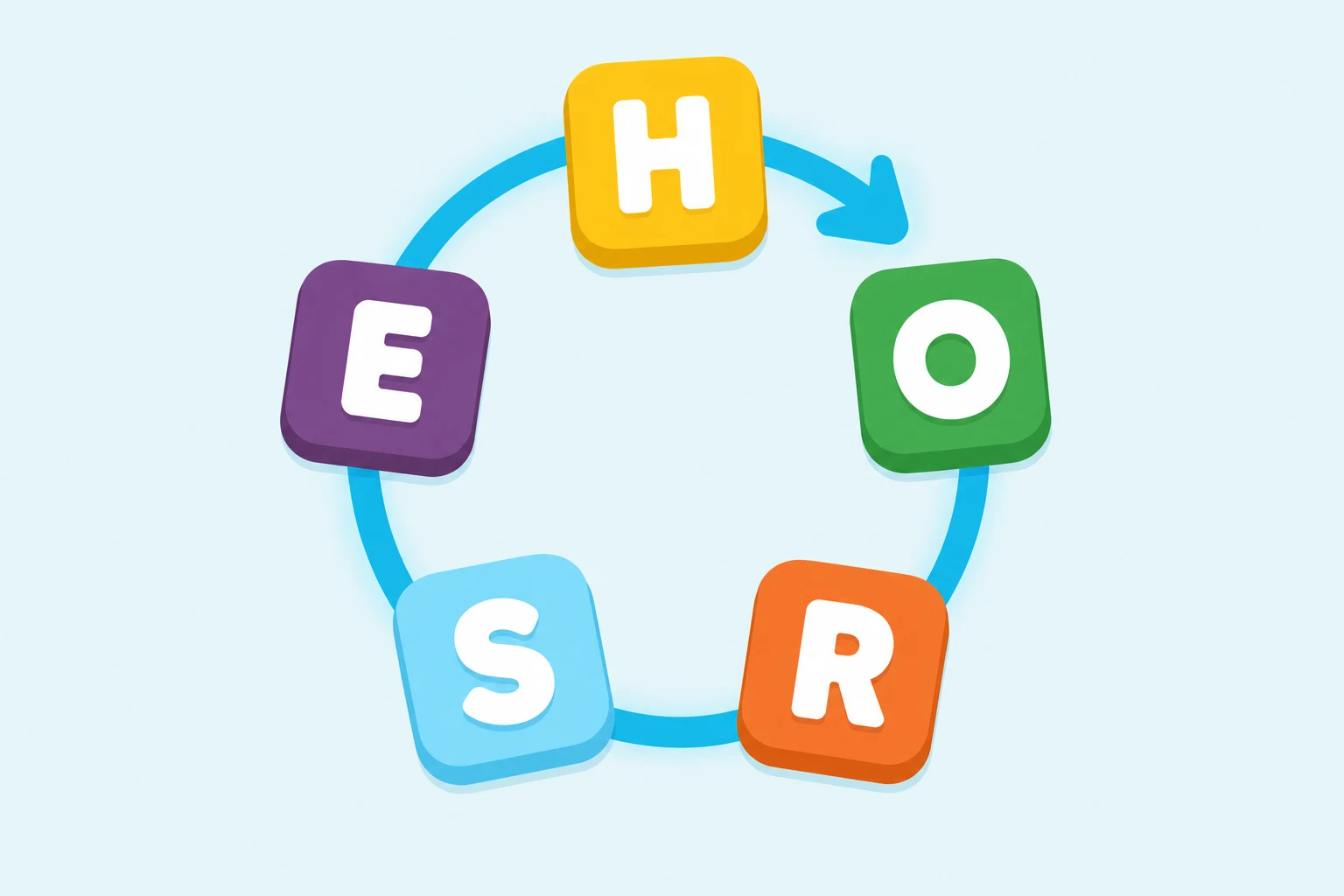
HORSE rotates through five limit games, and most players are only fluent in one of them. What each letter means, how the unfamiliar four actually work, and the survival rule for your weakest game.
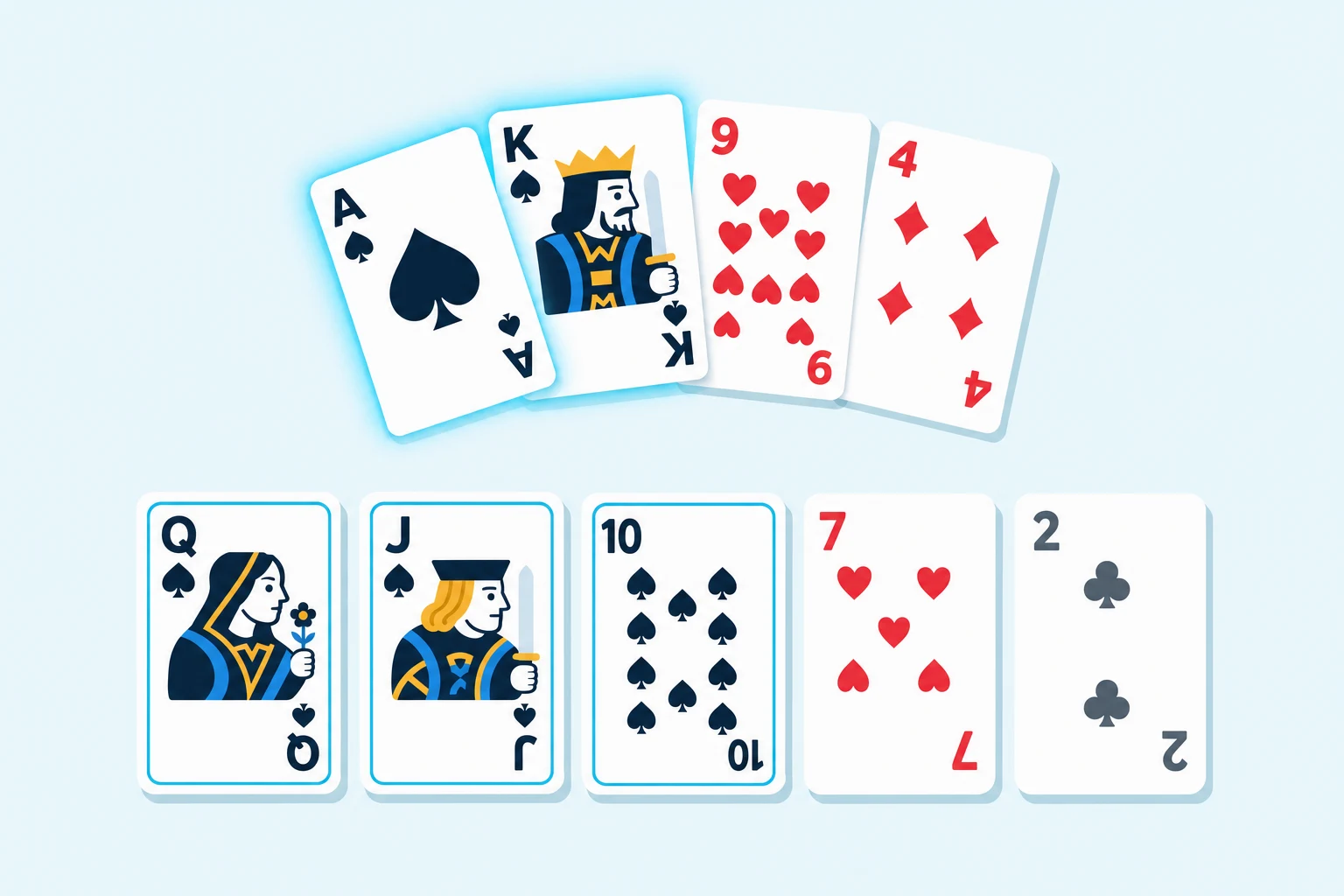
PLO hands you four cards, caps every bet at the pot, and quietly repeals half of what hold'em taught you. The two rules that matter, why aces stop being magic, and the habits to unlearn.
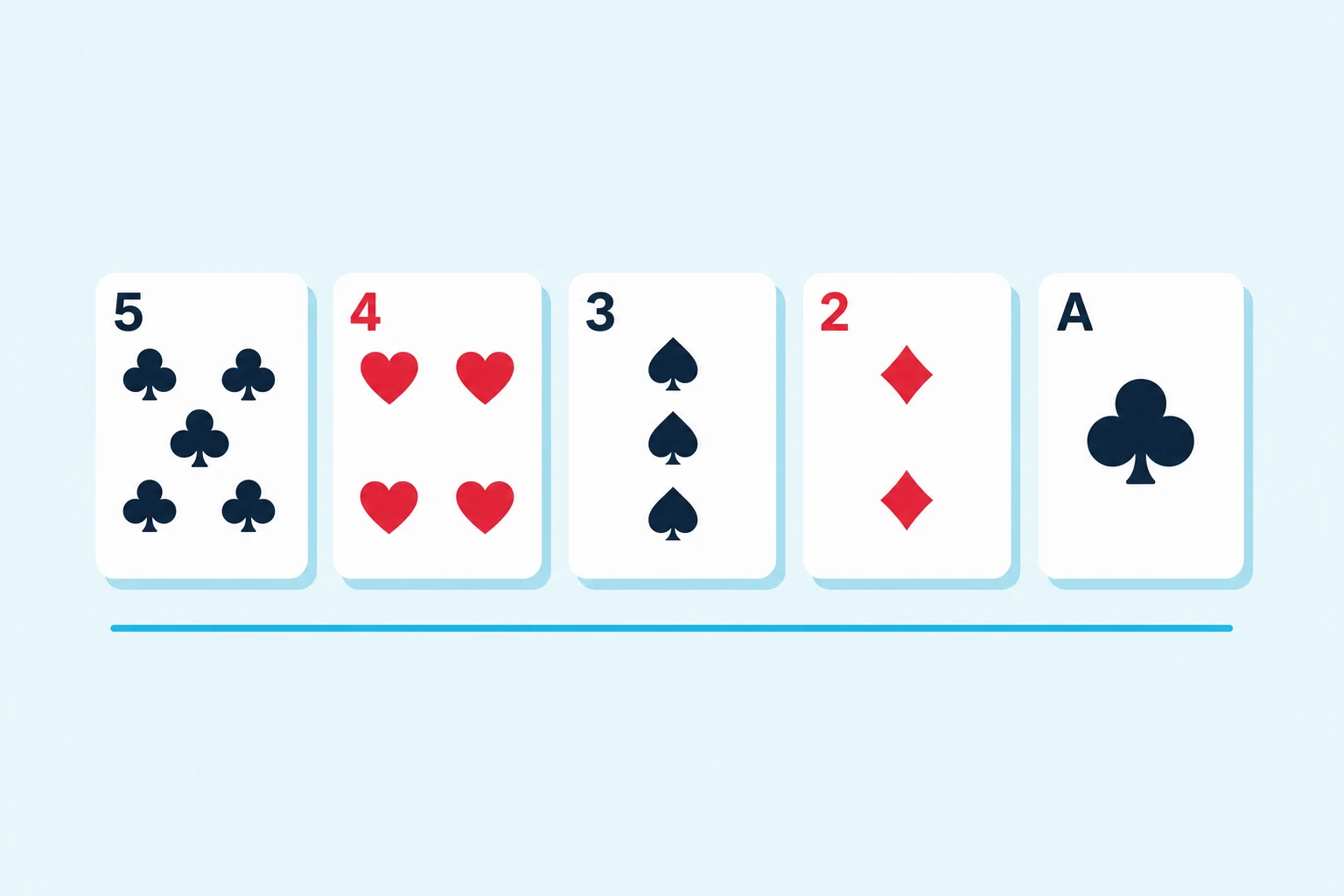
Razz is seven card stud played for the lowest hand. The ace-to-five ranking, the streets and betting, starting hands, and the Hold'em habits that cost you money here.
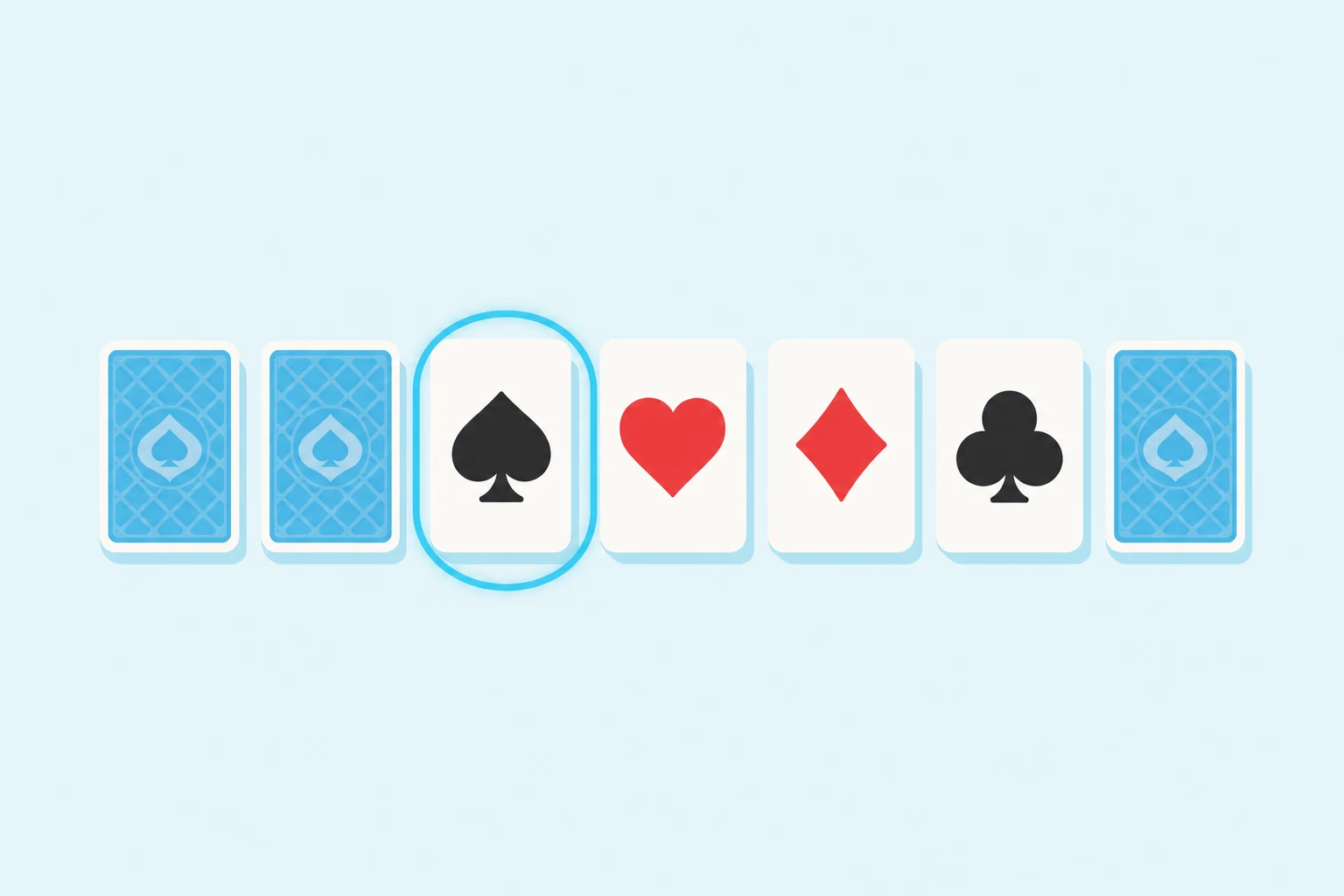
Seven card stud has no board and no blinds. Antes, the bring-in, five streets of cards, and a showdown built from your own seven cards.
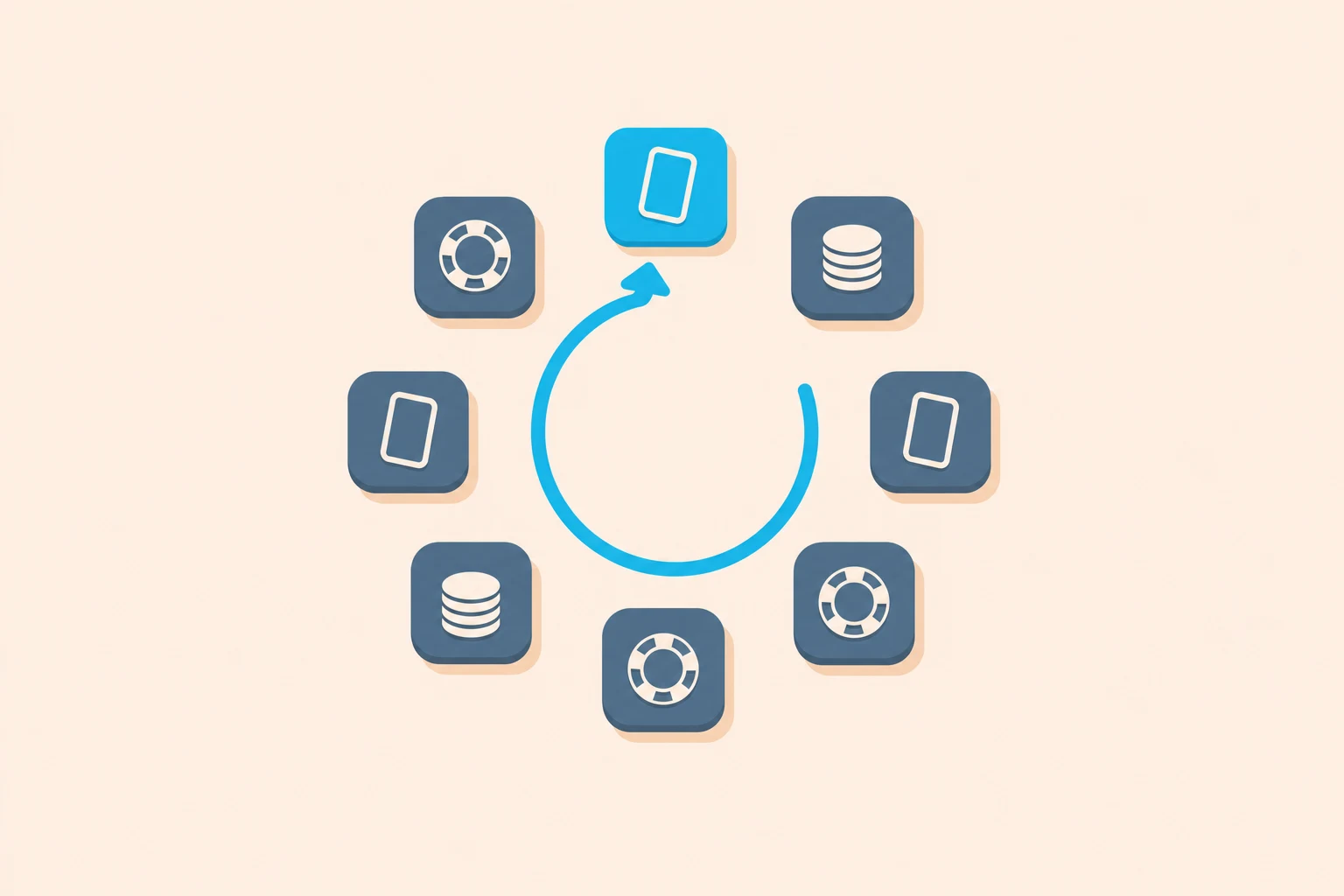
What rotates in HORSE and 8-game, how dealer's choice picks the next game, what changes when the button disappears, and the order worth learning the variants in.
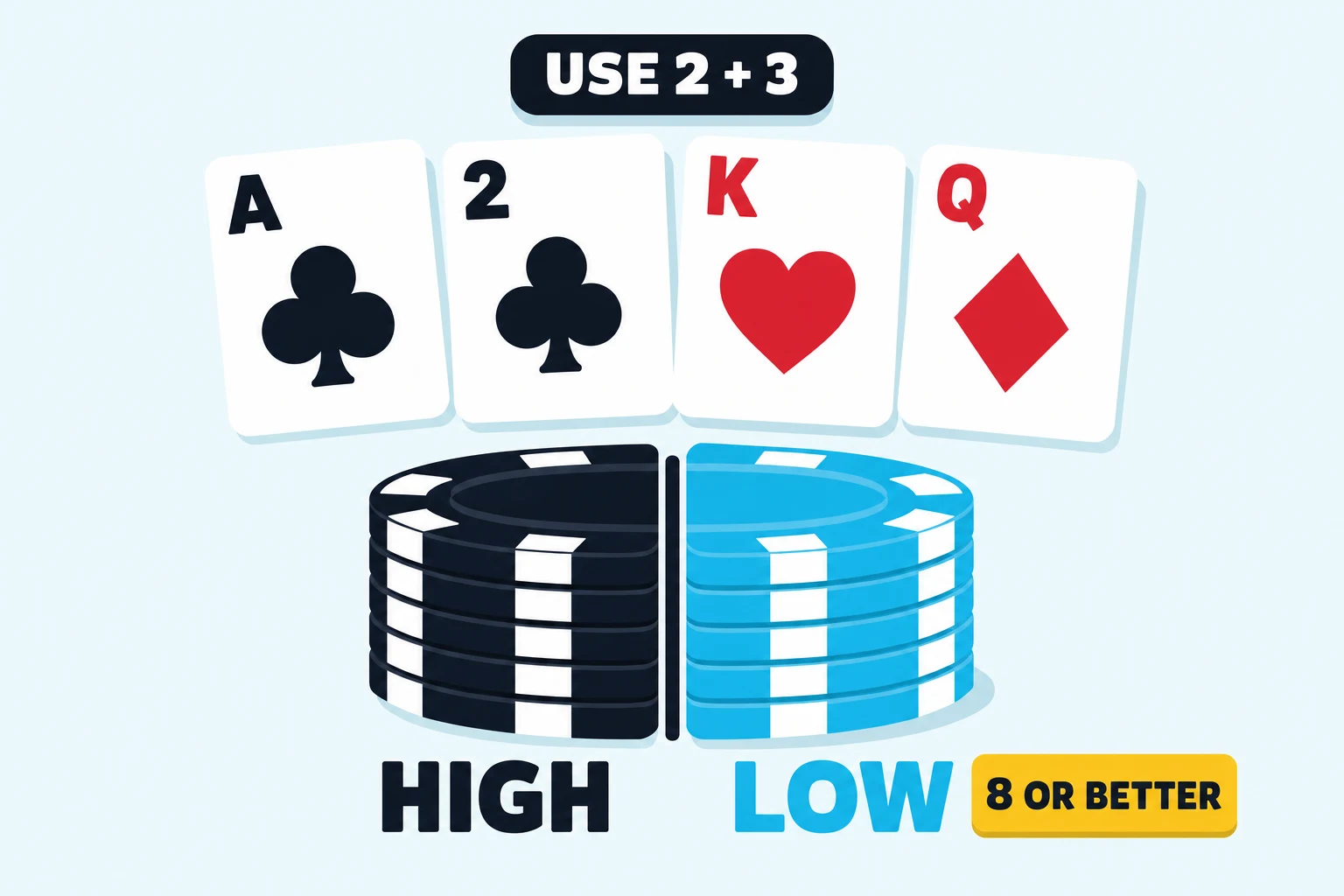
Four hole cards, two halves of one pot, and a low hand that only counts if every card is an eight or lower. How Omaha eight-or-better is dealt, read, and won.
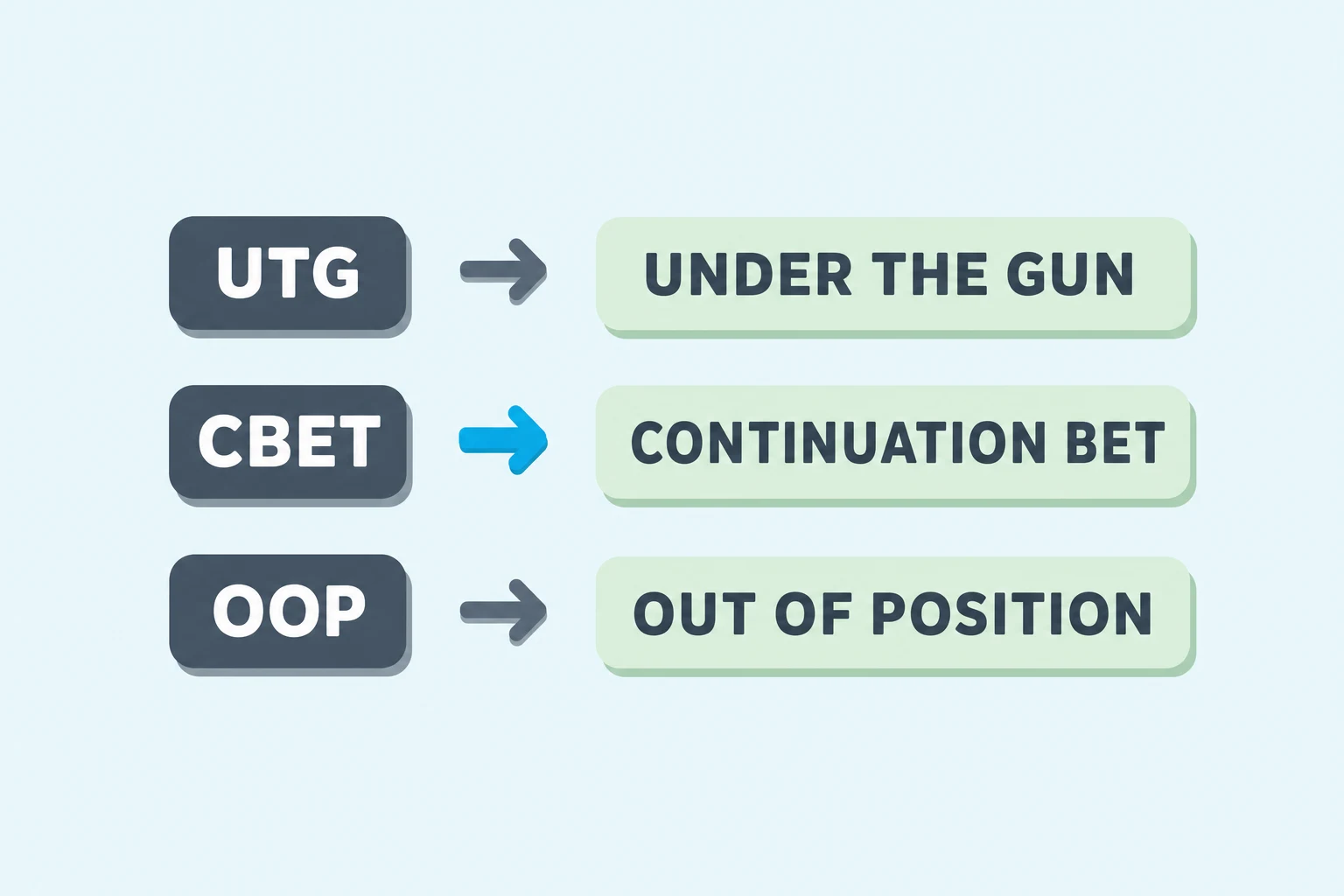
UTG, 3bet, OOP, MDF, bb/100. The twenty abbreviations that carry most forum threads and hand histories, decoded by category, each one linked to its full definition.
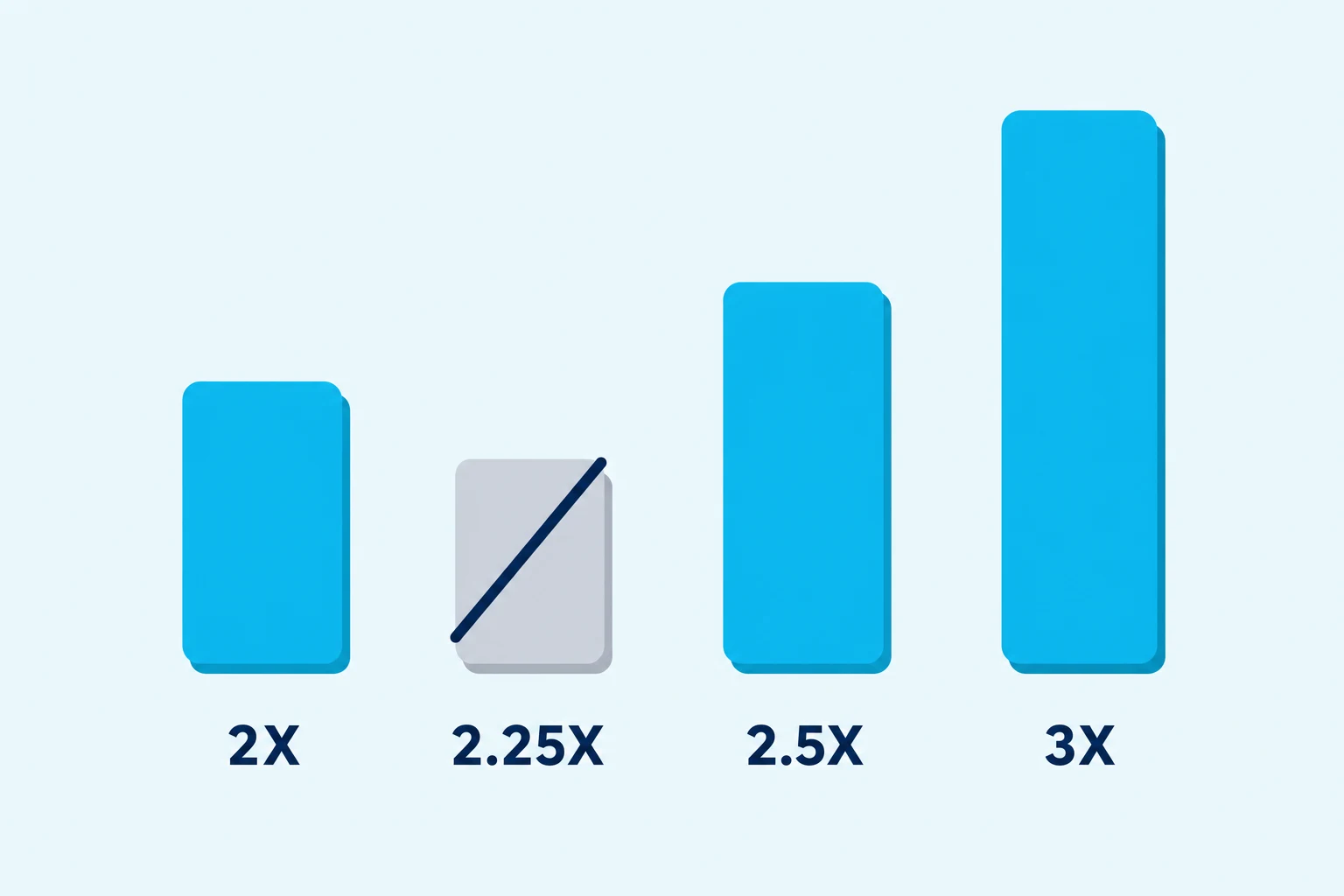
Two well-known tournament players spent a week arguing about chip denominations. Underneath the logistics is a strategy question most players never get taught: what does the number you pick actually do?
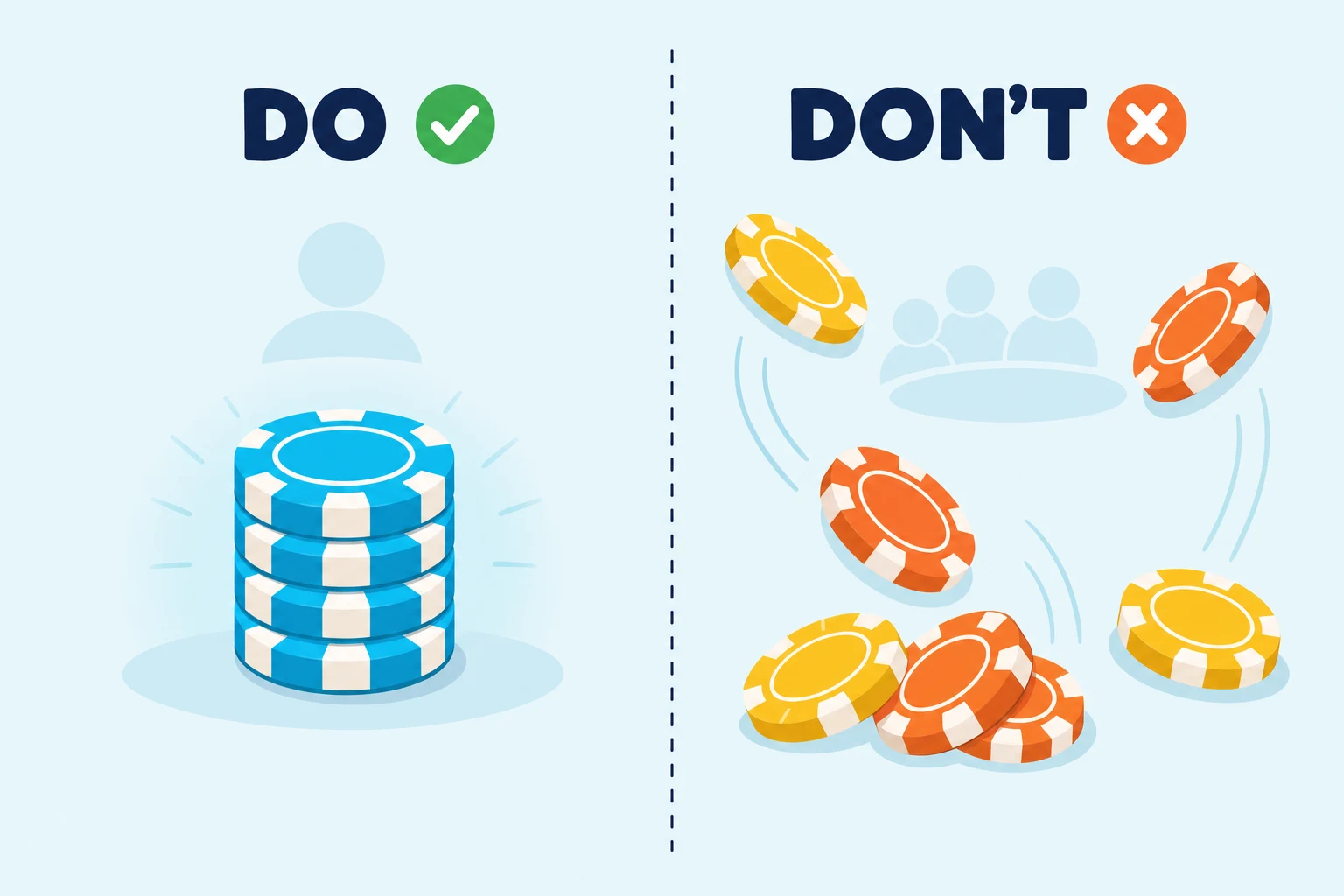
Live poker runs on two rulebooks, and the dealer only enforces one of them. The unwritten rules organized by moment in the hand, plus the handful that cost real money when broken.
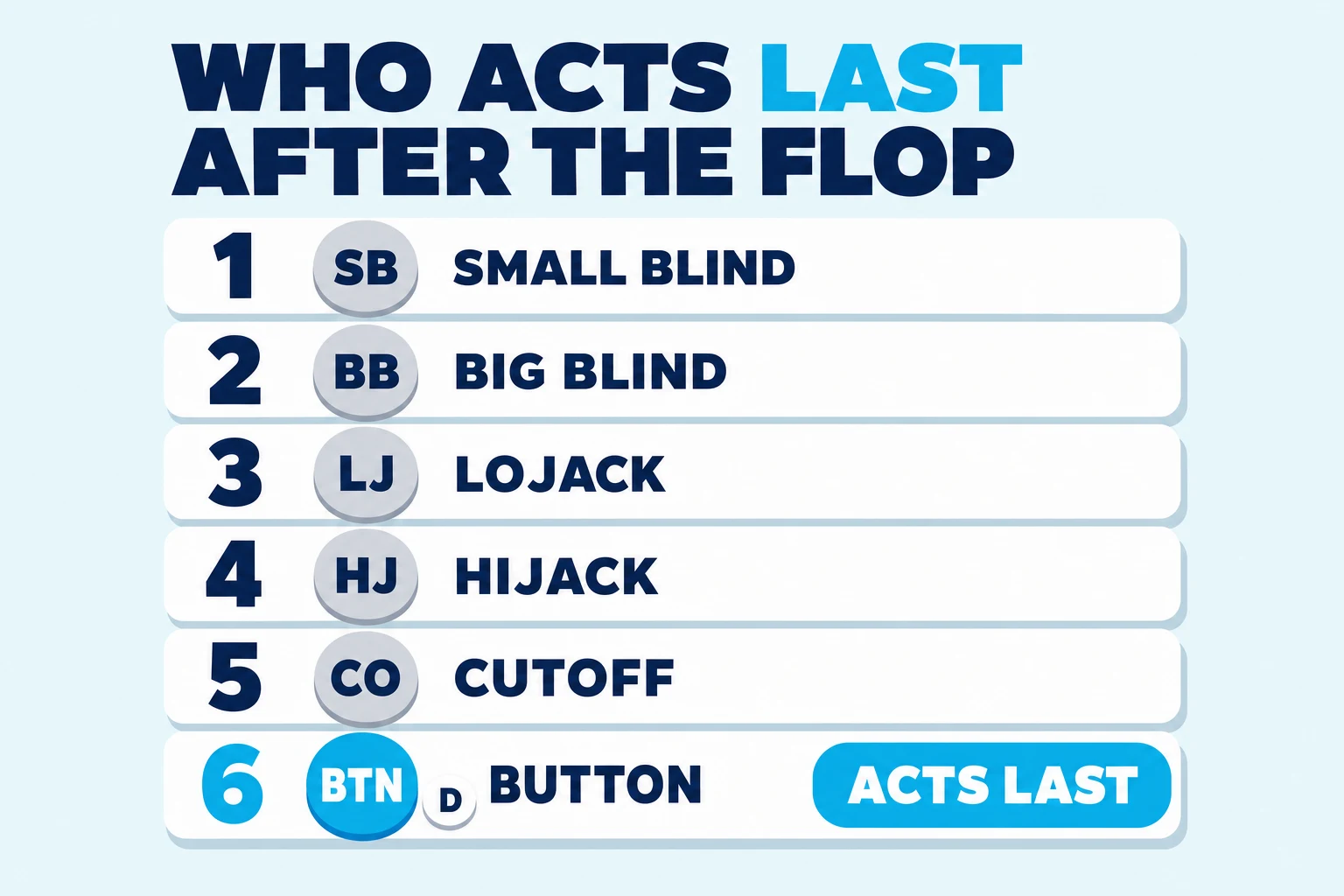
Your seat decides whether you act first or last, and that one fact sets how many hands you can play. Every position counted back from the button.
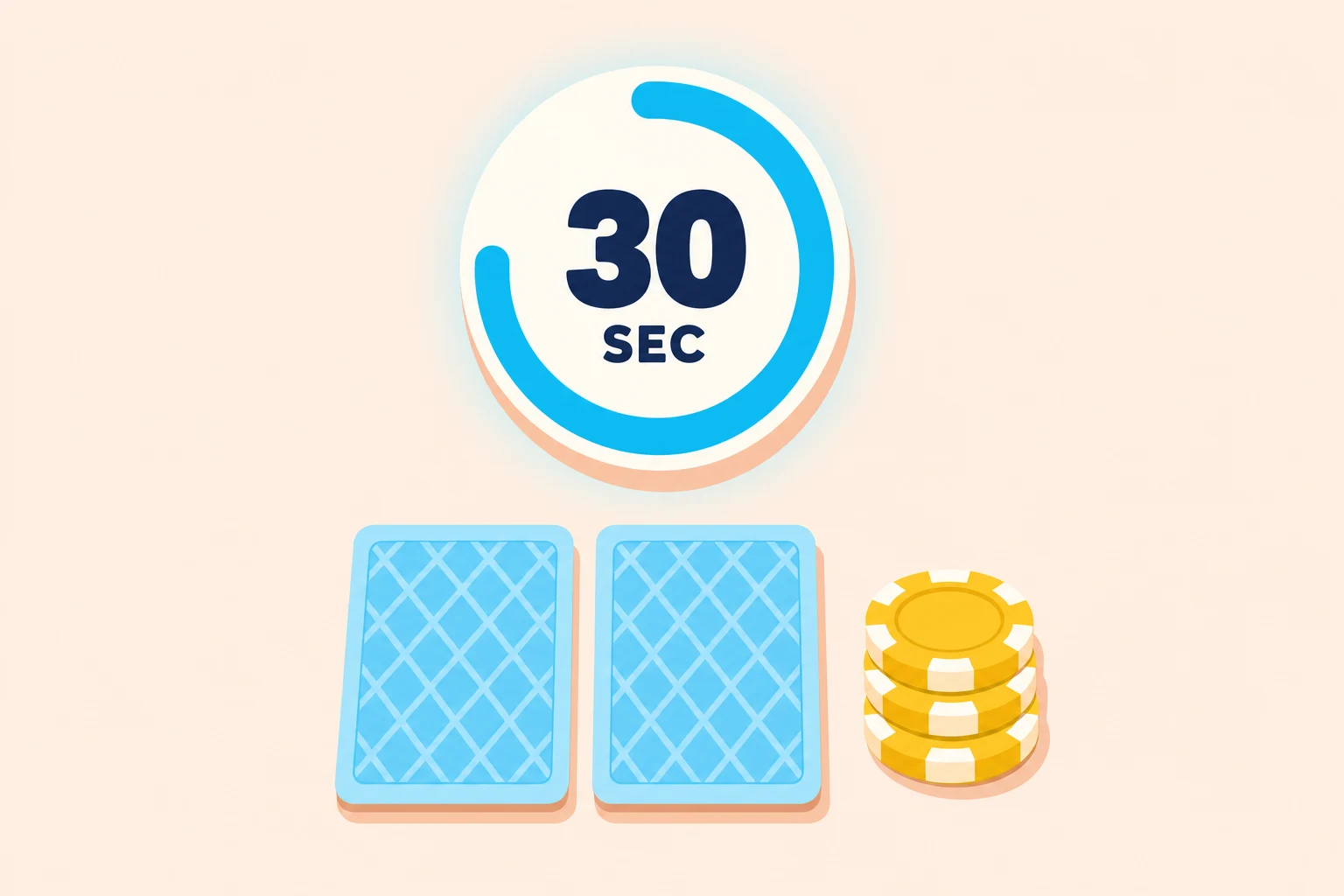
The World Series just put its Main Event on a timer for the first time ever. How shot clocks work, why tanking forced the issue, and how to keep your decisions sharp in 30 seconds.
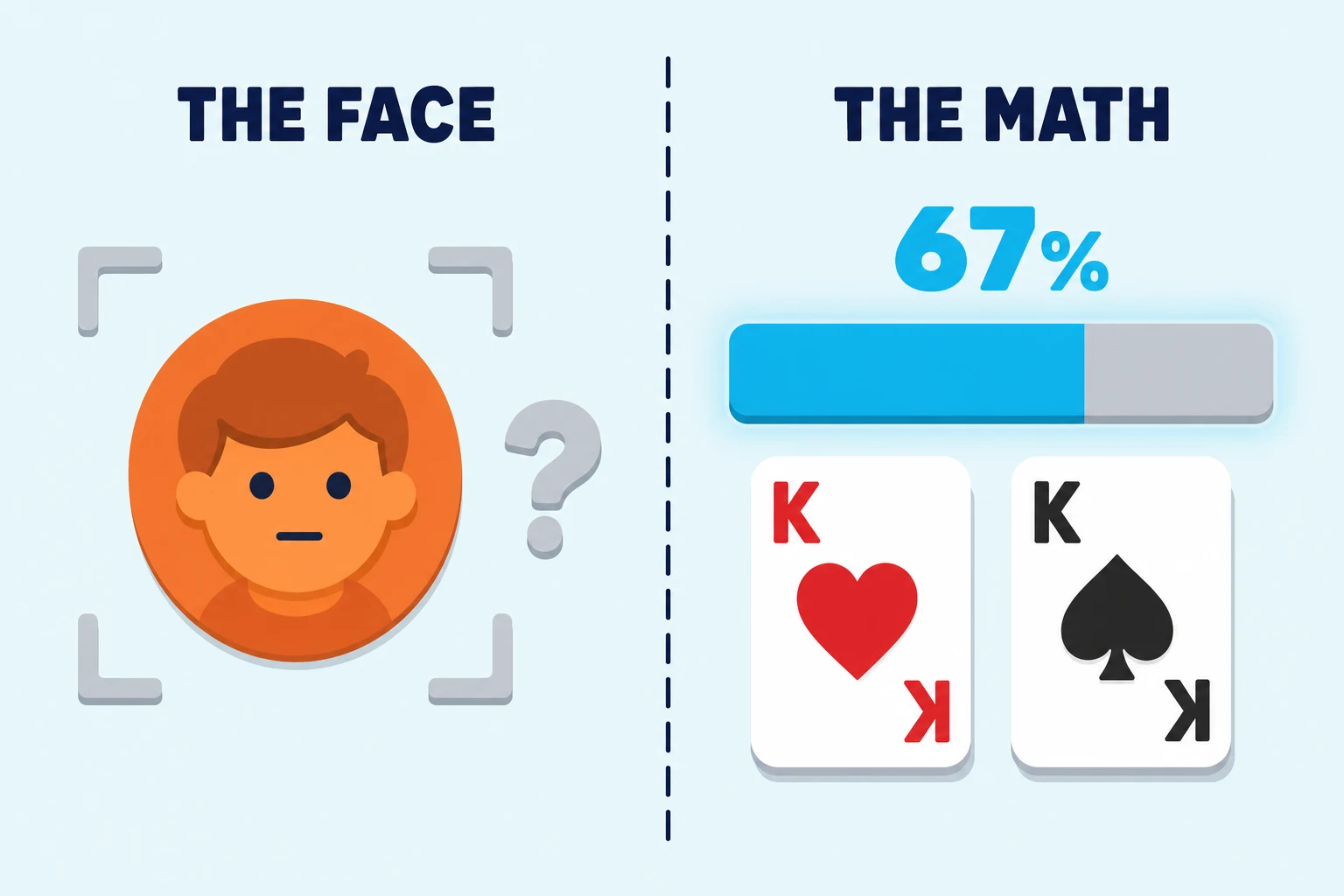
ESPN put an AI on the Main Event broadcast to read players' faces. What tells are actually worth, which ones carry real information, and why the best poker minds ever built don't look at faces at all.
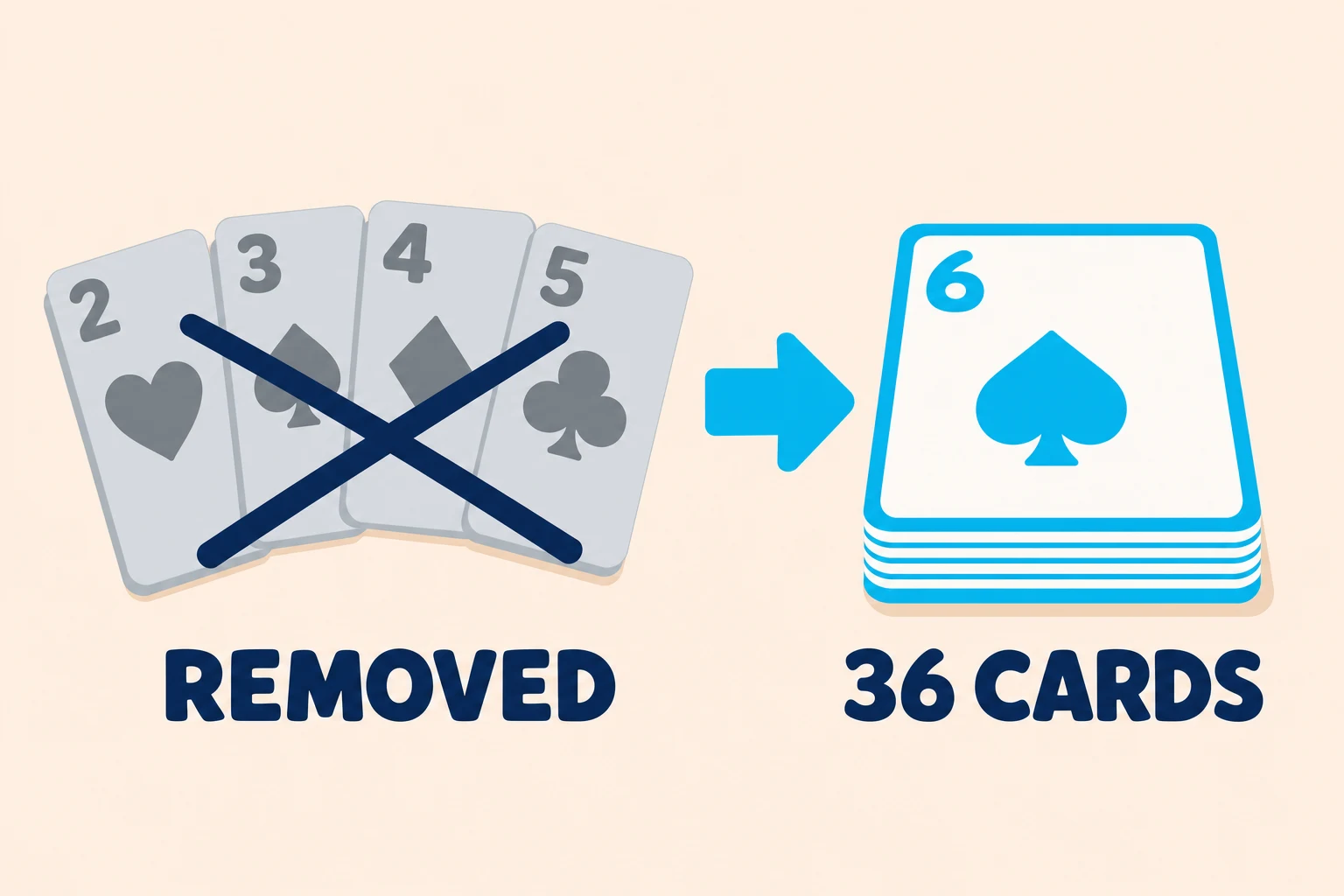
Take the twos through fives out of the deck and two hand rankings swap places. The 36-card game explained: the flush over the full house, the A-6-7-8-9 straight, and what it does to strategy.
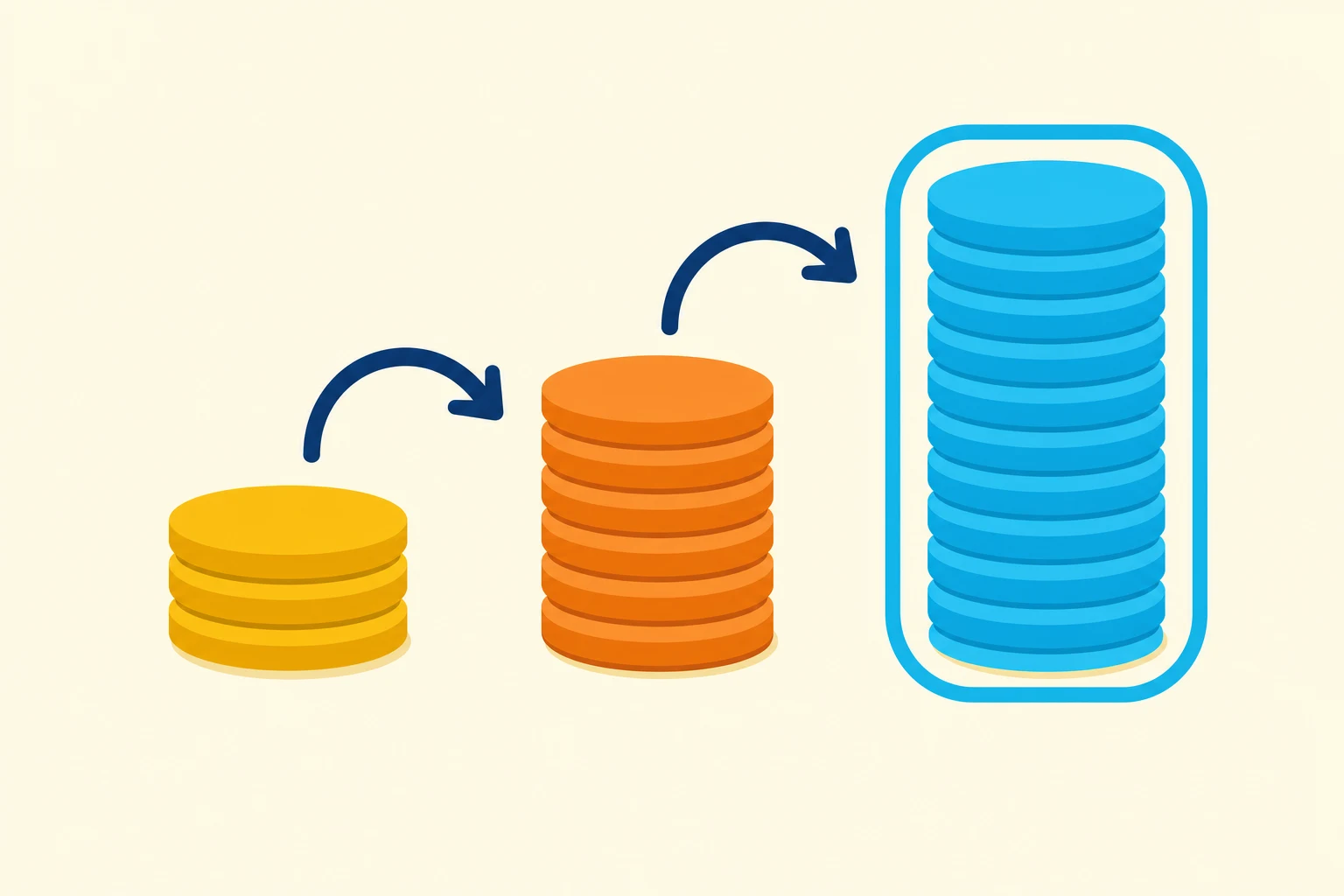
A 3-bet is the re-raise over the first raise. Why players re-raise instead of calling, which hands are worth it and what to do when someone re-raises you.
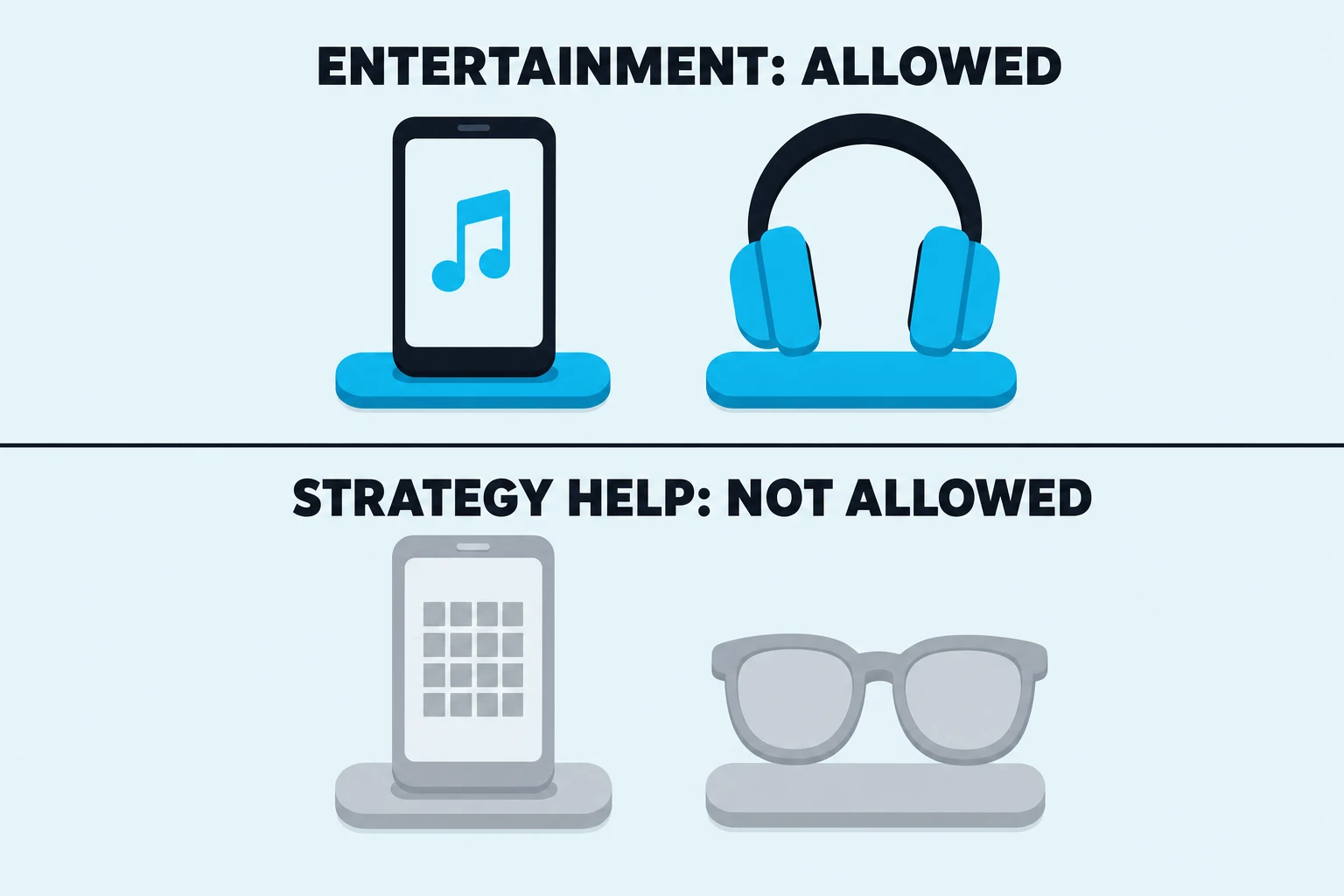
Phones, headphones, cameras, smart glasses. The rule that decides all of them is older than any of the hardware, and it is written around the help rather than the gadget.
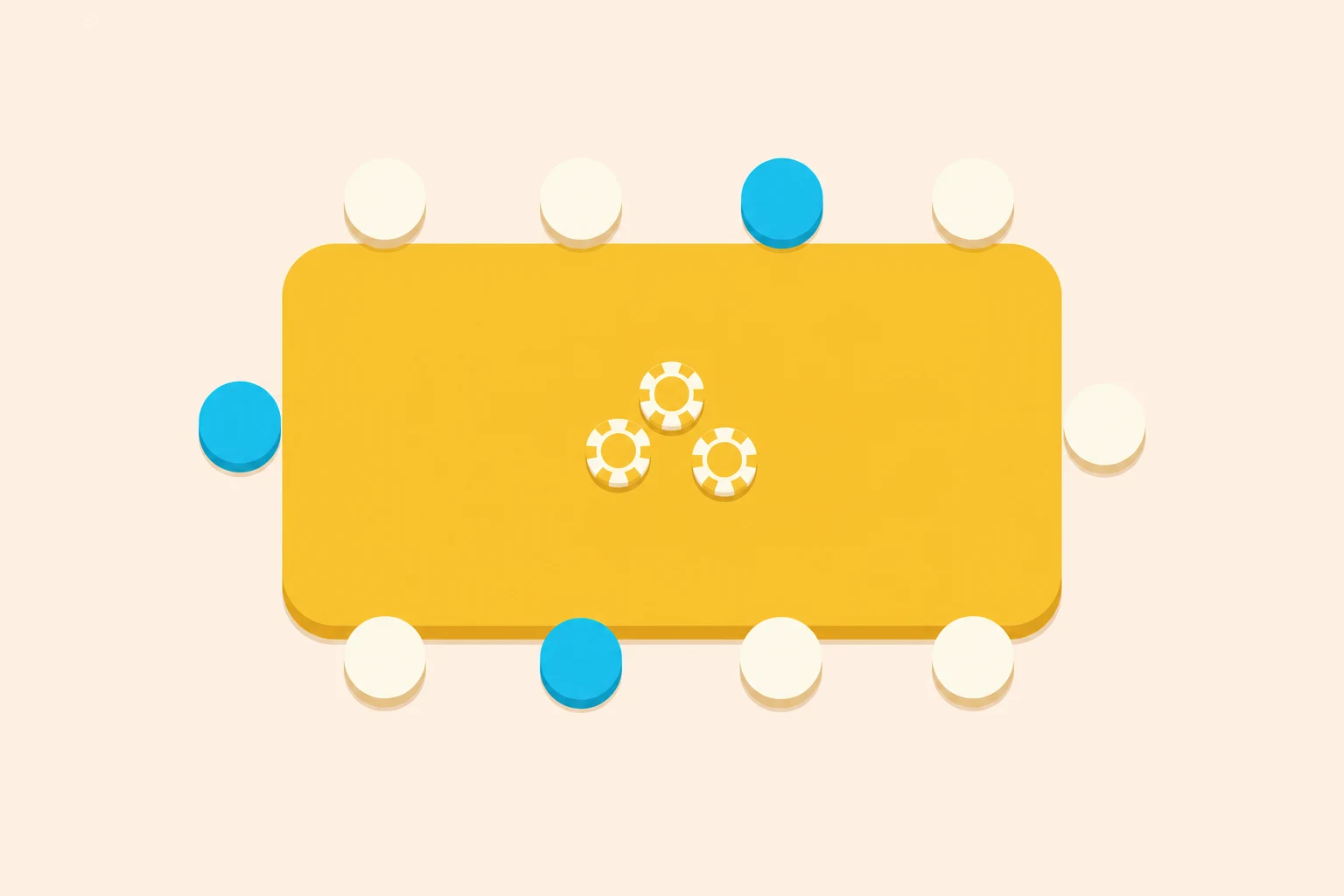
A sit and go starts when the seats fill, pays the top finishers, and turns into a push-or-fold game as the blinds climb. How SNGs run and how strategy changes by phase.
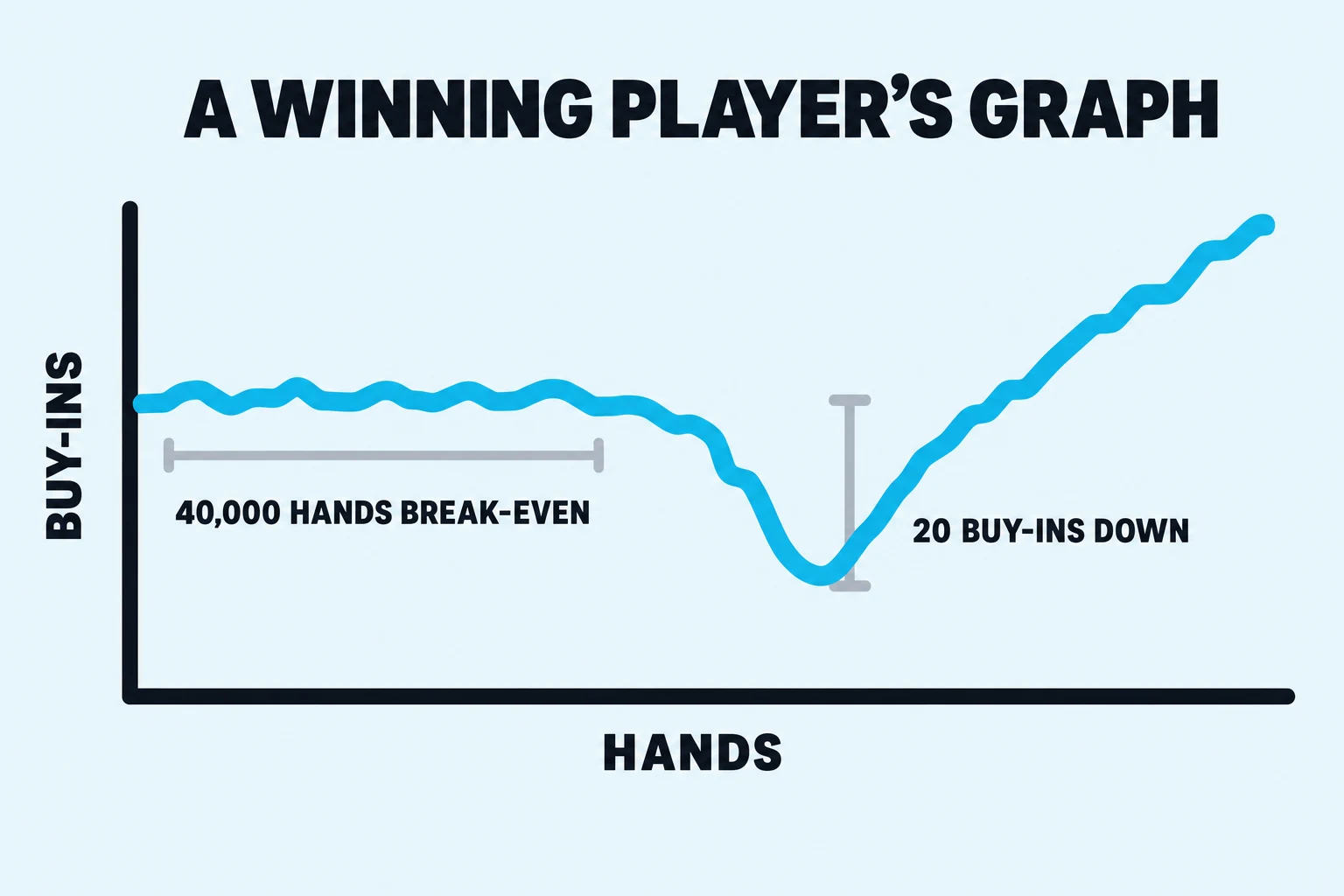
When a variance calculator hands back a probability that does not match your experience, the calculator is usually not the thing that is wrong, and neither is your memory. The inputs are.
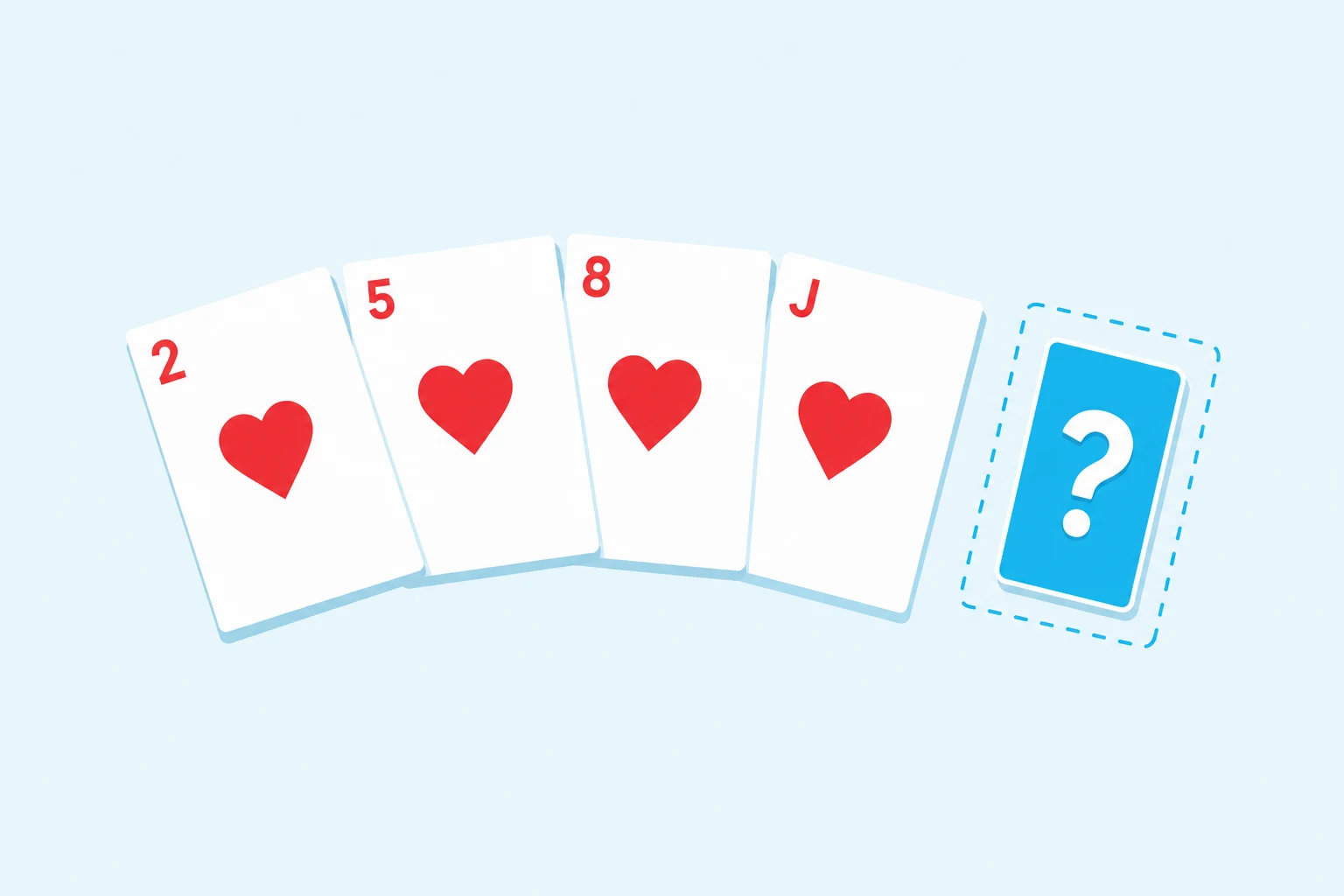
Four suited cards is not a hand, and it is not almost a flush at showdown. Here is what it is worth, when it is worth chasing, and the price math.
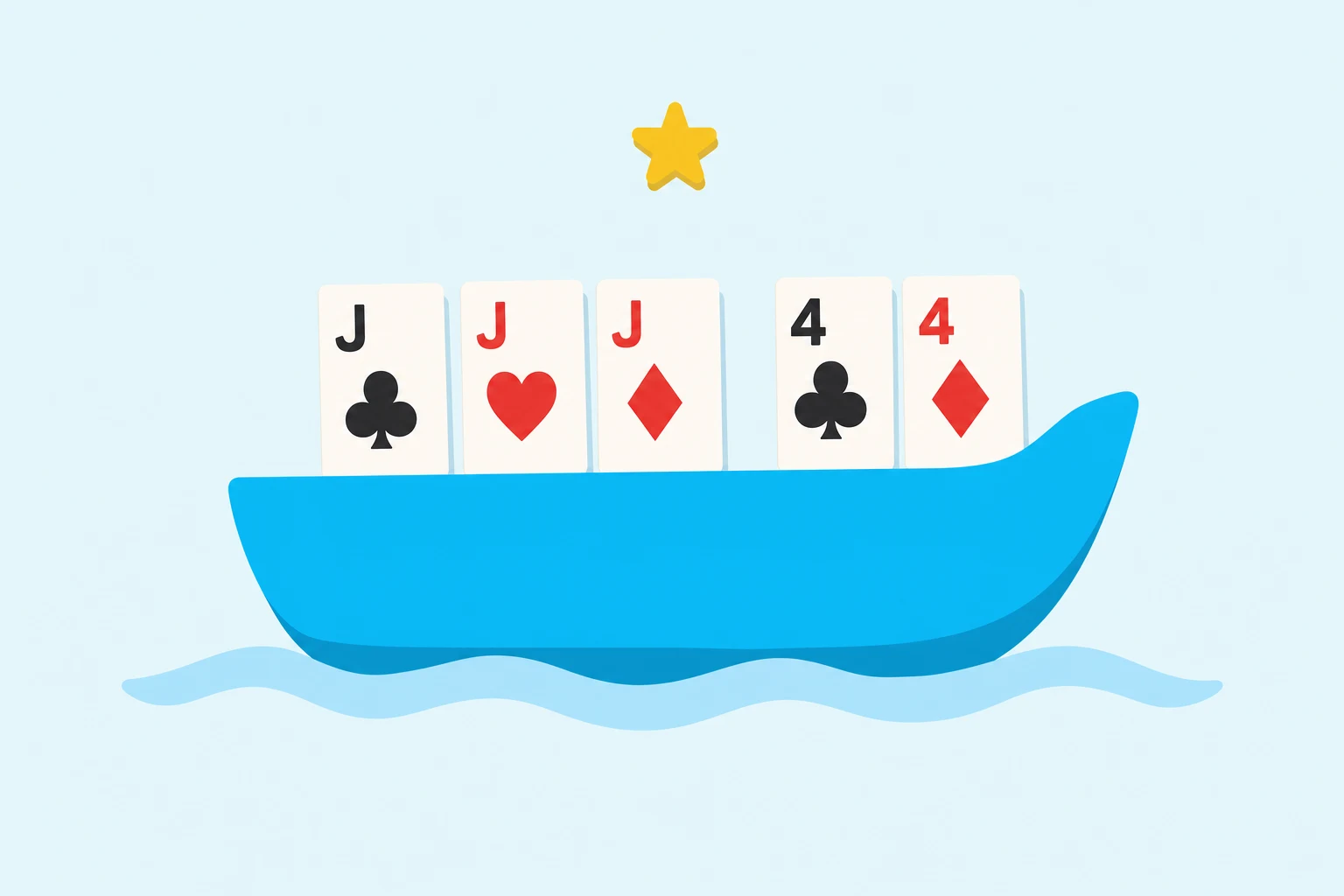
The nickname, where it probably came from, and the part that actually wins pots: knowing which boat beats which boat.
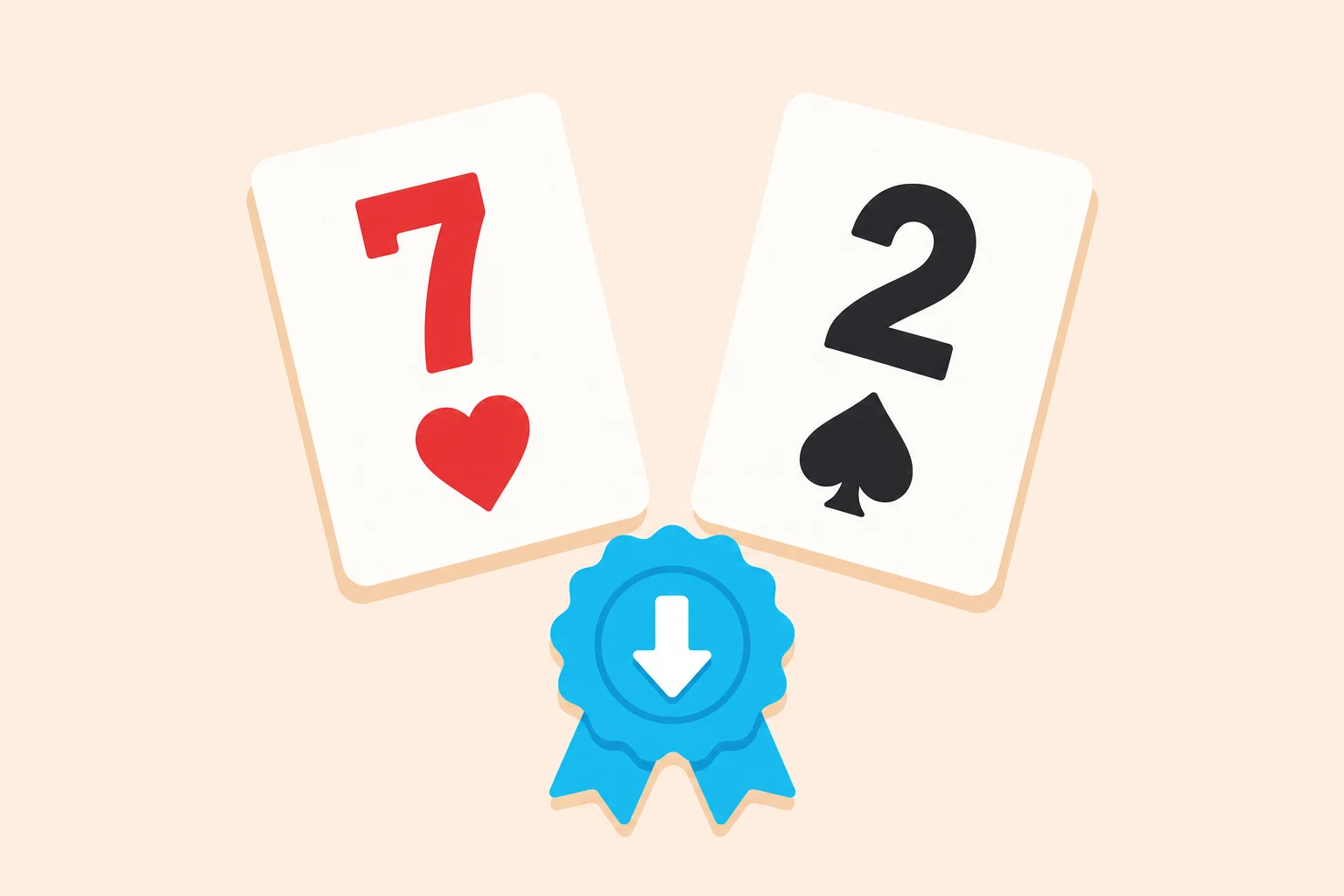
Why seven-deuce earned the title, the honest numbers behind it, and what the worst hand in the game teaches about every hand you should not play.
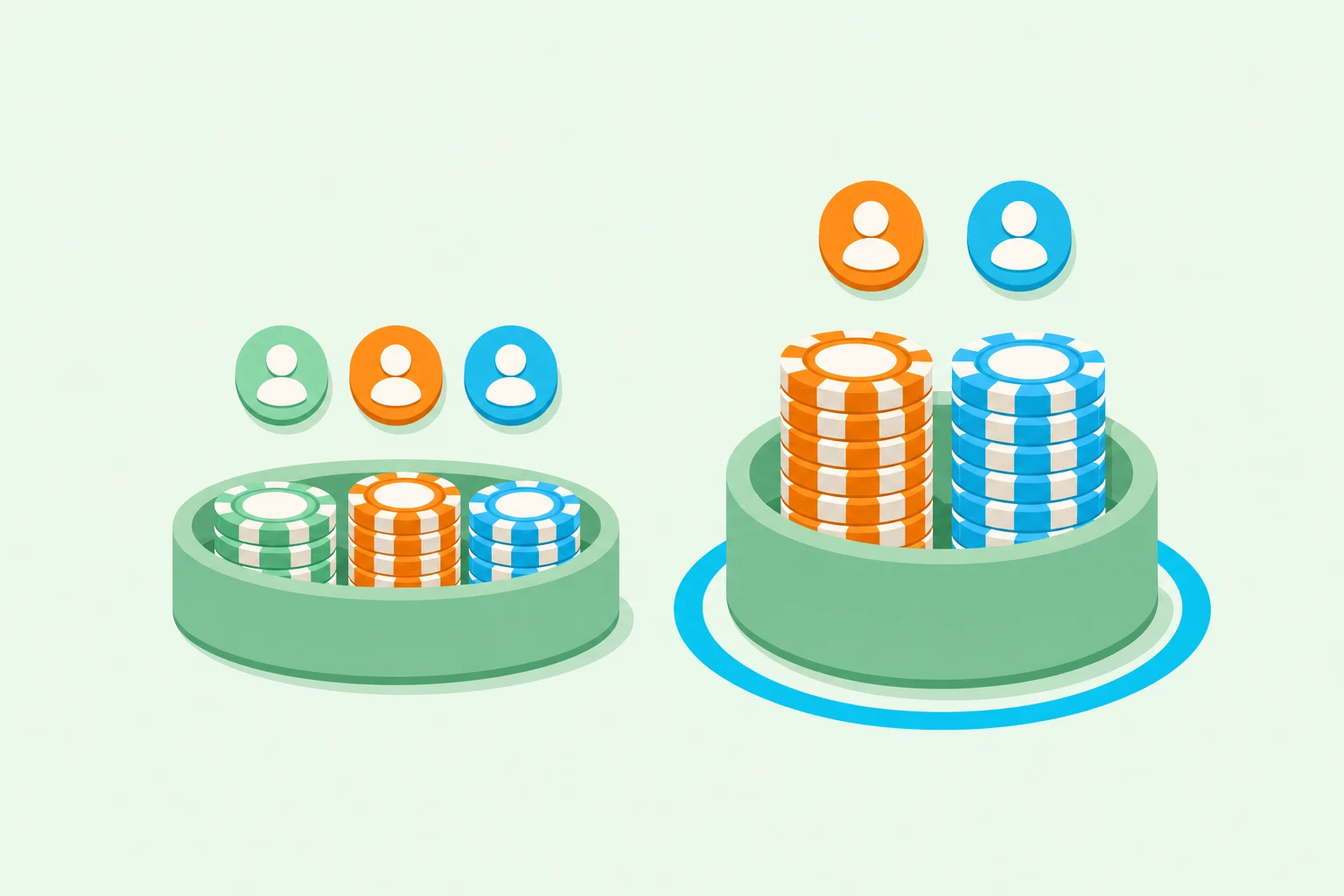
One rule generates every side pot: you can only win chips you matched. Two worked examples with real numbers, and the showdown order that confuses every home game.
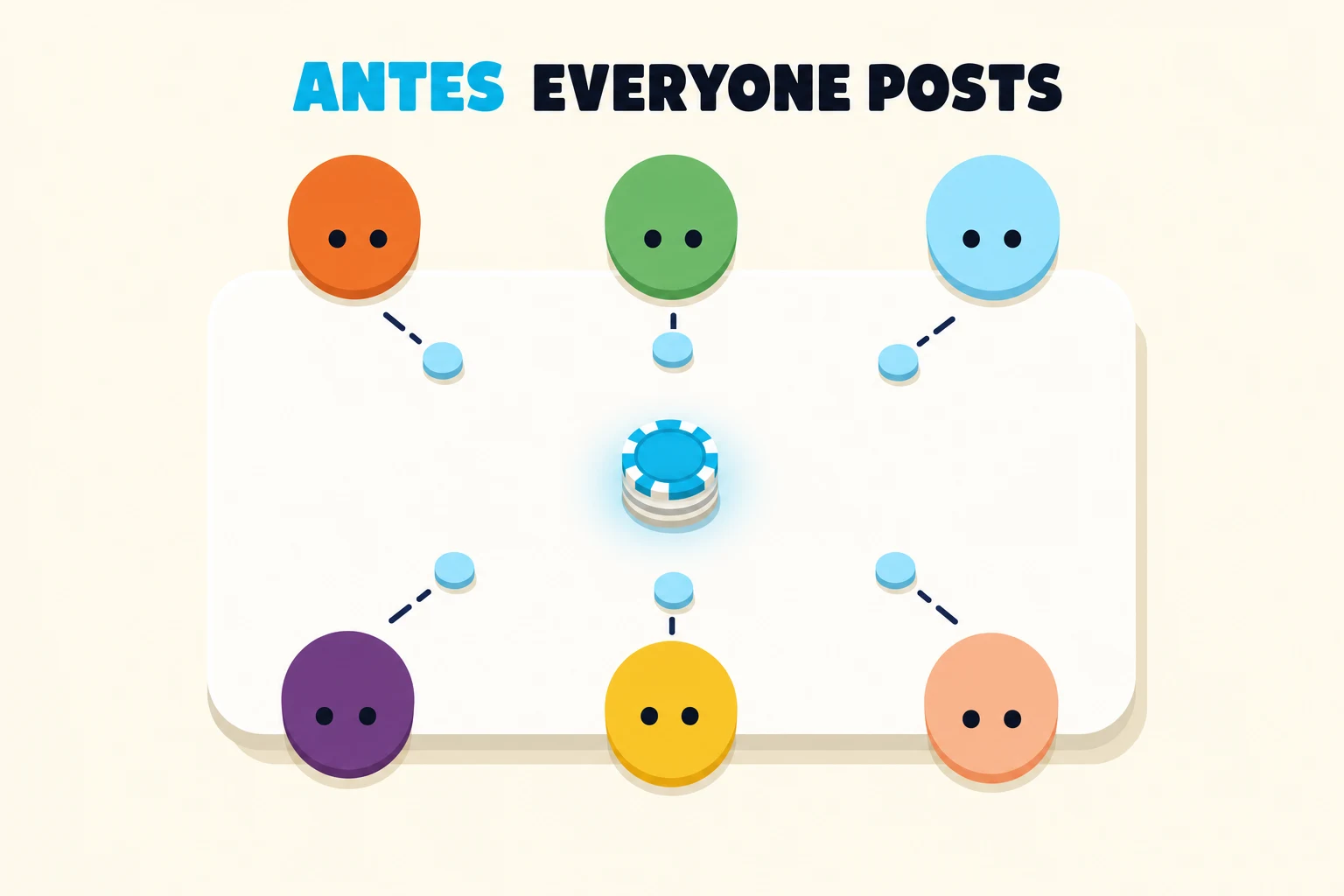
An ante is a forced bet every player posts before the deal. It fattens the preflop pot by two thirds, and correct strategy loosens with it: wider steals, wider defends, more action.
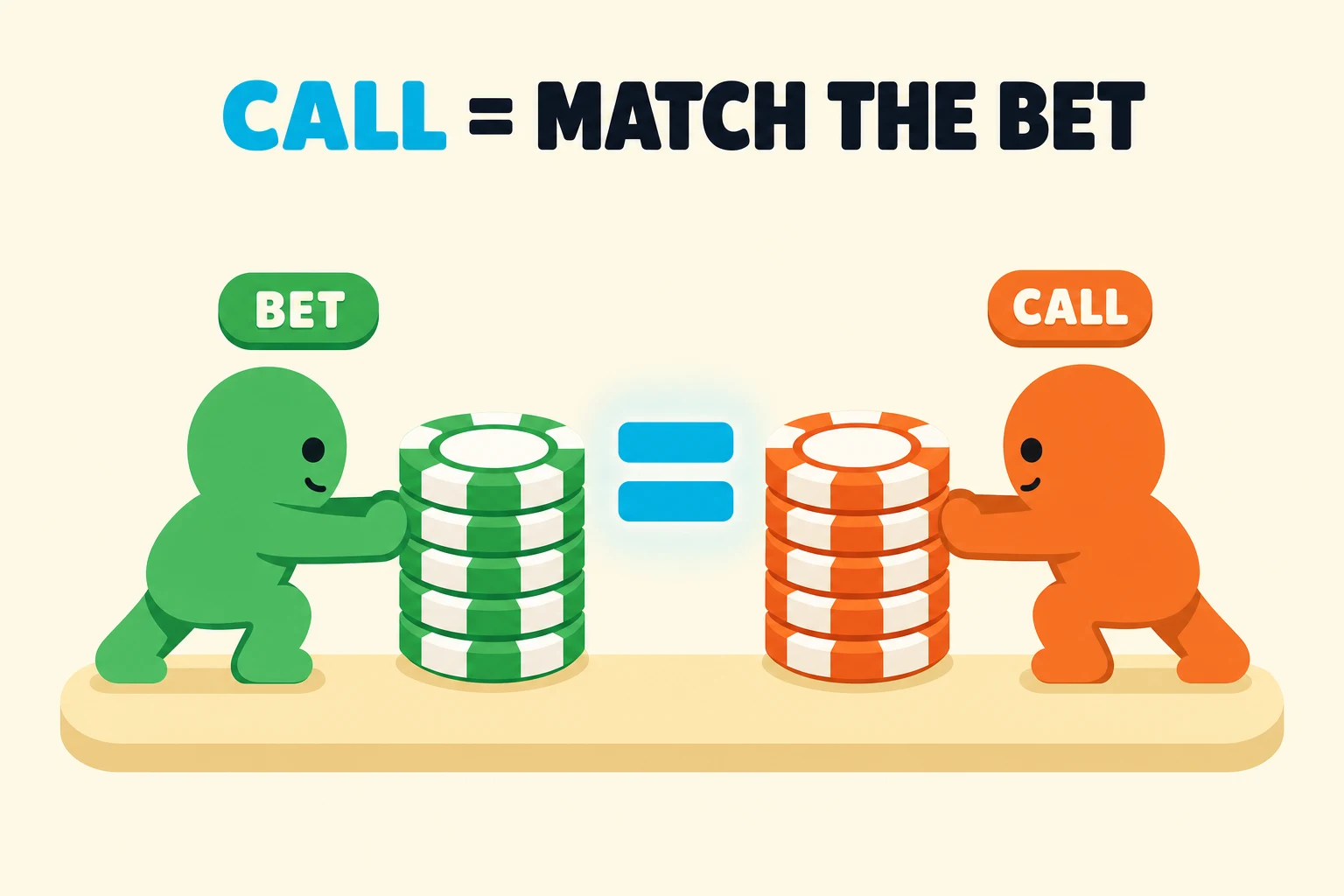
A call matches the bet in front of you, nothing more. When the price justifies it, calling prints; when it becomes a habit, it is the most expensive leak in low-stakes poker. The three-question filter that separates the two.
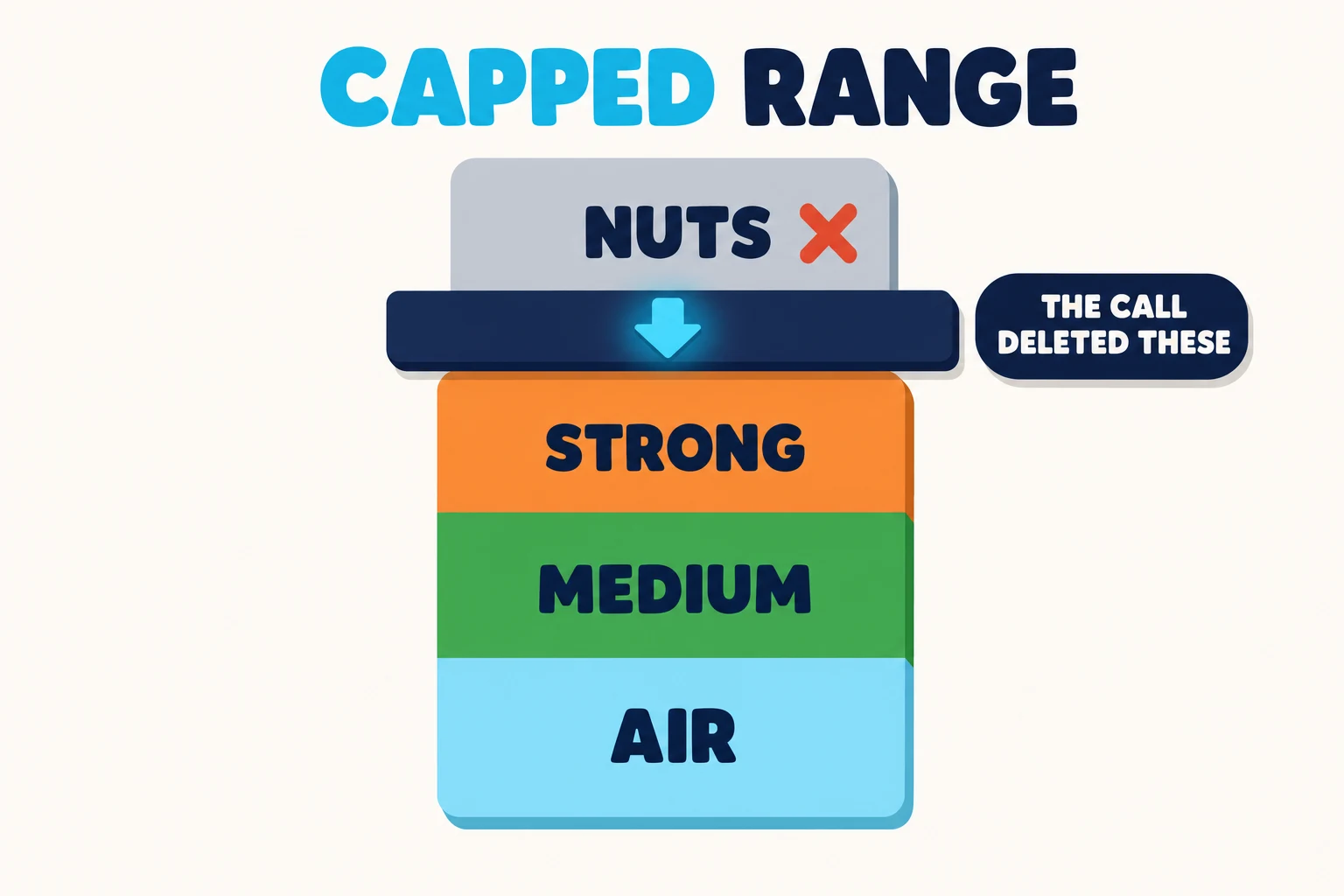
A range is capped when the line rules out its strongest hands: calls cap, and checks back cap. How to spot the moment it happens, the pressure playbook against a ceiling, and how to keep your own range whole.
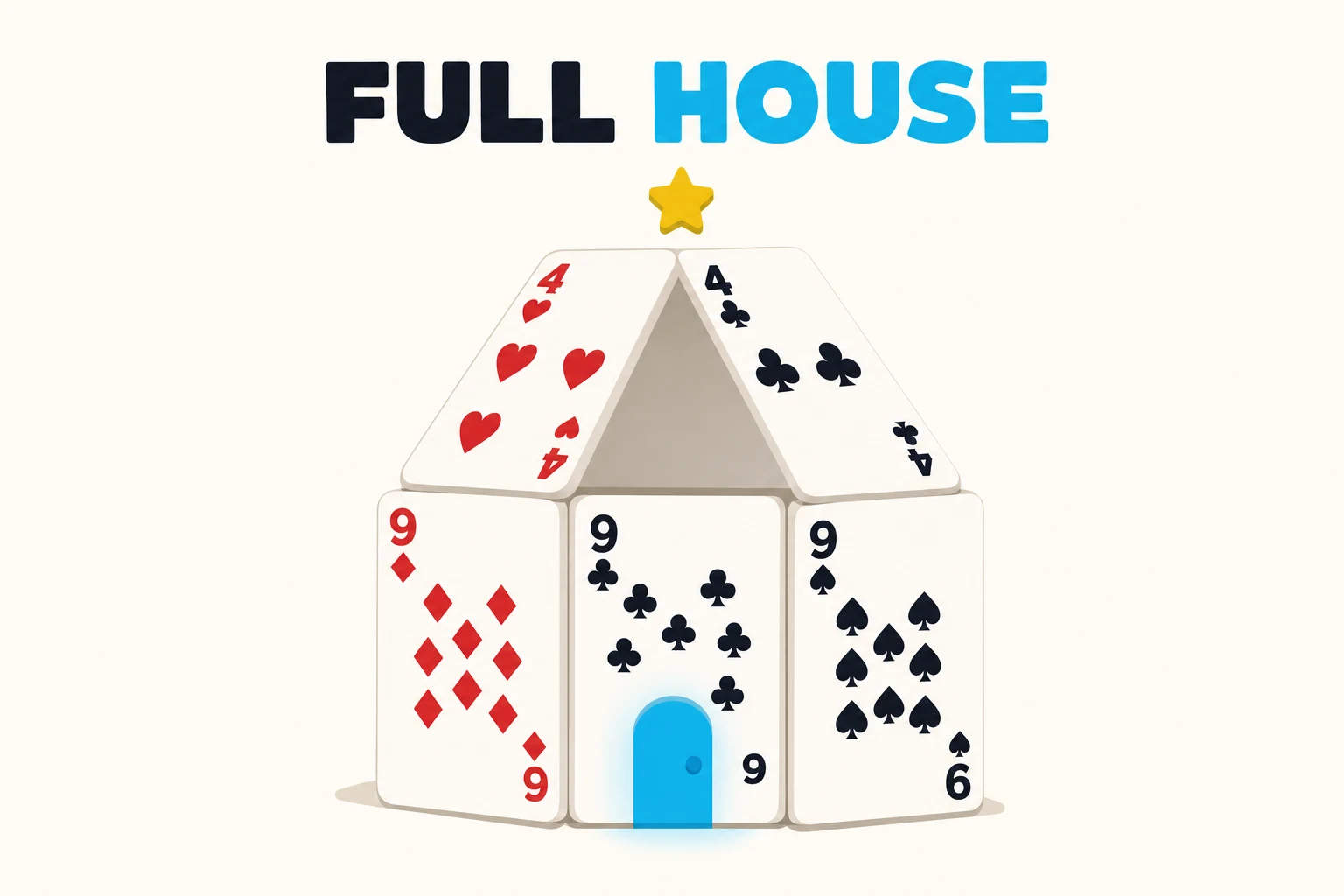
Three of one rank plus a pair of another. What a full house beats, what beats it, and the tie rule that decides boat-over-boat pots: the trips rank first, always.
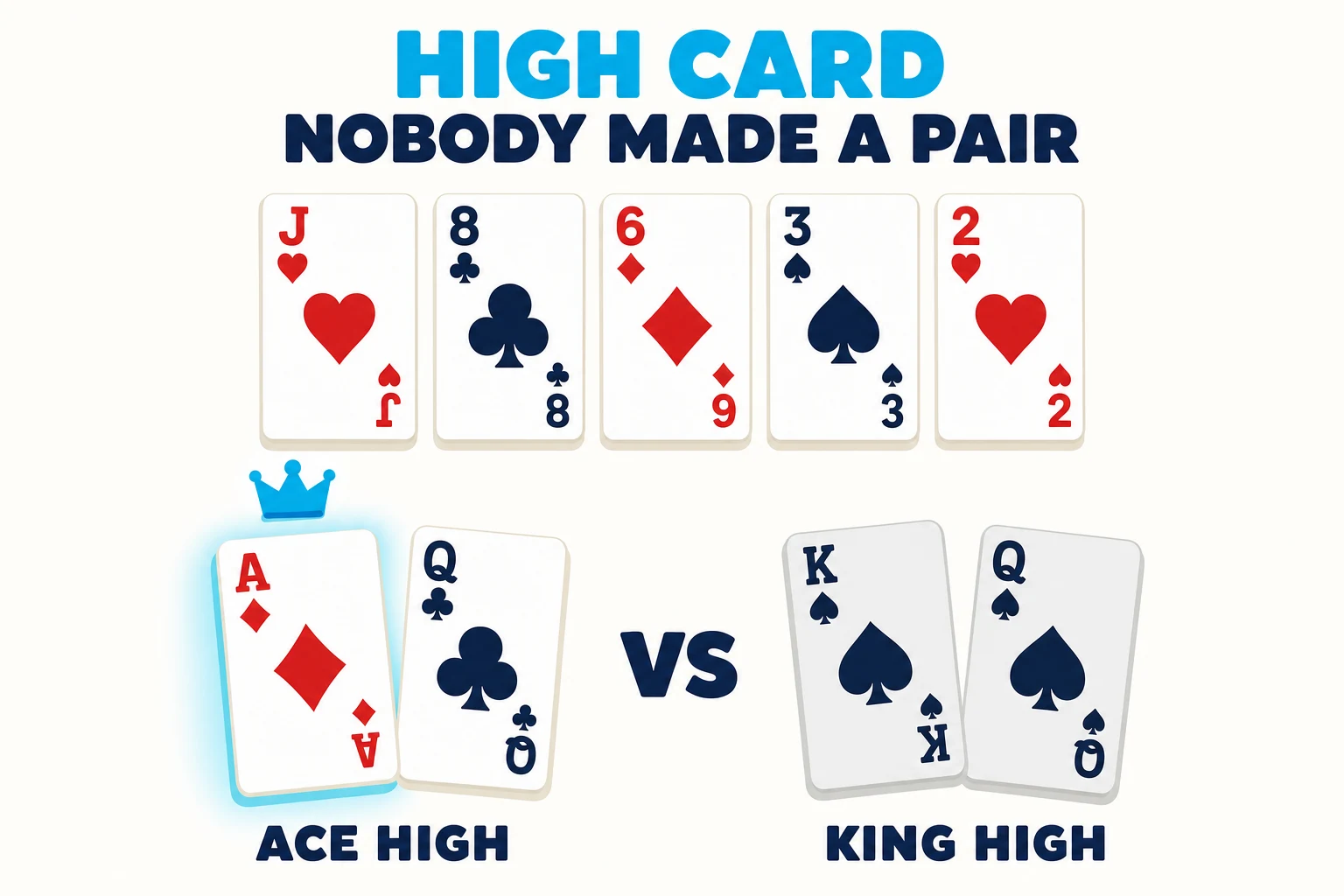
When no one makes a pair, the highest card wins, and when those match, the next card decides, all the way through five. The comparison walk, the ties everyone argues about, and when ace-high is a real hand.
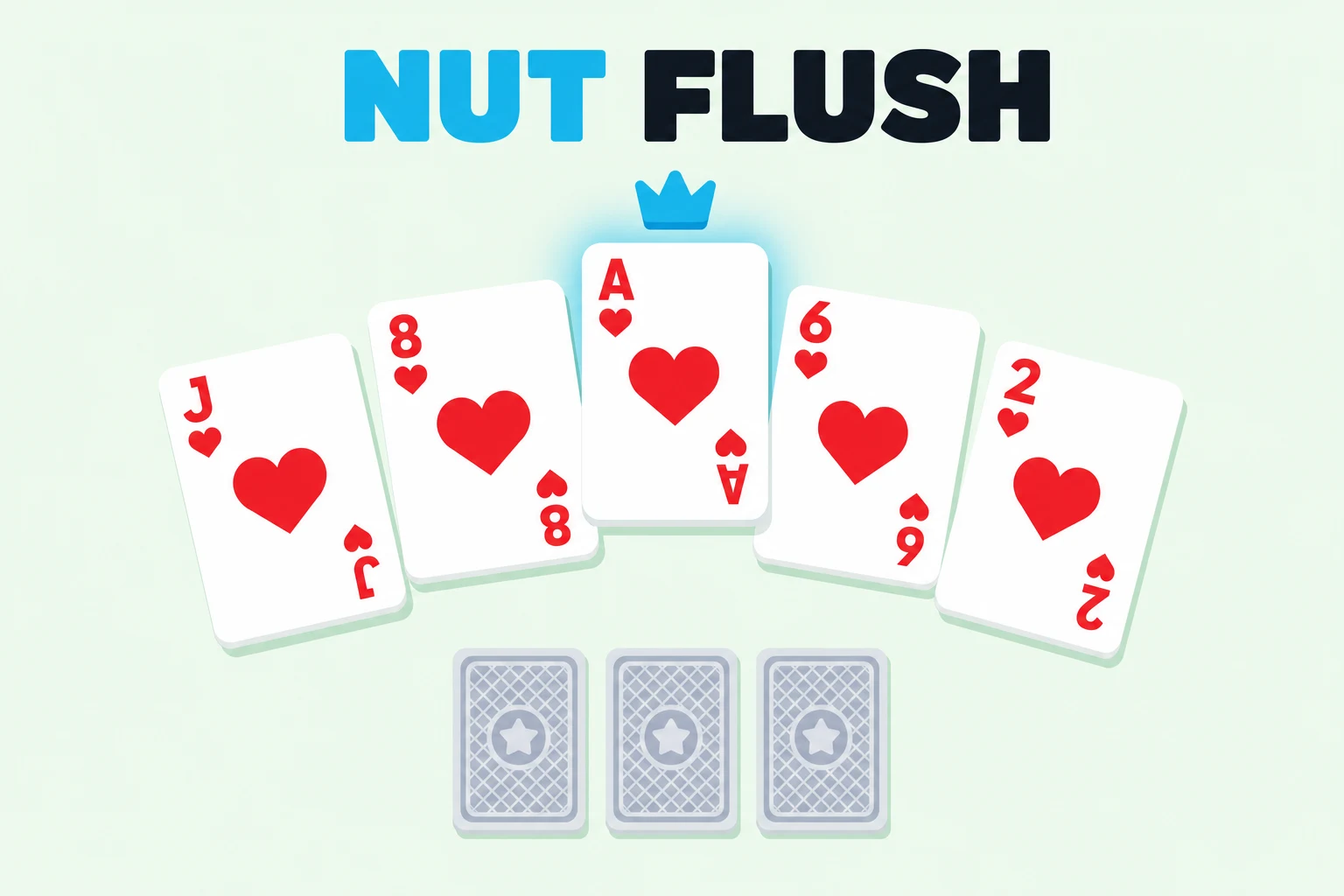
The nut flush is the best flush a board allows, usually the ace-high one. How to spot the nut card in two seconds, when the nut flush is not the nuts, and the math for playing the draw fast.
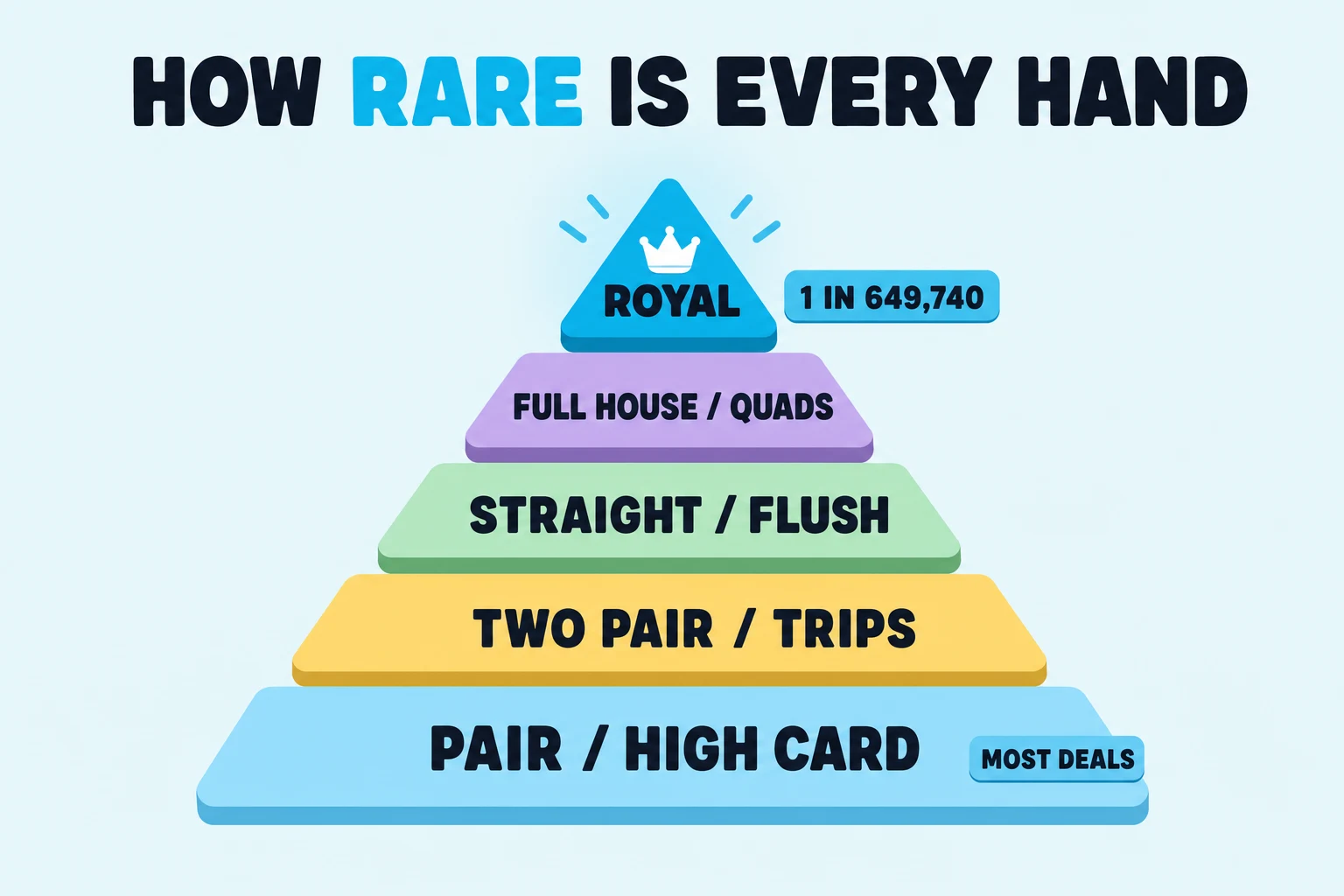
Every poker hand's exact odds in one table, both dealt five cards and by the river in hold'em. Half of all five-card deals are high card. By the river you pair up or better 83 percent of the time.
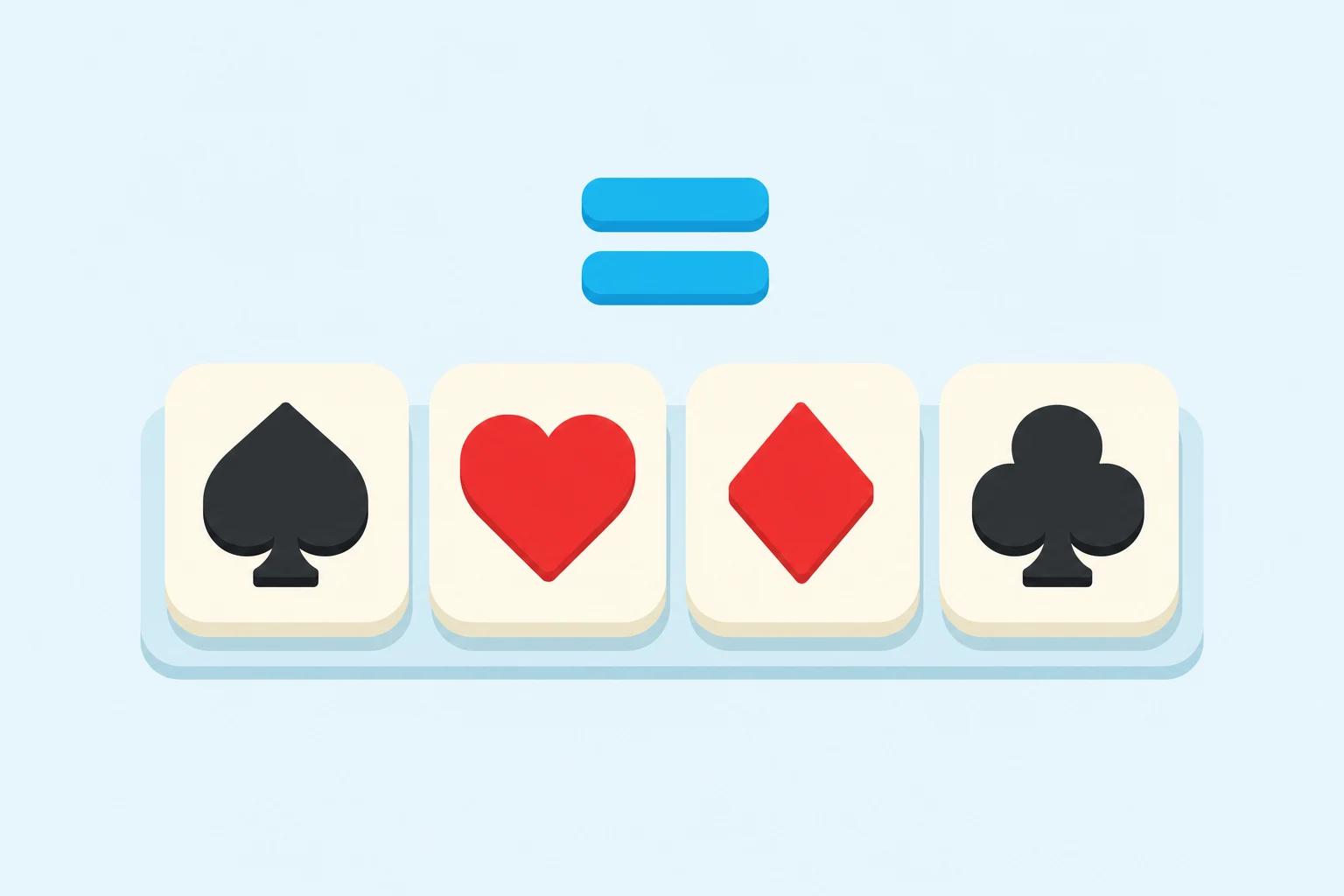
In Texas hold'em, no suit outranks another, ever. Where the suit-ranking myth comes from, the two real exceptions, and when suits actually matter.
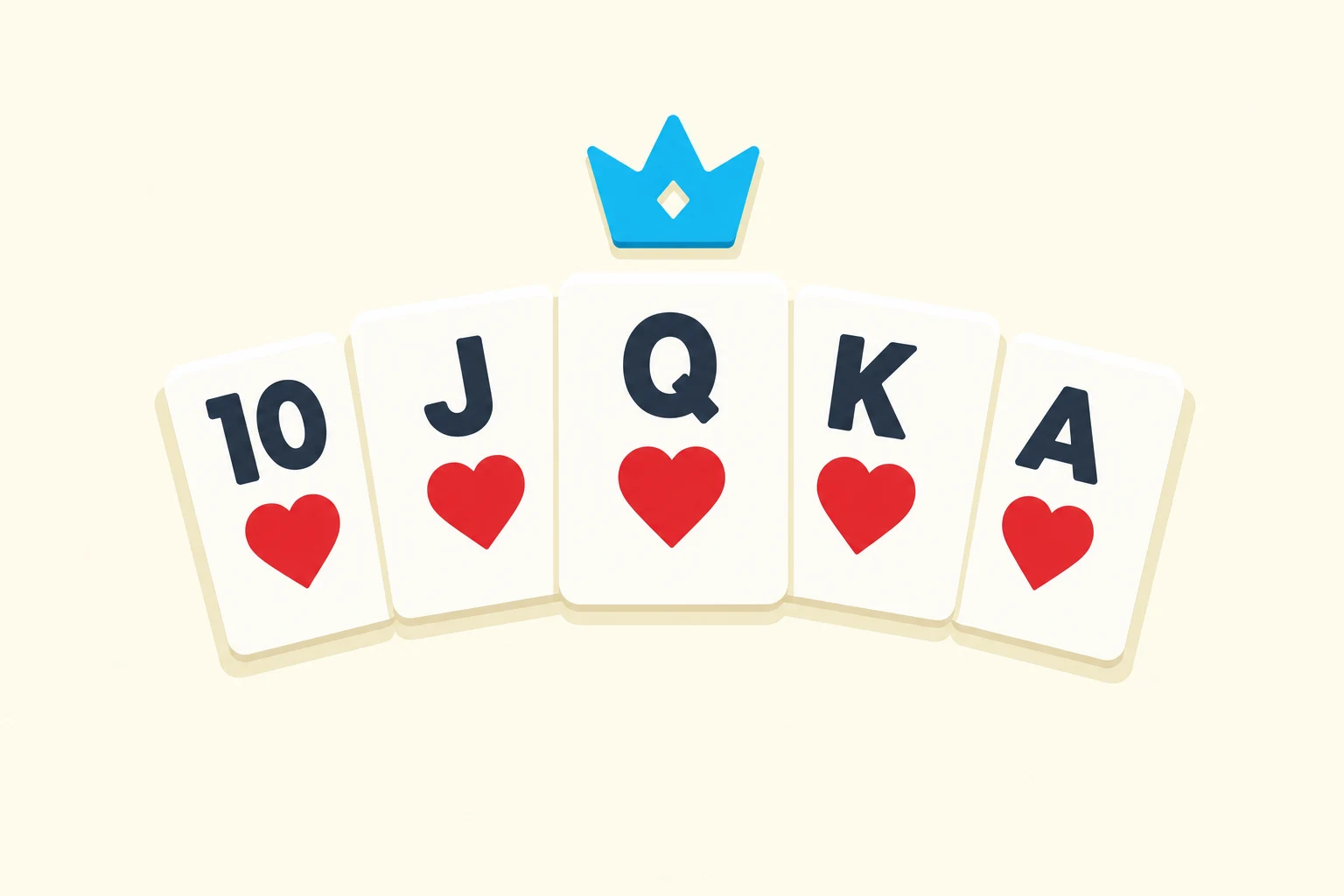
One deal in 649,740 makes a royal on five cards; hold'em's seven cards improve you to about 1 in 31,000 by the river. What those numbers feel like at a real table.
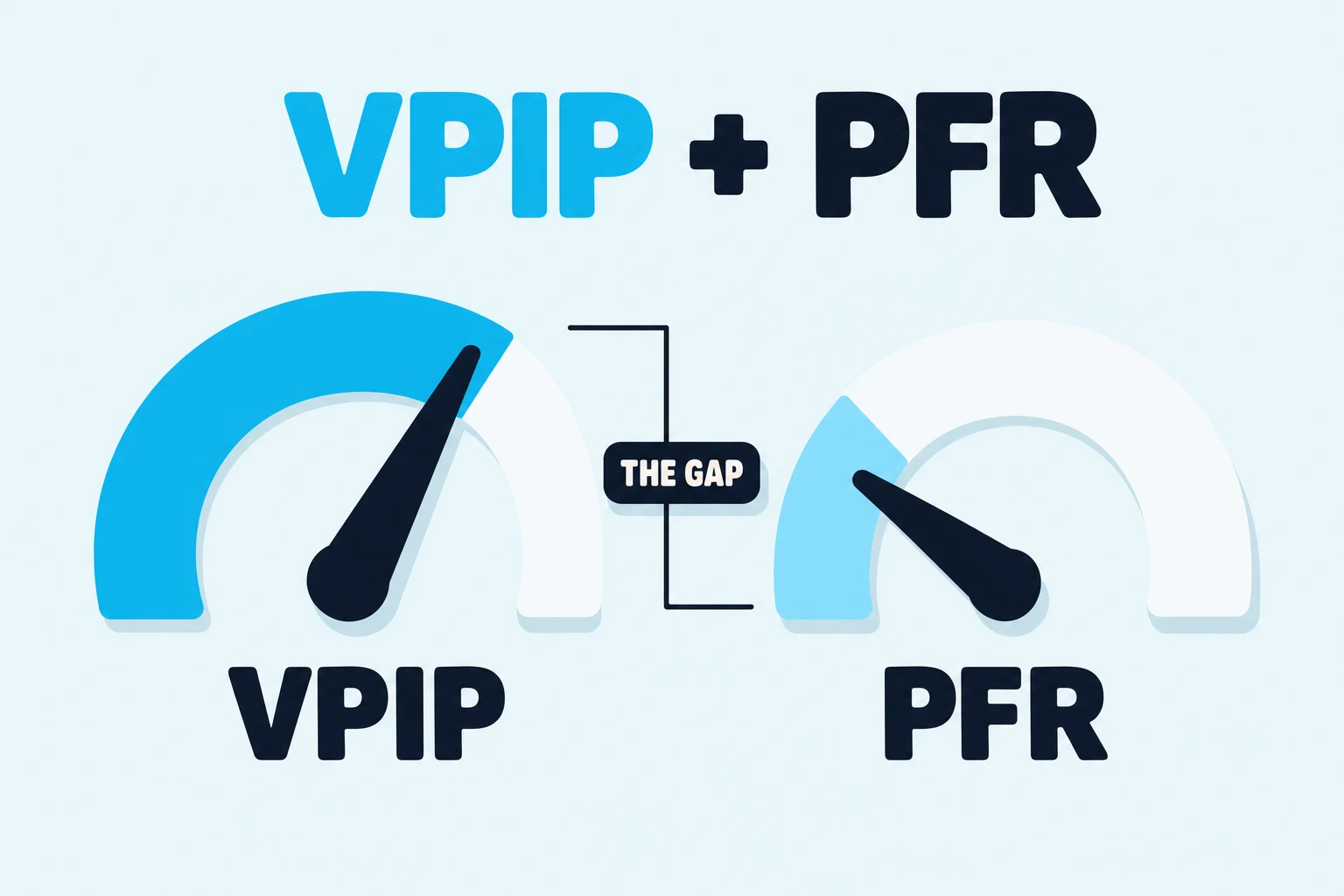
VPIP counts how often a player puts money in voluntarily; PFR counts how often they come in raising. The two numbers together, and especially the gap between them, draw a player's whole portrait.
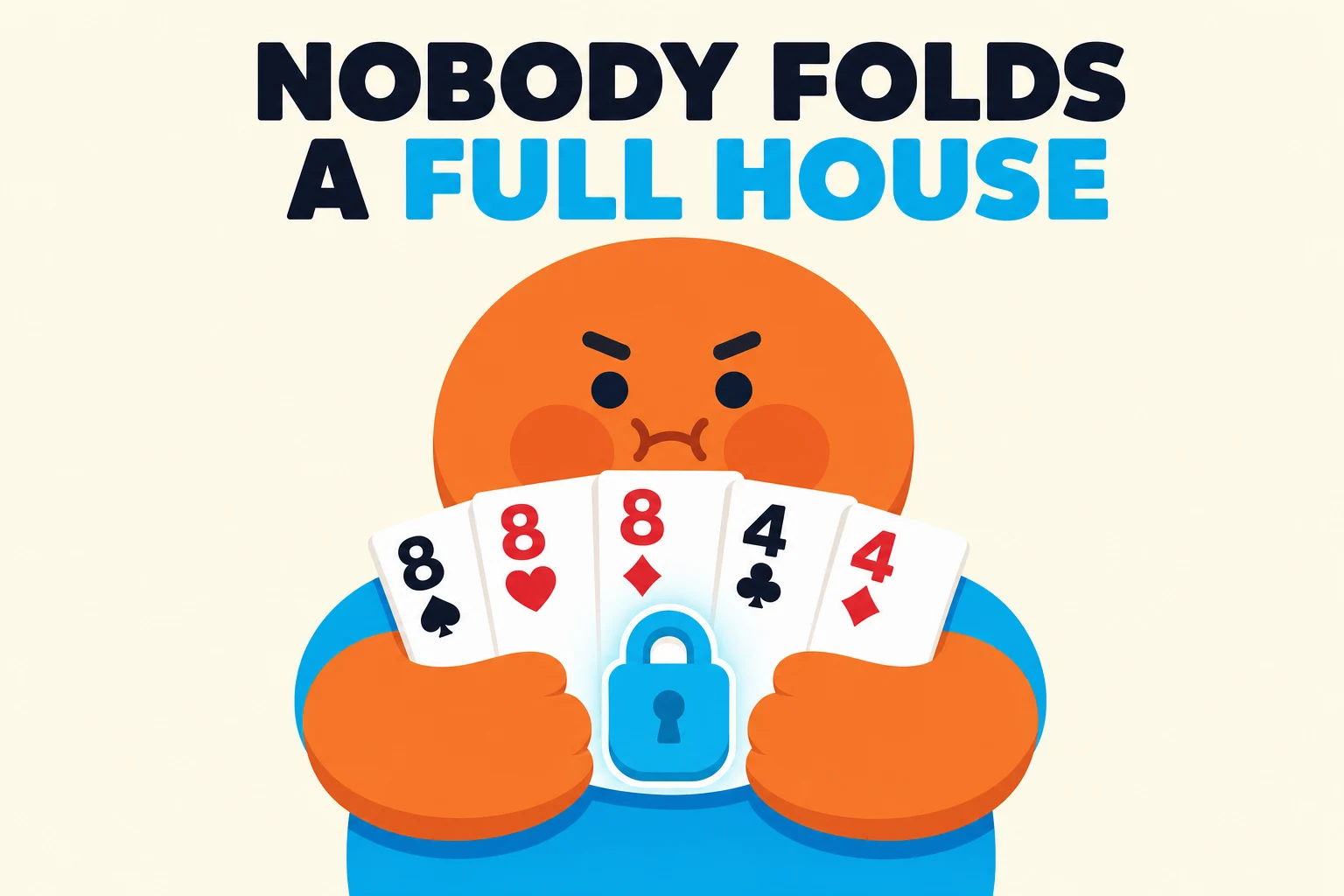
No player is capable of folding a full house on any betting round, for any bet size. What the oldest poker theorem gets right, the two adjustments it pays for, and the three spots where it finally breaks.
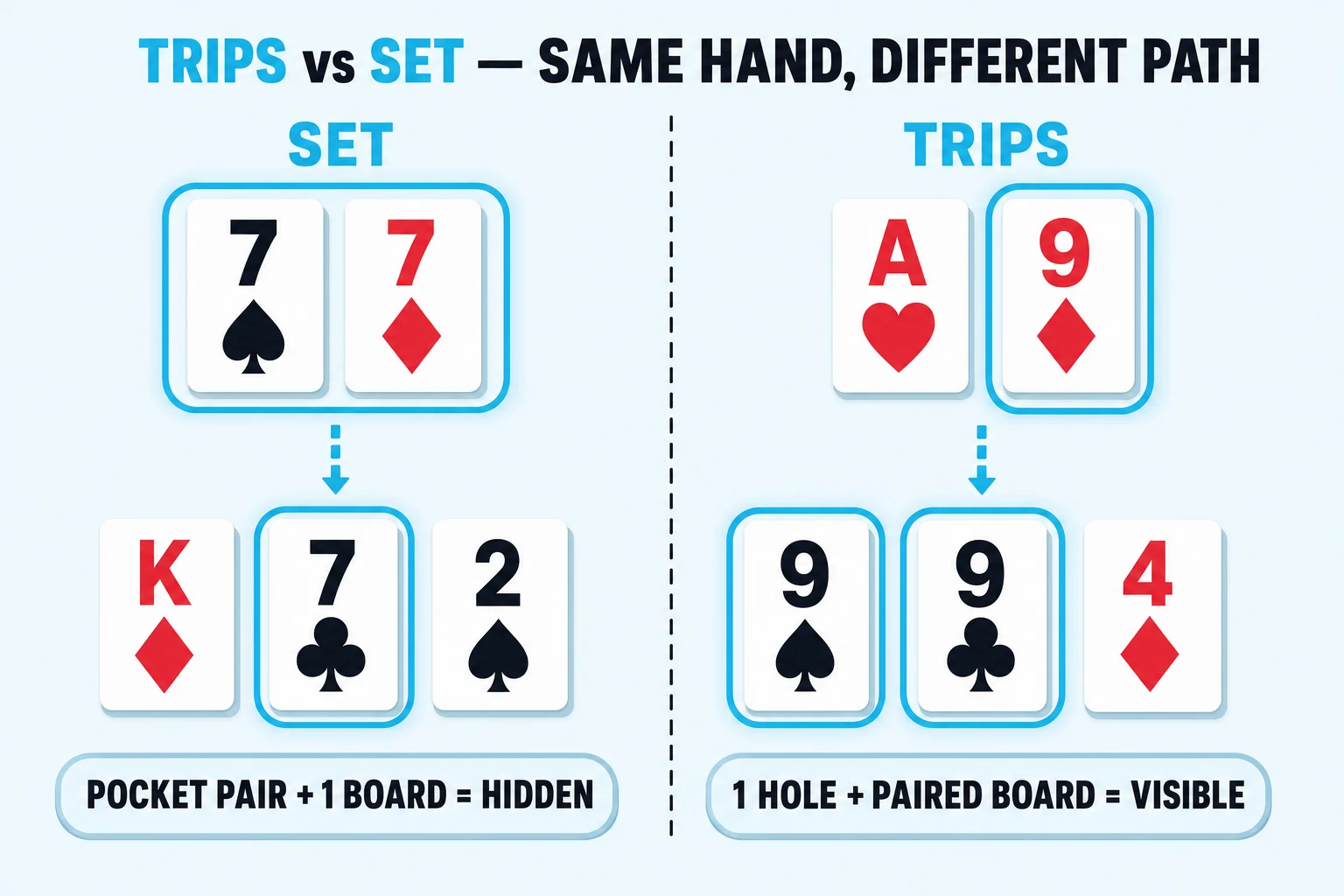
Both make three of a kind, but the path matters. Here is the one-glance test, three worked hands, and why a set quietly prints money while trips have to fight for it.
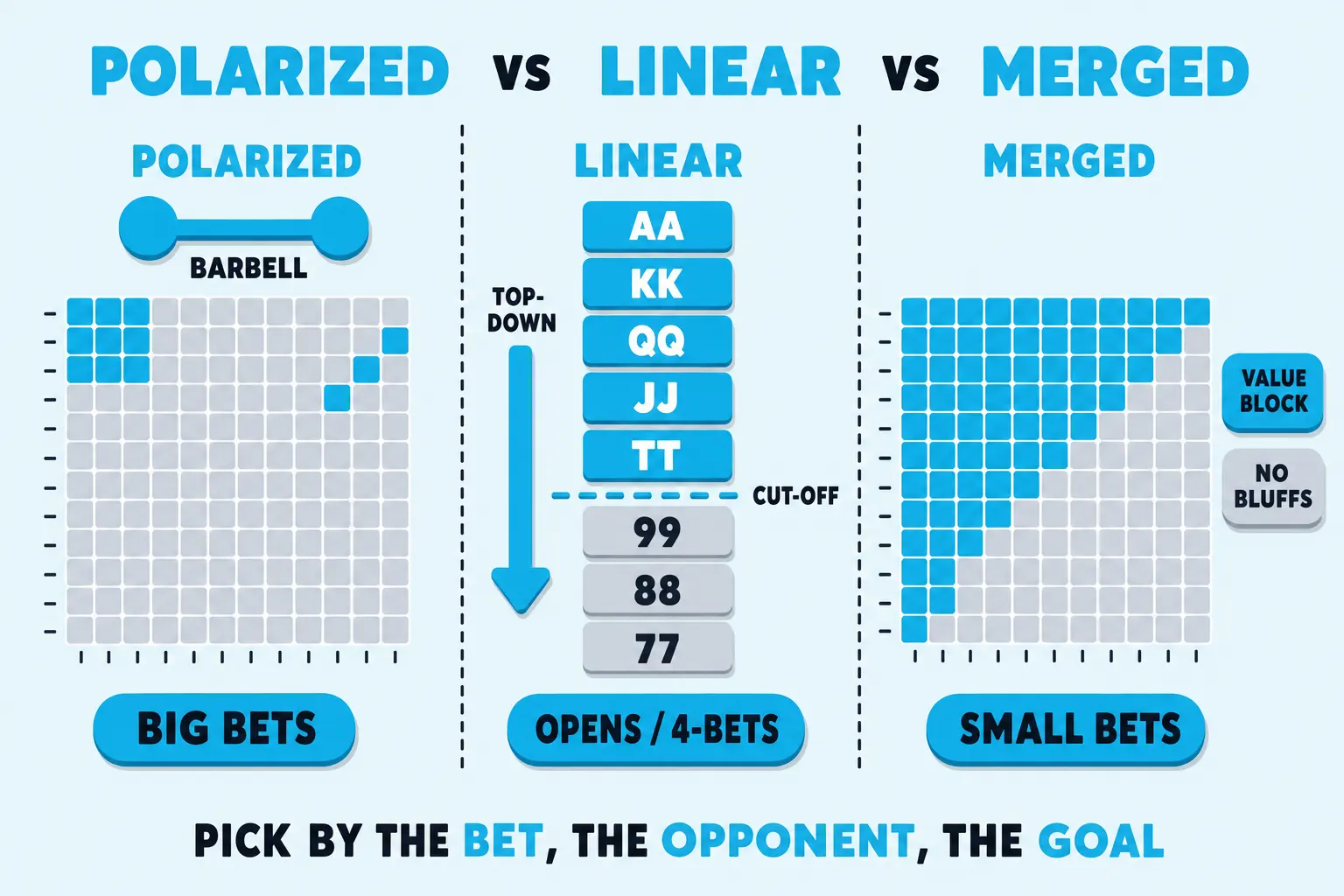
Three range shapes, three different jobs. The shape that matches your bet size, your opponent, and your goal — with worked hands and a three-question picker you can run at the table.