
Preflop charts
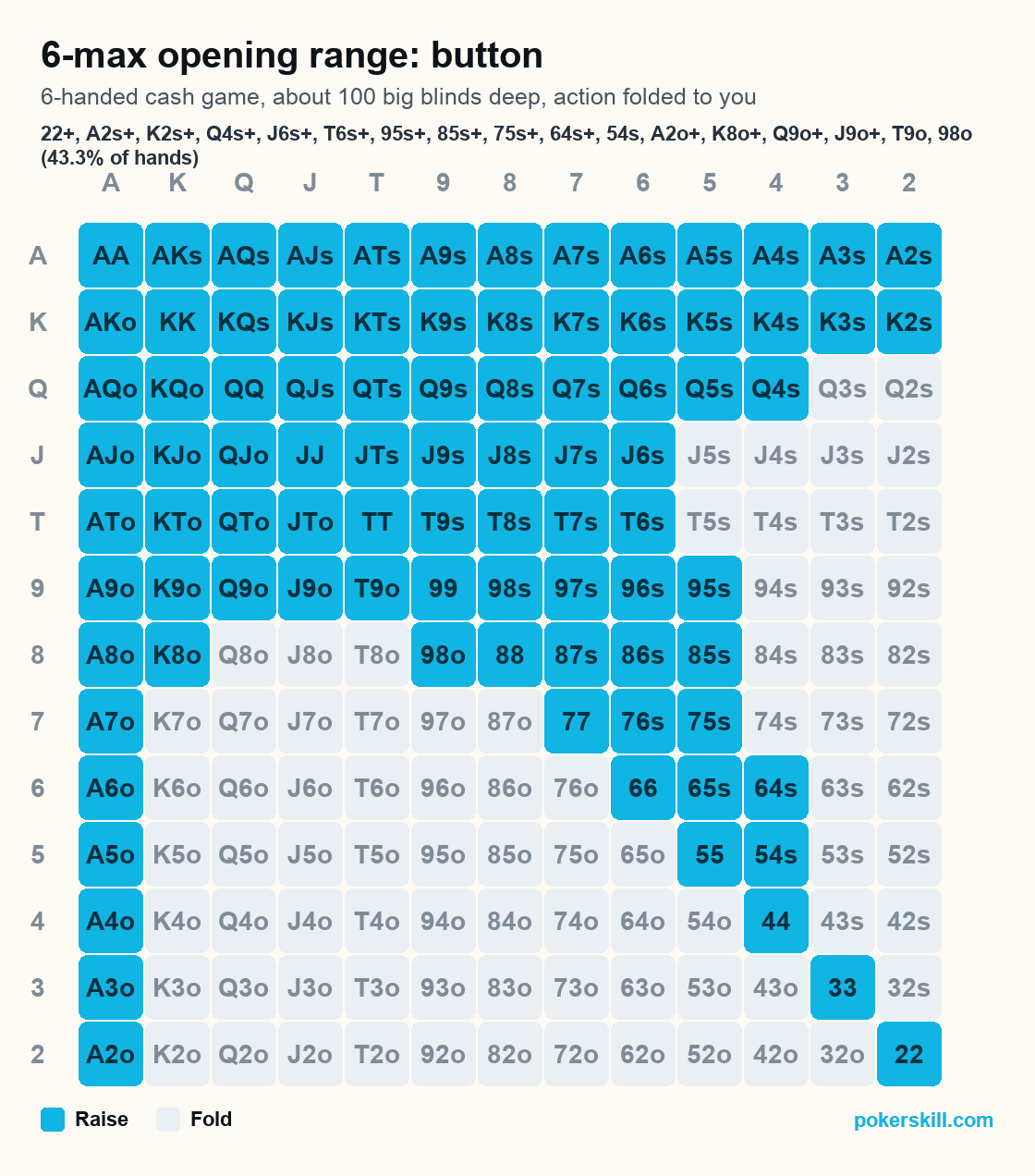
Which starting hands to raise from every position, 6-max and full ring, plus what to do when someone raises first.
Every chart we have made lives here: the starting hands to raise from each seat, the shoves that work on a short stack and the hand order that settles a showdown. Each chart sits on its own page as a table you can read, and most of them download as a printable image or a PDF. No email, no account.
Updated October 10, 2026 By Poker Skill How we built these charts
Which starting hands to raise from every position, 6-max and full ring, plus what to do when someone raises first.
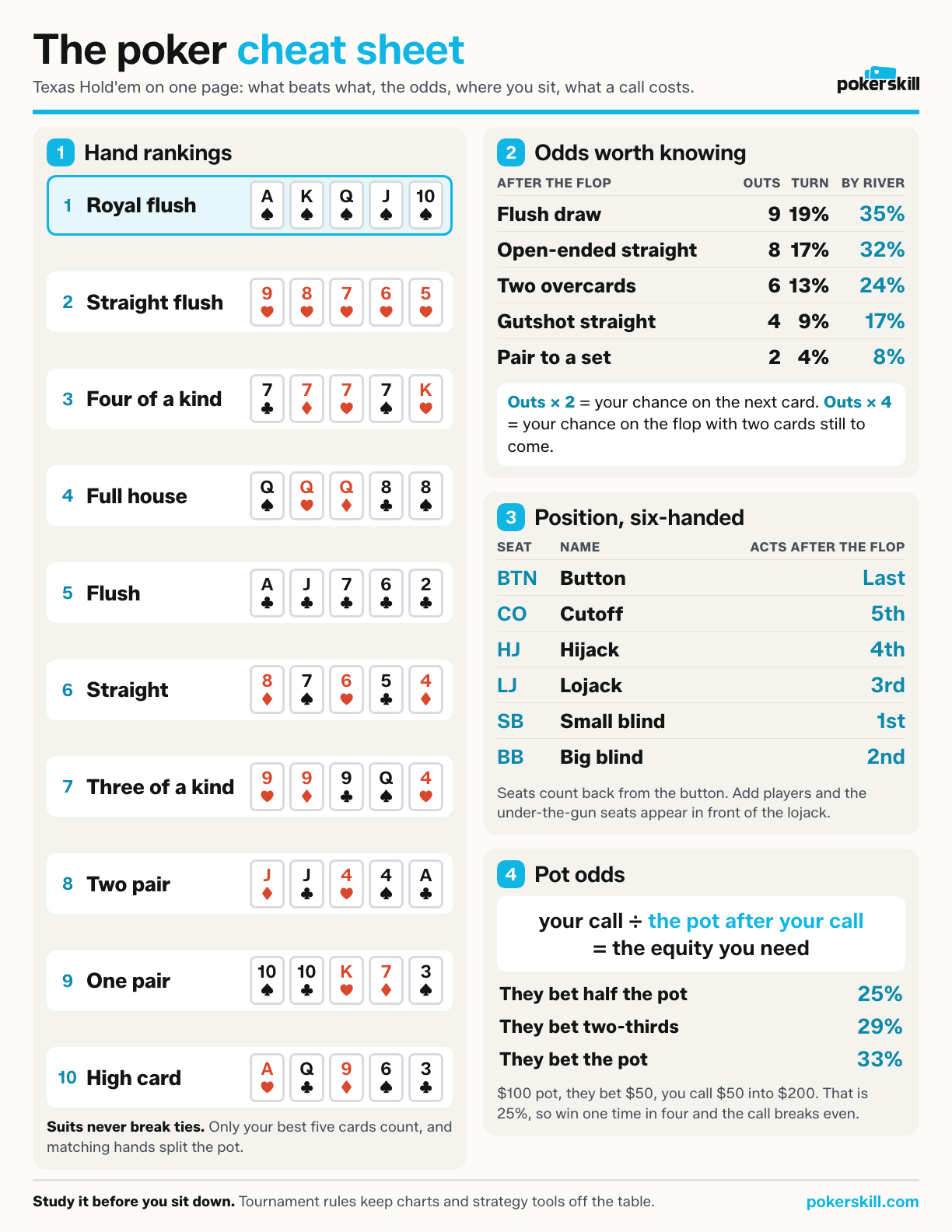
The whole card chart on one page: hand order, the draw odds worth knowing, seat order and pot odds.
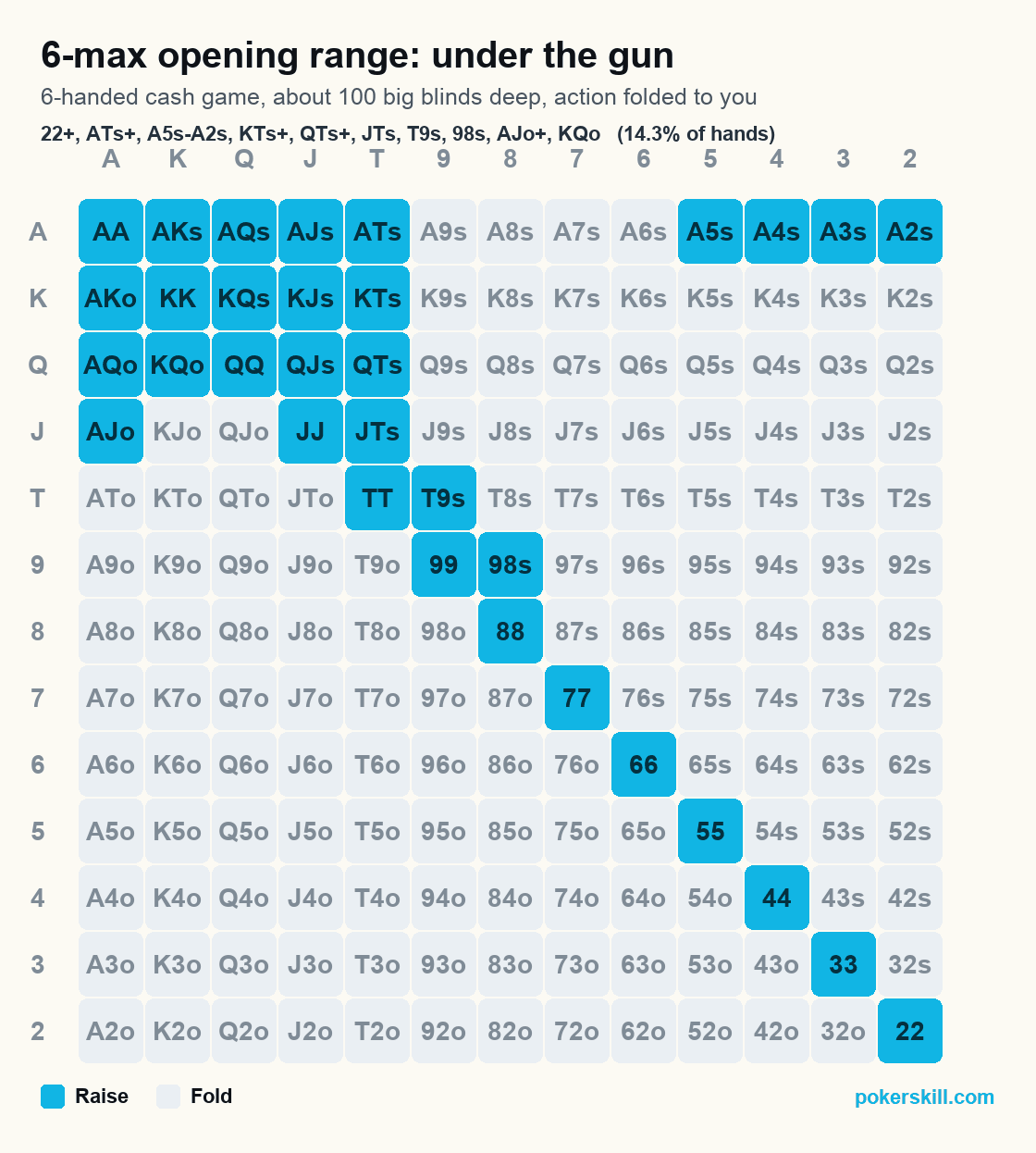
One chart per seat, under the gun through the big blind, with the share of hands each position plays.
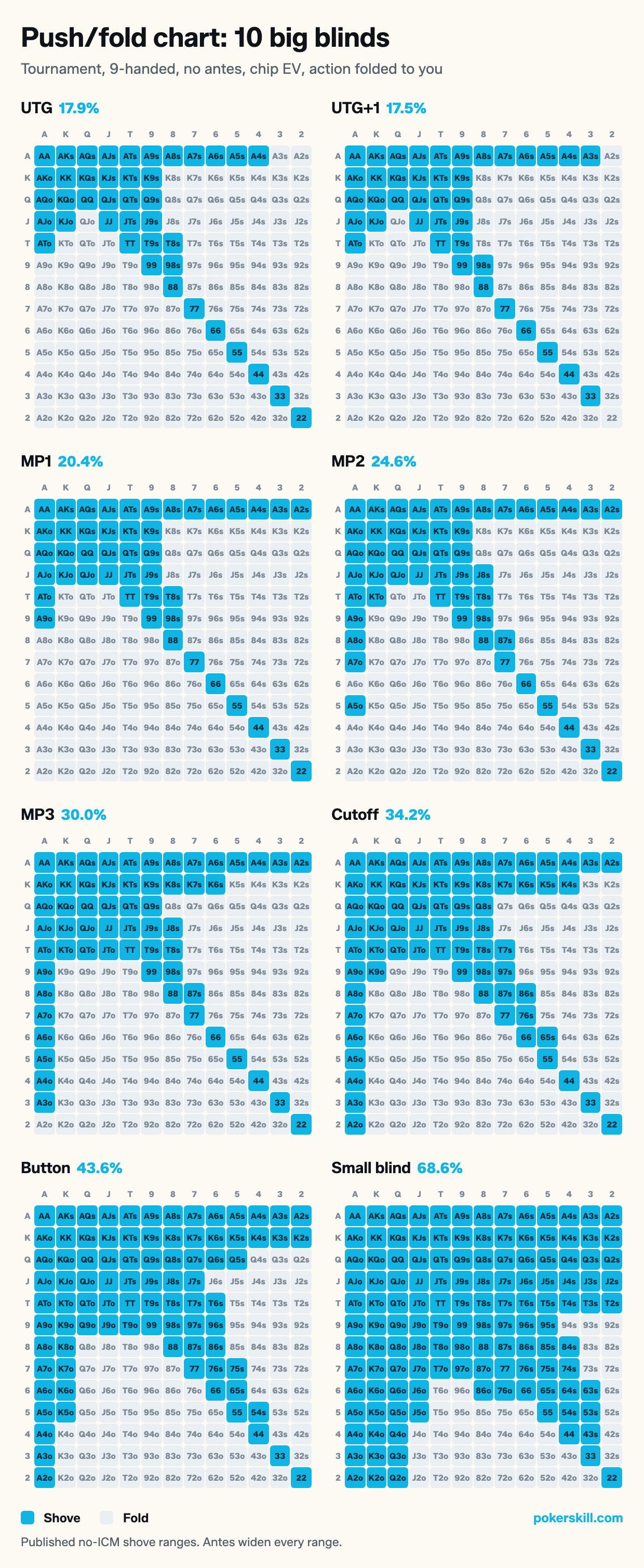
Short stack in a tournament: the hands that shove and the hands that fold at 5, 10, 15 and 20 big blinds.
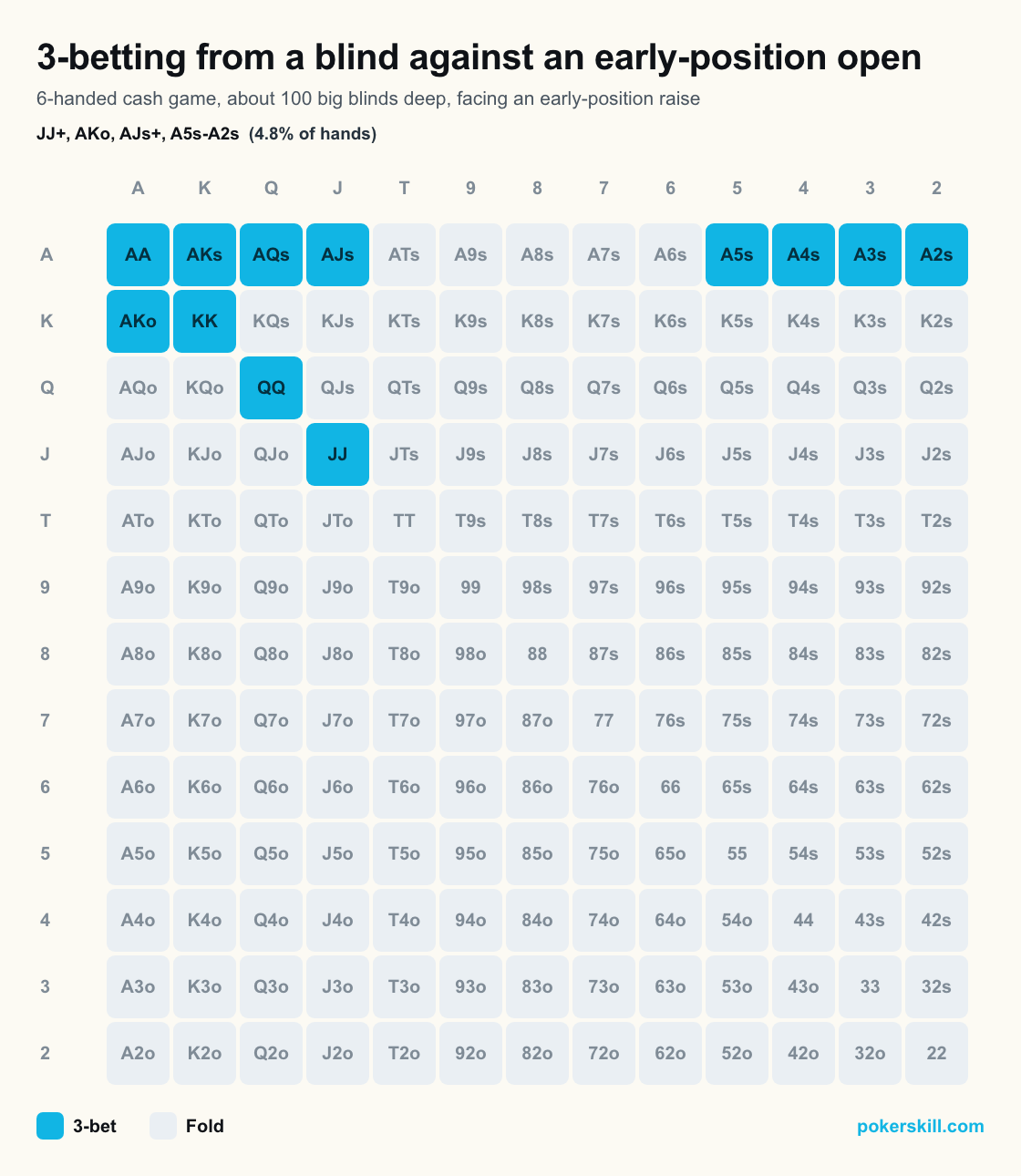
Which hands re-raise when somebody has already raised: the button facing a cutoff open, and a blind facing an early one.
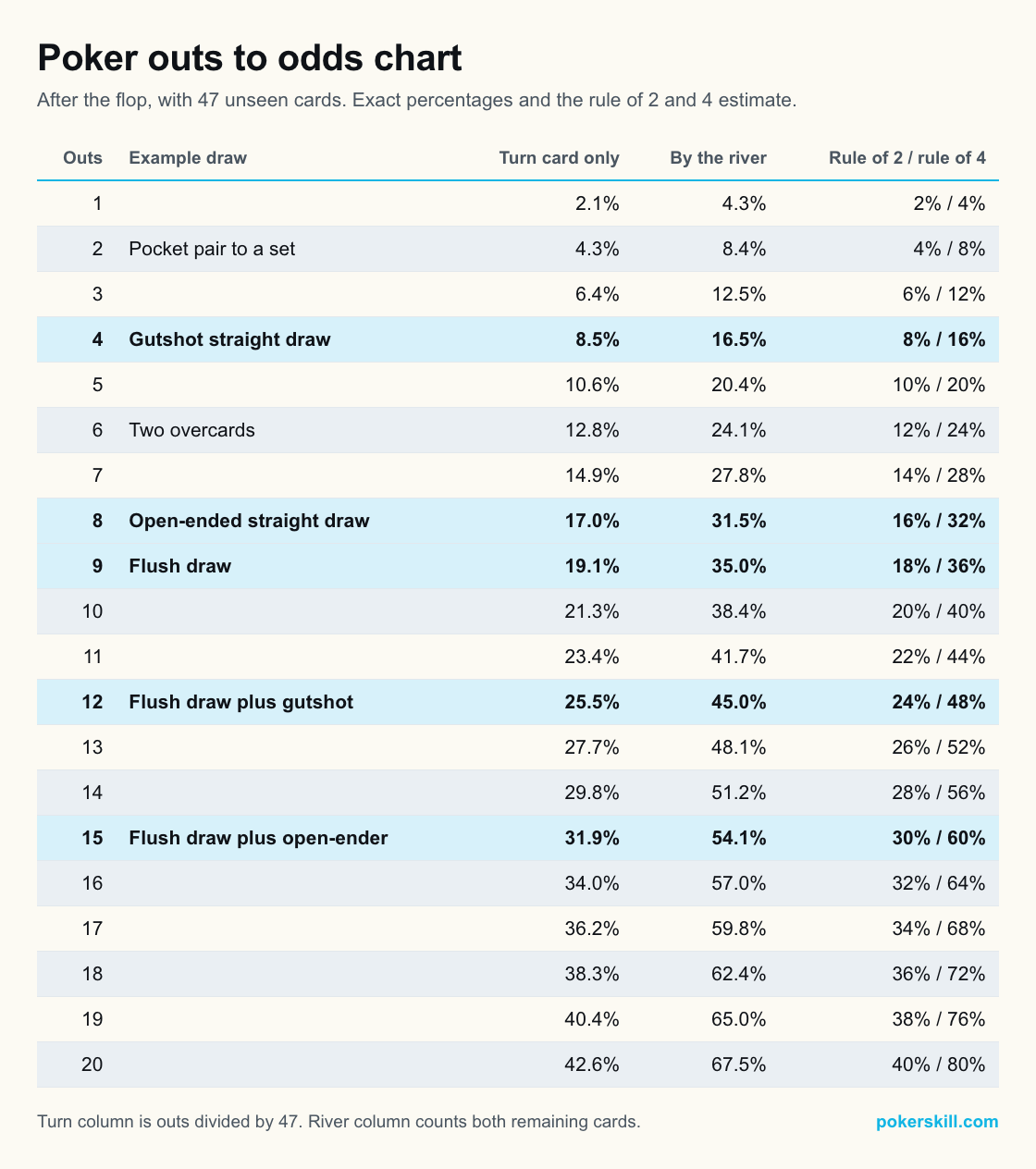
Outs to odds, the price every bet size offers, the situations players look up most and preflop matchup equity.
Pick the hands and the board to see how often each wins or ties, then check the price of a call.
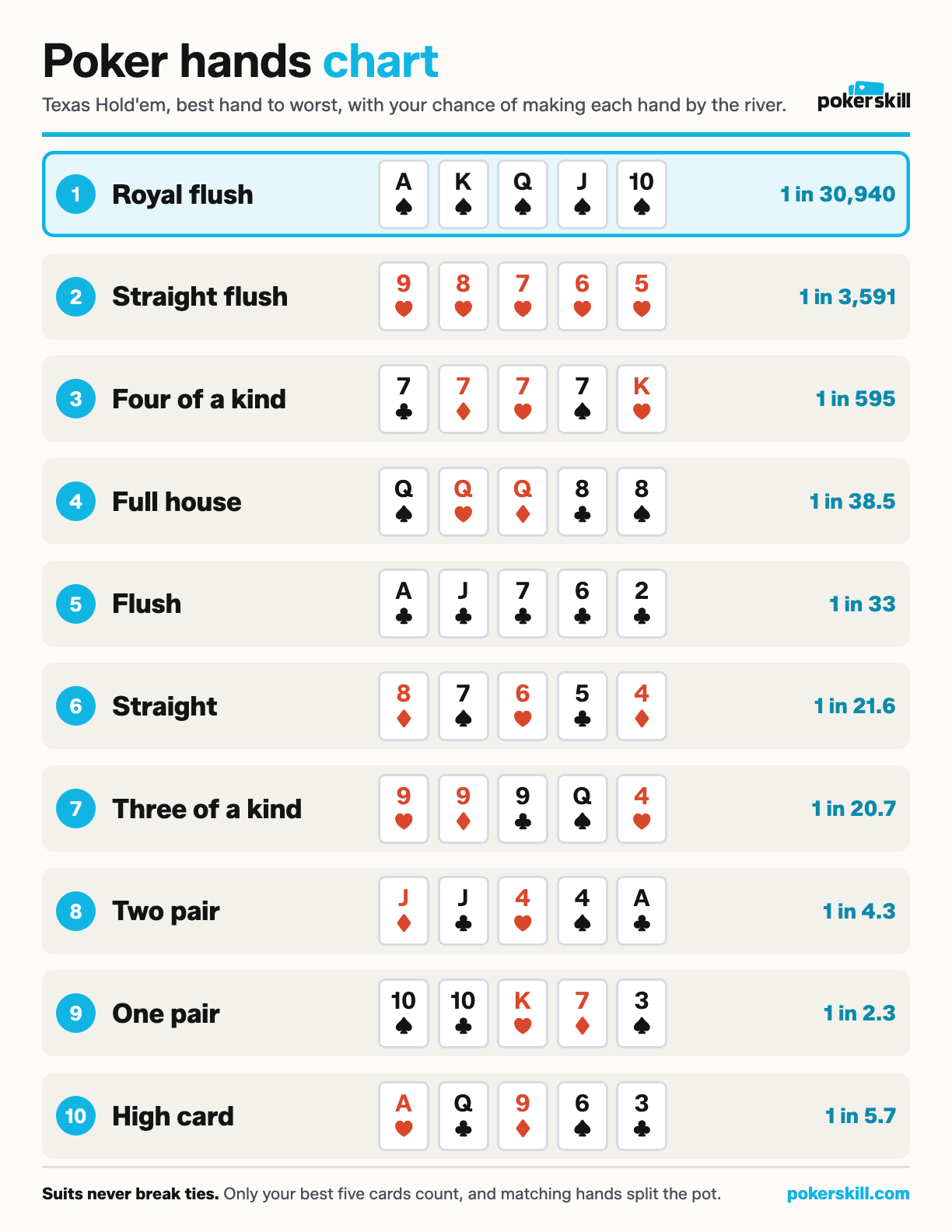
The hand hierarchy in order, royal flush down to high card, with the card combinations that make each one.
Set the board and the hands to see each player's best five-card hand, which one wins and why.
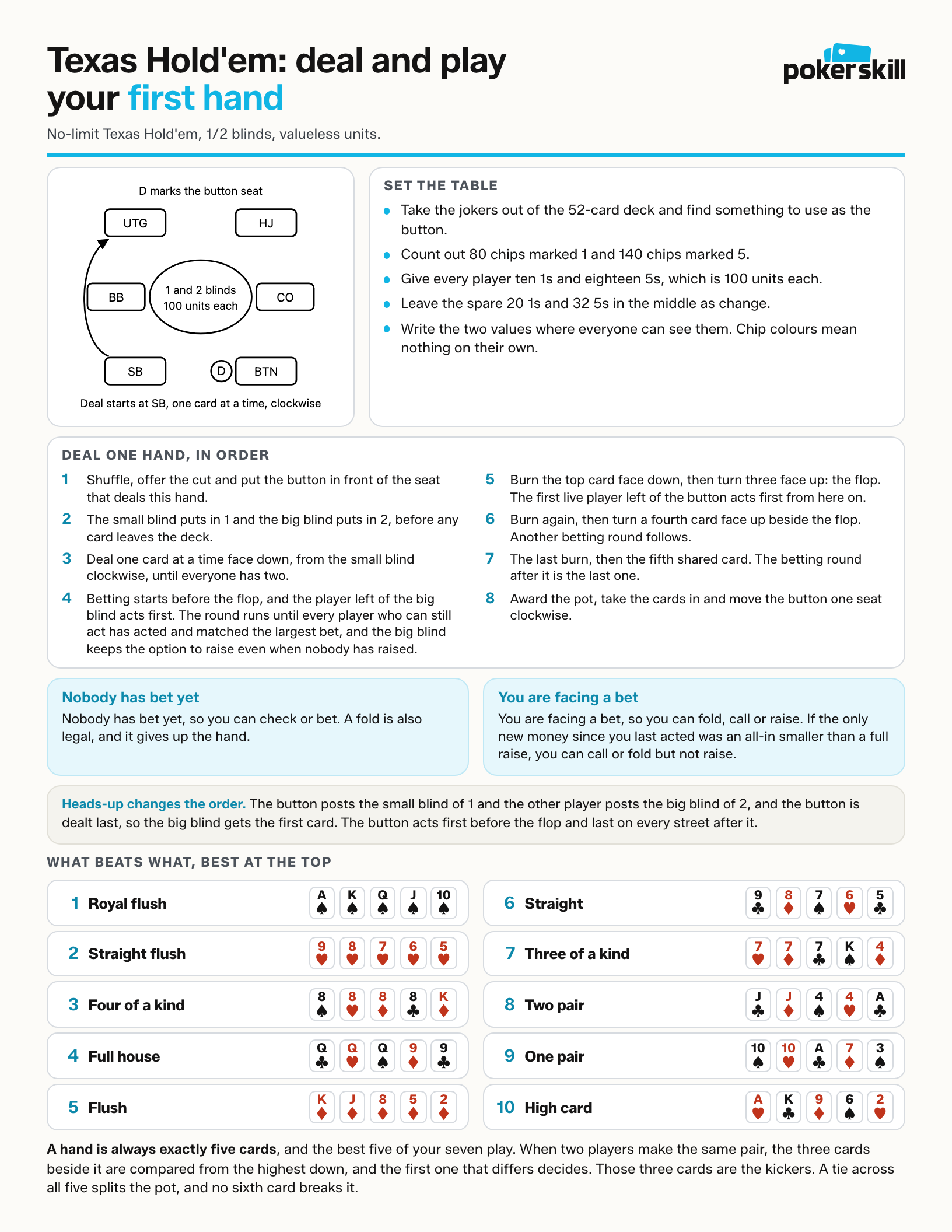
The deal order, what you can do on your turn and one played hand with the pot after every street, on two sides of one page.
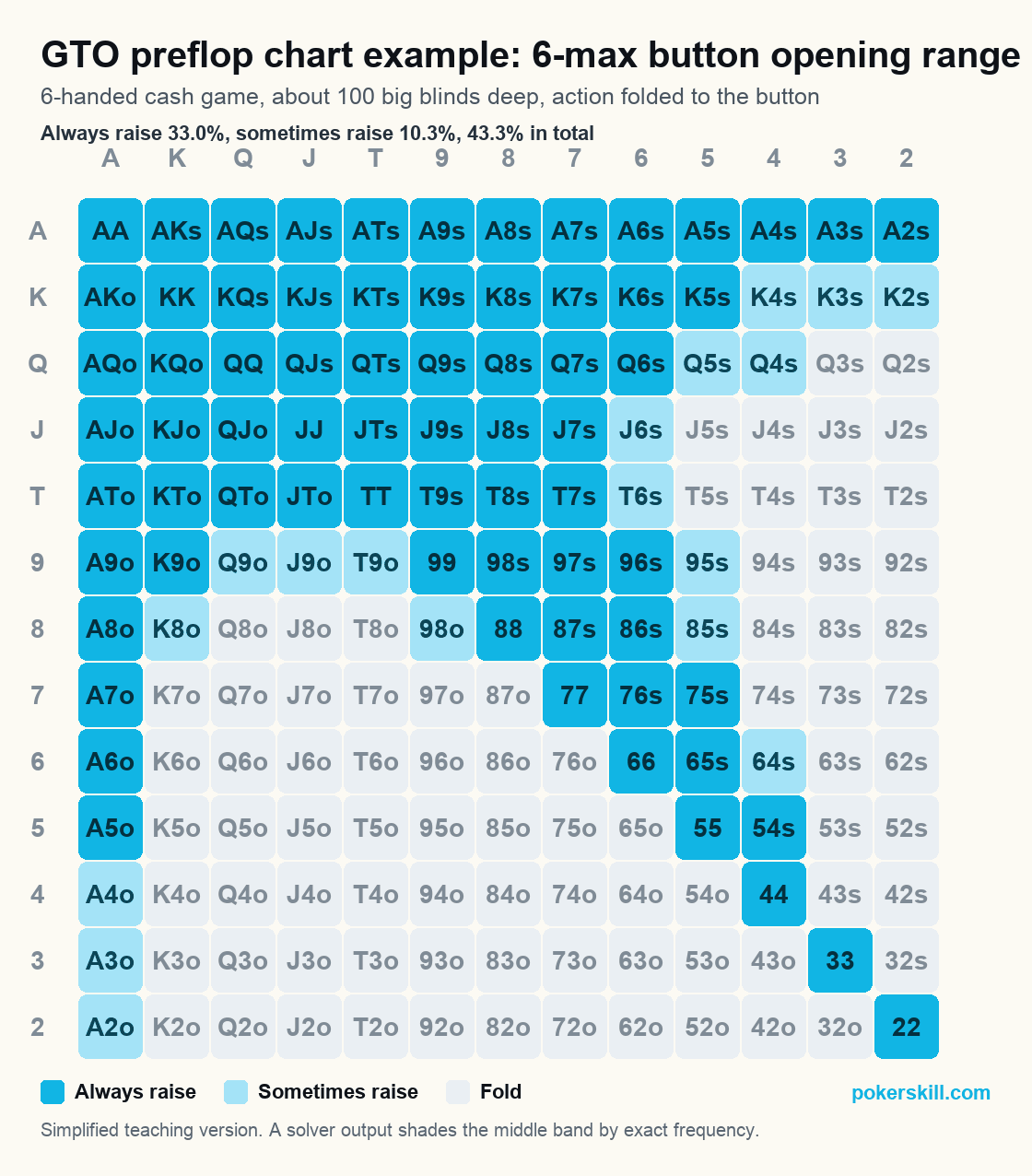
What the GTO label on a strategy chart promises, how to read one and the tables where it stops being the best play.
Find your question, open that chart, and come back for the next one when it turns up.
| What you are trying to do | The chart to open |
|---|---|
| I do not know which hand wins | Poker hands chart |
| I do not know whether to play this hand | Preflop charts |
| I am short-stacked in a tournament | Push/fold charts |
| I want to know if my draw is worth the call | Poker odds charts |
| I want one page that covers all of it | Poker cheat sheet |
Poker Skill's lessons cover the first two rows one hand at a time, starting with which hand wins and moving on to raise-or-fold decisions seat by seat.
Three shapes cover every chart on this page. A grid answers which starting hands to play, a table of numbers answers what a draw is worth, and a ranked list answers who wins at showdown.
A grid: which hands to raise
A table: what a draw is worth
A ranked list: who wins
Using one well is its own short subject: how to use a poker chart.
Most of the ranges here are ours: simplified teaching ranges that give every hand one action. The push/fold charts at 5 and 10 big blinds and the calling chart come from Poker Satellite Strategy, by Dara O'Kearney and Barry Carter, and the small blind's 3-bet chart from Advanced Concepts in No-Limit Hold'em. The odds tables are worked out from the cards and the pot, except the preflop matchups, which are approximate. How each set was built:
A chart tells you the answer. What it cannot do is make the answer automatic, and these decisions come at you in a few seconds at a time, several times an orbit. Poker Skill turns them into short daily reps and tells you why an answer was right, so the chart stops being something you look up. Free forever, no wagering.