
Heads-up: only two players
What heads-up means
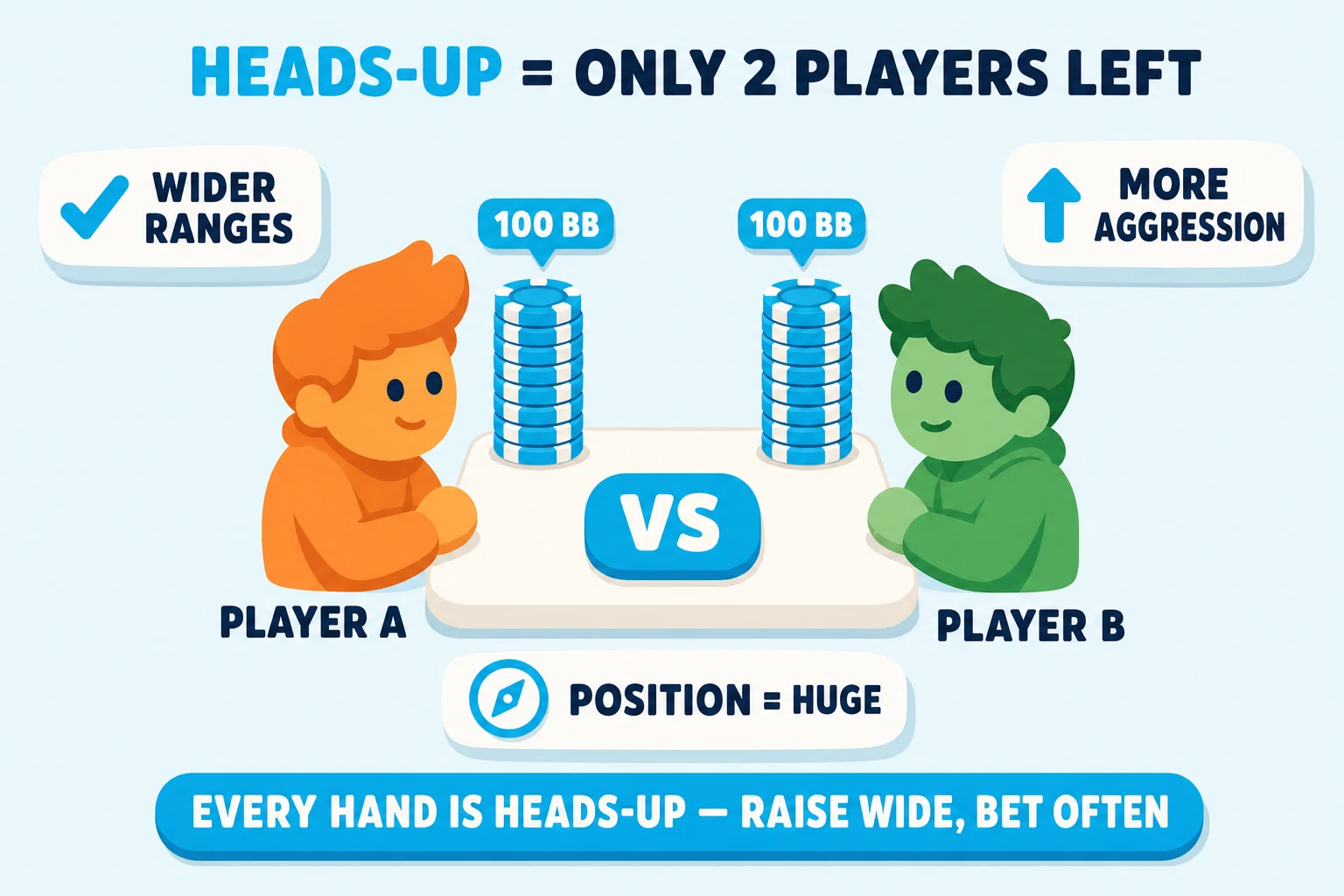
Heads-up means only two players are in the game or in the hand. It describes a format played between two people from the first hand, and it also describes the last stage of any tournament, when everyone else has busted and two players are left. The cards, the betting rounds and the hand rankings are unchanged. What changes is the count: two hands are dealt, both players post a blind every hand, and there is never a third player in the pot.
Two rules follow from that count. The button posts the small blind, which is the reverse of the full-table order, and the seat that acts first flips at the flop. Both are covered in full, with the strategy that follows from them, in heads-up poker rules and strategy.
Why the format plays differently
- You pay a blind every hand. At a nine-handed table you post a blind twice in nine hands. Heads-up it is every hand, so folding your way through a session is not available.
- You only have to beat one hand. Hand values that need a crowd to fold are not needed here, so the range of hands worth playing is much wider than at a full table.
- Position is worth more. With two seats, one player acts last on three of the four betting rounds, and that seat changes every hand.
Related terms
- Button, the seat that posts the small blind when only two play.
- Big blind and small blind, the two forced bets that are posted every hand here.
- Position, which decides who acts last on each street.