


Cold Call
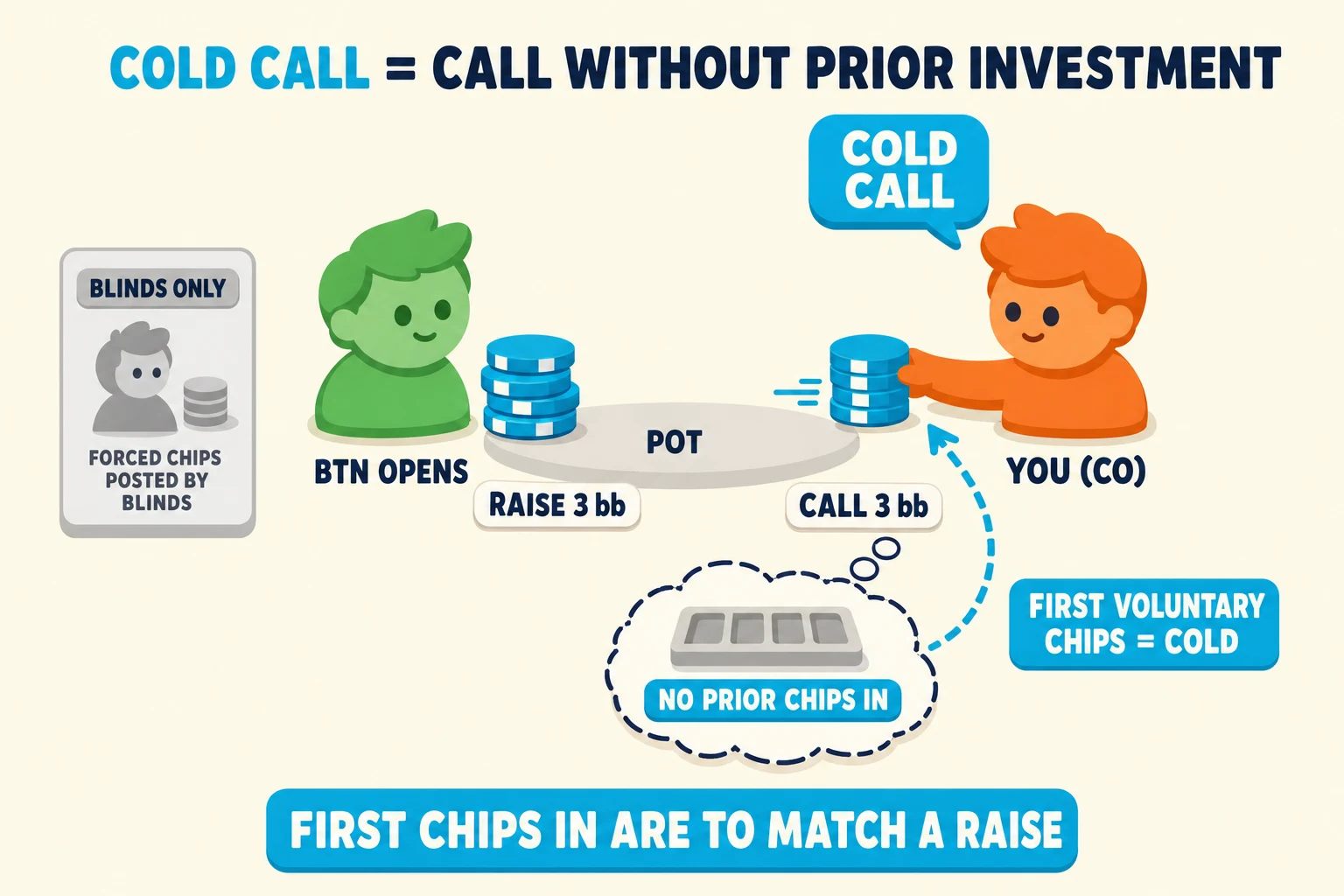
A cold call is calling a raise when you haven't voluntarily invested in the pot this betting round, aside from the blinds. It differs from calling additional chips after you have already called or re-raised earlier in the same round. A cold call typically signals a cautious, opportunistic plan to see the flop without inflating the pot. Example: the cutoff opens to 3bb; you on the button call 3bb - that is a cold call.
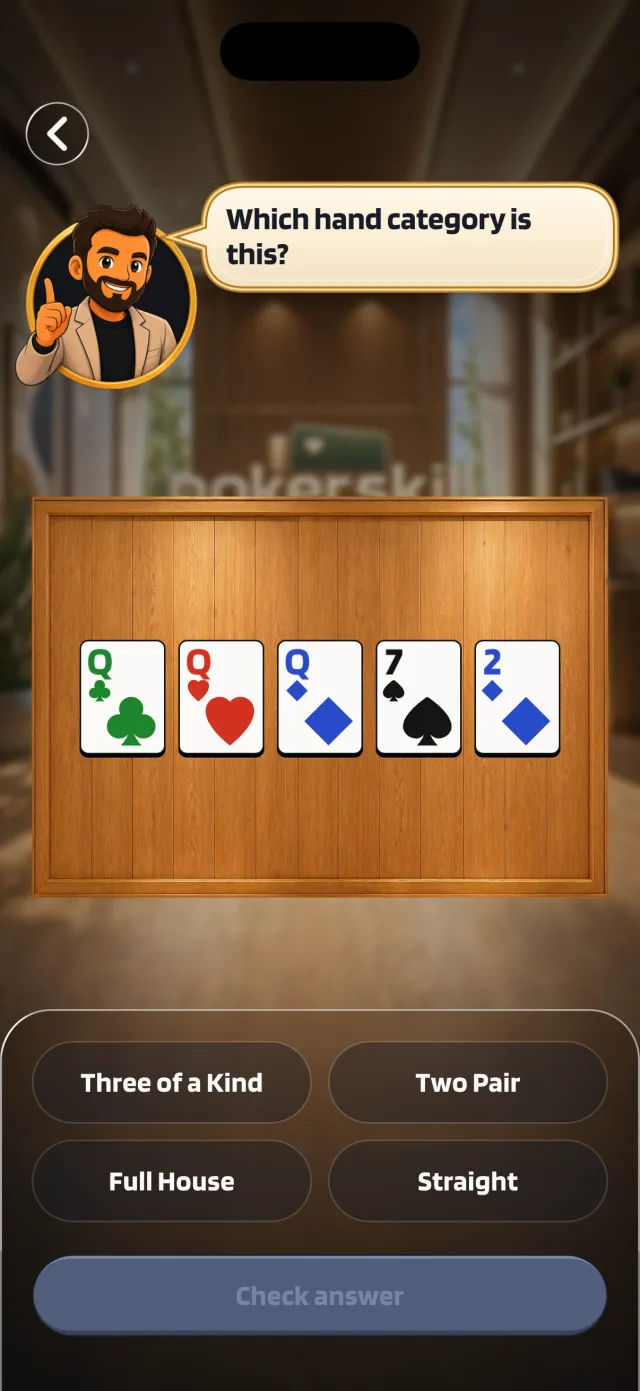
Practice this in Poker Skill. From the button against an under-the-gun open, the lessons have you cold-call 4♥ 4♦ and 8♥ 8♦ for set value, while A♣ 10♦, neither a small pair nor a premium, folds.
Get the free appCold call in No-Limit Hold’em
What a cold call is (preflop definition)
A cold call is calling a raise when you haven’t voluntarily put chips in this round (aside from any forced blind). It is different from calling additional chips after you’ve already called or re-raised earlier in the same round. Cold-calling typically signals a cautious plan to see the flop without inflating the pot. For example: the cutoff opens to 3 BB. You are on the button with no prior chips in the pot. You call 3 BB. That is a cold call.
Position: where cold calls make sense
Position drives cold-call profitability. In early position (UTG), keep the cold-call range tight: only hands that can take heat, like big pocket pairs or strong broadways. Facing a UTG raise, cold-calling 99 is usually risky, and raise-or-fold is the cleaner answer. In late position (cutoff, button), the cold-call range widens, especially in loose games where many seats see the flop. Suited connectors and medium pairs gain value when position and multi-way pots are working in your favor. On a limp-heavy table, cold-calling 78s from the button behind an early raiser can earn its keep.
Cold-calling from early position invites isolation raises and squeezes. Both leave you out of position with a hand that wanted to see a cheap flop, not play a 3-bet pot.
Hand selection and stack-size considerations
Pick cold-call hands for postflop playability and implied odds (the extra money you can pull in when you hit).
- Deep stacks (200 BB+): suited connectors, suited aces, and medium pairs. These hands hide strength in multi-way pots and pay off when they hit.
- Medium stacks (50–150 BB): discipline matters. Medium pairs and connectors lose value. Raise the strong stuff to build pots; fold the rest.
- Short stacks (under 50 BB): cold-calling marginal hands rarely pays. Implied odds shrink with the stack. Raise or fold.
Mix in some calling with strong hands at any depth so your cold-call range isn’t all medium fluff that opponents can squeeze.
Opponent tendencies and table dynamics
Tune cold-calls to the opponents. Against aggressive raisers and frequent squeezers, skip marginal cold calls that turn into out-of-position folds. Against passive, calling-heavy fields, cold-calling builds the multi-way pots where drawing hands shine. Track tendencies, position, and stack sizes. Sticky raiser plus a couple of likely callers behind is the spot where a cold call earns the most.
Tactical uses, risks, and countermeasures
Some good players cold-call as part of a trap, but only in specific spots. Overusing the line makes your range face-up and invites isolation, squeezes, and postflop pressure. Counters:
- Mix in 3-bets so your range isn’t pure cold-call.
- Tighten cold-calls when squeeze frequency is high at the table.
- Be ready to fold to a well-timed squeeze if you don’t have the stack or the hand to continue.
Quick checklist
- Confirm you haven’t voluntarily invested in the current betting round (aside from blinds) before calling.
- Consider position, opponent tendencies, and stack sizes before cold-calling.
- Prefer raising with strong hands; cold-call selectively with hands that have implied odds and post-flop playability.
- Tighten versus aggressive or squeeze-heavy opponents; widen slightly in loose, deep multi-way games.
- Avoid routine cold calls to prevent making your range predictable and exploitable.