


Turbo
A turbo is a tournament with rapid blind increases, often with antes early. The clock, not your cards, is what pushes you into shove-or-fold territory.
Turbo: the structure where the clock does the work
What a turbo is
A turbo is a tournament whose blind levels advance rapidly, faster than a standard-speed event of the same buy-in. Some turbo formats also bring the antes in early. Nothing else about the game changes: same deck, same betting rules, same payouts. The only variable is the clock, and it is enough to make the event play like a different game.
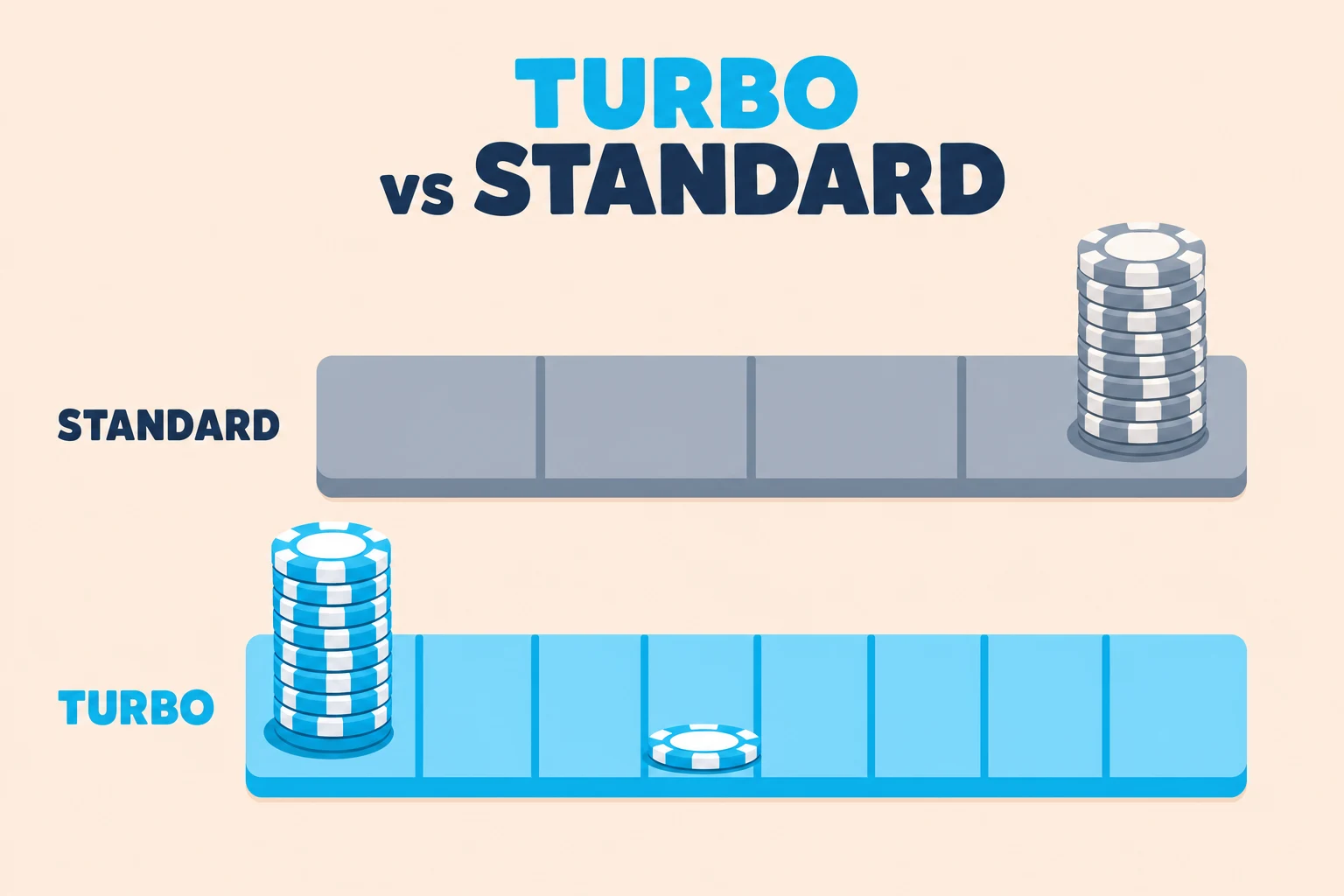
Why the clock changes the game
Your stack is only meaningful measured in big blinds, and in a turbo that number falls whether or not you play a hand. Every level you spend waiting for a spot costs you more of it than the same wait would cost in a slower event.
The number to watch is 25 big blinds. Below it you lose most of your postflop playability, and facing a raise your realistic options collapse to all-in or fold rather than call. In a standard MTT you might not reach that band for hours. In a turbo you can be there before the first break.
How correct play adjusts
Turbo structures reward aggression, and they reward it earlier.
- Shove wider, sooner. Shallow stacks leave less room to outplay anyone after the flop, so getting the chips in first is worth more than it is in a slower event. As opponents tighten and fold more of their range, your preflop fold equity goes up and your shoving range should widen with it. On Poker Skill’s push/fold chart, the button shoves 43.6% of hands at 10 big blinds and 54.4% at 5.
- Stop waiting for premiums. There is less time to wait for a hand, so a range built around the top of your holdings will be blinded down before it arrives.
- Treat shove-fold as the main game, not the endgame. In a standard event push-fold is a late-stage skill. In a turbo it is most of the tournament.
Example: the same stack, two different structures
You start a $50 event with 100 big blinds. Levels are 15 minutes.
In the standard version, blinds step up gently. Two hours in you are around 40 big blinds, still deep enough to raise, continuation-bet, and fold to a river check-raise. You have played meaningful postflop poker and had time to build a read on the table.
In the turbo, the same two hours puts you near 15 big blinds without a single lost pot. You never had a deep-stack phase. Every open you made was effectively an all-in decision one street later, and the correct opening range from the cutoff at 15 big blinds barely resembles the one you used at 100. The tournament did not get harder, it skipped a chapter.
Common mistakes
- Playing the first level like a deep-stack event. The deep phase in a turbo is short enough that a passive opening orbit costs a real share of it.
- Waiting for a better spot that the clock will not deliver. Folding down from 20 big blinds to 8 in search of a premium is the most common way to bust a turbo.
- Ignoring where the bubble will land. The money arrives faster too, so bubble dynamics show up while you are still adjusting to being short.
- Assuming turbo means reckless. Aggression earlier is not the same as calling wider. Getting the chips in first is the adjustment; absorbing someone else’s all-in with a marginal hand is not.
FAQ
What does turbo mean in poker?
It means the tournament’s blind levels advance rapidly compared with a standard-speed event, often with antes coming in early. The format is otherwise identical to a regular tournament.
Is a turbo harder than a standard tournament?
It is a different tournament, not a harder one. The deep-stack phase is compressed or skipped, so more of the event is played at stack depths where the decisions are preflop rather than postflop.
When should I start shoving in a turbo?
Use stack depth, not the clock. Once you are under about 25 big blinds you have lost most of your postflop playability, and facing a raise your practical choices are all-in or fold.