


Fast Play
Betting and raising a strong hand for value instead of checking to disguise it. Usually the better option, because slowplaying wins smaller pots.
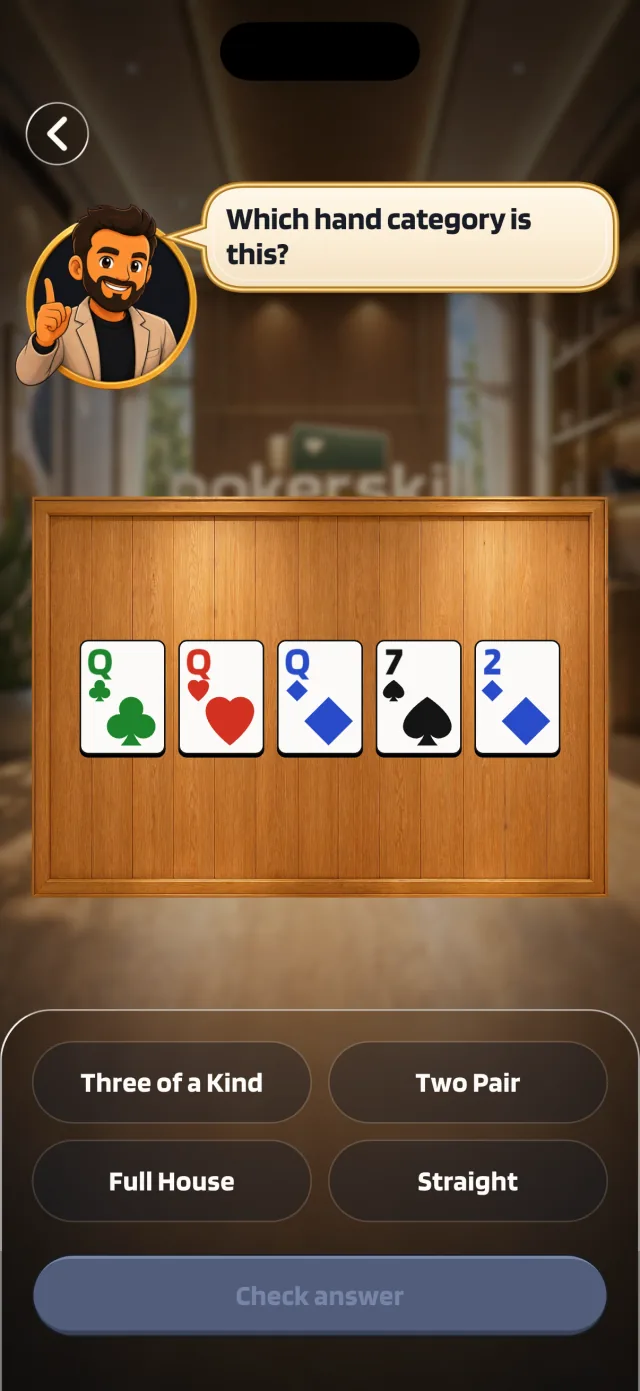
Practice this in Poker Skill. The Value Betting lesson opens on this choice, and with 7♦ 7♣ on 7♥ 4♠ 2♦ the answer is to bet the flopped set, because worse pairs and ace-high can still pay you off.
Get the free appFast Play
What fast playing is
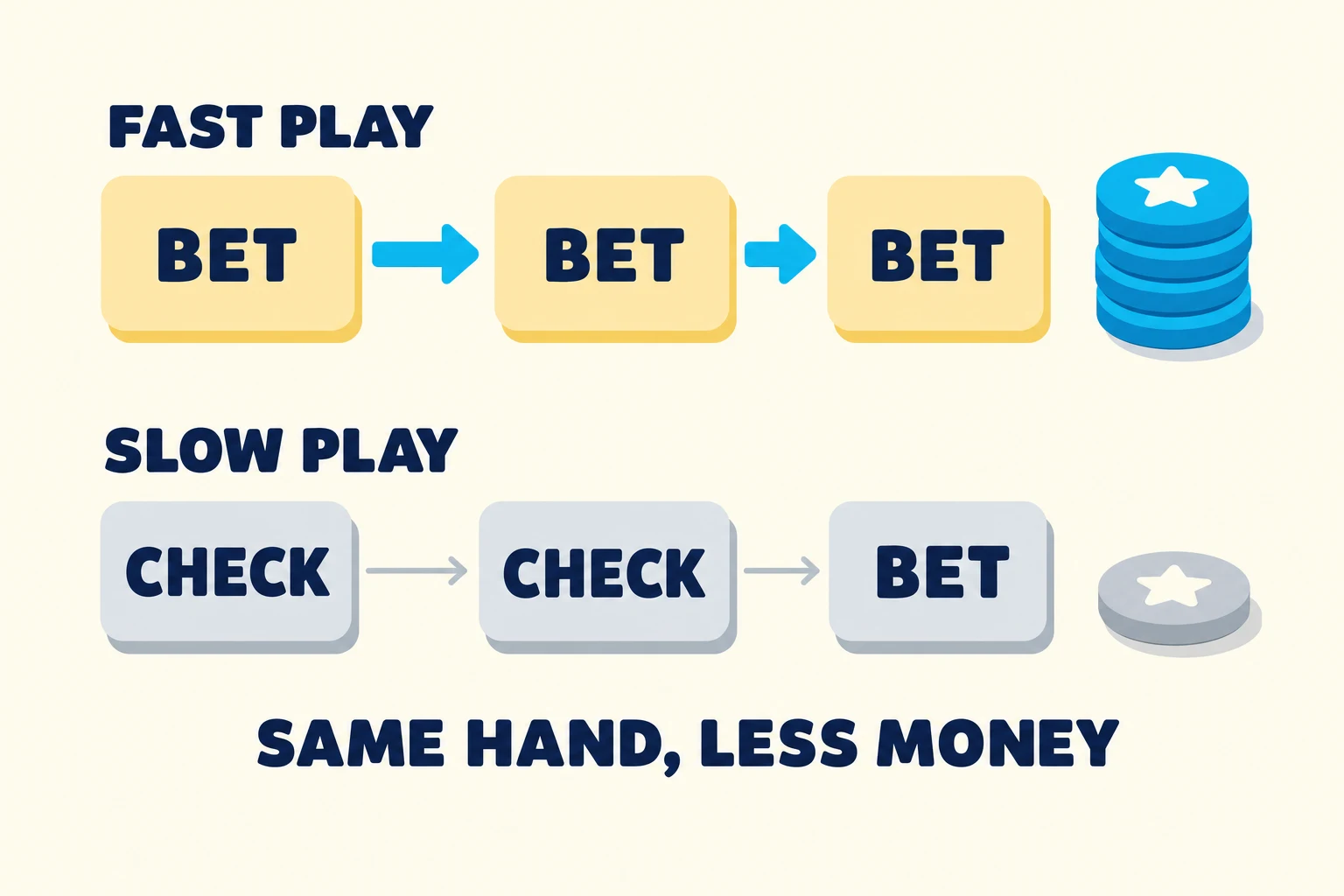
Fast playing a hand means betting and raising it for value rather than checking to conceal its strength. You have a good hand, you think it is ahead, so you put money in and let your opponent decide whether to pay.
Fast play against slow play
Slowplaying is the opposite move: checking or just calling with a strong hand to disguise it and invite a bet later. It works sometimes, and it costs money every time the opponent would have paid a bet you never made.
Slowplaying buys deception at the price of a street. Fast playing takes the money on the table now. The default with a strong hand is to bet it, because the size of the pot you win is settled on the streets you were willing to bet.
When fast playing is right
Fast play in the spots where an opponent has something to call with:
- They have shown interest, by calling the flop or raising before it.
- The board gives them second-best hands: a pair they like, a draw they want a price on, an overpair they cannot fold.
- The board is likely to change. A wet board that completes straights and flushes gives you fewer safe streets later, so take the money now.
- You are up against more than one player. Multiway, someone usually has enough to continue.
When slowing down is right
Check back or call instead when the board is dry enough that your opponent has nothing at all to pay with, or when your hand is strong but the only worse hands that would call are already drawing dead. Betting into an empty range wins nothing and folds out the bluffs that would have paid you.
Those spots exist. They are not the default.
Worked example
You hold 8-8 on a flop of 8-6-2 with two clubs. That is a set on a board where an opponent can hold a flush draw, a straight draw, an overpair, or top pair.
Fast playing means betting the flop, betting the turn, and betting the river. Every one of those hands has a reason to call at least one street, and the club that arrives on the turn is worse for you than for them.
Slowplaying means checking the flop to look weak. The cost is real: you have given a free card to every draw and you have shrunk the pot you are trying to win.
Common mistakes
- Checking a strong hand on a board full of draws, then complaining when a draw gets there.
- Betting tiny with a big hand and calling that value.
- Fast playing into a range that cannot call, then reading the fold as bad luck.
Quick checklist
- Fast play means bet and raise for value, not check and hide.
- The default with a made hand is to bet it.
- Draw-heavy boards raise the price of every street you skip.
- Slow down only when nothing worse can pay you.