


4-bet
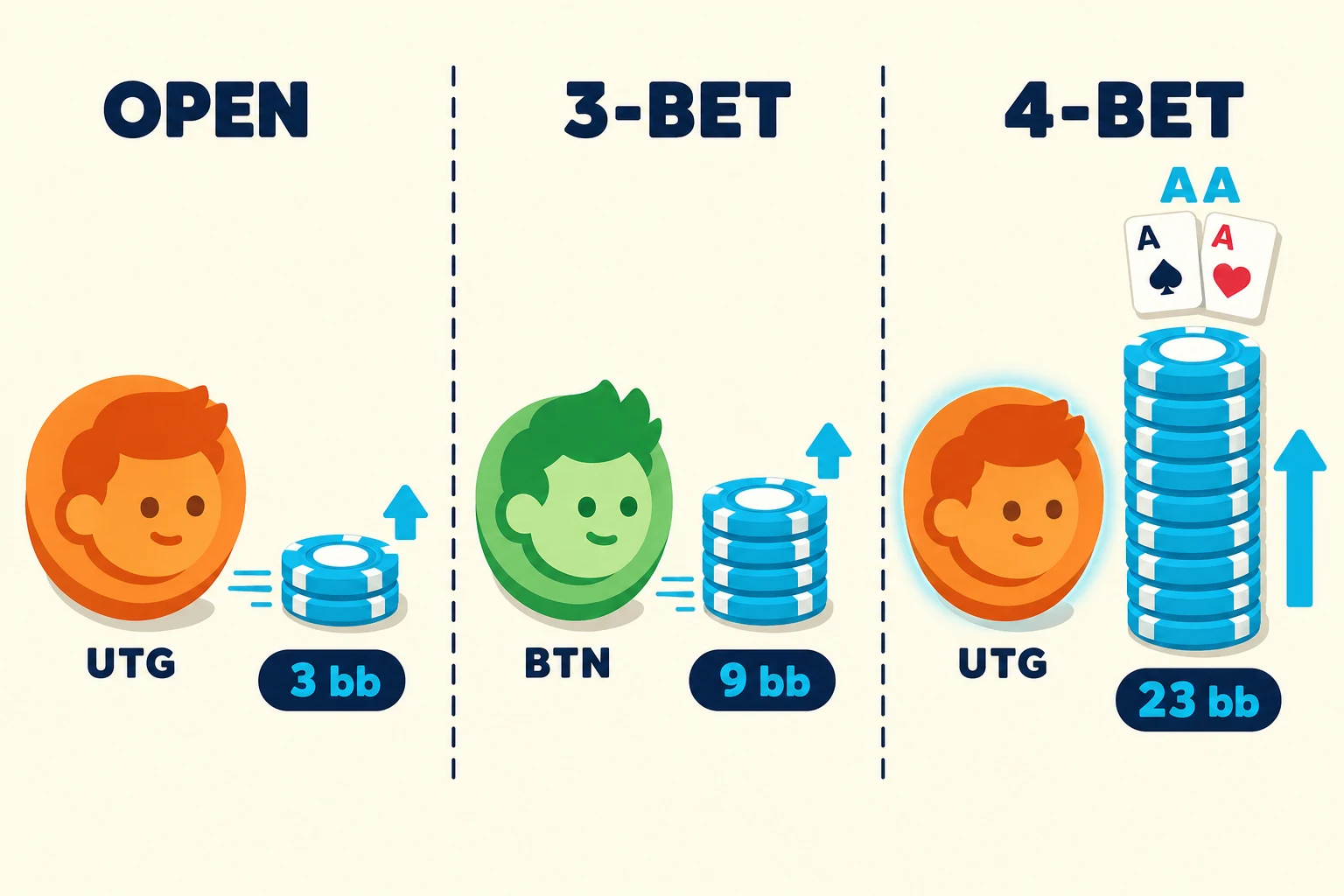
A 4-bet is the third distinct raise in the pre-flop betting round. The typical sequence: an open raise (first raise), a 3-bet (re-raise), then the 4-bet (another re-raise). Because it comes late in that escalation, a 4-bet signals strong commitment and aggression.
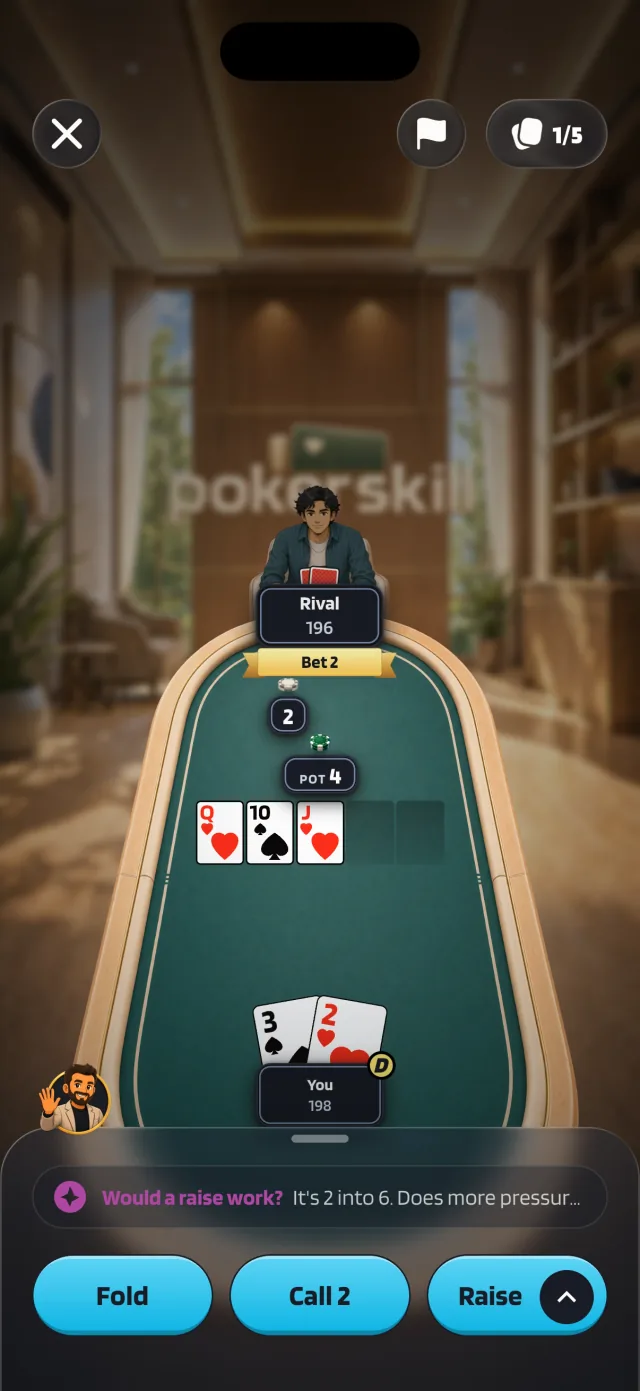
Practice this in Poker Skill. Practice vs AI seats you in heads-up, 3-player and 4-player Sit & Gos against AI opponents, and Coach Max, the coach at the table, grades what you do when a 3-bet comes back at you.
Get the free app4-bet in No-Limit Texas Hold’em
What a 4-bet is and where it sits in the pre-flop sequence
A 4-bet is the third distinct raise in the pre-flop betting round. The typical sequence: an open raise (first raise), a 3-bet (re-raise), then the 4-bet (another re-raise). Because it comes late in that escalation, a 4-bet signals strong commitment and aggression.
A 4-bet usually represents a very strong hand. The next escalation after a 4-bet is a 5-bet shove-an all-in-reserved for the very strongest holdings. A 4-bet therefore sits near the top of pre-flop pressure and alters the hand’s dynamics.
Strategic role: when and why to 4-bet
The primary reason to 4-bet is value. Premium hands like AA and KK want to extract chips, isolate the original raiser, and build the pot pre-flop. For example, you open UTG (under the gun), a later player 3-bets, and you 4-bet with AA to force callers or commit a short-stacked opponent.
A secondary, more advanced use is as a bluff. Against opponents who 3-bet frequently with wide ranges, a well-timed 4-bet bluff can force folds. This play is risky but effective when it shifts opponents’ ranges and folds marginal hands.
A 4-bet also reshapes opponents’ perceived ranges. If it folds everyone out, you win the pot without seeing a flop. That outcome relies on fold equity-the chance opponents fold to your bet.
Constructing a 4-bet range
A healthy 4-bet strategy is typically polarized: a value-heavy core plus occasional bluffs.
- Value core: premium pairs and hands that want calls or to induce 5-bet shoves, e.g., AA and KK.
- Polarized additions: select bluffs or hands with decent post-flop playability; some players mix suited connectors to avoid an exploitable, overly tight image.
Adjust the mix by opponent tendencies. Tight 3-bettors merit a narrower 4-bet range. Loose, aggressive 3-bettors merit more bluffs to exploit their wide ranges.
Table context: short-handed play, stacks, position, and image
Short-handed games widen 4-bet ranges because overall ranges loosen and aggression increases. Expect more 4-bet attempts in a 6-max game than at a full-ring table.
Stack sizes matter. Deep stacks give room for bluffing since post-flop play can justify a bluff. Short stacks push decisions toward value 4-bets because shallow stacks often convert to all-in confrontations.
Position and table image change frequency. Acting in position makes 4-bets more powerful. A tight image gives your 4-bets credibility; a loose image requires more value to earn respect.
Risks, counter-strategies, and common mistakes
Overusing 4-bet bluffs is a common error. If opponents call or 5-bet shove often, bluffing becomes unprofitable. Frequent 4-bets drain fold equity and invite heavy losses against disciplined counters.
Counter-strategies include calling with very strong hands to keep the pot manageable, 5-bet shoving with the nut range, or widening responses to exploit predictable 4-bet ranges. Predictability is the main weakness-if opponents can read your 4-bet range, they will adjust profitably.
Practical guidelines for integrating 4-bets into your game
- Reserve the 4-bet as a powerful tool; use it sparingly to keep credibility.
- Define your goal before acting: value, bluff, or isolation.
- Calibrate your mix by opponent type: tighten vs. premium-only 3-bettors; widen vs. frequent 3-bettors.
- Always consider stack depth, position, and likely responses (call, fold, 5-bet) before committing.
Quick checklist
- Define why you are 4-betting: value, bluff, or isolation.
- Adjust your 4-bet mix for opponent tendencies and short-handed versus full-ring play.
- Avoid frequent 4-bet bluffing; guard against 5-bet shoves and over-commitment.